
Around the time I started preschool, my mom introduced me to Piggybook, a picture book published in 1990 that tells the story of the Piggott family. The Piggotts live in a “nice house with a nice garden, and a nice car in the nice garage.” In the mornings, clad in the matching uniforms required at their “very important school,” the Piggott boys sit at the kitchen table, impatient. “Hurry up with the breakfast, Mom,” they call. Mrs. Piggott has her own job, and yet she still washes the breakfast dishes, makes the beds, and vacuums the carpets. The pattern repeats at dinner time.
One morning, tired of the endless chores that sandwich her workday, Mrs. Piggott leaves her family on their own with a note that reads, “You are pigs.” With the cooking and housework untended, the boys literally turn into pigs, and the house into a pigsty.
Before I even learned to read, my mom was warning me: do not become Mrs. Piggott.
In 1961, the year my mom was born, 38% of American women worked. By 1997, when I came along, the rate had risen to 60%. The Women’s Liberation Movement of the 1970s had challenged traditional gender roles and promoted entry into the workforce. But the rapid increase in female labor force participation didn’t bring an accompanying societal shift around domestic work. Women like my mom—who chose to work full time and have children—were still
expected to clean, do laundry, organize playdates, and cook three meals a day.
My mom likes to remind me that every morning of my childhood, when she woke up to pee, she stared at the toilet paper roll and began to stress about what to cook that night. She felt pressured to come up with new ideas while working around our individual preferences. I wouldn’t eat steak or vegetables other than peas until age six, while my sister and dad detested what they called “fishy-fish.”
On her lunch breaks, my mom drove home from work to prepare ingredients for dinner. By the time I got back from sports practice or tutoring, the smell of caramelized onions or enchiladas roasting in the oven were already wafting from the kitchen. Homemade spaghetti bolognese, vegetable quiche, chicken paprikás, all on the table by 6 p.m. And with the exception of Fridays, when I bought plastic-wrapped spaghetti and meatballs from the cafeteria, she made a packed lunch and snack for me and my sister every day of elementary school.
Meanwhile, my dad’s cooking—which consisted mainly of so-called Mexi melts (his version of a Taco Bell quesadilla) or frozen fish sticks—took place only on weekends, when my mom ran errands.
When my parents got together in the late ‘80s, it was assumed that my mom would cook and clean, even though the two of them spent the same amount of time at the office. She says it never occurred to her to have a conversation about splitting up the housework. My dad made more money than my mom, an unspoken excuse for him to contribute less to the unending household labor involved in raising a family. Plus, she’d learned from her own mother how to pick ripe fruit from the grocery store, mend clothing, and change diapers, none of which my dad did well. By the time my sister and I were born, my mom was already responsible for so much of the domestic work that she felt it was too late to change the roles. The routines were already established.
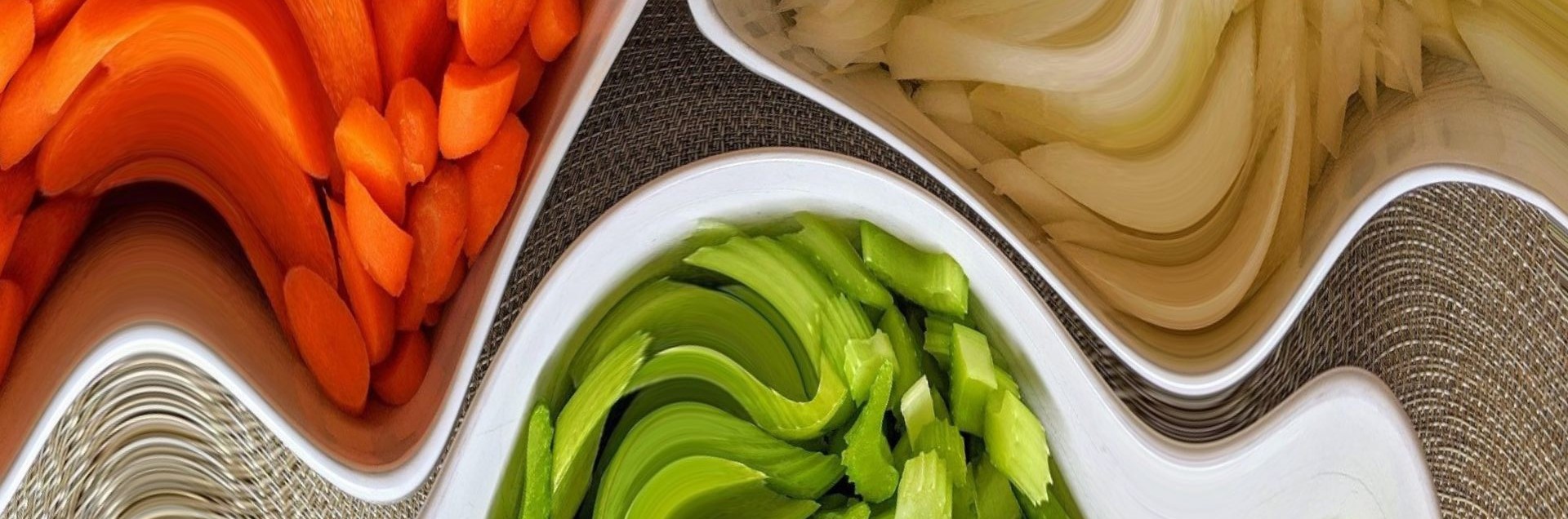
Even if he volunteered to cook regularly, I doubt my dad—who grew up on TV dinners and tuna sandwiches—could’ve lived up to my mom’s standards for finely chopped vegetables, pasta sauces made from scratch, and carefully-selected organic produce. With the efficiency of the chefs I watched on The Food Network, she meticulously chopped onions, carrots and celery into mirepoix and rolled corn tortillas into enchiladas without a drop of filling oozing out of the sides.
In her thick, purple latex gloves with a spray bottle of bleach in one hand, my mom looked at me from her post in front of the kitchen sink. “My biggest fear,” she said as she waited for the water to warm, “is that the only memory you’ll have of me when you’re old is of me standing here scrubbing the hell out of these dishes.”
It’s hard to know whether I carry this conversation in my memory because we’ve had it more than once or because the impression of her doing housework would’ve lasted in my mind regardless. But the image of my mother in her disposable gloves, shredding whole chickens or scrubbing dried up bits of rice pilaf from metal pots, comes to mind when I reflect on my childhood.
I never wore those latex gloves, never learned how to make the famous paprikás developed by my Hungarian ancestors or even to properly chop an onion. My mom largely kept my sister and me out of the kitchen. While some cultures and households view cooking as an art form, my mom raised me to see it largely as a chore. She wanted us to ride our skateboards and scooters in the front yard, run successful lemonade stands, and get good grades.
Meanwhile, each time boys came over to the house—my two younger cousins, neighbors from across the street, friends from school—my mom had them in aprons at the kitchen counter learning how to layer lasagna noodles or zest lemons. She tried to give them the skills she wished my dad had.
Rachel Cusk, in her 2016 essay “Notes on Domesticity,” writes that she plays “down the domestic work I do as if it were something contagious I don’t want [my daughters] to catch.” My mom, I realize now, did the same.
By the time I was living on my own in college, I had never cooked raw meat on my own or mastered dishes without the help of recipes. I subsisted off plastic-wrapped chicken strips from Trader Joe’s and frozen brown rice packets. The few things I knew how to prepare—scrambled eggs in the microwave, well-balanced peanut butter and jelly sandwiches, pasta with butter and parmesan cheese—I’d learned from my dad, who taught my sister and me his limited kitchen skills with pride.
In my senior year of college, I moved into a house with three other girls who made the fragrant Persian stews of their childhoods and restaurant-quality salad dressings with ease. In our cupboard, my shelf contained oatmeal, peanut butter, and green tea while my roommates had saffron, marinade for roasted chicken, cilantro, and homemade granola on hand. I started to wonder how, with a mom so skilled in the kitchen, I hadn’t absorbed more. My meals of pasta with broccoli and jarred sauce most closely resembled the frat boys whose beer-soaked apartments I partied at on the weekends.
When I relocated to New York City after college, I worked long hours as a junior reporter and got through the weeks on leftover Thai takeout and the ten-ounce cups of too-salty soup my office served each day at noon. When I started dating my boyfriend, Luke, the regular catch-up calls I had with my mom took on a new tone. “Does he cook?” she’d ask. “Does he make the bed?” He does just as much as I do, I’d tell her as I rolled my eyes, trying to get her off my back. “But does he scrub the dishes good?” she’d counter, cutting me off. “Have you had a conversation about the chores?”
Luke, who grew up with divorced parents and three older siblings, saw his parents run individual households. His image of domestic life involves everyone helping around the house. When we met, he knew how to roast chicken and vegetables without overcooking them. On Sunday nights, I took the bus to his East Harlem apartment where he made me the one home-cooked meal I consumed each week.
One evening, as news of an impending pandemic lockdown circulated in New York, a colleague approached me on my way out of the office.
“Do you have any food in your fridge,” he asked. As one of the youngest employees on the newsroom floor, co-workers looked out for me.
I did a mental inventory of what might be in the pantry I shared with two roommates. “I have a few bananas,” I said. “And some oatmeal.”
“You need to try to go to the grocery store on your way home tonight,” he said. “Stock up on a few things that might get you through a week or longer.”
Until then, I’d been in denial about the possibility of restaurants shutting down, let alone the office closing. The seriousness of his tone shook me into reality.
I dragged myself to a midtown Whole Foods only to find a mob of equally unprepared city dwellers. The shelves had been stripped of the few things I knew how to prepare. Eggs, pasta, frozen waffles, pre-made soups, bean salads in clamshell containers, all gone. The checkout line wrapped around the entire store. I left empty handed. I took the still-crowded subway home to East Harlem and spent $150 on what was left of the prepared foods at the bodega near my apartment.
The following week, the three places I relied on for my livelihood—the office, the gym, and the Thai restaurant I lived above—all shut down as the pandemic spread through the city. The original two-week lockdown period stretched into months, and for the first time in my life I decided I should learn how to cook. I bought a food processor, ordered a cookbook online, and bought paprika and bay leaves at the market.
But the risotto I stirred for hours turned out crunchy, I forgot to add the garlic to my mom’s pesto recipe, and I constantly cut the tips of my fingers with the dull hand-me-down knives I shared with my roommates. I threw away an entire pot of tomato soup, which turned out flavorless and chunky even though I followed the recipe carefully.
My failures weren’t solely the result of a poor foundation in childhood. Plenty of skilled chefs learn their craft later in life. But not knowing how to chop an onion or peel garlic efficiently set me back, I lacked patience and cut corners, neither of which make for delicious food.
I can’t help but think that my mom’s choice to keep me out of the kitchen had the intended effect. Six years into our relationship, Luke and I are equally mediocre in the kitchen. We get by on simple meals that depend entirely on an air fryer and rice cooker we found at an estate sale.
I make sure the burden doesn’t fall on me to prepare every meal by dividing weekly cooking assignments evenly between us. Even though Luke also wants an egalitarian relationship, I worry that one false move, one extra night of cooking, could send me on the path to becoming a so-called trad wife. While I don’t appreciate the fear my mom instilled, I might have a different life without it. On the nights that Luke makes dinner, I put my feet up on the couch and read or write.
I could choose to enroll in a class to improve my knife skills, or take on fewer freelance assignments to free up space to cook in the evenings. But I keep Mrs. Piggott in mind. As long as our career obligations match, so will our share of the domestic labor.
Last summer, my mom and I went to a shop to pick out used children’s books for my sister, who was pregnant with her first baby. We each tackled different areas of the kids section, searching for titles we recognized. Among the colorful hardbacks and padded baby books, I pulled out a flimsy, light-pink book with no title on the spine. “I found the perfect one,” I said as I turned to her. A copy of Piggybook for the first boy in our family.
Olivia Rockeman is a nonfiction writer whose journalism and essays have appeared in TIME Magazine, The Wall Street Journal, Vogue, Bloomberg, Harper's Bazaar and more. She is a second-year creative nonfiction MFA student at The New School and is working on her first book, a memoir about suicide loss.
Comments are closed.