Tag

drink

Browsing

by Fabio Parasecoli

from Huffington Post

Japan occupies an interesting place in Western popular culture: as one of the most developed countries in the world, its presence is warranted among the major players in the global economy and in international politics. Its industrial and technological products are among the most common household names in consumer culture across the globe. Its popular culture, especially when it comes to fashion, design, anime, and manga, has a considerable following outside its borders. The disasters following the recent tsunami have also contributed to a prominent spot for Japan in the global imagination.

Yet, when it comes to food, Japan has lost some of its mystery. Restaurant patrons are conversant with sushi, sashimi, and tempura, and shoppers are less and less surprised to see wasabi, seaweed, green tea, and even mocha in the “international aisles” of their supermarkets. The recent documentary Jiro Dreams of Sushi reflects the interest of Western gourmets in a culinary tradition that, until a few decades ago, was shrouded in exoticness. Now we have access to delivery sushi; we can pick sashimi off little conveyor belts; and cookbooks, TV shows, and other media are contributing to make Japanese cuisine accessible and comprehensible. Still, there are still layers and layers that some Western foodies have yet to consider, including the many local traditions that stubbornly survive in parts of the country, the kaiseki dining and cooking style, and the ongoing evolution that has created relatively novel approaches like the Japanese-inflected wafu pasta.

Merry White’s new book, Coffee Life in Japan guides us along as we discover a visible yet quite unexplored dimension of Japanese consumer culture. An anthropologist by training and by trade (she teaches at Boston University), the author takes us from coffee house to coffee house, uncovering a whole world that would be hidden from those wrongfully believing Japan is only about tea. As a matter of fact, it is the third largest coffee-importing country in the world, with an internal market shaped by high prices, high quality, and high costs of production. Although the country’s love affair with the drink is more recent than Europe’s, cafes were thriving long before the arrival of Starbucks.

White proves that the drink has played a significant role in the process of modernization in Japan through its ability to adapt to political earthquakes, changing urban structures, and evolving behaviors. Cafes turn out to be places where people can take a break from social pressure and express one’s individuality outside the harmonious consensus that many perceive as a defining trait of Japanese culture. Throughout the book we get to explore wildly different establishments, meeting a curious cast of characters that have dedicated their lives to preparing the best café possible, each embracing quite different standards. Preparations, design, techniques, atmosphere and soundscapes may vary, but all the café owners portrayed in the book seem to take coffee and customer care with the greatest seriousness.

Kodawari, the disciplined dedication and attention to detail that these individuals display, is far from being the stereotyped perfectionism (bordering on the pathological) that many attribute to Japanese culture. As White points out:

“A café in Japan is not a ‘global space’ -unless one counts the Seattle-based chain stores – nor is it usually a deeply local place, forbidding to newcomers… There is no single model for the café… The very openness of definition, along with the cultural parameters of services and quality that make these places ‘Japanese’ is the draw and the preservative of the café in Japanese cities… Its cultural logic is strongly Japanese, but the experience of the café can break almost all the usual rules of being Japanese.”

White wanders from café to café, from brewing master to coffee merchant, with nonchalant pleasure. At times the book structure seems far from linear, returning to topics and concepts already touched on before, but White’s affection for the world she describes is infectious. The narrative often reads like a memoir, and the author is able to transport us to places and situations that are not only described with the eye of the anthropologist, but shared with the passion of a true coffee lover.

Once again, the unstoppable machine of pop music invites us to a tasting of a sweet and – not incidentally – black body. This time Rihanna entices listeners to join her in a celebration where the main course is herself. As a matter of fact, a popular remix seems to point to her ex, Chris Brown, as guest of honor to the party the song refers to. The live performances do not leave many doubts as to what part of Rihanna’s body the word “cake” refers to. No need for winking, no double entendre: the song is a suggestive road map that guides the willing listener to blow the candles, lick the icing, and put his name on the artist’s cake, described as “sweeter than a rice cake, cake worth sipping.”

I am not trying to pass any moral or aesthetic judgment. Rather, I’m drawing attention on how popular culture, and in particular music, has compared female bodies to sweet substances that are there for the taking. “Honey,” “sugar,” and “sweetness” are common terms of endearment, without any explicit connection to oral pleasures and devoid of specific racial connotations. However, pop music draws more direct correlations between edible matters and female bodies. Lady Gaga hinted that she was an object of consumption when she showed up at the 2010 MTV Video Music Awards wrapped in a dress made of raw meat. But these connections are particularly interesting in what many identify as African-American pop culture, although produced by the entertainment industry for all kinds of audiences.

Starting from the 1930s, culinary themes were especially common in blues music. A desirable young girl was called a “biscuit” and a good lover was called a “biscuit roller” (If I Had Possession over Judgment Day, by Robert Johnson, 1936). The complexion of a black person also played a role: “honey ” referred to light-skinned persons, while “coffee” referred to darker ones, resulting in expressions such as “honey dripper” and “coffee grinder” as metaphors for a lover. Having sex was “grinding” (Grinder Man Blues, by Memphis Slim, 1940) or “squeezing lemons” (Dirty Mother for You, by Memphis Minnie, 1935). Jelly is an edible matter that denotes softness and sweetness, with connotations that point to childhood, comfort food, and satisfaction of primal drives. Peanut butter and jelly are often referred to as a quintessential treat for children and adults alike. The jelly metaphor, in which the physical consumption of food somehow mirrors the enjoyment of sexual pleasure, is not new, but originates in the 1942 song It Must Be Jelly (‘Cause Jam Don’t Shake Like That.

However, in recent years black female artists have started using these metaphors in ways that assert their power and control over their male counterparts. In her hit Milkshake, singer Kelis flips the stereotype from negative to positive to affirm the woman’s control over the man’s appetites. Realizing that her stuff is better than anybody else’s, she refuses to share her skills and wisdom with other women. Otherwise she should charge a fee. Destiny’s Child taunted listeners by reminding them that “I don’t think you’re ready for this jelly ’cause my body is too bootylicious for you, babe.” In her song, Rihanna teases an imaginary male who wants her cake “in the worst way,” positive about her control over him: “Don’t try to hide it, I’mma make you my bitch.” Who is the artist talking to? Just heterosexual males who find her come-on lines arousing, or also women who might identify with the sexual power and the assertiveness exuding from her?

Young black female performers might seem to have found, in the triangulation of their flesh, food, and sexiness, the key to affirming their commanding womanhood and their agency. Yet this phenomenon does not happen in a void, but as part of a massive showbiz industry that by commodifying minorities still allows mainstream culture to find new and discrete ways to reaffirm its power. At the same time, models of beauty that reinforce the preference for thinness turn female bodies into an object for entertainment.

Three authors of recently published books explain how rum, vodka, and gin have changed history and discuss the importance of these beverages today.

Speakers are:

– Patricia Herlihy, professor emeriti of history at Brown University and author of Vodka: A Global History
– Richard Foss, instructor in culinary history at Osher Institute/ UCLA Extension and author of Rum: A Global History
– Lesley Jacobs Solmonson, a food and drink writer and journalist and author of Gin: A Global History.

Moderated by Andrew F. Smith, faculty member of the New School Food Studies program.

Food Studies | http://www.newschool.edu/ce/foodstudies
The Inquisitive Eater (New School Food) | http://www.inquisitiveeater.com

Location: Wollman Hall, Eugene Lang Building
06/26/2012 6:00 p.m.

The New School is holding its first annual Earth Week Festival this April, coordinated by the Office for Sustainability. This cross-disciplinary collaboration of administrative and academic departments and student groups will raise awareness about sustainability issues, strengthen our campus community, and link The New School with millions across the country in the 42nd annual Earth Day celebration.

Careers in Sustainability

A panel of alumni working in sustainability-related jobs discuss their work and career trajectories. Moderated by Professor John Clinton, director of the Environmental Policy and Sustainability Management Program, The New School for Public Engagement.

Master of Science in Environmental Policy and Sustainability Management |http://www.newschool.edu/milano/environmental-policy-sustainability-managemen…

Panelists include:

Kirsten Brooks, Master of Science in Nonprofit Management from Milano, Manager of Corporate Outreach, A+E Networks

Jason Hudspeth, Master of Architecture from Parsons
Designer, New York City-based firm LEVENBETTS

Ashok Kamal, Master of Science in Nonprofit Management, Milano
Co-Founder and CEO, green social media marketing firm Bennu

Reana Kovalcik, Master of Science in Urban Policy, Milano
Development Coordinator, Wellness in the Schools

Alex Smith, Bachelor of Science, Environmental Studies
Environmental Educator, Green Design Lab, Solar One

Visit http://www.newschool.edu/earthweek for more information.

Milano School of International Affairs, Management, and Urban Policy |http://www.newschool.edu/milano

by Fabio Parasecoli

from Huffington Post

I admit it, I am a shameless history nerd, and I got excited when I received the advance copy of E.C. Spary’s upcoming book, Eating the Enlightenment: Food and Science in Paris. As much as we think we know French cuisine and its past, there is always new research shedding light on aspects that are not well understood or, even worse, are misunderstood. Spary’s work continues the efforts of other important books such as Susan Pinkard’s A Revolution in Taste: The Rise of French Cuisine, Sean Takats’s The Expert Cook in Enlightenment France, Rebecca Spang’s The Invention of the Restaurant: Paris and Modern Gastronomic Culture, Amy Trubek’s Haute Cuisine: How the French Invented the Culinary Profession and Priscilla Parkhurst Ferguson’s Accounting for Taste: The Triumph of French Cuisine, just to mention a few. So much material is available that it would be easy to teach a well-sourced course on the cultural history of French food.

Spary’s volume is far from being a light read, as it mines its way through a staggering amount of memoirs, letters, books, and all sorts of documents from the budding printing industry of the decades before the Revolution. But it definitely rewards those who might decide to engage with its fascinating content. Focusing on the Parisian who’s who, Spary explores debates and cultural dynamics that eerily remind us of the way many contemporary consumers in post-industrial societies decide what and how to eat, especially those in the upper income brackets who can afford to make expensive choices.

Of course, any crude simplification should be avoided: the author emphasizes that 18th century France was beginning to develop as a consumer society, in particular thanks to colonial products such as sugar and coffee. This epochal transformation was the cause of widespread unease and preoccupation: were French citizens going to be the same, even when ingesting exciting foreign substances and indulging in luxuries that were becoming increasingly affordable? Now, we live at a time when the consumption of exotic products and novelties is a daily occurrence and whole industries are based on our desire to experiment and try new stuff all the time. Also, 18th century upper class French consumers did not have to deal with global corporations, brand names, and the pervasive marketing that shape today’s food culture — one of the main reasons behind the renewed interest in traditional and so-called “authentic” foods.

Nevertheless, just like at the time of the philosophes, ingestion still functions as a metaphor for the cultural and political self. Standards of taste in the civic sphere were not only determined by fashion and practices, but also by political discussions, clashing scientific theories, and the attitude of public intellectuals. The connoisseur, who became a visible Parisian figure in the period that Spary explores, not only displayed expertise, but also claimed forms of authority and revealed specific approaches to the mind and its relationship of the body. Individuals modeled their behaviors based on scientific information, media, culture, personal preferences, popular advice , and competing ideals about health and well-being.

Then as now, dietary preferences can be used to distinguish us from one another, underlying our own uniqueness and personality, and it is possible to express political and social ideals by deciding to eat specific things. When we opt for products labeled as local, organic, sustainable, and fair trade, we are actually participating in political projects, just like the eighteenth century Parisians could express their discontents with the absolutist regime of the court by embracing sobriety and fasting. Spary shows how political controversies originated around coffee, liqueurs, and what was already known as nouvelle cuisine — a term that will enjoy long-lasting fortune and will be used under very different circumstances in the following centuries.
We should not be surprised: it is enough to think about the contemporary discourse on foie gras and high fructose corn syrup, just to mention two examples at opposite ends of the foodie spectrum. Spary’s book not only provides us with great information to understand the development of a cuisine that is still among the most prestigious worldwide, but also elicits reflections to our present-day attitudes about food, dietary choices, and their connections to much larger social issues.

By Fabio Parasecoli

from Huffington Post

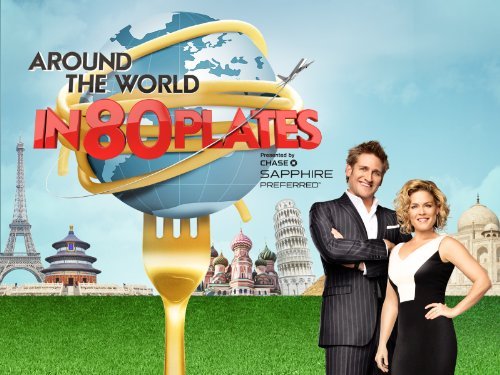
Quenelles in Lyon, tagine in Marrakesh, tortellini in Bologna: it sounds like a dream itinerary for food lovers. Moving from place to place to taste the best that the local cuisine has to offer has strong appeal. It is also the premise of a new reality show, Around The World in 80 Plates, which began airing in May on Bravo.

A group of young chefs is almost literally parachuted into different cities every week with the task of getting to know the native culinary tradition and mastering it enough to pull off a dinner for locals. Since it’s a reality show, chefs first have to complete assignments to get an “extraordinary ingredient” that is supposed to give them an advantage on their rivals: the possibility of using potatoes to cook pub food in London, the help of an Arab-speaking guide when shopping in the Marrakesh souk, or just time to make labor-intensive tortellini. The completion of the tasks usually includes rushing through markets at a neck-breaking pace looking for stuff, lots of breathlessness, and healthy amounts of catty one-liners.

Revealing the recent lack of originality in reality TV, the show combines two popular food TV genres: the travelogue and the chef competition. The first category features hits like Anthony Bourdain’s No Reservations and Andrew Zimmern’s Bizarre Food, where a host (often male) explores the culinary marvels of an unfamiliar place, displaying either his expertise or his fearlessness in trying stuff that most viewers would find unpalatable.

The genre has expanded to include less exotic fare like Guy Fieri’s Diners, Drive-ins and Dives, where the object of interest is the comfort that can be found in what some could consider the low end of the American culinary spectrum, and Man v. Food, where Adam Richman participates in eating challenges all over the U.S.A.

The other genre, the chef competition, exploded with the Japanese extravaganza of Iron Chefs, and developed into Top Chef, Master Chef, Gordon Ramsay’s Hell’s Kitchen and the short-lived Chopping Block with Marco Pierre White, among many others. By straddling the two genres, Around The World in 80 Plates manages to achieve an acceptable modicum of entertainment value, as viewers get to vicariously explore far-away places while enjoying the drama of the rivalry among the contestants.

The show offers great examples of what can be called “culinary tourism,” which in the words of folklorist Lucy Long refers to “intentional, exploratory participation in the foodways of an other.” Viewers are offered digestible portions of cosmopolitanism and culinary knowledge, two essential components for any self-respecting food lover (or “foodie,” a word that, just like “hipster,” appears to offend those it is used to define).

However, as chefs frantically devour their way through exotic locales, they involuntarily embody subtle colonial attitudes: the culinary treasures of the place they are exploring are there for the grubbing and for the enjoyment of the viewers. The fact that the contestants include individuals of different ethnic background feels like a conscious attempt to dampen any accusation of Eurocentrism. A contestant whose skills and training focused on Thai cuisine was soon eliminated as the other chefs felt that her expertise was too limited, as having a French- or Western-based culinary skills is a surefire recipe for success when trying to cook Moroccan food…

As a matter of fact, the show works on the assumption that professional experience in American restaurants gives the participants enough competence to quickly absorb knowledge about strange ingredients and unknown cooking techniques. At times the chefs come across as arrogant, like when the “secret ingredient” is an elderly lady who can teach them how to make the Tuscan soup ribollita; when they realize that she does not speak English, they do not even ask her to make the soup to learn from her actions.

The way the chefs are evaluated is also dubious. The “locals” that the show trumpets as the real judges of the chefs’ work are often food critics, well-known restaurateurs and their patrons. And the authenticity they seem to embrace comes across at times as vaguely elitist, like in the London episode that presents gastropubs, a relatively recent addition to the local scene, as British authentic cuisine.

The most questionable message that transpires from the show that it is enough to get acquainted with a few ingredients and to cook a few recipes to boast command over a culinary tradition. I am sure many chefs would have their doubts about this approach. But it is exhilarating to assume that a few mouthfuls can make you a culinary expert, and that’s the fantasy the show is selling.

by Fabio Parasecoli

From Huffington Post

According to a recent NPR report, it seems that this year, thanks to a mild spring, corn farmers are hoping for a bumper crop. The chances are quite high, thanks to the weather, but also because many planted earlier than usual, which should allow for pollination to take place before the summer heat, and because farmers planted the highest numbers of acres in years: around 96 million. The USDA specifies that, “if realized, this will represent the highest planted acreage in the United States since 1937, when an estimated 97.2 million acres were planted.”

Additionally, technology now allows much higher yields than in the 1930s. As the prospects for production are increasingly favorable, Bloomberg and Reuters have reported that the price of corn is likely to fall, ending an upward trend that lasted for three years, accompanied by high price volatility. As corn prices are determined on the global market, just as oil and other major commodities, it is expected that a bumper crop in the U.S. will have an impact not only nationally, but also all over the world. Prices, however, will not fall as much as they could, as demand is also growing all around the globe, thanks to the increase in consumption of meat and dairy, which in turns requires greater amounts of corn for livestock feed, and the renewed interest in ethanol as an alternative source of energy. Although no ethanol plants are being built, the production of this biofuel in the U.S. is still growing. Even after the elimination of tariffs levied on imported ethanol and the assistance for ethanol blenders through tax credits, the industry is indirectly subsidized by the federal requirement that ethanol is blended into gasoline in increasing amounts, with a goal of 36 million gallons in 2022.

Is this good news? American consumers probably will not notice any prices change when they shop, since grocery costs are largely related to transformation, packaging, marketing and distribution. Yet lower global prices have the potential to negatively affect small growers in other countries who do not apply the technologies and the economies of scale available to American farmers, and who cannot count on government subsidies, often eliminated under the pressure of industrialized countries and organizations like the World trade Organization. As a consequence, even if lower corn prices might be advantageous to the growing urban populations in developing countries, who will have to pay less for their food, it will increase dependence of those countries on foreign imports and their exposure to market volatility. The 2008 food riots clearly indicate the dangers of these policies. Furthermore, it is also necessary to consider the environmental effects of the expansion of corn cultivation in terms of increased monocultures, land use change, and water usage.

These are complex issues that need to be addressed at the national and global levels, and that cannot be reduced to the sounds bites that have become a common form of information. They certainly cannot be thoroughly discussed in a short blog post like this. For these reasons, it is particularly important than citizens become aware of them, especially now that Congress is working on the 2012 Farm Bill, already approved last month by the Senate committee on Agriculture, Nutrition, and Forestry under the name of Agriculture Reform, Food and Jobs Act of 2012. It is urgent that Americans realize that the bill does not only deal with farm subsidies or ethanol production, but also with other issues that hit much closer to home, including food safety, conservation and supplemental nutrition assistance program, or SNAP, formerly known as the food stamp program. Whose interests will the new bill favor? What will its priorities be? What will its consequences be on what gets to our tables? Data is available for everybody to consider, and various organizations, like NYC Food and Farm Bill Working Group help us reflect on how legislation impacts our entire food system, from producers to consumers. We can do our part as educators, also outside of Food Studies programs, with classes and public events dedicated to these themes. For instance, at The New School we will be offering classes like Food, Global Trade, and Development and History of American Farming and Agricultural Production, which will explore food-related debates and policies, emphasizing the relevance of issues that too often do not receive the attention they deserve.

from Huffington Post

by Fabio Parasecoli

The media, and fans all over the world, are abuzz with excitement about The Hunger Games, the movie based on Suzanne Collins’ novel, the first within a trilogy with the same name. No need for a spoiler alert: It is the story of a young woman, Katniss Everdeen, who has grown up struggling to provide food for herself and her family in a future, war-torn and battered United States. The events unfold in a nightmarish future in which a tyrannical Capital has imposed its dominion over the rest of the country. Katniss is constantly faced with scarcity of food: The provisions allotted by the Capital are far from sufficient, and many families opt to buy rations of food in exchange to increase their chances to get picked to participate in the sadistic fight-to-the-death Hunger Games, sponsored by the Capital. The competition takes place in an artificial arena dotted with forests and meadows, lakes, streams, and hills, and only one contestant is allowed to come out alive. Katniss finds herself forced to fight for survival, hunting, scavenging, gathering roots and berries, destroying her opponents’ food reserves and, yes, killing.

As any powerful literary dystopia, the book is a reflection not on the future, but on our present. Good science fiction, after all, reminds us that the world we inhabit could have been different, and could still be different. It manages to bring us to temporarily suspend our disbelief, creating worlds that are credible enough to grant us a sense of uncomfortable familiarity. To achieve these effects, sci-fi has often employed food and eating, forcing us to reflect on their relevance for the stability of political and social structures. In the post-disaster America that Katniss inhabits, food is a source of power, the oil that allows the administrative machine to function. Individuals have limited choices: All is decided somewhere else. That is, unless citizens decide to break the rules: Katniss poaches for game in places where she’s not supposed to roam, strategically uses provisions to secure her victory in the arena, and even manages to use food to force her will on the omnipotent authorities.

Katniss’ epic adventures remind us of another great dystopian novel, Octavia Butler’s The Parable of the Sower, which I discuss in my book, Bite Me: Food in Popular Culture. Also in Butler’s novel, society collapses on itself because of greed and social unrest. America breaks down into independent gated communities under constant siege from those less fortunate, trying to get their share of wealth and, of course, food. The story is narrated by Lauren Olamina, a young woman who, like the other families in the compound where she lives, tries to make up for the lack of food by growing fruit and vegetables. It is a difficult task for suburbanites, used to buying products from supermarkets; they need to learn from scratch what can be grown in orchards or backyards, and the fruit of their labor is under constant threat from thieves and hungry marauders. With the political body crumbling down, extreme consumerism and the free market show their ugly side, hitting the weakest portions of society while causing scarcity of food and, later, hunger. Food is the only hope for survival and seeds are the promise of future crops. When Lauren’s community is finally invaded, the young girl is as equally affected by the sight of the destroyed crops as by the dead people. She starts traveling, facing the dangers of a land without rules and principles, where all that counts is survival and, consequently, securing the next meal. In Butler’s dim future, the social fabric is frayed, one against another.

In The Hunger Games, Katniss makes her mark in a world where the downtrodden devise tactics to survive in a land controlled by others. We are reminded that when we enter a supermarket, or decide instead to go to a farmers’ market, or join a Community Sustained Project, we enjoy the illusion that we are making choices for ourselves, expressing our own taste and personality. In reality, all available options are pre-determined and pre-packaged by production constraints, political choices, and structural dynamics. In a consumer society where alternative food networks and associations have been built on the premise that we can change the food system one meal at the time and that eating is an agricultural act, Katniss’ adventures remind us that, after all, we are poachers in somebody else’s territory. We cannot always win by fighting in the limited arena we are familiar with; we need to figure out ways to change the whole system outside the arena.