Tag

drink

Browsing

by Fabio Parasecoli
from Huffington Post

“Three home cooks compete to prove that their product has what it takes to become the next supermarket brand.” That’s the concept of the new Lifetime reality show Supermarket Superstar, as explained in the first episode by host Stacy Keibler while images of consumers’ favorites — from Chef Boyardee’s canned beef ravioli to Orville Redenbacher’s Pop Up Bowl — roll on the screen. From the get go, viewers fully understand what’s at stake. Participants are not talking about fancy gourmet food or a celebrity chef’s restaurant. They are giving a shot to the real bread and butter of food business in the U.S.: the packaged products that can be found on the shelves of your local bodega, grocery store, or supermarket. The show tries to bank on the growing popularity of food and on the equally increasing numbers of people who decide they have the vision, the abilities, and the chops to take their love for cooking or their side activity — for which they receive compliments from family, friends, and at most a small circle of clients — to the next level.

Every episode is dedicated to a different category of food product. Competitors pitch their idea to a panel of professional mentors: the founder of Mrs. Fields Cookies, Debbi Fields; renowned chef and (in the words of the host) “retail visionary,” Michael Chiarello; and “branding guru and food product pioneer” Chris Cornyn. Taking into account their comments and advice, the participants then get the opportunity to tweak and perfect their proposal in a professional test kitchen (with the help of a real-life R&D expert), present it to a focus group of consumers, and design the packaging.

In each episode, A&P supermarket buyer Tom Dahlen decides who will win $10,000 in cash and $100,000 worth in product development to get professional samples of the contestant’s creations. In the end, the winners of each category get a chance to have their product picked and distributed in the A&P supermarkets and their affiliates all over the U.S. It is the same attempt to connect reality TV with the real world of business that we have seen in shows like the short-lived America’s Next Great Restaurant and Fashion Star, both on NBC. Winners do not only hope to achieve TV fame, but may also get an opportunity to make it to the big time.

In the first episodes, we see competitors vie for the win in the categories of cakes and global cuisine (whatever that means in a supermarket aisle). Peach cobbler cupcakes, alcohol-laden “cake buzz,” and kung pao chicken chimale (Chinese tamale) are among the products that are offered for the audience’s enjoyment, alongside their sometimes colorful makers. With her big smiles and her warm demeanor, Ms. Fields plays the cheerleader for the contestants who get their dose of reality check (quite an oxymoron, as this is a reality show) from Chiarello and, above all, Cornyn. But then again, the roles of the sweet and harsh mentors in reality competitions have long become a mainstay of the genre, allowing for drama, tears, and overall good entertainment. That said, Chiarello’s and Cornyn’s observations, together with Dahlen’s questions, provide a window into the actual business of selling food.

However, anybody working in the food business would understand the shows lives in the realm of fantasy. No single entrepreneur simultaneously works in research and development, marketing, and packaging design unless they are at the very beginning of their adventure, in which case their products would definitely not land in the big distribution. The negotiation skills necessary to simply secure circulation and introduce a new product on supermarket shelves are not part of the competition, although they would be a great talent to master. As we are in the realm of televised fantasy, Dahlen plays the role of the fairy godmother, as the winners for each category compete for the final prize that will take them from the small screen to the reality of supermarket shelves all over the country.

The show allows the audience a glimpse of the brutality of the food business, beyond the romanticism that often surrounds the sector. Pricing is the bottom line, beside good ideas and great flavor. Food trends come and go. By the time a new product hits the shelves, after the necessary time for research, manufacture and distribution, it may already be out of fashion. It is a cutthroat business, fought to the last cent in front of the “masses,” the Holy Grail that this reality shows dangles in front of competitors.

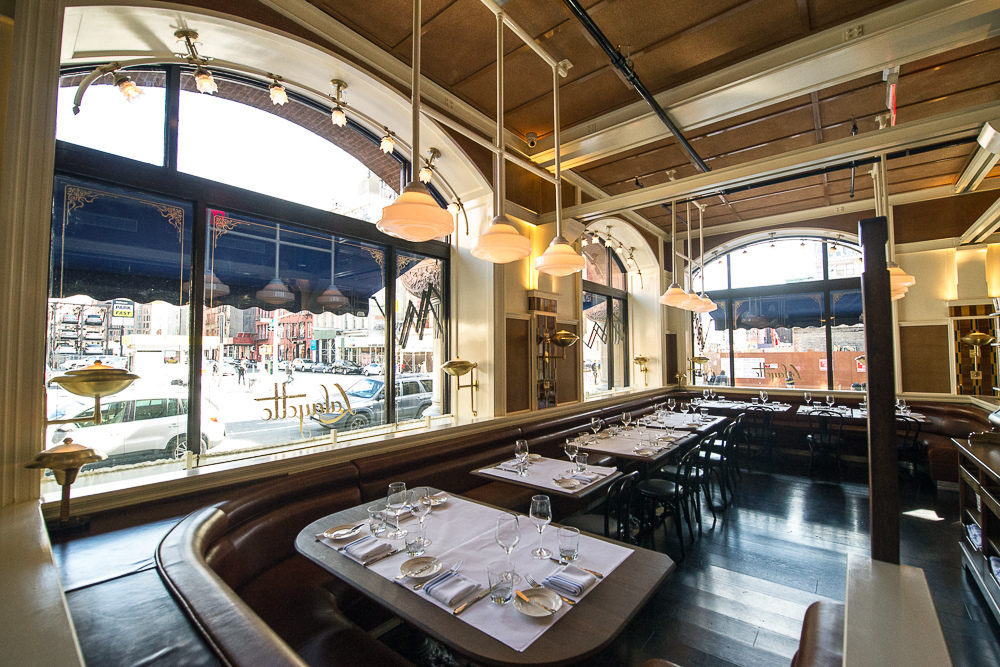
The Food Studies Program of the New School for Public Engagement is partnering with The James Beard Foundation (JBF) to launch a series of panel discussions titled Dining + Design: Conversations with Chefs and Architects on Creating the Ideal Dining Experience. This unique series will feature conversations with top toques and architects, highlighting the critical relationship between a restaurant’s culinary concepts and physical design in creating the ideal dining experience.


This is the second panel discussion of the Dining + Design series. Speakers include:

– Chef Andrew Carmellini, The Dutch, Locanda Verde and Lafayette (coming soon)
– Robin Standefer and Stephen Alesch, Roman + Williams
– Moderated by Fabio Parasecoli, Coordinator, Food Studies program

The videos for all the sessions of the conference (including the keynote speech delivered by Dolores Huerta) are now available.

[youtube=http://www.youtube.com/watch?v=rzzjPUEX1kE]

[youtube=http://www.youtube.com/watch?v=_kNjB9uAc58]

[youtube=http://www.youtube.com/watch?v=SS8_wsVlGRs]

[youtube=http://www.youtube.com/watch?v=3Fk0rY60B_g]

[youtube=http://www.youtube.com/watch?v=5G9mAapZwGs]

[youtube=http://www.youtube.com/watch?v=aHfaYALJjsg]

Innovate or die. This has turned into a mantra for today’s globalized food scene to the chagrin of those that would rather see traditions survive and thrive. Food manufacturers constantly introduce novelties and then spend huge amounts of money convincing consumers to embrace them. Chefs embrace new technologies and approaches to make a name for themselves. Many consider ongoing change as fundamental for economic success, but what happens when, for various and relevant reasons, innovation is hard to envision, let alone implement? And what if innovation needs to overcome deeply rooted social and economic divides? The food sector in the Dominican Republic provides a good example of these kinds of predicaments.

Lisa and Michael Ballantine, as relative newcomers to the island, have experienced the difficulties involved in carrying out projects that somehow clash with the status quo. Their latest project is a well-designed and quite upscale restaurant, Aroma de la Montaña (The Scent of the Mountain), located in the town of Jarabacoa, in a hillside development poetically called Jamaca de Dios (God’s Hammock). The Ballantines are dedicated to satisfying their local, mostly upscale and quite discerning clientele, and to do so they have relied on importing organic beef from the United States — despite the many cattle ranches that dot the island.

This is not unusual in the Dominican Republic, as upscale establishments — in particular those located in tourist resorts — often purchase their ingredients from faraway places, often considered superior in quality and prestige. However, the couple is now trying to switch to a local organic cattle farm and to implement a farm-to-table approach. In fact, part of the produce is actually grown on the property and the Ballantines are planning to expand their vegetable cultivations both in terms of quantity and diversity of crops. Moreover, by buying organic coffee, chocolate and vegetables from local farmers, they also hope to contribute to the improvement of the overall sector.

What struck me when I visited the restaurant is how difficult it can be to introduce innovation, which in this case corresponds to highlighting the culinary potential of the surrounding area. Despite the Ballantines’ best intentions, few entries on the menu are inspired by local traditions, as well-heeled patrons are not particularly open to dishes that remind them of the daily fare consumed by the majority of the population. Class stratification is clear and hard to avoid if entrepreneurs aim to build viable businesses.

The desire to maintain social distinction impacts the simplest of innovations, such as the diffusion of water filters, as the Ballantines have experienced firsthand. After moving to the Dominican Republic as missionaries in 2000, they soon figured out that the church might not have been their primary call. In 2003, they invested all they had to buy land on the slopes above Jarabacoa to establish a vacation house community. At the same time, they worked to find viable solutions to the urgent problem of drinkable water, which impacts, above all, the poorer segments of the populations.

To that purpose, in 2006 Lisa established a company called FilterPure to develop affordable and practical filters that could easily be installed and used all over the island. After a few attempts, the company designed a simple ceramic filter that adopts a technology based on the chemical properties of silver and coal to purify water. Each filter costs $35 and, placed in a plastic bucket with a faucet, lasts five years. The price is still quite prohibitive for many families, so NGOs stepped in, buying thousands of units (so far around 50,000) not only for the Dominican Republic, but also for nearby Haiti.

Yet, when FilterPure tried to sell the filters to more affluent Dominicans, the product was not successful because it had already been identified as a “poor people’s filter.” The Ballatines then partnered with local artists to create filter containers that homeowners could proudly boast of as beautiful and costly pieces of art. The School of Design of Altos de Chavon, near La Romana on the southern coast, organized an exhibition of these creations in its art gallery. Purchasers of the top-of-the-line models would automatically finance the delivery of a simple, plastic bucket model to a needy community. Buy one, give one, in other words. The initiative is brand new, and so far few pieces have been sold, but the company hopes that the trendsetters who bought first will entice others to follow their example. The potential is there. The question is how to implement new solutions in a cultural and social environment that — for very complex reasons — is often resistant to change.

[youtube=http://www.youtube.com/watch?v=Iuc3l4d77z8]

Restaurants are ubiquitous, but few of us reflect on the number of workers and the labor issues involved in the industry. How well does the restaurant business do in providing good jobs, with decent wages, fair promotion policies, and health insurance and other benefits? What more could be done?

Members of the Restaurant Opportunities Center of New York (organization of restaurant workers working to improve wages and conditions in the restaurant industry) will engage in a multi-stakeholder dialogue with a common objective of improving conditions for everyone involved in the restaurant and food business community. The discussion will focus on three important topics — wages and benefits, labor practices, and consumer engagement and sustainability.

Speakers include owner and employee representatives from restaurants (Bogota Latin Bistro, Craft, Good Restaurant, International Gourmet Kitchen, La Palapa, Mexicue, One if by Land, The Green Table) and community groups (Union Square Hospitality Group).

[youtube=http://www.youtube.com/watch?v=QUSivYb1XGs]

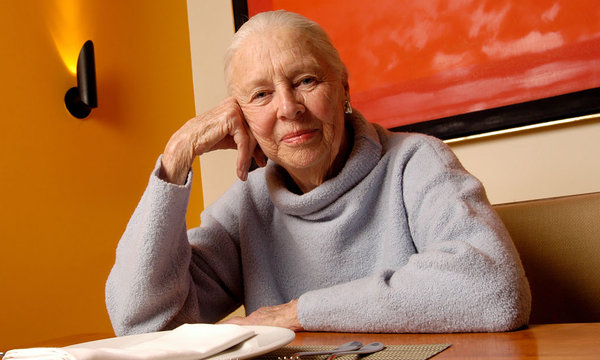
Marion Cunningham (1922–2012) started her professional career at age 50 after taking a cooking class with James Beard. He was so impressed with her cooking that he hired her as his assistant, a position she held for the next 11 years. On Beard’s recommendation, Random House selected Cunningham to edit the 13th edition of The Fannie Farmer Cookbook (1979). Its success inspired Cunningham to write her own cookbooks, including two for people who have never cooked before. Her dedication to home cooking led former Gourmet editor Ruth Reichl to proclaim, “If Beard was the father of American cooking, Cunningham became its mother.” Speakers include Judith Jones, senior editor and vice president, Knopf; Laura Shapiro, author of Something from the Oven; and Anne Mendelson, author of Milk: The Surprising Story of Milk Through the Ages. Moderated by New School Food Studies faculty member Andrew F. Smith.

The Culinary Luminaries series celebrates outstanding figures in the world of food and gastronomy. Past panels have been devoted to James Beard, Julia Child, M.F.K. Fisher, Craig Claiborne, Joseph Baum, Clementine Paddleford, Pellegrino Artusi, Robert Mondavi, and Henri Soulé.

by Fabio Parasecoli

from Huffington Post

Supersized food portions are not news, especially if you live in the U.S. But when I first moved here as the correspondent for the Italian food and wine magazine Gambero Rosso, I was constantly amazed by the difference in food servings with what I was used to in Italy. I am less so now, as I’ve spent more and more time in the States, but also because Italians have done their part to increase average food consumption, and not always towards healthier choices. The Mediterranean Diet is more of a nostalgic ideal than a reality, as diet-related conditions have become rampant among adults as well as children.

That said, as both a consumer and a food scholar, I am very interested in how how people eat, what people eat, and what they think about it; what sorts of conversations develop around food. With that in mind, you can imagine I was very intrigued when I saw that the History Channel 2 had dedicated an episode of Modern Marvels to supersized food. The show, if you are not familiar, tries to look at contemporary objects, customs, and systems from the point of view of scientific progress. As the title of the series suggests, the show often embraces a triumphant tone when it comes to technological advances and successes, celebrating the achievements of researchers, inventors, and tinkerers, both as individuals and as members of teams.

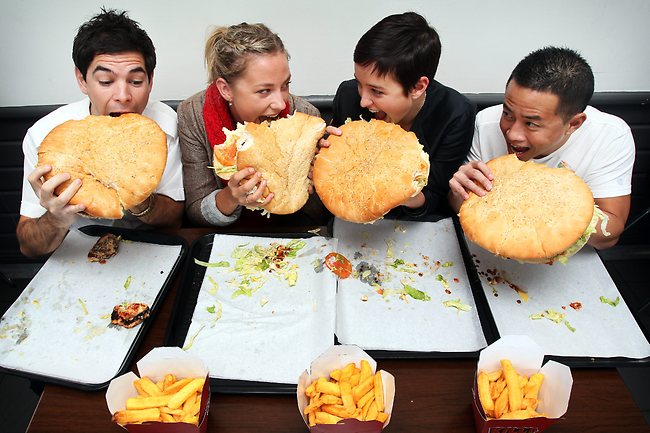
Modern Marvels adopts a different approach from, say, Man v. Food on the Travel Channel, where host Adam Richman travels around the country to participate in food challenges. Eating competitions get mentioned in the Modern Marvels episode — and actually we see a Chicago fireman trying to devour a gigantic meat-centered menu in Texas in less than an hour, in front of his adoring family — but the show focuses more so on what happens backstage to achieve the preparation of a 250-pound burger in a 44-pound bun (and its celebratory consumption by a whole team of young football players — not really a surprise), seven-pound hot dogs, 54-inch giant pizzas, 4.5 pound steaks, 5-pound gummy bears and so on. Viewers are invited to reflect on what it takes to cook a huge hamburger, what technical challenges present themselves when you need to bake a pizza large enough to feed 30 “hungry pizza lovers,” and what sort of ingenuity its makers display.

In the interest of the supposed educational and informative aspects of the series, the excesses showcased with glee and pride by the American entrepreneurs are mitigated by an attempt to reflect on why gargantuan portions and eating contests are so present in American popular culture. The voiceover commentator mentions “supersized appetites, resources, and egos” as essential traits of American culture, where supersized homes, electronics, and vehicles are wildly successful, and where food has become cheaper, more available, and more convenient. The burger maker explains that commercial food needs to be entertaining, and that clients love over-the-top items, while the hot-dog maker suggests a Darwinian strive to show power and strength. The show discreetly seems to share these opinions, as the Mongolian hordes of Genghis Khan are indicated as the first consumers of meat patties. Cornell University’s marketing professor Brian Wansink, who has written extensively about eating behaviors, points to the competitive pressure in American culture. To do so, he reports an experiment where young college students are invited to eat as many chicken wings as they can, with and without the presence of cheering spectators. Of course, those performing in front of an audience tended to eat 30 percent more, on average.

Overall, however, the show is less interested in the motivations for exaggerated eating than in its technical aspects. In a way, the fact that Americans tend to consume oversized portions is taken as a given that needs only marginal soul-searching. What’s interesting is how brave entrepreneurs are able to read their customers’ desires and adapt their production to satisfy them. The patrons’ life choices are not their responsibility. Their goal is to increase their clientele and to grow a solid business. Nothing wrong with that, of course, except for the echoes of the political discourse that use the argument of personal responsibility as an excuse to avoid public intervention in health and nutrition issues. What is troublesome is that the cultural and social assumptions behind this approach are accepted as unavoidable facts, rather than as consequence of specific policies and collective choices.

by Fabio Parasecoli
from Huffington Post

Don’t get me wrong — I love cooking for friends and family. Thanksgiving happens to be my favorite food-related gathering — followed closely by the Super Bowl party, where I can get creative and come up with new, usually healthier interpretations of traditional game treats. I guess I enjoy those occasions because, as a foreigner, I did not grow up with them. However, I was exposed to the less appealing aspects of family reunions, when you find yourself stuck in the same space with people you may not particularly be fond of, for what seems as an excruciatingly long stretch of time that moves at the speed of a glacier (pre-global warmth, that is) and provides the same amount of fuzzy warmth. We are supposed to buy into the Normal Rockwell wholesome fantasy of smiling families, with the patriarch at the head of table beaming over his faithful minions and cutting that crucial first slice of turkey. But we all also know that those images mostly amount to wishful thinking.

For years, filmmakers all over the world have been digging into the misery behind all kinds of celebrations. As the jolly season approaches and we’re getting ready to stuff our faces more than usual, it can be fun to look for memorable holiday meals on the silver screen and, beyond that, to marvel at the power of food to express anxieties, love and all kind of emotions.

Here are some of my favorite Thanksgiving food-related movies:

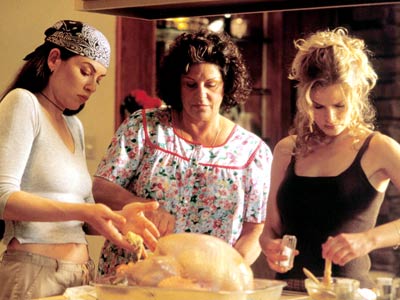
1. Peter Hedges’s Pieces of April (2003) digs into the anxiety many first-time holiday hosts feel by presenting a worst-case scenario. April, played by Katie Holmes, lives in a not-so-glamorous tenement apartment in the East Village with her boyfriend. For the first time, she finds herself facing the scary prospective of having her very proper, but also very dysfunctional, suburban family over for Thanksgiving. The turkey and her uncooperative oven quickly become her scourge; unable to make her own oven work, she turns to the people living in the same building, only to be rebuked by a local, hyper-efficient gay man. Eventually, she finds aid from a middle-aged couple whose bantering allows April to master at least some basic cooking techniques.

2. There are as many versions of the Thanksgiving meal as the countless cultures that thrive side by side in America. In many cases, it is during the holidays that long-upheld traditions clash with the realities lived by the younger generations trying to make it in a confusing and complex society. Gurinder Chadha’s What’s Cooking is so far the best illustration of these tensions, showing us the preparations and the gatherings in four different families: Jewish, African-American, Latino and Asian.

3. Everybody knows that the Thanksgiving turkey can easily turn into a weapon of humiliations and punishment, as Jodie Foster’s Home for the Holidays (1995) flaunts for everybody to see. It is yet another turkey-centered family drama, but Holly Hunter and Robert Downey Jr’s performances make it enjoyable and graciously grating.

4. If you feel so removed from festive meals brimming with love that you’d rather ease on down the road with a scarecrow, if toiling in the kitchen and washing dishes feels like working in the sweatshop of Evillene the wicked witch, Sidney Lumet’s The Wiz (1978) is the movie for you. The Quincy Jones’ hallucinating, mildly psychedelic take on the Wizard of Oz is a gentle antidote for the holiday blues. In the end, though, you might find yourself pining for home and for a brand new day…

5. Although not a holiday movie per se, Ang Lee’s The Ice Storm (1997) deserves a special mention thanks to a brief but memorable scene where Christina Ricci, asked to say grace for Thanksgiving, starts a rant about empty material goods, the wastefulness of the celebration and even the massacres of the natives at the hand of the white colonists. Connecticut suburban life at its best.

And there’s more coming for Christmas…

by Fabio Parasecoli

from Huffington Post


The release of Lutz Hachmeister’s documentary Three Stars confirms what I suggested a few weeks ago on this blog: the love story between media and cooking has found yet another outlet, and one that can claim very respectable origins. After cookbooks, TV shows, the Internet and social media, celebrity chefs are becoming a staple on the silver screen — and not only as mercurial, intriguing, foulmouthed and unnerving protagonists of fiction movies. Big-name restaurants have acquired enough cachet, and can command large enough audiences, that documentary makers have also turned their cameras on them. We might be witnessing the rise of a new sub-genre in the already popular category of food-centered documentaries, although less politically engaged and polemical.

Three Stars tries to go beyond the glitter and the celebrity factor that seems to dominate much of the media discourse around chefs. Though interviews and footage of famous chefs occupy most of the screen time in Hachmeister’s film, his main focus is the industry itself, in its business aspects and its complicated relationship with critics. The entry point for Hachmeister is the Michelin guide system, which since 1932 has reviewed and starred restaurants, first in France and then an ever-growing list of global cities. In the past few years, the release of the out-of-France Michelin guidebooks has unleashed widespread criticism against what many interpret as gastronomic imperialism aimed to impose French haute cuisine standards, principles and priorities to the rest of the world. The expansion of Michelin, still largely perceived as a French institution, may appear anachronistic at a time when other culinary traditions, like those from Japan and Italy, are achieving global recognition as worthy of high-end establishments.

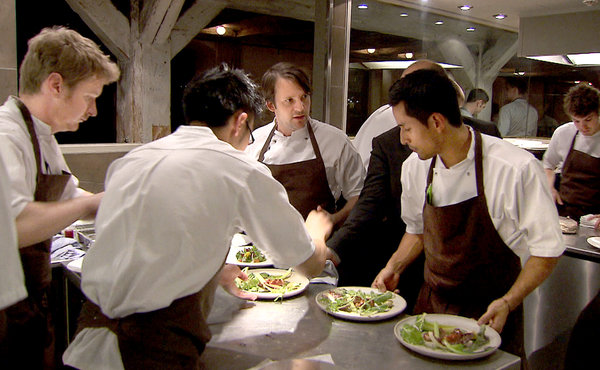
Three Stars tries to unpack what hides behind the Michelin phenomenon by following nine restaurateurs in seven countries. The narrative cannot avoid addressing the tragic death of Bernard Loiseau in 2003, widely reported as a consequence of his losing his third star, but the filmmaker looks beyond this to understand what makes the whole system thrive and why chefs all over the world play along with it. Some of chefs, although critical of the guide system, admit that the Michelin star has an impact on their future and fame, although it does not automatically mean a profitable business. Questions of logistics, labor and ingredient expenses emerge as urgent issues for the restaurant owners, who also discuss their own take on the Michelin system and their personal choices regarding it. René Redzepi from Denmark, considered one of the most innovative and interesting chefs in the world, evaluates his two stars and its impact, while French chef Olivier Roellinger explains why he closed his very successful restaurant after achieving his third star to open a hotel. Other questions are not addressed. For instance, why is there only one woman, the very talented and gentle Nadia Santini from Italy, among the protagonists of the movie?

Although Three Stars features many gorgeous shots of fantastic dishes, luscious produce and intriguing hand, Lutz Hachmeister does not embrace the use of food-porn aesthetics for the food porn’s sake. The guidebook system and the chefs that gain or are damaged by it, rather than the plates they prepare, remain the central elements of Hachmeister’s curious gaze. This approach makes the documentary very informative, especially for those who are curious about the glitzy world of exclusive restaurants, but are not too familiar with their inner workings.

Overall, the desire to reflect as many points of view as possible from very diverse chefs, across very distinctive establishments in very dissimilar culinary cultures, dilutes the documentary’s impact. Furthermore, in an attempt to focus the viewer’s attention on the main topic, Hachmeister also interviews Jean Luc Naret, the previous directeur général of the Michelin Guides. Since the filming, Naret has been replaced by Michael Ellis, a manager more closely connected to tire production, conceivably instructed to manage the increasing losses incurred by the books. This change at the helm of the Michelin guides may suggest a revision in the overall strategy of the company, and we wonder how the whole system will develop in the future.