Author

Anya

Browsing

by Seth Oelbaum


my tum’s neither full nor em. teddy’s tum?
that’s dumb. he has none. all white stuff, fluff. come
to me airplane peanuts, salty and saved.
mommy bayed when I kept them: it’s not k.
no, there’s dough in piggybank; not as much
since daddy went up, but we can eat buff
chickens still – it won’t kill. let’s bottle juice:
red, purple, orange juice. it won’t take a coup,
mommy can pick up at fat store. but… bore.
peanuts? more! they’re tiny, like crumbs on floor.

Seth Oelbaum is a poetry MFA student at the University of Notre Dame where he publishes the literature fashion zine Karlie Kloss. His publication credits include Red Lightbulbs and Stoked Journal.

by Lila Selim

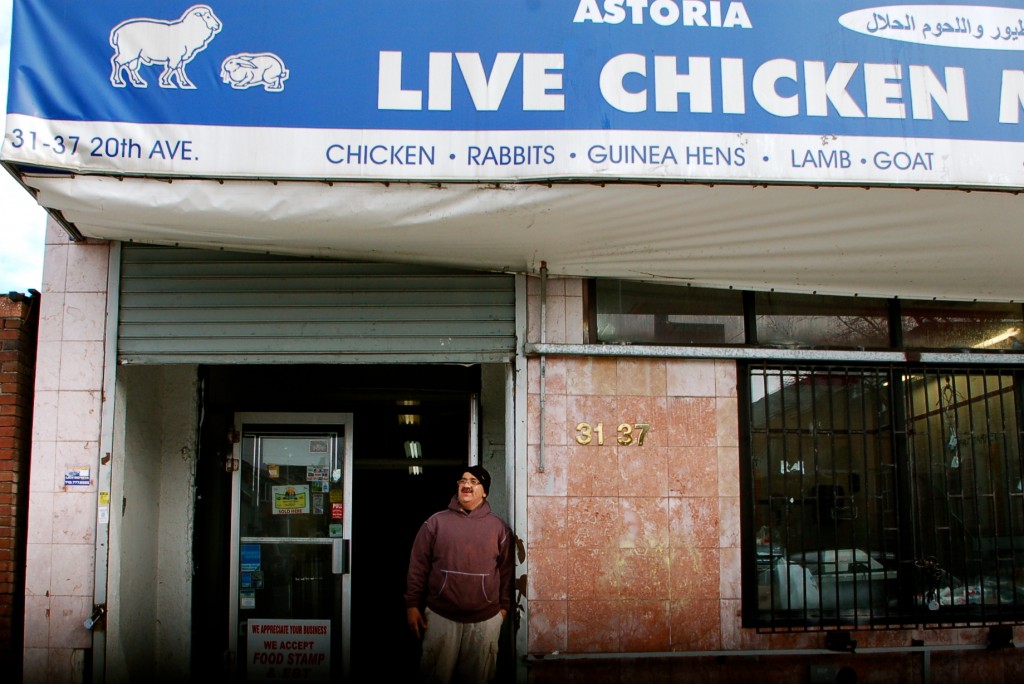
Astoria Live Poultry – Gamal Rahman’s shop – is housed in a small unremarkable industrial building lodged between blocks of row houses and an expansive Consolidated Edison power plant, a corner of Astoria that nobody would ever go to without being sent. To the right of Astoria Live’s front door is a very small and ordinary looking butcher shop – ordinary for Astoria, in that there are skinned lambs hanging from the ceiling. Directly ahead, however, is something absurd to see in New York City limits. A small warehouse is lined with chicken cages on every wall. Two or three chickens are in each large cage, organized by color: brown ones, white ones, black-and-white spotty ones. Then the ducks, Cornish hens, and turkeys, are each segregated accordingly. At the end of the chicken room is a door leading to a backyard where a herd of a few dozen sheep and goats stand calmly baaing and munching on grass. Behind them a few docile brown cows stand watch. The first time I visited Gamal’s shop and got the full tour, I remarked how sad it was to see them there so sweet and calm. He said, “Yes, I know what you mean. They’re nice animals. They are cute. But, they gotta go.”

Gamal: Age 55: Astoria, Queens: Owner of Astoria Live Poultry

I came here in 1978 with my father. I wanted to get out of Egypt, to find some opportunity. There wasn’t any opportunity there. I was 23. At home I studied to be an accountant, Accounting for Islamic Societies. Because we can’t charge interest, people have to find other ways to make money. What it amounts to is just that the price goes up if you need to finance something. So you buy a car, it costs $10,000 if you buy it cash. If you want to make payments, the price is $12,000 or $13,000. It’s not called interest; it’s just a higher price. Anyway, there’s a system for accounting and business according to the Shariah, and that’s what I studied at home, in Egypt.

So I came here to New York, and I went to school again, in Manhattan. I studied hotel management, and started working for a Kosher catering company, Ruben’s. They were a famous company at one point. They had 38 locations before they closed. I worked for them for 23 years. I became the head man. I was a big manager there. They were right next to the World Trade Center, and they catered for all the big businesses in the area. Then September 11th happened, and they closed. The owner got some money from the government, and he decided to retire.

At the time, there was no halal meat available in New York. Really, there was nothing. You see it all over the place now. Back then it was different. I wasn’t sure it would work. But I took a chance.

I didn’t know what to do. I was single at the time. My wife and I split up before that, and she took our two kids back to Egypt. There were teenagers already. I was staying with the owner of the catering company, my old boss, at his house upstate. I heard about this slaughterhouse in Astoria being available. For seventy years it was a Kosher slaughter house. It went out of business. I thought I would go into business with my old boss. We could buy it together. He already knows the customers for Kosher foods. He didn’t want to do it. He said “I’m retired now. I don’t want to do it. I’ll put up some money if you need it, and you can do halal meat.”  At the time, there was no halal meat available in New York. Really, there was nothing. You see it all over the place now. Back then it was different. I wasn’t sure it would work. But I took a chance.

At first, I didn’t like it. I used to wear a suit to work. I was in charge of so many people. I stayed clean all day. This is very different. The people who drive cabs here, they have a complex. They all want that too. They want to wear a suit, and sit at a desk, and be the manager of something. They don’t feel good about their work. I’m no different from them. But I’ve gotten over it now. I like my work. I own the business. I have six employees. But I still do the slaughtering myself. Because it’s halal, you have to say the prayer first. My employees are these Hispanic guys, and they don’t know the prayer. So I do that part. That’s part of why I like my job, because I’m saying the name of God so much all day, and it makes me feel good.  I learned how to do it from my father. He taught me how.

My employees are these Hispanic guys, and they don’t know the prayer. So I do that part. That’s part of why I like my job, because I’m saying the name of God so much all day…

When you’re with your parents, at home, they teach you how to do everything. They teach you how to clean your teeth, how to speak, how to eat. Everything. As parents, they want to see themselves in you. Families are so close. At home, I have everybody around me. I feel very safe. Not like here. Here nobody talks to their families. They live far away from each other. My son lives in Connecticut, and I don’t see him. It’s just me and my wife. In the morning, I come to Starbucks and eat some breakfast. I talk to a few people here, then I walk to work. That’s it.

Business is not so good right now. It’s ok. But not enough. I need to figure out bring in the American customers. I sell the meat directly to the people. Now I have the Bengalis, the Pakistanis, the Arabs, a few Hispanics, and very few Americans. American people need to be educated about what halal means. It’s practically organic, though we’re not certified for it yet. The animals are in Pennsylvania. The cows are 100% grass fed. The lambs are grass fed. They get no injections, no hormones, no antibiotics. I see them myself. Once a month I go to Pennsylvania to see them at the farmers. Then they’re shipped here, and I kill them with my own hands. I drain their blood myself. No machines. People would like this process if they knew about it. And people are curious to know about it. They just need to be educated about it and see. If I could get the Americans to come into my shop just once, and try a steak, they would become my customers. And then I would start to feel secure.

Then they’re shipped here, and I kill them with my own hands. I drain their blood myself. No machines. People would like this process if they knew about it.

Islam is growing in America though. You see there are so many mosques here. There are twelve mosques in Astoria. Three or four more in Woodside, and so on. I have the list. I call all of them before the holidays to see if they want to make an order. It wasn’t that way when I got here, even ten years ago. And there were even less in the 80’s. But we have a problem. Some people are interpreting the religion the wrong way. They’re taking it to an extreme. The religion itself is beautiful. Every religion is beautiful. I believe it. But it is beautiful, and peaceful: the discipline, the morals, the principles of it.

The mosques need to do a better job of showing people how to act.  I mean for the Muslims to see how to act, and for the Americans to see what Islam really looks like. There was a point, when I just got here. My wife and son were with me. He was very small at the time. And we were desperate. I couldn’t find a job. Things were very difficult. We didn’t have any food in the house. We went to a church, and they helped us. They gave us help. You should be able to go to the mosque and ask for help. It’s in the religion. Islam is supposed to be a community service. Some of them do this already, but they need to do it better, so people can see it. So they can see it’s about community service, and not violence. There’s no violence in Islam. The Koran doesn’t say to kill anybody. There’s no violence in any religion. It’s just these few people who interpret it badly.

I can’t convince you my steak is good. You need to try one to believe me. It’s the same thing. I can’t convince you that Islam is good. You need to see us acting well.

I was walking a while ago, outside of my shop. One of my neighbors was walking near me. He was singing a little bit. He’s been my neighbor at the shop for five, six years. He was singing “Free the chickens. Kill the Muslims. Free the chickens. Kill all the Muslims.”  I said “Hey man. Why are you saying this?  We’ve been good neighbors for so long.”  He started telling me about some people he knew who were soldiers who died in

Afghanistan. I told him “Hey. Islam isn’t violent. Take this book.”  I gave him a Koran. He stopped by a few days later and told me he’d read some of the book, and he understood I was right. He apologized. I think he was just drunk anyway. He didn’t mean it. I tried beer before. I tried pork too. I tried everything, because I’m curious. It’s not against religion to be curious.

But this guy drinks a lot. He’s lonely. When you feel lonely in your heart for so long, it’s difficult. You get frustrated. Some people say Islam is no good. But it’s just those few people, interpreting it wrong. Some people say America is no good. I can’t say that. I can say some politicians are no good, sure. But I’ve been successful here. I’m not going back to Egypt, ever. This is home now. My daughter lives in Egypt. But she’s coming here next year to be a pharmacist. My son finished business school. He got a job, and now he lives in Connecticut, and drives a BMW. My son is spoiled more than my daughter. Because she mostly grew up over there, and he was mostly here. This is a good country. The people who are born in it don’t realize, don’t appreciate it, like my son. I just thank God they’re ok. They’re not on drugs. They’re ok.

I visit Egypt a lot. I was going to go before these demonstrations. But I cancelled. I said “No way. No way I’m going now.”  The whole thing is stupid. There’s corruption everywhere. But they had peace. They had some stability. Now it’s chaos. And it’s not safe. It’s no good. My brothers had a business. They had to close because of the demonstrations. Twelve families worked at that business. Now they’re all out of work. For what?  Under Mubarak, at least people were safe. I’m staying here.

The last time I went back home, I brought back my new wife. This is my third marriage. My older brother said, “You should marry.”  You need somebody to cook for you, care for you. I said “I want to be left alone. I don’t want trouble.”  I see trouble, I go. I run away from it. I don’t want headaches. Life is too short. It’s not worth it. And I don’t like to be rushed by anybody. I stopped smoking, 90 days ago. I can’t have trouble.

Lila Selim is a writer of non-fiction, a reader and lover of fiction, and a politics junkie. She is Editor-in-Chief of 12th Street, a literary journal published by the New School’s Riggio Honors Program in Writing and Democracy. She is currently completing her Riggio thesis, a long form work of literary journalism about Muslim communities in Queens, her home turf.

Photos by Yolanda Suarez

Astoria Live Poultry 3137 20th Avenue, Long Island City, NY, (718) 777-7249


by Kathryn Tomajan

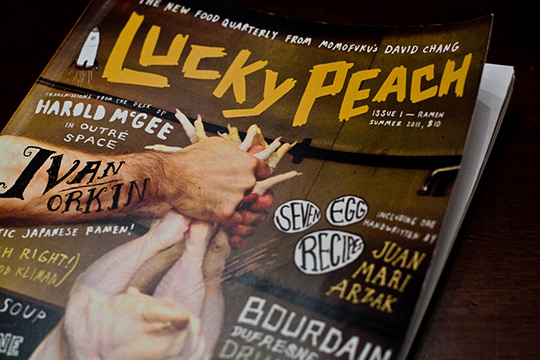
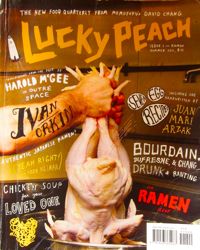
I find the magazine shoved into my mailbox, and the first thing I notice is the image on the back cover: a gorgeous, perfect bowl of ramen. While studying food culture in Italy, I received a gift subscription to Lucky Peach magazine, the latest project from celebrity chef and New York restauranteur David Chang. I’ve been in Italy for three months and my craving for spicy Asian food is off the charts. Looking at the photo is torturous.

Front Cover
Back Cover

I pass it around to some of my classmates –not unlike sex-deprived teenage boys might pass around a single copy of Hustler– and we all groan at the sight of noodles, nori and runny egg yolk. But the lust-inducing recipes and raw nudity on the cover (ok, maybe naked chickens don’t count) is where the porn comparisons end. It is a food magazine, but not like one you’ve seen before. This one’s from the cool kids, the bad boy of the culinary world, indie publishing darling McSweeney’s and star contributors like Anthony Bourdain, Harold McGee and Ruth Reichl.

At worst, Lucky Peach is a piece of pop culture created to stroke the egos of its narcissistic creators and encourage the god-like worship of chefs. At best, it’s a high-caliber literary work from creative food professionals doing cool things with their friends. Either way you look at it, the magazine is created in the image of its makers –unruly, testosterone-driven, egotistical, inventive and obsessive. And ultimately it’s the makers, not the food, on display in Lucky Peach.

In the era of dying print publications, Lucky Peach is a 175-page publication without a single ad. (Well, actually there are two ads: one for the Lucky Peach iPad app that is still in development, and one for a McSweeney’s cookbook.) Each quarterly issue will have a theme and the first is spot on with the hippest food trend: ramen.

Lucky Peach isn’t for your average food media audience who dog-ear recipes while making grocery lists. The magazine is written in an ultra-casual tone with a more than healthy dose of profanity, slang and restaurant jargon. Its target is hard-core foodies –the kind that go to underground supper clubs, already know that ramen is the new cupcake, and hate the term foodie.  At $10 a pop, it’s pricey. Readers get a physically superior magazine with heavy matte paper and exceptional design. Readers also get a glimpse into an exclusive culinary clique.

The opening article is a travelogue of Chang and fellow editor Peter Meehan’s ramen research trip to Japan. The 16-page spread documents the drunken ramen binge interspersed with noodle-praising expletives, the idol worship of Toyko’s master ramen chefs and two accounts of Chang vomiting from overindulgence.

In one of only two pieces by women, Ruth Reichl reports on her instant ramen taste test. In a maternal tone, Reichl insists on tossing the ramen packet. “Throw out the packaged soup mix. Trust me… This is not something you want to eat.”  Yet turn the page and naughty chef Chang uses that disgusting seasoning packet in a series of instant ramen recipes including potato chip dip and a riff on the Italian classic cacio e pepe.

cacio e pepe

This use of a lowbrow ingredient is not for the sake of irony. In another article, the ingredient-driven cuisine popularized by Alice Waters –who is not a formally trained chef– is lambasted in a rambling conversation on mediocrity between Chang, Bourdain and fellow New York chef Wylie Dufresne:


Wylie: Ingredient-driven food, what the fuck does that mean?

Anthony: Okay, it means taking three or four pretty good ingredients or very good ingredients or superb ingredients and doing as little as possible-

Wylie: It’s called cooking… That farm to table bullshit… Come on. There’s just too much of it.

Anthony: Farm to table is saying right up front that it is —to use the dreaded phrase— ingredient-driven rather than chef-creativity-driven or technique-driven. It’s saying that the most important thing is where it comes from, how it was grown, who grew it, and not what you do with it. It’s basically patting yourself on the back for being there.

Wylie: But that’s not cooking. We’re talking about cooking. We are cooks. We should have a responsibility to cook. The fact that we’re talking about ingredients rather than what people are doing with the ingredients is a mistake. Do something to it. That’s showing that you have skill.

Dufresne’s diatribe on farm-to-table cuisine justifies his existence. His conclusion that ingredients are secondary to the golden touch of a skilled cook secures he and his buddies’ position as the Creators in the food universe.

The recipes in Lucky Peach echo that attitude. Heavy on technique, they require a high level of kitchen skills and are probably not for the average home cook. For example, in the introduction to one recipe Chang writes:

This recipe is not for a final dish, or something I’d put on a menu, or something that’s been fully optimized for home cooking. What it is is a blueprint for making a tonkotsu-ish broth in a short period of time—it’s more about the principle than the technique. In this case, we use a pressure cooker to extract a ton of flavor out of the bones quickly, but pressure-cooking the stock for too long also clarifies it. So this is a hybrid method, cooked partially under pressure.

Readers are privy to the ramen broth recipe from Chang’s Michelin-starred restaurant Momofuku, a guide to fresh alkaline noodles, and approximately 20 ways to cook an egg with a full-spread chart to illustrate yolk texture.

We also find more classic food writing such as a regional guide to ramen in Japan, a review of “the best potato chips in the world” and an insightful article on authenticity.  And there’s some unusual elements for a food magazine –a work of fiction by Japanese novelist Jun’ichirō Tanizaki, illustrations by award-winning cartoonist Tony Millionaire, and full-page renderings of now-legendary ramen chefs reproduced from letterpress prints– quality art and literature by anyone’s standards. Even if we never attempt a single recipe printed in Lucky Peach, we must assume they’re works of art since they’re housed in the same gallery.

Ramen Gods

No doubt Lucky Peach is fuel for the food and food celebrity obsessed. In the first issue, ramen is fetishized but it’s also analyzed, deconstructed and re-imagined. It elevates food to art, chefs to artists, and cooking to a creative process. It doesn’t make the food or its creators more accessible to us, but maybe that’s the point. Not everyone can cook, but lucky for us there are some chefs in this world that can.

 Kathryn Tomajan is studying food culture at the University of Gastronomic Sciences in Pollenzo, Italy. She is also a co-founder of Eat Retreat, a creative workshop for leaders in the food community.

Clementine Paddleford was the first American journalist to take food seriously. In her legendary columns for the New York Herald Tribune and This Week Magazine, she pioneered a smart, sassy reporting style that managed to elevate food writing from the dull formulas of home economists to must-read material. Flying around the country, sometimes in a Piper Cub plane, which she herself piloted, she worked tirelessly to gather the best recipes from cooks in every region. That meant seeking out the best cheesecake in New York City, hunkering down in chili parlors in Texas, and touring salmon canneries in Alaska—and tasting everything she could find in between. It also meant that between 1948 and 1960, she traveled more than 800,000 miles in the pursuit of food—more than three times the distance from the earth to the moon. The marathon paid off: Paddleford’s weekly readership topped 12 million during the 1950s and 1960s. In 1953, Time magazine named her America’s “best-known food editor.” At the height of her career, Paddleford made a salary of $250,000—at the time an almost unheard of sum, especially for a woman. In 1960, Paddleford published How America Eats, a collection of 12 years of columns that became a seminal work. Many have regarded Paddleford as America’s first food journalist.
This panel revisits Paddleford’s contributions and discusses her legacy. Panelists include Kelly Alexander, former senior editor at Saveur and North Carolina-based author of the critically acclaimed biography Hometown Appetites: The Story of Clementine Paddleford, the Forgotten Food Writer Who Chronicled How America Ate (Gotham 2008); freelance journalist and author Betsy Wade, whose newspaper career began at the Herald Tribune, where she worked in Women’s News with Clementine Paddleford; former restaurant columnist at Gourmet magazine, Colman Andrews, who was the co-founder and editor-in-chief of Saveur; and Molly O’Neill, journalist and author of three award-winning cookbooks, a memoir, Mostly True, and editor the Library of America’s anthology American Food Writing. Moderated by Andrew F. Smith, faculty at The New School’s Food Studies Program

Tabled 

I laid a beautiful spread on glass
succulent olives—purple, green, and black,
crusty French bread and raspberries,
smoked mozzarella and fine red wine.

Hours into the night, candles low
and still no passionate touch,
I asked - You still hungry?

He hugged me goodbye
backpack in hand—
A kiss would have sufficed.

I’m beginning to doubt my power.
I've played this game to its logical conclusion                                                  
Yet no logic exists.

Wine does nothing to warm my ego.
Tears crowd the spot that's marked
"Do Not Pass Go."

We’ll meet again soon, he said.

Softly, stomach rumbling
                      I closed the door.

Marking Time

Three months
Pass us by
         Then crash!

I tap your shoulder

Mussels and mango salsa, pastries
delicious in my street fair mouth

Your eyes meet my
polished purple toes.
They dazzle and tempt.

Let’s meet for a drink next month
when I’m finished with my obligations…

Again, no action
                 after all this exposition.


Liz Axelrod is a graduate of the Riggio Honors Program: Writing and Democracy at The New School and is now studying for her MFA with a concentration in Poetry. She is now a Poetry Reader for LIT Magazine. Liz has been making the rounds of the NYC Poetry Circuit for close to a decade.

by Valeria Necchio

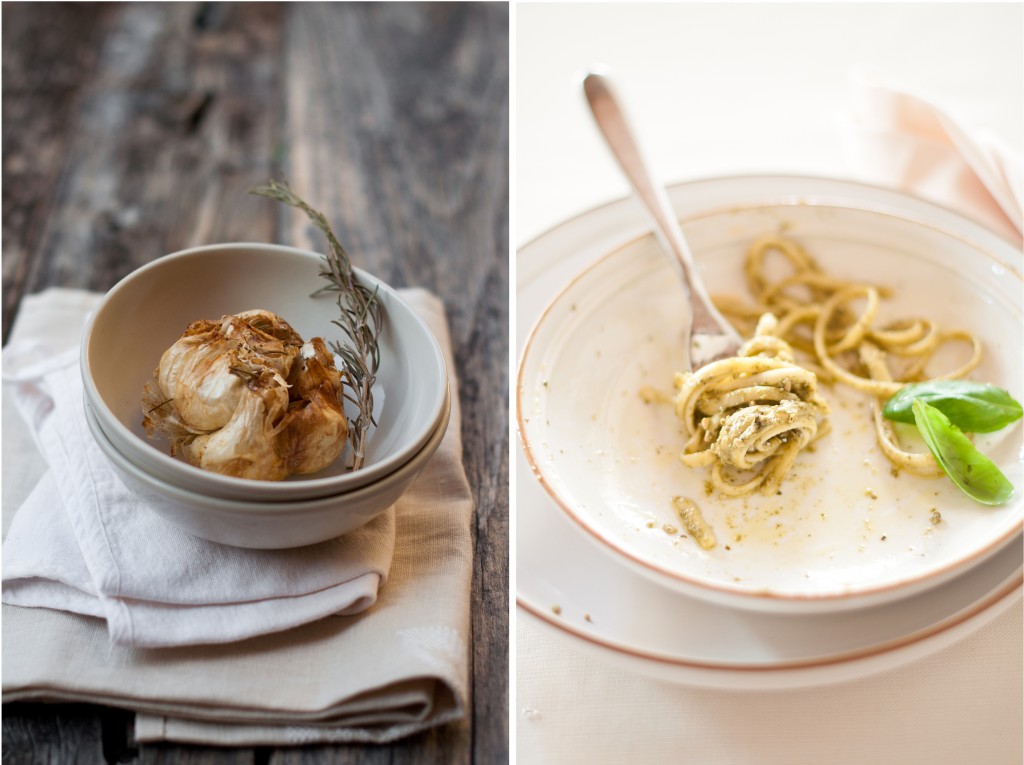
I am attracted and intrigued by food from many points of view. The esthetic side of it, though, is the one that has always interested me the most. In my pictures food can be both alone or in a context, but it will never be just food.

Valeria Necchio graduated from the Unviersity of Gastronomic Sciences with a master’s degree and immediately took off on a path connecting her passions of good food and photography. A true Italian, she likes to spend time at the weekly market, in the kitchen and behind the camera.

by Ben Goldfarb

Here in the US, we like our meat cut from a flank, belly, or shoulder, or we don’t like it at all. Eating an animal’s every esoteric body part is considered uncouth, and perhaps a sign of social deviance – would you let a person who eats brains babysit your child? Elsewhere in the world, however, such industriousness is of course de rigueur.

During the year that I lived and worked in Bangkok, I stuck mostly to standard street fare – som tam, noodle soup, and pad siew all featured prominently in my diet – but I also sampled more exotic anatomy: fish bladder soup and fried pig intestine were pungent highlights. My most memorable epicurean adventure, though, came in Phuket, in the company of chicken feet stew and a Thai woman named Take.

Take and I were teachers at the same private school; she was a stout, jeering person whose English always seemed to be most fluent when she was using it to direct cruel jibes at our students. We co-taught a single, dysfunctional class together, and constantly engaged in passive-aggressive skirmishes to determine which of us could get away with doing the least work. Neither of us had much respect for the other’s teaching abilities, which stood to reason, since we were both bad teachers.

Despite our differences, however, Take extended an olive branch over our New Year’s vacation and offered to accompany me to Phuket. Her aunt owned a seafood restaurant there – we could eat for free, Take assured me, and the food would be terrific. Sure enough, the night we arrived in the city, her aunt served us calamari rings wide enough to bracelet my bicep and a flakey, unidentifiable whole fish with teeth like syringes. It was an extraordinary meal, but Take assured me the best was yet to come. “Tomorrow,” she said, “we eat something very, very good.”

The next day – New Year’s Eve – Take and I drove her motorcycle out to a nearby suburb. More accurately, she drove, with the grim abandon of a person who has come to grips with the prospect of dying in a fiery motorbike crash. I clung to the back of the bike like a gargoyle, a pale blue HelloKitty helmet athwart my noggin, mentally composing a last will and testament. The day was hot; the ride, dusty. Occasionally we’d round a bend and catch a glimpse of the ocean, and a thirst would scrape at my throat – and then Take would lean into the next curve so hard that I could feel the G-forces compressing my vitals, and the ocean would disappear.

At last we came to a tiny roadside stall decked out with plastic furniture and a green awning. Take swung from the bike and spoke rapidly to the withered proprietor, who promptly busied himself with some silver vats and ladles and other, more obscure equipment. I collapsed into a chair that bowed under my weight and de-dusted myself.

Moments later, chicken feet stew arrived before me, steaming.

The presentation of the stew was impressive, in the gleaming and terrible way that, say, a cache of machine guns is impressive. There was no getting around it: the stew looked frightening. My bowl brimmed with fierce, denticled talons that seemed still capable of scratching out the eyes of an incautious farmer. I fully expected a claw to spring to life, clutch me by the wrist, and plea that I spare it the acidic rigors of my digestive tract.

“Come on, guy,” Take scoffed. “Come on, guy” was Take’s favorite reproachful phrase whenever I was being particularly obtuse in the classroom, such as when I failed to understand that telling our students they were ugly was actually good pedagogy. She must have seen the trepidation in my face, because she said, “You scared? You eat.”

I resolved not to show Take any signs of weakness, and I looked for a point of entry into the stew. But a conundrum faced me: how to eat the feet? The feet were essentially skeins of rubber stretched over a lattice of fine, inedible bones – tarsals and metacarpals and phalanxes that seemed expressly designed to choke diners. I began meticulously removing shreds of plasticine skin from the tiny bones, no doubt expending more calories in surgery than I stood to gain in consumption. It was a task for scalpel and forceps – even knife and fork would have been inadequate – yet I undertook the operation armed with only a plastic ladle and a set of wooden chopsticks. I might as well have tried to defuse a bomb with a hammer and chisel.

Five laborious minutes later, I’d picked pebbled skin fragments from only two toes. The cairn of bones teetering on my plate was an unjustly miniscule monument to my tenacity.

My struggles seemed to arouse a complex oleo of emotions within Take – amusement, amazement, and embarrassment all vied for the attention of her features. Finally she took pity on me. “You doing it wrong,” she sighed. “Like this.” She picked a foot from her bowl and sucked hard at one of the claws, then pulled it from her mouth with a dramatic flourish. The bone was clean. Take tossed the skinned foot aside. She grinned, and I was reminded of a velociraptor. “It’s so easy… why you can’t do it?” She pushed back from the table to fix me with her flat, exasperated gaze.

“I’ll try,” I said, duly shamed.

The chicken feet, it turned out, were less than scrumptious even after I’d been shown the proper method. They were rubbery, of course, and flavorless. The myriad bones, I learned, weren’t big enough to choke me, but still felt damned unpleasant rattling down my esophagus.

What’s more, the dish came packed with lueh: suspicious cubes, the color of charcoal and the texture of tofu, bobbing within the stew like fleshy icebergs. The iceberg analogy didn’t end there, either, because lueh, which crops up in many Thai soups and stews, is as likely to scuttle the appetite of an unsuspecting eater as a submerged glacial mass is to sink a tanker. Lueh’s composition is as unsavory as its appearance: the gray blocks in my stew were congealed pig’s blood.

I’d only tried lueh once, but that lone sample was enough to convince me that I never needed to try it again. I can’t come up with a more suitable adjective than rancid. Still, I wondered at the time, and still do wonder, how much of my revulsion had psychosomatic origins. There was something about the phrase “congealed pig blood” – couple it with the word “gelatinous” to maximize nausea – that gave me the willies. Objectively, I understood that eating blood was neither more nor less foul than eating any other part of an animal’s body. In fact, one could argue that eating blood is more natural than consuming the mystery meats found on western menus: every fool knows what blood looks like, but could anyone besides a meat packer identify the bacon on a dead pig?

Nonetheless, rationality lost out to whatever cultural proscription forbids blood from the American diet. I could never stomach a single lueh blob during my time in Thailand – even the sight of one wobbling on a soup spoon was enough to dampen my appetite. Indeed, though my Thai never progressed beyond the level of “flailing tourist,” there were two words I never failed to pronounce impeccably: Mai lueh. Hold the blood.

Avoiding the blood cubes, I finished my soup, and rendered my chicken feet into a heap of clean, yellowed bones. “You like it?” Take demanded, peering across the table at my face. The afternoon was turning orange, and Take’s motorcycle, parked in front of the stall, cast elaborate shadows that lapped at our feet. Roosters pecked at the side of the road, methodical as oil derricks.

“It was very interesting,” I said, and I meant it.

Take clucked and waved a dismissive hand at me. “This place is the best, and you no like,” she said in disbelief. You philistine. She sucked thoughtfully on a claw and stared out at the motes of dust that hung between us and the red sun. I poked at my uneaten lueh 

We paid for our stew and remounted, cruised down from the suburbs and back into the city. Plastic bags kicked up in our wake and tumbled behind us. Shirtless, sunburnt white men wandered out of pizza joints that substituted ketchup for tomato sauce. The sun touched the ocean. It was New Year’s Eve in Phuket.

Ben Goldfarb is a Master’s student at the Yale School of Forestry and Environmental Studies. He is also a freelance writer who frequently contributes articles on environmental topics to a number of publications, both within Yale and elsewhere.

Although food from Mexico, Brazil, and other Latin American countries has become a staple of the New York diet, Latino chefs often do not receive the same public recognition and critical accolades as those from other cultures. Their culinary traditions are frequently conflated and confused, and many consumers are still reluctant to pay a fair price for dishes that require expensive ingredients and extraordinary skills. What does it mean for Latino chefs to become successful in a competitive restaurant market like New York City? What structural and cultural obstacles do they face? What is the future for Latino labor in food service?

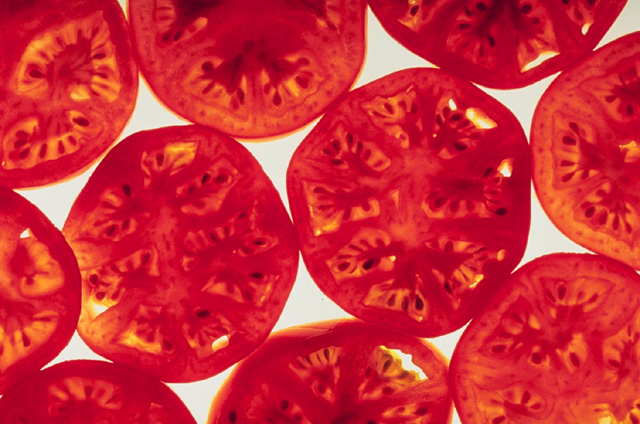
I watch my father slice into a ripe, plump tomato engorged with juice and pulp. The innards of the fruit, a slush of orange red seeds and jelly like fluid, seep onto the cutting board and between his large fingers.  His hands massage the medallions of venison, loosen the meat to better absorb flavors of brine or marinade.  He presses his knuckles into the malleable protein, his flesh glossy in the bright lights above him in our kitchen as he works the heels of his palms into the marbled fat and tendon then rubs it with a thin layer of pepper and salt.  The exertion makes the vessels on his forearms bulge and twitch.  I watch the way his face changes, kneading the seasoning into the mutton, his concentration focused on the motion of his fingers and precision of preparation.

My father’s fingers curl over curved surfaces.  His large palms and length of his fingers work with machine-like precision, tying tiny but secure knots with thin twine to hold a leg of lamb together, stuffed with herb butter and breadcrumbs.  The rapid pulse of his steel blade carves and minces whole vegetables into piles of petite, colorful shapes.  His two hands seem to multiply, performing multiple tasks at once: chopping, scoring, arranging, molding, and crafting, a metamorphosis of dexterity.  He neither rushes nor lags; patient in a meticulous way that knows no flaws.  His face undulates into curves of concentration as he moves the knife in quick strokes

~

The ledge of the viewing window only reaches my nose.  I learn the odd mini-knife he holds like a pencil between his gloved fingers is called a scalpel.

“Are you sure your daddy doesn’t mind you watching?”  A passing nurse voicing concern appears in the reflection of the window behind me.  I shake my head no and tell her I’ve watched before so she disappears into the hallways and returns with a plastic chair.  Waving her away from helping me, I climb on top and peer into the operating room where my father is working.  He creates an invisible line with his index finger guiding the slight blade across the surface of flesh, drawing the path of the incision towards him.  I can hear my mother in my head: “Never cut towards yourself, Halle, always away.”  The line of crimson is piercing in the O.R. light, widening until two halves of skin give way into a gaping cavity.

~

Knife and scalpel: my father prepares dinner the same way he works in the operating room, does not grip the knife with impatient fingers but holds the black handle as if he is holding my hand, gentle but firm.  The blade slides through the supple flesh of the tomato with a clean-cut edge, sharp and unwavering.  His technique lets him cleave and sever with a rhythm that picks up speed as the tomato transforms into little pieces. He shovels the soppy pile of fruit into a nearby pot, his hand ladle-like, and then swipes the cutting board with his palm to add to the rest of the mixture.  He never wastes anything.  Each component has a purpose.

Cooking dinner is a daylong routine for my father.  Before we leave for the hospital on weekend mornings he prepares his mise en place, makes sure the meat is marinating well in a glass dish, chops herbs, dices and juliennes vegetables and places them in small metal bowls like edible confetti.  The refrigerator is stuffed with the various components of dinner not yet prepared.

~

There are utensils and trays, bowls, containers of stainless steel, plastic, rubber, liquids, bottles, sharp instruments to sever, manipulate, cut, hack, and slice.  My father deconstructs and reconstructs, recreating something he can call his own.  The rooms are immaculate, then dirtied, spattered, smeared.  Every necessity has a place where he can find it, all at his fingertips.  Nurses hand him what he asks for with an extended palm.   In the kitchen, I fetch what he needs but pretend to be one of his assistants in surgery.  I imagine I am gowned and masked, careful with the supplies, handing them over placed lengthwise in my palms like a platter.  He requests a peeler and I hand him forceps.  He asks for a dishcloth I bestow him with a surgical sponge.  He wants balsamic vinegar I give him saline.  “Yes doctor.  Here is your instrument Dr. Murcek.”

The lights illuminate solid instruments against supple organs, meat, and flesh, glistening and slick in water, blood, oil, and sweat.  My father’s hands have a constant gloss.

“No room for error in medicine.”  My father’s father told him, a surgeon in World War II.

“No such thing as error in cooking,” is my father’s credo in the kitchen.

~

I press my small hands against the glass that separates me from the sterile space.  Bodies dressed in identical mint uniforms skew the panorama of the room and I cannot find my father, camouflaged within waves of green cloth, lost amongst the masked faces and blur of movements under the white hot light.  Finally, I find him perched over a mass covered by a sterile blue sheet.  A daughter knows the presence of her father even when he is in uniform:  the way his forehead is void of lines even though he is concentrating for precision, movements rhythmic.  He reaches up to adjust the thick surgical glasses that protect his eyes, then does the same to a headband situated over his surgical cap attached with a small light at the center of his forehead like a miner.  His hands disappear into unknown territory only to be extracted for a different tool.  Swift and precise, but patient, he molds, scrapes, severs and rebuilds.  The vibrancy of red that coated his rubber gloves when he withdraws them from inside the body, throbs.  Red beats life into the body.

He does not move from his position over the operating table and the arches of my feet ache.  My father stands for ten hours at a time during his surgeries.  He holds out a latex hand again, fingers dipped red, and another gloved one passes him a metal plate with rounded edges. Are his feet sore like mine?  Bodies pivot away to reveal my father pulling something floppy and thick, porous, the color of ripe melon on one side, splotched maroon on the other.  He stretches and folds back this slab of flesh over and over, replacing it as if making adjustments on the covered mass.

The table jostles as a green anonymous body exposes a section of the mass covered earlier.  This thing is human; eyes taped shut like a damaged mannequin.  What appears to be half of a nose sits above lips parted with tubes.  There is another flap of skin, I now see, is the patient’s right cheek.  My father adjusts the section of skin and muscle over the metal plate now secured to the patient’s face like a robot.  Half of it has been sliced away.  I reach up to my own cheek.  Pat and poke it.  My stomach squeezes into my throat like toothpaste in a tube.

The deconstructed face sticks fast in my memory.  The viewing window is not a TV screen. I can’t push a button to make the image go away.  It will be the last surgery of my father’s I will watch.

~

I bite into the leftover slices of red tomato, knowing the pieces are too large to fit into my mouth whole.  But I slide the wedges in anyway like quarters into a slot machine, struggle with chewing the mushy, pulpous fruit.  A small soft mass of the tomato’s guts escapes between my lips and past the corners of my mouth, down the side of my jaw.  I let the liquid sit on the precipice of my chin, deciding at the last second whether or not to let it drip into unknown territory.  It reminds me of what I do with an open wound.  The blood swelling from a pinprick into a small nodule of red until it leaks down either side of my elbow or knee, arm or leg or finger.  I like to watch it accumulate, amazed at how the body thrives, that a substance can escape from the inside out.  I have no control.


Halle Murcek currently writes for online news media magazine, Tripped Media and attends The New School as a graduate student in the creative writing MFA program with a concentration in fiction.  Halle currently lives in New York City.