Author

Anya

Browsing

by Diana Zahuranec

Pie is more than just a dessert in Waitress. In this 2007 film directed by Adrienne Shelly, Keri Russell stars as Jenna, the waitress of the title and a pie-making genius. For all the parts pie plays, it might as well be a main character. It’s a symbol of traditional American culture, a mediator of power, and a catalyst of action.

Jenna is trapped in an abusive marriage with Earl (Jeremy Sisto) and waitresses at Joe’s Pie Diner in a southern American small town. Spoiler alert The film follows Jenna through her struggle with an unwanted pregnancy, an unhappy marriage, an affair with her physician Dr. Pomatter (Nathan Fillion), and finally the beginning of a new chapter in her life. Pie is a sweet presence in Jenna’s journey from Scene One to the end.

The beginning shots of Waitressroll with close-ups of sweet batter poured into a pan, apple slices tossed with bare

Theatrical release poster for Waitress

hands, molten chocolate poured over a pie crust, and glossy cherries tumbling into a pie pan. Sinful delectable pies are pulled hot from the oven, and the “food porn” obsession that modern cooking shows have come to love is complete. All the elements are there: the imagined tactile sensation of tossing chocolate chips, and skipping the less exciting steps, like making the crust, and passing right from placing the pie in the oven to the steaming finished pie. The shots make one’s mouth water, and also put “main character” pie into immediate center-stage.

Anyone who has sunken a fork into a steaming hot pie knows what a treat it is. Likewise, every American knows that pie is a traditional American symbol: Thanksgiving, the Fourth of July, fresh berry pies in the summer, and spicy pumpkin pies in the fall, pie is delicious and nostalgic all in one bite.

The tiny slice of Jenna’s past that the viewer sees is linked to pie. The first time she dares to take her lover home, she tells Dr. Pomatter in her kitchen, “Mama used to call this Lonely Chicago Pie. She made 100s of pies. They all had strange names like Car Radio Pie, or Jenna’s First Kiss Pie.” Nostalgia and tradition, connected to a golden past, are contained in her pies.

Sweet, unassuming pie is also strongly linked to power and control. In her home life, Jenna has little power over anything. Rude and controlling Earl, her husband, smothers her with cries for loving attention that Jenna cannot reciprocate. He abuses her emotionally and physically. It doesn’t take a great imagination for the Dixie Chicks’ “Goodbye Earl” to start playing in your head. She hardly has a personality because Earl is too obtuse to recognize any vestige of an individual. But back in the pie diner, Jenna is recognized as a masterful baker with a kind and sensible personality. She chats with her friends; she shows a bit of fiery personality to her boss; she earns money; even the curmudgeonly owner “Old” Joe (Andy Griffith) loves her pies. Together with the other waitresses (also unhappy at home), Dawn and Becky, Jenna has creates a home-away-from home.

The control that Jenna actually can exercise is, of course, through pie-making. She creates new pie recipes as an emotional and creative outlet, imagining one to fit every situation in life. Bad Baby Quiche is invented when Jenna feels particularly hostile about having a child; Fallin’ in Love Pie is created with Dr. Pomatter in mind; Magic Love Pie for Dawn to take with her on a blind date; Earl Murders Me Because I’m Having an Affair Pie: you smash blackberries and raspberries into a chocolate crust; and Baby Screaming its Head off in the Middle of the Night and Ruining My Life Pie: New York style cheesecake, brandy brushed, with pecans and nutmeg.

The fact that Joe appreciates her pies is quite a testament to Jenna’s engaging nature and pie genius; everyone else avoids him. “This is my pie diner. I own it,” he states without preamble. “And I think it’s warm in here. They keep all my businesses too warm on the inside. My gas station, my supermarket, my laundromat.”  The all-powerful pie lets Jenna assert her own worthiness to Joe, even though she is of a lower class than him. She says, “I don’t believe for one second you’re as mean as you play,” calming his temper with a slice of pie he can’t refuse. Later in the film a friendship blossoms when Joe says Jenna’s Strawberry Oasis Pie “could solve all of [his] problems in the world.” Joe gives Jenna advice, talks to her, and dances with her at her friend’s wedding (in the diner). This friendship is key to Jenna’s actualization in the end of the film: Ultimately, Joe is her enabler to begin a new life by bequeathing her a small fortune upon his death.

With Joe’s money, Jenna buys her freedom. No longer monetarily dependent on Earl, she leaves him on the spot. Earl reacts more like a baby than the newborn. Even though Jenna has enough money to move away from the very town, she buys Joe’s Pie Diner and continues to work as a waitress and bakes pies. It’s a subtle triumph, at first, a bit like Jenna herself – never presuming, never out loud. But you see it in the transformation of what is now called Lulu’s Diner, after her daughter: in the bold, bright colors splashed on the walls, and in the lace-edged uniforms, dresses plucked straight off a doll. In the scene before Jenna and her daughter skip Hollywood-style into the sunset, she is holding her daughter, baking a pie at home, humming and smiling – happily.

Jenna’s transformation from downtrodden wife, dallying waitress to independent woman is helped, catalyzed, and symbolized through pie.

Diana Zahuranec is earning her Master’s degree in Food Culture and Communications at the University of Gastronomic Sciences in Piemonte, Italy, by eating, drinking, traveling and studying about food in all of its aspects. She’ll be graduating in May 2012.
by Jennifer Baily

I felt my sister clutch my hand and I looked over at her.  The huge toothy smile showed me she was nervous. We were sitting alone in a dark dusty living room- the house was alive with sounds of people bustling and talking about, but we were alone. We were perched on a mustard coloured couch with a coffee table in front of us, on it a vase filled with plastic carnations and roses. A bookcase nearby was covered in family photographs, fabric bound books and more plastic flowers. It seemed to me like any house, in any town. The most unique feature was the view. Through the window I saw a sloping hill leading down into a river. The bank was covered in shrubbery, trees and sporadic smooth round rocks. Over the other side of the river was sand, a light orange that seemed a vast contrast to the lush greenery below.

We were sitting above the Nile in Aswan, Egypt in the home of my uncle’s neighbours. As I stared out, an Egyptian river boat, a felucca, meandered slowly but with expert precision through the swirling and shallow waters, the sailor leaning back on the sail appearing to sleep at the wheel. My uncle has lived in Egypt for over 30 years and this was my sister and I’s first visit. My uncle is an antisocial man and had never taken up the invitations of the neighbouring family to visit their home for dinner. So my sister and I decided to accept, dining with the neighbours as my uncle napped the early evening away on his roof top.

As the sun set, the women of this household stood in the kitchen, whilst my sister and I waited in the living room. I could hear them chattering through the mud brick walls. I wanted to help, but we were guests and our place was to relax alone until called. I inhaled smells wafting from the kitchen- not the spicy heady scent you might imagine: it was warm and savory. I pictured pots of broth with chunks of meat and potatoes, and then through the air came the tang of just-cut red onions followed by hints of cumin and cardamom.

A teenage girl entered and grabbed our hands- “Come,” she said.  She introduced herself as Fatima. Our lack of Arabic made communication difficult, but Fatima’s high school English class had come in handy, and she became a translator of sorts for evening.

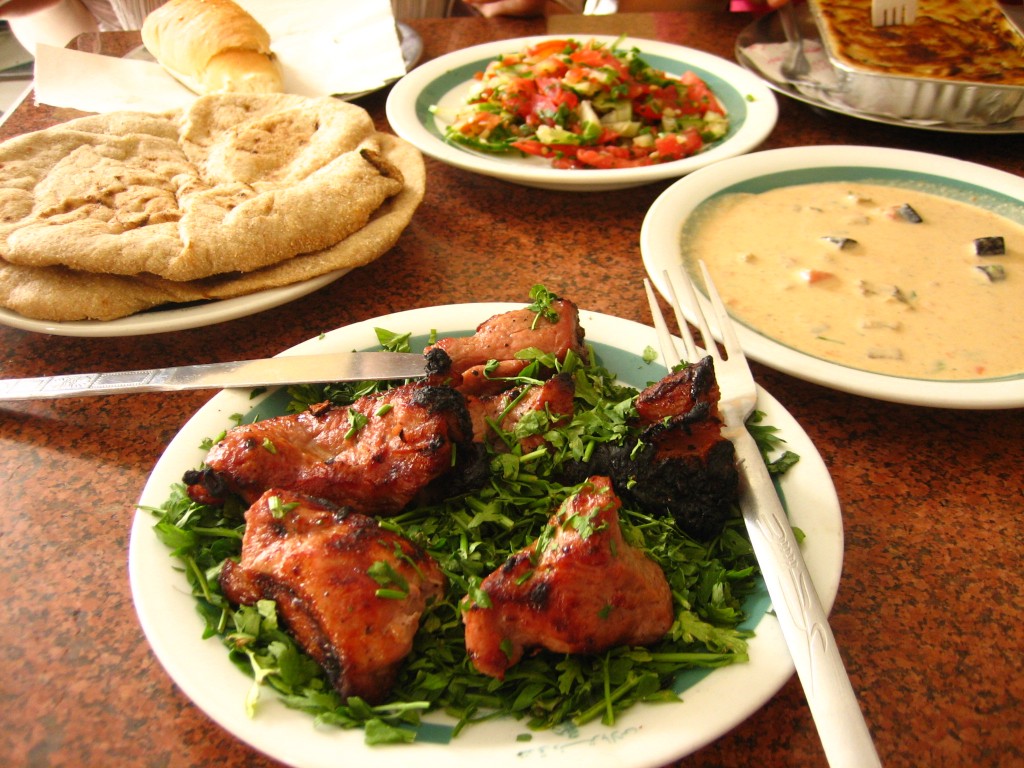
On the table was a dark meat curry, cucumber and feta salad, red onion and tomato, pita bread, baked minced beef slice and Koushari, a dish of rice, lentils, and chickpeas, an Egyptian family staple. The family sat and smiled at us; the celebrities of the party had appeared. Fatima relayed questions back and forth: were we married? Why weren’t we? Was it hard to find a husband in Australia? We laughed, similar questions were asked at our own family dinners by our female relatives.

We sat laughing and eating, the women filling our plates when they began to empty. Everyone smiling, watching us eat. Conversation was secondary. The focus was ensuring that we were being well fed. Any time we paused to speak they gestured, as if to say ‘More! Have more!’

We with our bellies full, having learned barely anything of the family who had just fed us, yet feeling cared for and satisfied.  There was no pretension, no facades or attempts to impress. There was simply food shared and food given. Which in this case spoke louder than words.

Jennifer Baily is a lover of food and writing and combining the two whenever possible.

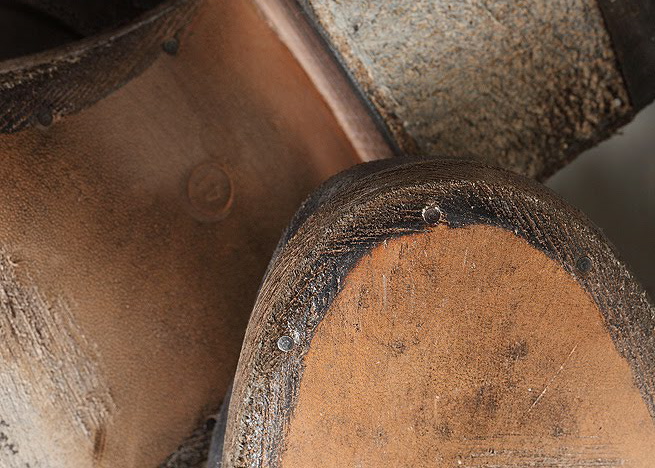
When I was a young girl in Alaska I ate shoes. Come spring the snow began to melt in our backyard. Things that had been missing since October when it first snowed suddenly reappeared. We found all kinds of footwear: slippers, tennis shoes, going out shoes and boots. My father believed that almost anything could and should be eaten. The boots were both a necessity and a delicacy. My father soaked the boots in the bathtub, and then scrubbed the soles with a wire brush. In a big pot on the stove he boiled them until they softened, and then he cut the leather with an extra sharp pair of scissors, used only for this purpose. Next he sautéed the strips in oil, garlic and onions, and then salted and peppered them. The plate of boot strips was the centerpiece to our dining room table. It was the sign that spring had finally arrived. I would have rather eaten flowers, but I knew I had to eat at least one piece of boot. It tasted just like moose meat.


Lori Lynn Turner received her MFA from The New School. She is a student advisor for The Feminist Writers Organization, and an administrator/program planner at the School of Writing, The New School. She is working on a non-fiction book titled It’s In the House.

by Leah Iannone

there are times, when
disappointment about a mango’s innards
causes you to think about
an even sweeter kind of dinner
tiny sugar shapes, sprinkles for instance
not the not-sweet pink meat that is having its moment

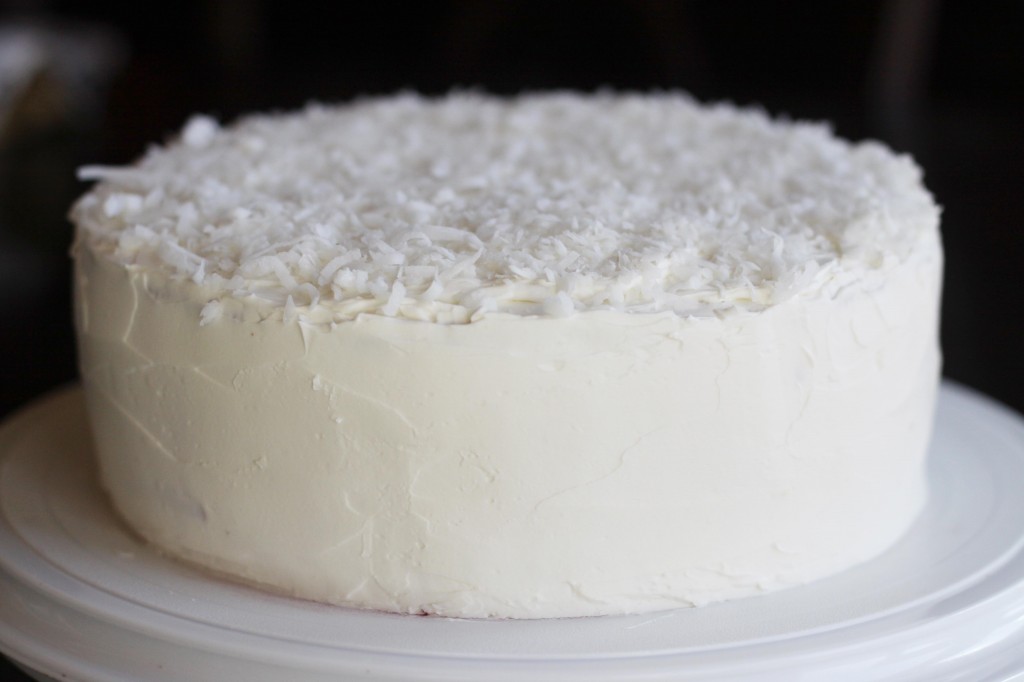
I want to be the girl who keeps cakes in her fridge
not cracked pepper crackers in her cabinet
cakes look good in my fridge—fancy
and girly and white

there’s a cake in my house, a cake in my house
a cake a cake a cake in my house
!
but oh, that confection is a nag

Let’s stand in that healthy perimeter of the grocery
while everyone’s breathing on the cheese
and talk about carrots
and how they’re overrated
because we all know they are
so let’s just declare it a truth,
and beauty

I’d like to think I have more
produce reaction time than most
so that when the discussion
of carrots comes up,
as it always does
I can prepare a passionate argument
and stand firmly behind stalks of celery


Leah Iannone lives in Brooklyn, NY and loves it despite it being a borough. Her work has appeared in Newsweek, 12th Street, The Best American Poetry blog, Alimentum, Redheaded Stepchild, PAX Americana, Barrow Street, and Psychic Meatloaf. Her first book of poems, Fantasies May Vary, is currently trying to find a proper home.

by Lindsay Vietor

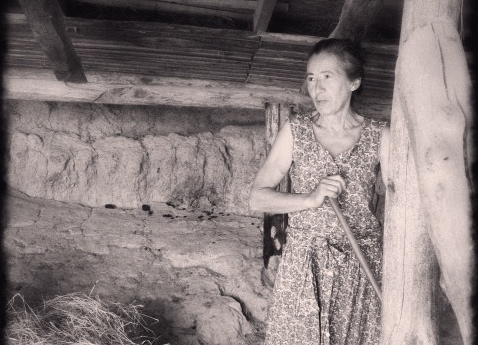
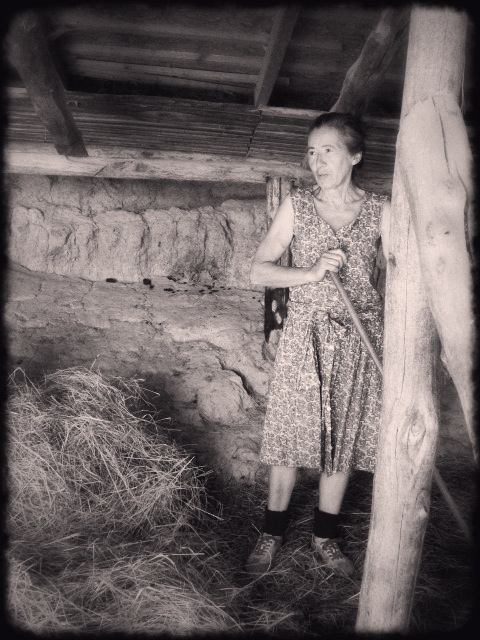
Close your eyes. Imagine Max from Where the Wild Things Are. Now imagine that instead of a little boy, he is a beautifully ragged Hungarian woman, with a long gray braid, dressed comfortably in a flowered sheath, thick wool socks, and blue suede sneakers. An outfit you could almost expect to see on an ironic hipster, cat-walking down Bedford Avenue in Brooklyn. There she is, swinging on trees and howling with the beasts. Only the beasts aren’t the Wild Things, they are a herd of goats, a lame deer named Bergamot, and an enormous but very shy horse. And she never goes back to the real world like Max. She stays. This is her home and these animals are her family. We call her The Goat Lady.

We are in the Tokay region of Hungary, a little farther north of the vineyards that draw most foreign visitors. It is an intense Indian summer and the grasses along the endless stretch of road are slightly singed from the brutal heat. As we slowly wind up into the cooler hillside, under the speckled shadows of the trees, her farm comes into view.

She greets us with a warm smile and mischievous eyes, perhaps a little jarred to see so many people at her place. She takes us out in the field to meet the goats who are with their tender, a mentally disabled Roma man. He has worked for her close to seven years. The two seldom talk but she expresses to us her comfort in seeing him morning after morning.

Photograph by Lindsay Vietor

Afterward, we head back to the stable, goats in tow, and meet them more personally. They all have their own names. She helps remember who is who by using the same first letter for all goats born in a season.

The reason for our visit was to taste her goat cheese. It is not a traditional product in Hungary, where, as one resident commented, cheese is, “either round, white and tasteless or the processed stuff.” This makes her one of the few artisanal producers and perhaps the sole one in the region. The only reason she even has goats is because, years ago, some man who could not pay a debt, dropped a few off with her brother as a settlement. Her brother didn’t last on the farm. He left, and she stayed behind with her growing goat family. She is remarkably tender and caring with them. She’s spent many nights asleep outside in the stable with the herd, especially when new young goats arrive in colder seasons, and she fears they will freeze at night. She slept with Bergamot the deer as well, when she found him as a foal, wounded in a field. He stayed in her bed until he was well enough, and now, despite being back in the wild, he swings by the farm everyday for lunch.

After a quick milking demonstration, she brings us around to the back of the house. We sit down on wobbly benches, green and damp with age. Behind us is the well, her only water source. She pops into the house and returns with a tin tray scattered with a bunch of sticky muscat grapes, picked from a neighboring vineyard, green peppers the size of a baby’s fist, fresh mint, and some walnuts. Everything but the grapes comes from her own plot of land. Wadded up in plastic wrap among the accoutrements is some of her goat cheese.

She made it three days ago for herself. In fact, most of the cheese The Goat Lady makes, she eats. The little that remains is aged into half dollar size rounds that dry up to the point of seeming petrified, and are then sold to eager chefs in Budapest who keep encouraging her to make more. She begins spreading the cheese on bits of green pepper and passes them around. A far cry from the cylindrical logs of goat cheese that languish in the vacuum-packed graveyard at the supermarket; her cheese, like her goats, gains its strength from its ability to breath.

Quickly running out of pepper, she realizes she has no other vehicle on which to serve the cheese. “Hold out your fists,” she says and spreads the cool cheese onto the back of our hands. Marta, our Hungarian guide (and mother to one of our companions) then composes the “dish,” adding little garnishes of grapes, walnuts and fresh mint to the snow white smear.

Like giddy puppies, we stick out our tongues and furiously lick the back of our hands, tasting the happy balance of the sweet aromatic grapes, the tingling bite of mint, the buttery walnut crunch and the fresh grassy cheese. A chef couldn’t have plated it better.  We do it again and again until we run out of walnuts and Marta has to start banging the walnut tree looming above us with a long wooden pole. She whacks it with fervor, and the nuts hail down onto the table. The Goat Lady unwraps another bundle of cheese and we start the ritual again.

Lindsay Vietor is a Masters student at the University of Gastronomic Sciences.

by Madge McKeithen 

Much in my life is small, on purpose. Small apartment, small kitchen, and a small book by the coffee pot for a moment’s read first thing in the morning. Space is tight, time is finite, and the budget is trim. The small book had been my father’s, carried in his pocket in WWII in Italy. On a midsummer Sunday morning, the day’s light streaming in my north-facing kitchen window, I read a string of adjectives — bold, dynamic, dangerous, expansive, optimistic, dedicated, satisfying, and glorious. Allegedly descriptors of a well-lived life, the words are  unsettling, not because they are dissonant with a good life but because they are distant from my perception of the one I’ve been most recently living.

I close the book, shower and dress, run a few quick errands, and hop in the garage-baked, decade-old Honda for the quick drive up the Palisades for lunch.

“Magnitude,” says my friend. “As you know (I do not, but he is generous), color is all about magnitude.” With his hands, he frames a 6-inch square of green-painted wall below the mantle and then a much larger swath above. In the three years since my one previous visit to this house, walls have been painted, rooms furnished. My friend enjoys entertaining, cooking, and gathering around him people he likes; he has invited me today to help prepare a meal in honor of his friend and mentor’s eightieth birthday.

In the wide and high, full-of-light kitchen, I sit on the one stool and pull from my bag of veggies a tri-color squash. He pulls one from his. He sees my patty pan squash and raises me three Kirby’s. I counter with bacon, fresh ricotta and fresh rosemary; he, with arugula and fresh corn.  I serve up blackberries, and he lobs back blueberries. To my round red onions, he proffers tiny roasted beets. The similarities and redundancies are a delight, as if we had been contemplating more or less the same meal. It would now be more diverse and more abundant.

The fragrance of knowledge. A fragment of a sentence I had read that morning has snagged in my head. A part of a whole persists, the rest of the sentence fallen away.

Mozzarella melts over sweet tomatoes on the hot plate in the sun, slides right into the squash medley. We taste and talk, taste and talk, a thing in the mouth, one in the mind, and again. People we have known, things we have read and want to, family, hilarity, losses, finances, perceived realities, watermelon, insecticide, naps, and Netflix.

On the veranda, near the table where we sit, the deep magenta phlox, so sweet its aroma is peppery, is redolent of complexity.  Selecting, planting, tending, and attending can give rise – and not just in these blooms — to a perplexity, a quandary with potential.

“Are you allergic to anything?” I ask my friend, the man of the mansion.

“Only sanctimony,” he says.

When the guests arrive, we sit to eat, and the conversation ranges far and wide  from that point high on a hill of granite and gneiss. We talk of plants and gardens, dramas and musicals, deaths and hopes, pursuits and detours, a few accomplishments, more deferrals, John Berryman and Wallace Stevens, and Emily Dickinson, and I wonder whether, even here, in this beautiful place on this spectacular day Berryman’s Henry would have sensed a different little cough somewhere, an odour, a chime.

Old catastrophes and heavy things are about, his mother’s death just past, my father’s dying continuing, but other things hold this day. We proceed with what comes from the ingredients in front of us, consider the options, and toss things in. The lunch guests leave, and we go for a walk, stop in and visit friends of his – a widower he has known for years and his grown sons, home for a long weekend.

He cooks again; I chop. Mint and ginger together act on the salmon and white beans in the sauté pan and on the now cooler evening dinner plate, lifting the flavor, lightening it, bringing to mind fennel.

When I worry that I’ve been too bedazzled by the beauty of the day and have wearied him with an excess of wows, he says he’s been known to use wowser on occasion.

The keeper of good company gives me a cup of chamomile and mint tea to take upstairs to bed. “No Worries” Tea, I read on the label hanging on the string outside the cup and consider the possibility that the whole day has been too good to be real, propaganda or wishful thinking or too much country air. Breezes off the lake blow up the hill, and the very different tomorrow mixes in my mind with today’s leftovers.

Some of the words from the morning’s read in my father’s small book run through my head again. From my friend’s country home to my 500 square foot studio apartment, the movement back to finite from expansive is obvious, and yet expansive is not infinite; limits and possibilities come into play in both settings, in most.

*Lines from John Berryman’s Dream Song #29

Madge McKeithen teaches nonfiction in the Writing Program at the New School. Her essays have been published in TriQuarterly, the Utne Reader, the New York Times Book Review, Best American Essays 2011, and in Blue Peninsula, her first book (FSG, 2006). 

by Danielle Bonnici

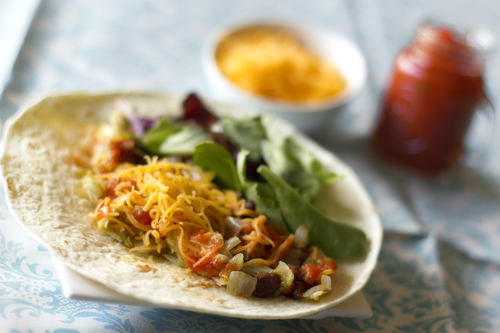
My Denver-bred husband was craving Mexican food. Not authentic, arroz con frijoles or tamales, but the Tex-Mex style of his hometown. Back in New York, we made quesadillas, nachos, Mission-style burritos, all topped with chunky salsa fresca and homemade guacamole.  But here in the heart of Berlin, this was a bit of a challenge. We lived in the more genteel area of Schoneberg, where gourmet shops and natural food stores were well stocked with local, organic apples, kales and roots, fresh cheeses, chocolates, artisan breads, and olive oil rich sauces imported from Italy and Greece. Avocados? Sometimes. In BioCompany on Haupstraße, they were small, hard, ovals. In the Riechelt down the block, they were large, genetically modified monstrosities, with unnatural smooth skin. Both varieties lacked the creaminess of the Hass avocados we used to buy in Queens. The alternative was pre-made guacamole spread, a nasty concoction that looked like greenish cream sauce rather than the chunky guacamole of Tex-Mex cuisine. There was also the problem of tortillas. Germans are known for their bread, but their tortillas were rubbery, sweet cardboards. And the salsa. Our friend Riechelt sold Del Fuego brand. Not bad, but lacking in kick and too sugary for the real deal.  Zucker seemed to be a required ingredient in all packaged German foods, including beans, vegetables, and even hummus. Despite these obstacles, I was determined to figure out a way to make the food Dennis craved.

We had come to Berlin because I was offered a job at a German-American high school. We knew we were taking a huge risk–I’d left a job with the Department of Education, and hed left a budding career as a coffee roaster in an up and coming roastery in Brooklyn. But what did any of that matter given the opportunity to live and work abroad? A lot it seems. While things only went well for me, Dennis had struggled. After a month of working at a café, the management refused to pay him. Apparently this is a trick played a lot on newcomers, and without a visa my husband had no recourse. He was unemployed, far from home, and the only person he knew was me. Always an avid runner, and without anything else to do, he ran for kilometers along the Spree, burning up energy and calories at an alarming rate. I didn’t want him to waste away, so Tex-Mex had to happen.

With some exploring, I managed to find beans nicht zucker in Oz-Gida, the delightful Turkish supermarket a little bit further down on Haupstraße. A friend from work said there was nothing we could do about the avocados, but recommended Aqui España in Charlottenberg for our other quandaries. My husband and I were feeling intrepid, so one day after work, we embarked on the journey to the mini-Spain of Berlin. An S-bahn, U-bahn, bus, and 25 minute walk brought us to the tiny market. As soon as we walked in, I smelled the familiar gamey scent of jamón. I raised my eyes to the ceiling to see rows of the stuff hanging. The cramped aisles were crammed with olives, oils, pimentón, saffron. An entire wall was dedicated to the wines of Spain and Portugal, and one diminutive section was devoted to the salsas and sauces of Mexico and South America. Finally! Three mini-shelves of salsa! We grabbed at the jars with greed, drinking in the ingredients, desperate to find edible, sugar-free salsa. We found a bottle, not unlike a bottle of beer, made in Mexico. It looked chunky and delicious. There was also tomatillo salsa, refried beans, masa harina, and a beautiful tortilla press. We loaded our arms and with all haste made our way to our apartment in Shoneberg to make burritos.

The tortilla press worked perfectly. The tomato salsa was spicy-rich with garlic and cumin and chili, but was as salty as the German brand was sugary. After every bite we needed to drink so much water that our stomachs filled with liquid rather than Tex-Mex goodness. So we were back at the beginning.

Some weeks later, a mission unrelated to our desire for Mexican food brought us to KaDeWe, a massive, seven-floor department store, the sixth floor of which was a gourmet shop to put all others to shame. There were little restaurants representing every country, rows of chocolate, a champagne bar, wine bars, cheese bars, olive bars, tea bars, an exotic fruit and vegetable stand, and finally, a tiny aisle devoted to American food. This aisle contained: Hershey Bars, Swiss Miss, Pancake Mix, Jack Daniel’s barbeque sauce, Reese’s peanut butter cups, Chips Ahoy, and finally, a whole variety of Old El Paso Mexican products, that reminded me of my childhood taco night. That night, we made a Tex-Mex feast with homemade tortillas and guacamole, delicious homemade beans, and topped it all with good old American salsa. It almost seemed like we were back in our tiny Astoria apartment, like we were back home.

Danielle Bonnici is an English teacher, traveler, and yogi who lives in the woodlands of Queens, NY.

by John Chinnici

I’m not sure who to blame. The Food Network? The parenting techniques of the 1980s? It doesn’t matter. Somehow the saying that “everyone’s a critic” has come to be accepted without irony. I mean, I’m generally down with all the crowd sourcing and wiki-everything that makes the world go round. Can’t complain about benefitting from the free labor that paves the information superhighway. But we’re at a point where the criticism of restaurants comes to us not just in laymen’s terms, but on laymen’s terms. And that leaves me a little queasy.

You can’t google a restaurant without having to stare down its ratings in the results page. Recently I needed the telephone number to a trusted, beloved Mexican restaurant in my neighborhood, just to see when their kitchen was closing that night. I ended up wasting half an hour reading the reviews. When it comes to the comments sections of political news articles, I’ve gotten good at ignoring what’s on my screen. Yet there I was, consuming the opinions of, ugh, regular people, just because they had eaten at one of my favorite restaurants.

There wasn’t a single two- or three-star review (out of five). Every poster had decided that the place was heaven or hell, the pico of the litter or burnt tostadas. One customer complained of food poisoning she had come down with just hours later, despite that being medically impossible. Somehow her dinner of crab guacamole, chorizo nachos, a carnitas burrito, and mango frozen margaritas didn’t sit well with her. Score one for empiricism!

Just like you wouldn’t blame a restaurant for indigestion after completing their 72-ounce steak challenge, you shouldn’t become accusatory after indulging in a cumulative 72 ounces of various foods. No rational person should expect that a meal of a) seafood and avocado, b) pork cheek sausage, c) an entree of enough calories for an entire day, and d) artificially flavored booze will be greeted hospitably by the digestive system. When you gorge on every kind of lipid in the natural world and down it with booze, then wind up sick, that’s not food poisoning. That’s your own fatty acid getting what’s due.

I suppose that when a reviewer gives clues that I shouldn’t trust them, I should be able to move on with my life. Yet her one star rating pulls down the average, and for a new restaurant with maybe ten reviews, that matters. She has 10% say in telling the world whether to eat there.

The fact that having Internet access affords us the right to have a say in driving business to or away from a restaurant can’t be a perfect situation, right? Maybe if everybody’s user profile contained more contextual data, such as how many how many Scoville units they can handle and whether they think Olive Garden qualifies as fine dining, then we would have more usable information. But even then, we would need each person’s review to count unevenly – we’d need weighted scores where some people don’t get to vote. Undemocratic, I know. I know.

I used to complain about professional reviews for a few reasons: casual and neighborhoody joints often don’t get a fair shake, and the standard practice of estimating the price point by using a meal of appetizer, entree, drink and dessert can make those figures unusable. But you know what? We don’t need to be reading reviews of every falafel joint and pizza parlor anyway. We all have our favorites, and we’re too busy to be driving across town or transferring subway lines just to get a different, random, five-dollar lunch. We need reviews for the restaurants where we’re spending special occasions, the places where we’re dropping half a day’s wages.

Everyone is more conscientious than ever about food, and that has to be a good thing. I’m glad that people are more informed about a wider variety of cuisines and that we are all increasingly savvy about what makes a quality restaurant experience. But like climate change research, we should all be deferring to the experts. There are people out there who have studied and practiced the craft of food writing, and I believe in the value of informed, objective criticism. When we abandon the monoliths of expertise, we end up wading in a pool of opinion-sewage. Our tummies grumble while we moan through tastelessly written reviews of anecdotal circumstances.

John Chinnici is currently finishing a master of fine arts in poetry at The New School, where he works as readings coordinator. Raised as a meat-loving Texan, he now enjoys a vegetarian life in Manhattan. His poetry credits include the North Texas Review, Gigantic Sequins, and The Best American Poetry Blog.

by Danya Bilinsky

Nestled in the southwest corner of Adelaide’s Central Market in Adelaide, Australia is Lien Heng Asian Grocery. It is identified by piles of greenery – one dollar bunches of coriander, fresh mint and an array of leafy vegetables. Mustard greens, choy sum, bok choy and kang kung are heaped on stalls that overflow from the small store, which itself only covers nine square meters.

I delve further inside. Knobs of ginger are gnarled hands and strands of garlic shoots are restrained from running wild by blue tape. The enormous jackfruit is armored with a spiky exterior alongside the green papaya, halved, de-seeded and ready for grating into a spicy salad.

The aisles of the store contain an entire continent. The musty aroma of the shiitake mushroom carries me to China. A corner of spices conjures up the colorful saris and dusty streets of India. Titles of mysterious Japanese snacks are indecipherable, although tempting, considering the joy they seem to provide the grinning cartoon characters on their packets.

Other sections simply intrigue. Where is dried sea coconut from? How is the fox nut used? Would a dry lily bulb taste earthy or floral? The dried north almonds and the dried south almonds look suspiciously similar within their separate packages, so what would the explanation be for the one cent difference in price?

Types of tofu line seven rows of the small fridge, interspersed with balls made from beef and fish. Even the freezer section, never an area to provide much inspiration, makes the stomach rumble. Frozen dumplings neatly encase pork and prawn – crimped, curved and crescent varieties. Reams of paper thin Peking duck wrappers bring to mind the crunch of the bird’s skin they were made to hold.

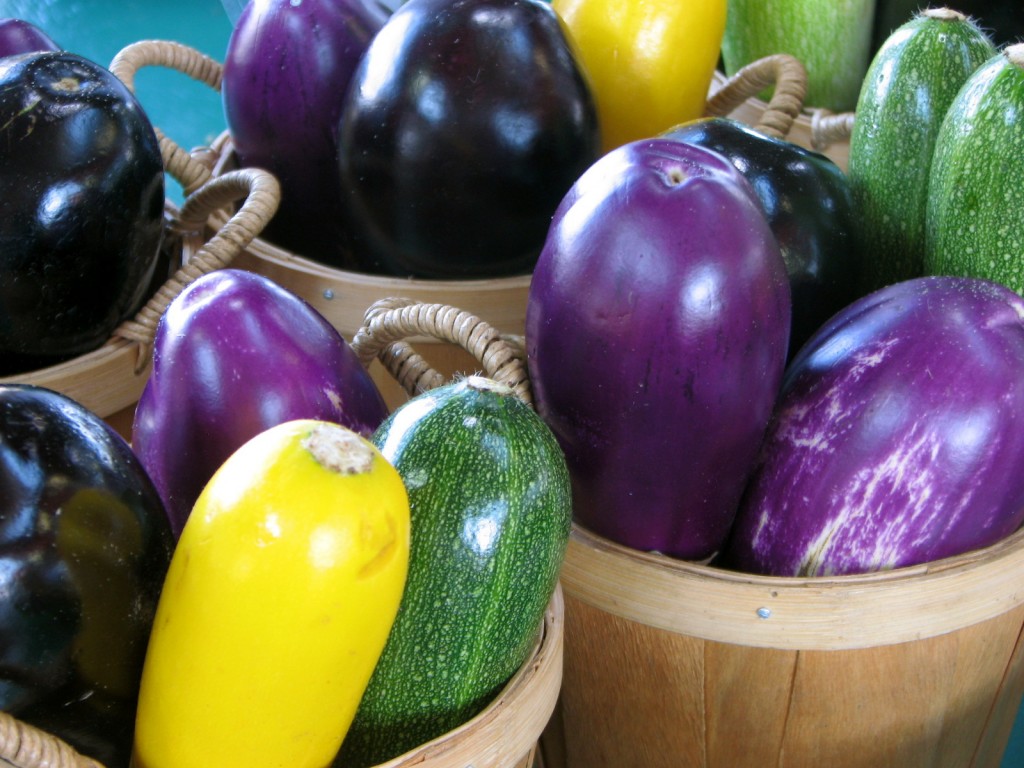
However it is the simple purple eggplant that transports me.

I am in the north of Laos, in Luang Prabang. Despite having a traveling companion I have kept the morning to myself. I wake not long after the sun and cycle along the bumpy streets to the local market. Similar to the southwest corner of Adelaide Central Market the produce is piled high and taken from the ground not long before its sale.

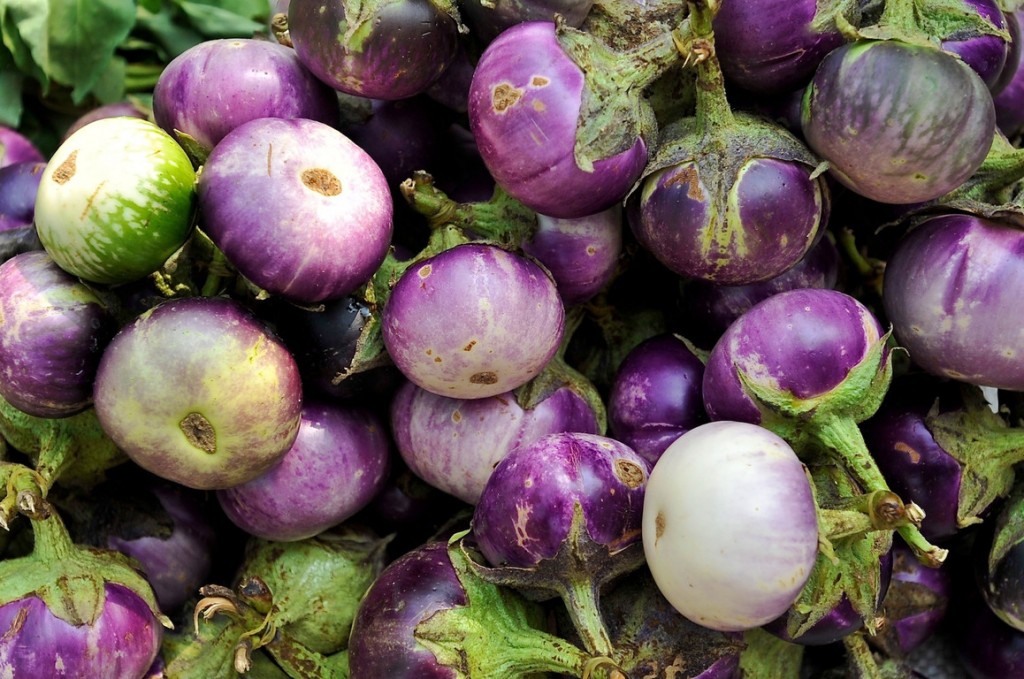
One of the stalls is simply a blanket on the ground. A variety of eggplants covers the material. Smooth skinned orbs, the size of a golf ball, come in purple, green and porcelain white. They can be served raw, a refreshing crunch to douse the fire of a minced meat larb. The smallest eggplants are only the size of a pea and similarly green in color. Still clinging to the vine they provide a bitter burst in a curry. Longer, meatier eggplants are roasted, together with garlic, and puréed to form a dipping sauce to serve with sticky rice.

The stallholder notices my fascination, although our languages divide us. A passerby assists. ‘This is not even the beginning’ she translates from the toothless face. ‘Do you know how many different types there are?’

I admit I do not.

‘Sixteen’, she proudly declares. ‘There are sixteen types of eggplant.’

Danya Bilinsky has written for the Spectator food blog, Spectator Scoff, as well as Australian online publication Concrete Playground and blogged for Yahoo 7 lifestyle.  She has worked in Food TV and made food look beautiful for cookbooks.  She is currently studying Food Writing at The University of Adelaide.

Photo by Jennifer Martiné

by Julianne Clark

There is no greater pairing than the pungency of garlic and the umami taste of anchovy. Add a few bottles of extra virgin olive oil, and you end up with a local Piemontese dish called bagna cauda.

Bagna cauda is not for  someone who plans on an intimate conversation soon thereafter. You will not get the taste of this potent combination of garlic and anchovy out of your mouth for at least a week’s time.

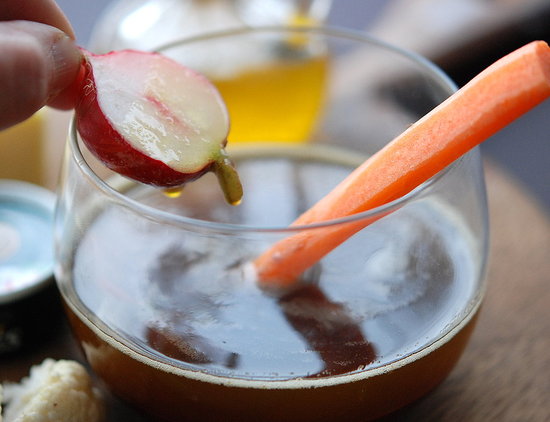
It is traditionally eaten during late fall and early winter months with fresh vegetables like, fennel, bell peppers, celery, potatoes, and carrots.  There are some variations depending on which region in Italy, some substituting olive oil as the main component with cream or butter. It is generally served in a small terra cotta pot to keep warm over a small candle or flame. I have eaten it in a local trattoria served on a plate poured over bell peppers, but it is not quite as fun as the fondue family style of a home, which consists of having a huge pot in the center for dipping and a plate of vegetables for everyone to share.

Piemontese people are generally private and hesitant to open up until you show them you are someone they can trust. Luca is different. I met Luca at a party through another friend about a year ago. He was hosting a dinner party for two Spanish students who were helping him on his farm. Luca, naturally athletic, is a builder by day and socialite by night. He is almost always in his work boots, jeans, and a t-shirt. His permanent tan from working outside gives him a healthy glow, complimenting a friendly smile.

Every few months he hosts travelers from around the world to come stay with him in exchange for work . For each guest he will host dinner parties filled with close friends and plenty of Barbera wine from his brother’s winery. I was able to attend paella night with two guests from Madrid, homemade pizza night with some of my friends from the University of Gastronomic Science and bagna cauda night with visitors from The States.

Luca is never too busy to have people over, and makes you feel guilty if you don’t come. People come and go from his house about as often as they check their face in the mirror. His place is there, and you generally know exactly what to expect. What you get at Luca’s is a nice hangover the next morning; nonetheless you also get memories to cherish after the headache subsides. He is the first to greet you and the last to ask you to leave, encouraging one more drink.

Dinners always start late, and end past late. During the winter months there is always a warm stove in the kitchen that acts as a central meeting place for two dogs that are about as mobile as your metabolism after Thanksgiving dinner. The friendly old neighbor Francesco is a permanent fixture at the house and rarely misses a night. Other regulars include old family friends and hunting buddies.

For bagna cauda night, Luca, with a cigarette already in his mouth, came in carrying bags of fennel, bell peppers, anchovies, and extra virgin olive oil. As guests slowly arrived, a new dish or wine was added. While everyone else started peeling and chopping garlic, Luca simmered the olive oil and anchovies in a big pot. After a few fistfuls of garlic were added to the oil, the combination was stirred for a little over an hour. Finally, the garlic and anchovies had melted in the oil, creating a thick sauce with tiny bits and pieces of anchovy sticking to the pot.

I had a pretty good idea of what it would taste like as the aroma was stinging my nose, but what I did not expect was the pungency of the  garlic and the slightly hairy texture of the anchovies after you swallow. The first spoonful felt like thousands of tiny knives going down my throat. I was a bit disappointed at my ability to take the pain.

By 2 AM the bagna cauda pot and the wine bottles were empty. The only things left on the table were a few lonely pieces of fennel. We had been sitting around eating garlic and anchovies for 6 hours. Some of the guests, including myself, were either too tired or felt too smelly to go home that night, so we stayed in one of the spare bedrooms.

I will remember the dinner for a long time, not only because of the bagna cauda smell I had on my clothes, but the warmth of Luca’s kitchen and the unexpected friendliness of his Piemontese friends.

The other night I attempted to make bagna cauda on my own with my small, inferior pot and could not duplicate Luca’s version. My kitchen felt cold and sterile in comparison to his. Garlic and anchovies are easy, but friends, a warm fire, and two lazy dogs are not.

Julianne Clark is currently a master’s student at the University of Gastronomic Science in Pollenzo, Italy. She will be graduating this May with a MA in Food Culture and Communications. After graduating, she will be pursuing her interest in Piemonte food and wine.