Author

Anya

Browsing

by Jane Moon45673_8fd2b78138a5779662150a65b3dcc084_55f50bd3f10d31357a44140315907078

Tuna brings to mind many things.  I think of the canned product sitting on supermarket shelves and the raw version of the fish used in Japanese cuisine. I also think of mercury health concerns from the consumption of tuna.

Andrew F. Smith, editor of the two series Food and Edible, addresses all these topics and more. While covering the history of tuna, Smith tells us how Japanese fisherman along the California coast were vital to the tuna industry, and why the government encouraged consumption of tuna during World War I. He also tackles the persistent dolphin meat myth, discussing the issue of dolphins killed during the tuna fishing process.

American Tuna is divided into two sections: the first half covers tuna’s ascent from obscurity to popularity.  The second addresses the challenges later faced by the American tuna industry.  Tuna began with an uphill battle for acceptance: at first, the few Americans who thought to try tuna described it as oily and unappealing. Only after the canning process had been refined to remove most of the oil and lighten the color of the meat did the public conceive tuna to be enjoyable. I found this first part of the book particularly fascinating, as it focused on the underdog rise of tuna.  Smith also writes about the origins of the Tuna Club, a sports-fishing organization dedicated to preserving the original rod and reel method of tuna fishing, and covers all the steps from tuna’s unsavory introduction to the American diet to becoming a staple on the American dinner table.

The second half describes the fall of tuna: how the import of foreign tuna threatened the American tuna canning industry, unable to compete with low foreign labor costs.  This part of the book focuses on the economic and financial history of tuna, walking readers through the politics of tuna: tuna imports into the United States, the restrictions of American fishing boats in foreign waters, and the government’s involvement with the tuna industry.

Finally, Smith includes a section of tuna recipes. Several were published in cookbooks from the 19th and early 20th centuries. Other recipes come from corporate promotional pamphlets. These instruct the use of a specific brand of tuna in the ingredients, such as Blue Sea Tuna Fish in tuna chowder or Avalon Brand Tuna for tuna loaf.

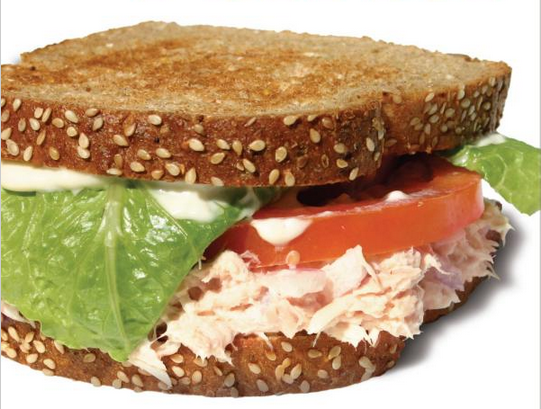
Smith does a wonderful job of keeping my interest during the first part of the book, depicting the background of the tuna in a story-like form. My attention started to wane in the second section, when it became heavy with the facts and figures of import tariffs and distance restrictions regarding fishing on foreign shores. That said, American Tuna is a great read for anyone who wants to know how a fish that was once undesirable became one of the most popular sandwich fillings in America.

Jane Moon received her MFA in Creative Writing at The New School. She is currently writing her first novel.

by Joseph Warren

“This is Seattle food. For Seattle people. This is what we eat here. Seattle people eat teriyaki. This isn’t Dallas.”

-Boo Yul Ko, co-owner, Manna Deli & Teriyaki (Edge)


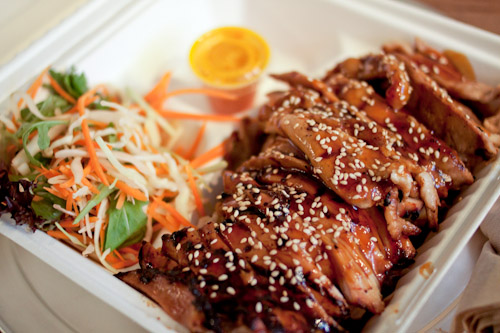
I grew up in Seattle, Washington in a family with two adopted Korean-American siblings. As such, my parents established a family tradition of regularly taking us to Korean restaurants. On most days, kimchee and rice were part of every meal, but on the weekends we drove up Aurora Ave N. and “went to Korean Food.” Instead of announcing Korean food, the signs for the two or three places that we went most often predominantly advertised traditional Japanese fare of teriyaki and sushi.  The Korean options were only revealed later on the menu.  While my parents usually ate chicken or beef bulgogi and my siblings and I generally ordered bibimbap, we also loved teriyaki. The teriyaki these restaurants served, the teriyaki I knew, varied from establishment to establishment but followed a pretty specific model. Huge amounts of chicken, beef or a combination of the two lay on a bed of white rice with an additional ball of rice on the side. Some places made their sauces with pineapple, some with citrus, some with ginger, but every teriyaki sauce was unapologetically sweet and liberally ladled over the meat and the rice.

It wasn’t until I was an adult, living nearly a thousand miles from my Seattle home that I realized that the teriyaki I had grown up eating was something special. Outside Seattle, the teriyaki I tasted inevitably led to disappointment. Instead of being a restaurant’s primary product, it was usually a just menu item among other Japanese foods. It had less sugar, more salt, and far more restrained portions. I remembered my childhood restaurants and wondered what made the origins of Seattle teriyaki so remarkably different.  Was it that I had been eating Korean-style teriyaki all along?  I decided to investigate.

Seattle teriyaki is considered, by some, to be the city’s signature food, like Chicago hot dogs, New York thin-crust pizza, or Philadelphia cheese steaks. I quickly learned that Seattle-style teriyaki established itself into the region’s diet soon after its introduction in the 1970s. Barely twenty years after it was created, Seattle’s distinctive teriyaki style was nominated in the local paper as the city’s “signature dish”.

And my guess that the very distinct form of Seattle teriyaki had been Korean based was not entirely off:  I learned that while Korean influence has been important, even dominant, Seattle teriyaki has been driven by many (primarily thought not exclusively) immigrant ethnic groups.

Predecessors

In an extensive 2007 article documenting the history of Seattle Teriyaki, Jonathan Kauffman traces the prototypical teriyaki history. Almost as interesting as the places where the history can be found is where the history cannot.

Teriyaki did not exist in the most likely places.  The Nihonmachi neighborhood, a Japanese community in Seattle from the end of the 19th century until the WWII internment, had no teriyaki restaurants, nor did the pre-war Japantown section of Seattle.

After the war, and the return of the detainees, teriyaki foods were on a small number of menus. Bush Gardens, the swanky Japanese restaurant in the city’s International District attracted former internment camp detainees and Caucasian GIs who had developed an appreciation for Japanese food while stationed abroad. The restaurant served teriyaki steak from 1957 onward. Canlis, the city’s most famous fine dining establishment, has included a teriyaki beef dish on their menu since their beginnings in the 1950s.

Toshihiro Kasahara’s 5 Item Menu

The contemporary Seattle teriyaki plate generally consists of a three-compartment clamshell container. For most of my life, the container was Styrofoam though it is now a more environmentally conscious cardboard.  In the largest compartment, there is the meat on its bed of rice. In the smaller compartments are a perfectly formed sphere of rice and a vegetable; usually a cabbage or lettuce salad. This standard was established by the father of the modern Seattle teriyaki, Toshiro Kasahara.

In 1976 (though Elizabeth Rhodes’ 1992 article on the subject says 1977) Kasahara opened Toshi’s Teriyaki Restaurant. Kasahara, a Pacific Northwest business school graduate originally from Ashikaga, Japan, imported the now ubiquitous containers from Japan. He created a sauce that broke tradition by using sugar instead of sweet rice wine, much like Hawaiian teriyaki.

The menu consisted of the following items:

  • Teriyaki Chicken
  • Teriyaki Beef
  • Tori Udon

And during dinner hours, also:

  • Teriyaki Steak
  • Japanese-style chicken curry

The prices ranged from $1.85 to $2.10.

The success of Toshi’s Teriyaki lead Kasahara to open a second store, this time focused exclusively on takeout. He expanded by, essentially, flipping the shops he opened. He would start a shop, bring it to a level of profitability, sell the shop, and open a new location, rarely owning more than two at any given time. By 1992, he had opened ten shops.

Yasuko Conner, the first employee of Kasahara’s second store, bought one of the shops, changing its name to Yasuko’s and starting her own ever-expanding chain of, at their height, nine restaurants. Similarly, a man named K.B. Chang purchased one of Kasahara’s stores and began quickly opening and “flipping” stores also (semi-legally) called Toshi’s.  Kasahara eventually began to sell franchise rights and to train new shop-owners.

The success of these stores, and the many stores they inspired, is astounding. Kasahara could only guess how many Toshi’s he’d opened over the years (the guess being thirty) and the number of teriyaki places in the greater Seattle area can only be estimated.  In 1992, there were 107 establishments within Seattle’s King County with “teriyaki” in their names.  By 1996, the estimated number of King County teriyaki places was up to 175. By 2007, there were 519 restaurants with “teriyaki” in their name, in the state of Washington and more than 100 just within the city limits.  In John T. Edge’s 2010 article, he cites the number of teriyaki stores within the city limits as a more conservative eighty-four. He also notes that there were, at the same time, only about forty Burger Kings, Wendy’s, or McDonalds.

Multiethnic Expansion

When Toshihiro Kasahar was selling and franchising Toshi’s Teriyaki shops, the new owners came from a variety of ethnic backgrounds: Japanese, Chinese, Mexican, Caucasian, Indian, and Korean-American.

“I’m glad it’s many nationalities,” he told The Seattle Times’ Elizabeth Rhodes in 1992. “That means more people are interested in my business and see it as an opportunity.”

Since the food’s early growth in the 1980s and 1990s, the variety of ethnic and cultural influences on Seattle Teriyaki has dramatically expanded. There are Hawaiian teriyaki restaurants.  Vietnamese Phở shops (another ubiquitous Seattle fast food option) often sell teriyaki, as do local hamburger places and Thai restaurants. A Somali restaurant in Tukwila (a suburb near the airport) serves a halal chicken teriyaki and a Vietnamese restaurant serves beef short ribs with lemongrass as, “The Best Teriyaki In Town.”

Tokyo Garden, near the University of Washington, is owned by a Nepalese immigrant with a chef originally from Puebla, Mexico. Among their offered dishes are Nepalese dumplings, Japanese dumplings, sushi, and, astonishingly enough, corn dog teriyaki.

Korean American Influence

The immigrant group with the largest impact on Seattle teriyaki was, as I suspected initially, Korean. After the passing of the Hart-Celler act of 1965, altering the system of immigration to the United States, Korean immigration boomed. Between 1970 and 1980, the Korean population in Washington’s King County increased by 566%, compared with 412% in the rest of the nation.

Many of the Toshi’s and Yasuko’s stores were purchased by Korean Americans. Other Korean natives, such as Chung Sook Hwang, opened unaffiliated shops of their own. In 1983, Hwang opened what would become one of my favorites, Yak’s Deli on a corner in the Freemont neighborhood.

In her 1992 article, Elizabeth Rhodes tells the story of Chang Sook Hwang (not to be confused with Chung Sook Hwang), a New York City deli owner. Chang received a call from a friend advising that teriyaki shops in Seattle were a moneymaker. Despite not knowing what teriyaki was until arriving in the Seattle, Hwang’s shop attracted crowds of customers.

In addition to dramatically increasing the number and popularity of teriyaki places, the Korean-American owners influenced the way teriyaki sauce tasted.

“We Koreans made it more interesting for people.” Kyung La (Sarah) Ahn explained to Jonathan Kauffman. “The Japanese only have three ingredients for seasoning: sugar, soy sauce, and vinegar. We have twenty to thirty ingredients for making seasoning. Teriyaki tastes much different.”

While I’m not convinced that the Toshi’s restaurants’ sauces were quite as simple as Ahn described, the influence of Korean cooks is evident. Ginger, garlic, and sesame oil all play a role in sauces that do, in some ways, resemble Korean bulgogi marinades.

While many restaurants have a pretty simple menu, some (such as the ones my family frequented during my childhood) have secondary Korean menus.

Seattle Exports

It could be said that a city’s signature food is defined by its arrival in other places. When “New York Style” pizza or “Chicago Style” hotdogs are available at the Dallas Ft Worth airport, you can be sure that it has achieved that status. The earliest Seattle teriyaki missionary I could find mentioned was in 1996, the single Toshi’s franchise outside of the greater Seattle area in Phoenix.

In 2002, Seattle area natives Eric Garma and his cousins Rodney and Allen Arreola opened Teriyaki Madness in Las Vegas. They purchased the Korean/Seattle-style recipes, the plans, and the rights to the name “Teriyaki Madness” from a local store where they had eaten growing up, and used the image of an Asian Elvis impersonator to cement a distinctive brand. There are currently seven Las Vegas stores, and they have begun the work of setting up franchises throughout the Southwest.

In 2010, businessman and Seattle ex-pat Paul Krug opened the first Glaze Teriyaki Grill in New York City.

“I lived here (NYC) for seven years and noticed New York was missing teriyaki,” Krug explained. “There’s a ton of Japanese restaurants in New York that offer teriyaki, but it’s a lot more expensive and doesn’t taste nearly as good as it does in Seattle.”

Glaze’s Seattle-style Teriyaki has developed a following. As research for this paper, a coworker and I visited a Union Square Glaze shop.  The food, as well as the shop itself, is very much like Seattle, if a little bit more self-consciously stylish.

Conclusion

Several years ago, for reasons irrelevant to this paper, I stopped eating meat. I have never regretted this choice nor have I had any real temptation to abandon it. The only meat that I have longed for in that time is Seattle teriyaki chicken. While I’ve yet to be convinced to change my vegetarian ways, I have become, like Paul Krug and Eric Garma, something of a Seattle teriyaki missionary. The first time my future wife came to Seattle, the priority after meeting my family was to drive up Aurora Ave N. to buy her the Korean (and Japanese, and Hawaiian…) -inspired chicken that was such an important food during my childhood. When two friends were in Seattle for their honeymoon, they asked if there was anything they should be sure to do. I recommended getting teriyaki at least once. To my delight, their Facebook pages documented at least one, sometimes two teriyaki meals per day of their Seattle trip, each from a different store. I think that it is safe to assume they enjoyed it.

References

Blake, Judith. “Teriyaki — Secret Is In Sauces For Popular Fast Food.” The Seattle Times 12 June 1996: n. pag. Seattletimes.com. The Seattle Times, 12 June 1996. Web. 24 Oct. 2012. <http://community.seattletimes.nwsource.com/archive/?date=19960612>.

Edge, John T. “A City’s Specialty, Japanese in Name Only.” The New York Times 6 Jan. 2010, New York Edition ed., sec. D: D1. The New York Times. Nytimes.com, 5 Jan. 2010. Web. 4 Oct. 2012. <http://www.nytimes.com/2010/01/06/dining/06unit.html>.

Giudici, Carey. “Korean Americans in King County.” HistoryLink.Org The Free Online Encyclopedia of Washington State History. HistoryLink.Org, 31 May 2001. Web. 10 Oct. 2012.

“Glaze Teriyaki.” About Us. Glaze Teriyaki, n.d. Web. 24 Oct. 2012. .

Kauffman, Jonathan. “How Teriyaki Became Seattle’s Own Fast-Food Phenomenon.” SeattleWeekly.com. Seattle Weekly, 15 Aug. 2007. Web. 4 Oct. 2012. <http://www.seattleweekly.com/2007-08-15/food/how-teriyaki-became-seattle-s-own-fast-food-phenomenon.php/>.

Kugiya, Hugo. “A Seminal Moment for ‘Seattle Teriyaki’ | Crosscut.com.” Crosscut: News of the Great Nearby. Crosscut.com, 30 Dec. 2010. Web. 4 Oct. 2012. <http://crosscut.com/2010/12/30/food/20502/A-seminal-moment-for-Seattle-teriyaki/>.

Raskin, Hanna. “Local Teriyaki Pioneer Is Back at the Grill.” The Seattle Weekly 9 Feb. 2012: n. pag. SeattleWeekly.com. Seattle Weekly, 9 Feb. 2012. Web. 10 Oct. 2012. <http://blogs.seattleweekly.com/voracious/2012/02/local_teriyaki_pioneer_is_back.php>.

Raskin, Hanna. “Teriyaki’s Expansion Plotted by Seattle Natives – Seattle – Restaurants and Dining – Voracious.” The Seattle Weekly Blogs. The Seattle Weekly, 13 Feb. 2012. Web. 10 Oct. 2012. <http://blogs.seattleweekly.com/voracious/2012/02/teriyakis_expansion_plotted_by.php>.

Rhodes, Elizabeth. “Teriyaki Takes The Town — Everybody’s Making It, Including Many Small Delis.” The Seattle Times 12 June 1992: n. pag. Http://seattletimes.com. The Seattle Times. Web. 10 Oct. 2012. <SeattleTimes.com>.

Susskind, Jonathan. “Votes Split on Which Dish Says Seattle.” Seattle Post-Intelligencer 10 June 1992: C1. Web. 10 Oct. 2012.

Joseph Baruch Warren holds an MA in Media Studies from The New School. He works for the Eugene Lang College budget office and takes occasional Food Studies classes at The New School for Public Engagement.

by Varaidzo Corinne Sengwe

Who knew that a bite of a small, ball shaped chestnut, boiled in lard could be so potent as to evoke significant memories within me? I did not. It was my first time in the Monragalase region of Piedmont, Italy on what I thought would be an average didactic tour around a farm and a chestnut forest.  I was there while studying abroad in Italy for the year, a far way away from my home in Zimbabwe.

As I tasted the boiled chestnut, a local delicacy of the area, I recalled a taste, flavor and texture that was familiar to me. It was not the conventional nut flavor that I had expected. Rather, it was starchy, sweet, and dry all in one mouthful. What I  tasted was a bittersweet memory of sweet potatoes from my time at home.

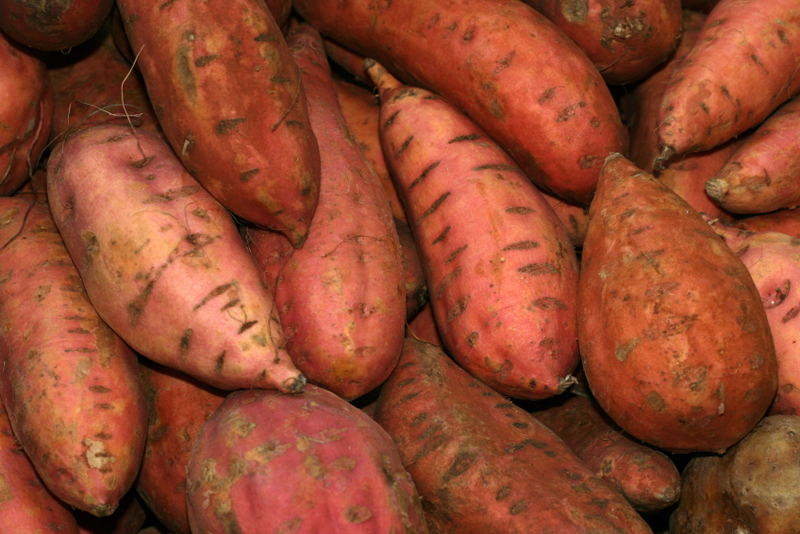
Sweet potatoes are more to me than just oblong shaped tubers with colourful white, beige or maroon skin that grow in the ground. For me, sweet potatoes represent family, enterprise, survival and hard work. This is because some of my family, myself included, faithfully produce sweet potatoes every year, planting in early summer, for an early winter harvest.  The extremely laborious physical work produces enough to feed my enormous extended family for the winter season, featuring breakfasts of boiled sweet potatoes as side dishes to roasted sweet potatoes. There are enough left over for enterprise, selling our sweet potatoes to the community for an extra income to cover school fees and pay the necessary bills.

But in Italy, I reminisced as my tour guide, Mr. Castagna, looked comfortable with the ice cold spring rain drops gently falling all over his body. Meanwhile, the tour group was shivering in the cold forest making silent prayers that it would either stop raining or the tour would be brought to a sudden end. Unhinged by the extreme weather conditions, Mr. Castagna continued his highly animated and very detailed explanation and description of the varieties of trees in the area. His determination reminded me of Mai Jasi, the main sweet potato producer in our large family.

Scorching summer sunshine, raging storms, and the not so silent complaints from the labourers who are her children, nieces (myself included) and nephews, do not deter Mai Jasi from producing possibly the best potatoes in the area. They are the envy of all the neighbours; boiled or roasted, the blemish-free, colourful skin effortlessly peels off exposing firm, supple edible ivory flesh.

Personal bias aside, the tubers are good for several reasons. The primary reason is probably that Mai Jasi has a personal devotion to the product. There are vast areas of arable land available in the semi- rural community of Juru, Zimbabwe; but these sweet potatoes are grown within the parameters of her ample yard so she can keep a watchful eye on their growth and make sure that wandering cows do not eat the crop. Weeds are a foreign concept as far as the sweet potato rows and ridges are concerned. We, the children, are responsible for allowing only green heart-shaped leaves to thrive. Everything else that attempts to sprout up out of the ground is an alien threat and instantly uprooted.

I constantly lament that I was born into a family that has an affinity to agriculture. I live in the capital cosmopolitan city, but I find myself usually coerced an hour away planting or weeding mbambaira (the Shona word for sweet potato) on a Saturday morning. Not high on my priority list. My cousins remind me that I am lucky I only visit, even if it is once a week, otherwise it would be my daily fate.

My loud and often angry complaints about the hard work are usually shut down by Mai Jasi’s default statement “as long as you have some land, you will never go hungry.”  Hers is a simple philosophy, an echo of generations before her, and a voice she hopes will continue to echo in generations to come. It is to my own peril and demise if I decide not to till the land, or at least have a vested interest in tilling it. I think that the constant repetition of this mantra works as a scare tactic, since my elder brother, who initially despised the hard work of farming, has been converted. He and his wife are now well on the way to being full -time farmers, leaving me as the last one to be converted.

I eat the slightly salted and boiled potatoes prepared as a tasty breakfast for us after a morning in the fields. It is important to know that I like sweet potatoes, but served with mashed sweetened avocado or as grilled chips, seldom for breakfast and never in excess. During some breakfasts, I have slow choking sensations that come from the half-chewed mushy tuber stuck at the roof of my mouth. Perhaps it is the universe’s way of telling me to develop an interest in farming, and then maybe, just maybe, the sweet potatoes and their memories will be easier to swallow.  Or perhaps Piedmont’s chestnuts- boiled, roasted, or dried- will seduce me into growing my farming knowledge. And then Mai Jasi’s sweet potatoes will truly be sweet.


Zimbabwean born Varaidzo Corinne Sengwe, is a recent graduate of the Masters Programme in Food Culture and Communications at the University of Gastronomic Sciences in Pollenzo Italy. She is currently based in Zimbabwe exploring the dynamics of the food system.

All Serena wants is lovely green. Collards, Dandelions, Lacinato Kale, Spinach, and Basil sautéed in olive oil with garlic and tiny tomatoes. Never onions, though she is fond of scallions and chives. White and purple onions stink and burn tongues and give bad breath and bring tears to eyes. She likes other things: snappy expensive shoes, stylish old-timey pocketbooks, a gorgeous bowl of rice pasta with the above mentioned greens and Manchego cheese, medium bodied California red wine, strong fair trade coffee with a teaspoon of 1% milk, and peace and clean water and a safe home for everyone. Serena despises the filthy color of money. That shade of green turns otherwise honest folks into dishonest folks. Serena is a money launderer. She soaks her money in the bathroom sink, and then clothes pins it to a line that stretches from her kitchen to her bedroom. She irons her bills crisp. And yes, if you wondered, she washes her coins in the kitchen sink, dries them on the windowsill. Serena does her part for the environment and the economy. She uses only clean money to buy her beloved greens.


Lori Lynn Turner received her MFA from The New School.  She is a student advisor for The Feminist Writers Organization, and an administrator/program planner at the School of Writing, The New School. She is working on a non-fiction book titled It’s In the House. This is an excerpt from a longer piece in progress.

by Rachel Edelman

Marcela was born in New Orleans and grew up in Florida. We met freshman year at Amherst College. Six months after Hurricane Katrina battered New Orleans, we traveled to Louisiana on a spring break service trip. One afternoon, Marcela invited me to join her for dinner with her godmother, Caroline. We waited for Caroline to pick us up at the gate of our FEMA volunteer camp, which housed around 2,000 college students and was patrolled around the clock by four National Guard members. “Y’all going into the French Quarter for some bourbon and beignets?” they asked.

“Yum,” I said. “Not tonight.”

Just then, a blue minivan pulled up and Caroline jumped out with her arms open, squealing, “Oh, Marcela!” At five foot nine or so, she towered over both of us. Her blue eyes were wide behind big round glasses that seemed to fog for a moment before she squeezed us both and whisked us away.

As I rode through the outskirts of New Orleans, her stories flowed like the sticky breeze across the Delta. Down each bend in the road, she’d point out a city block where a barge floated, or a swath of the city inundated by twenty feet of water for nearly three months. She drove us from poor white St. Bernard Parish to diverse middle-class Metairie on the east side of the canal, spared from the worst of the devastation. We picked up Caroline’s mother, Marie, who had recently moved in with Caroline, and headed out to a neighborhood seafood joint, the kind of place my father always sought out when we went to the beach. I could smell the clarified butter from the parking lot.

We sat at a table draped with a red checkered cloth. The windows were wide enough to invite a hint of the salty breeze. Marie sat down to my left, her glasses and gaze mirroring her daughter’s across the table.

“If you girls want a beer, order the Abita. It’s bitter, and it’s the best thing to drink with the seafood,” suggested Caroline.

The menu was a series of lists, no descriptions. Po’ boys, gumbos, all kinds of nautical creatures to eat boiled, fried, or steamed.

“It’s softshell crab season,” she told us. “We weren’t sure if we’d get any this year, but some of the boats are fixed up enough to go out again, thank goodness.”

Caroline could hardly stop smiling when she looked at Marcela, but whenever she glanced away or looked to her mother, I caught a glimpse of weariness around her eyes. Our beers arrived in cold dark bottles. When I put mine to my lips, its bitterness burst all over my tongue and then, all at once, was gone; a perfect palate cleanser for the rich sweetness of shellfish on the way.

“This was one of the first places to open up again after the storm. It was open a week before we found the house in Metairie.” Caroline’s house in the city proper had been flooded, drywall soaked. Even the studs were moldy. Her description of her ravaged home reminded me of the drywall I’d torn out earlier that day and the water-logged carpets I’d wrenched up with a crowbar the day before.

I grew up in Memphis, another food-loving Mississippi Delta city. Long before my time, traders used to travel south on the river with cash crops to sell at the port of New Orleans. They’d come home on steamboats, smelling of chicory, bourbon, and gumbo filé. I imagine them returning, telling their wives of the glorious bowls of gumbo and jambalaya.

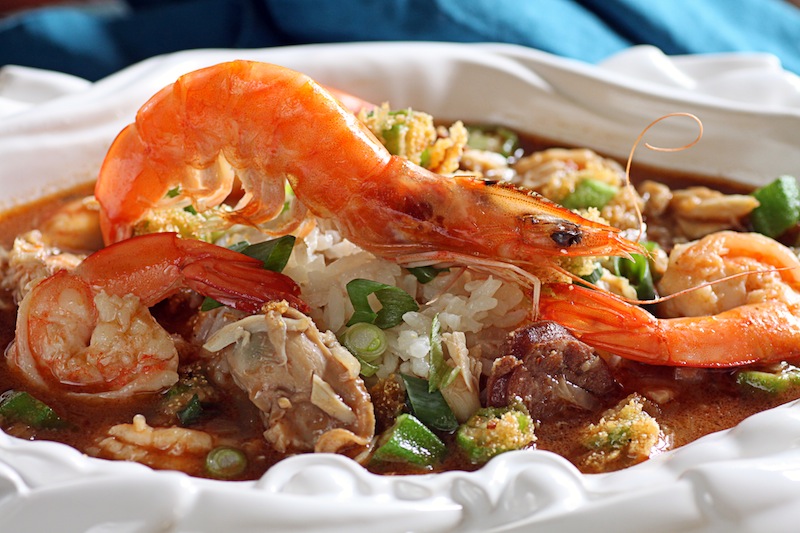
Differences in regional cuisine notwithstanding, these Delta cities share an undying love of gumbo. In Memphis, it’s something that folks cook at home; you don’t see it so much in restaurants. It’s the food I crave when I’m homesick, the dish my Grandma makes when I visit. When our bowls of gumbo arrived, I began to feel right at home in this wrecked city, at ease with this family that was not mine. At the restaurant, the bowl before me contained Gulf shrimp and Andouille sausage instead of the chicken falling-off-the-bone I grew up with, yet the sauce was bound by the same rich brown roux that I learned to stir, perched on a stool in my grandma’s kitchen.

We sipped our soups and beers. As Caroline and Marcela shared recent stories about their families, I wondered how to ask Caroline about leaving and having her home destroyed, and then coming back to try to rebuild when all kinds of government officials had already hinted that the city wasn’t worth saving. The disaster had already created the largest Diaspora in U.S. history; was it really worth it to uproot all those people again to bring them back? Marcela and Caroline continued their exchange in English peppered with French. I talked with Caroline’s mother.

“I hadn’t planned on moving in with Caroline,” she said. “I liked my independence.”

“What do you think now?” I asked.

She sighed, looking down at her pale, wrinkled hands as she delicately peeled her shrimp. “I’m glad to have a roof over my head. It’d be hard to live alone right now. I don’t want to drive at night by myself; the National Guard’s still everywhere. You see your neighborhood on the news. It makes the place feel like a war zone.”

I nodded. She smiled and said, “But we’ve got seafood again.”

Soon enough, I saw two servers walk toward us in a billow of steam. One dished out the main courses: boiled shrimp for Marie, fried softshell crab for Caroline, shrimp po’ boy for Marcela, and oyster po’ boy for me. The po’ boys were overwhelming: six-inch-long cocoons of fresh French bread spread with butter and mayo, then scattered with lettuce and stuffed with fried seafood. I wondered if I’d even be able to taste the oysters through all the fixings, but with my first bite, every ingredient revealed its purpose: each was a foil for the fish itself. In one bite, you could taste every nuance of the salty-sweet, cornmeal-battered oysters played out through each component of the dish. It was so bold, so tangy, so bright.

For a few bites, none of us spoke. Then, Caroline divided up lumps of her crabmeat and passed around a shared plate to which the rest of us added bites for sampling. As we tasted spicy boiled shrimp and crispy crab, she told us about her son’s new school, and his frustration over closed soccer fields. He missed his friends who were still holed up in Houston or Birmingham.

“My son and I left for Baton Rouge with Mama the day before the evacuation order,” she told us. “My husband wasn’t even going to leave;” he was a cameraman for a local news station. “But then there was the mandatory order and even the news crews moved north. They hardly had time, really. He was headed out of the city, and—you know, I can’t even believe it—he went back for the cat. I’m just so grateful; we would’ve lost her. It would’ve been even harder to come home.”

“Why did you come back?” I asked. Caroline sighed. Marie looked down into the tablecloth. The aftertaste of my words was insensitive and stale. It was as though I was a creature of the land, crawling into the sea and asking where all the water came from. And how was it that one breathed there?

“We never imagined it would be so bad.” Caroline said. “But we couldn’t abandon this place. It’s too special. My husband’s from Ohio, but I grew up here. It’s not so often any more that you get a feeling of a place like you do here.”

“We were some of the lucky ones,” Caroline continued. “Our jobs are still here. Our family survived. But we still don’t know who else will come back.”

I took a sip of my beer and felt its bitterness soothe my nerves. I looked at the bottle: Abita Extra Bitter, brewed in New Orleans. Bottling date: 1/13/06, Expiration date: 6/5/06.

Well, I thought to myself, I guess the brewers must be back.

When we left the restaurant, it was dark. There were few working streetlights, and some neighborhoods were so dark I wondered if I was staring into Lake Pontchartrain. We drove back by Caroline’s house to drop off Marie. Caroline’s twelve year-old son, Ben, was home. He hugged Marcela and presented us each with Mardi Gras beads and candies from just a few weeks before. Then, Caroline drove us back to the FEMA camp in St. Bernard. I thanked her for her stories. She gave Marcela a long hug. And then she slipped her hand under her glasses to wipe her eyes. “Just don’t forget us here,” she said quietly, then waved and drove away.

Rachel Edelman is a writer and environmental advocate living in Boulder, Colorado. She enjoys helping others connect with the earth, especially through delicious food.

by Wende Crow

There was a time when I wanted to die. I had wanted to before but not quite with the same intensity. Rather than make a decision, I stopped eating and disappeared. By disappear I mean I quit my job and moved to mother’s house in the middle of nowhere surrounded by cornfields and Baptist churches. And what did I want, other than nothing.

Choosing not to eat must be hidden from others, so I ate breakfast and dinner when she was at home. I left the house to buy cigarettes and, when forced to, to go to one of the Baptist churches. The preacher, a former cop who had devoured sin until he slammed his car and his body into a tree, walked with a limp and talked a lot more about hell than he did about heaven. Mighta gone there, he said over and over. I would sit there and say hello when others said hello to me, then we would go home. Sundays, I had to eat three meals to hide the dying or wanting to die.

One parishioner was a retired English teacher, Miss Ruth. She had the fragilest handshake and I had to lean in really close to her to hear what she was saying. I didn’t like getting close to anyone because I knew they would smell me: ketones. The body eating itself and releasing a bitter odor. Better not to stand too close or talk. She said how wonderful that you are an English teacher. Was. I was an English teacher Miss Ruth. Well what are you doing now? I don’t know, I said. I don’t know.

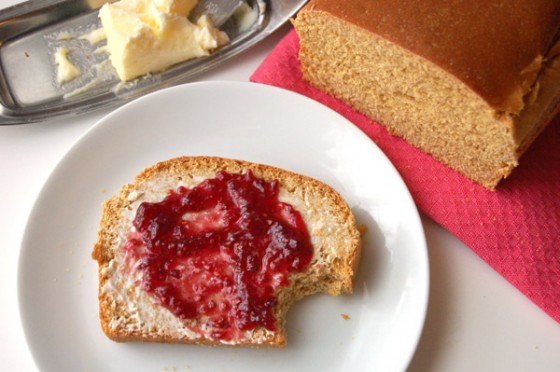
The next Sunday she placed a small wrapped loaf of her sweet sourdough bread in my hands when she came around during welcome. I’m sorry Miss Ruth? I said.  It’s really something with a little butter and jam, she said. My mother and I ate two slices each with lunch. Then I ate another.

Your sourdough bread sure is good, Miss Ruth. How do you make it? A polite question. Ruth was kind and I wanted to be kind. And the next week she brought another wrapped loaf and a mason jar half full of a frothy paste. It’s the starter. You have to feed it twice a week to keep it alive. With this you start the bread. Thank you, Miss Ruth. See you next Sunday. Being polite.

We had to keep being polite. We bought instant mashed potatoes and wheat flour and sugar. One morning I got up after the fifth cup of coffee and the tenth cigarette and washed my hands. One cup of flour, three tablespoons of instant mashed potatoes, a cup of sugar. Let sit for eight hours. This will not rise. Then the starter had to be used. You have to feed the starter, but you also have to work some of it into three loaves of bread. It must be fed and then eaten.

One cup of starter, half a cup of sugar and half a cup of corn oil, six cups of flour. Form into a ball, cover with foil, let rise for eight hours. The next morning, kneed and kneed and kneed, divide into three loaves, let rise another four. Bake thirty minutes at 350. My senses were not yet dead and there is no escaping the smell of bread rubbed with butter. I had to do this, to smell this again and again.

We didn’t know what to do with so much bread. Some went to my aunt’s house, some to my mother’s office, and much was eaten for breakfast every morning with a little butter and jam. One loaf went to the church, to Miss Ruth’s fragile hands. I fed it, Miss Ruth, and then we ate it. I kept it alive. I know you did darlin’.  I want to eat this bread, Miss Ruth. I know darlin’.


Wende Crow’s poems and stories have appeared or are forthcoming in Ploughshares, LIT, New Haven Review, The Bakery, and other journals. She teaches English as a Second Language in Atlanta.

by Fabio Parasecoli

from Huffington Post

Supersized food portions are not news, especially if you live in the U.S. But when I first moved here as the correspondent for the Italian food and wine magazine Gambero Rosso, I was constantly amazed by the difference in food servings with what I was used to in Italy. I am less so now, as I’ve spent more and more time in the States, but also because Italians have done their part to increase average food consumption, and not always towards healthier choices. The Mediterranean Diet is more of a nostalgic ideal than a reality, as diet-related conditions have become rampant among adults as well as children.

That said, as both a consumer and a food scholar, I am very interested in how how people eat, what people eat, and what they think about it; what sorts of conversations develop around food. With that in mind, you can imagine I was very intrigued when I saw that the History Channel 2 had dedicated an episode of Modern Marvels to supersized food. The show, if you are not familiar, tries to look at contemporary objects, customs, and systems from the point of view of scientific progress. As the title of the series suggests, the show often embraces a triumphant tone when it comes to technological advances and successes, celebrating the achievements of researchers, inventors, and tinkerers, both as individuals and as members of teams.

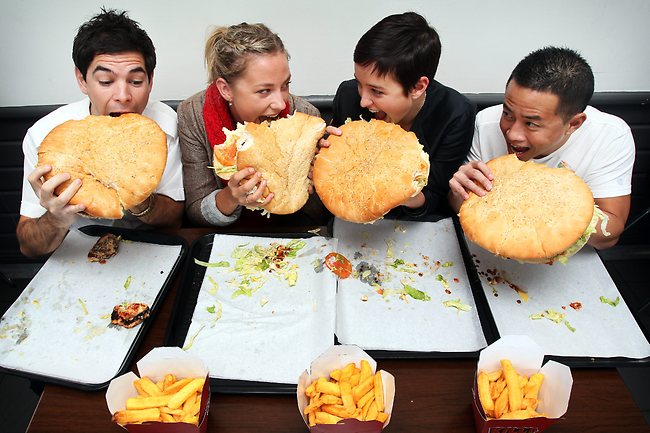
Modern Marvels adopts a different approach from, say, Man v. Food on the Travel Channel, where host Adam Richman travels around the country to participate in food challenges. Eating competitions get mentioned in the Modern Marvels episode — and actually we see a Chicago fireman trying to devour a gigantic meat-centered menu in Texas in less than an hour, in front of his adoring family — but the show focuses more so on what happens backstage to achieve the preparation of a 250-pound burger in a 44-pound bun (and its celebratory consumption by a whole team of young football players — not really a surprise), seven-pound hot dogs, 54-inch giant pizzas, 4.5 pound steaks, 5-pound gummy bears and so on. Viewers are invited to reflect on what it takes to cook a huge hamburger, what technical challenges present themselves when you need to bake a pizza large enough to feed 30 “hungry pizza lovers,” and what sort of ingenuity its makers display.

In the interest of the supposed educational and informative aspects of the series, the excesses showcased with glee and pride by the American entrepreneurs are mitigated by an attempt to reflect on why gargantuan portions and eating contests are so present in American popular culture. The voiceover commentator mentions “supersized appetites, resources, and egos” as essential traits of American culture, where supersized homes, electronics, and vehicles are wildly successful, and where food has become cheaper, more available, and more convenient. The burger maker explains that commercial food needs to be entertaining, and that clients love over-the-top items, while the hot-dog maker suggests a Darwinian strive to show power and strength. The show discreetly seems to share these opinions, as the Mongolian hordes of Genghis Khan are indicated as the first consumers of meat patties. Cornell University’s marketing professor Brian Wansink, who has written extensively about eating behaviors, points to the competitive pressure in American culture. To do so, he reports an experiment where young college students are invited to eat as many chicken wings as they can, with and without the presence of cheering spectators. Of course, those performing in front of an audience tended to eat 30 percent more, on average.

Overall, however, the show is less interested in the motivations for exaggerated eating than in its technical aspects. In a way, the fact that Americans tend to consume oversized portions is taken as a given that needs only marginal soul-searching. What’s interesting is how brave entrepreneurs are able to read their customers’ desires and adapt their production to satisfy them. The patrons’ life choices are not their responsibility. Their goal is to increase their clientele and to grow a solid business. Nothing wrong with that, of course, except for the echoes of the political discourse that use the argument of personal responsibility as an excuse to avoid public intervention in health and nutrition issues. What is troublesome is that the cultural and social assumptions behind this approach are accepted as unavoidable facts, rather than as consequence of specific policies and collective choices.

by Michael Cirelli

I blame it on field greens
and the French — with their anti-gravity
noses pointed towards the point
of Tour Eiffel. It was Bush-I-era when our
groceries, not Provençal, were flooded
with these preemie leafies whining
on our plates. So deceived by
this new alien word for salad: our Icebergs sunk
by rocket (arugula), God’s breath (Swiss chard),
and N-dive or On-deev or whatever whatchamacallit.
Our romaine omitted for Dijon’s child
(mustard greens), for mizuna, for oak leaf,
mâche, radicchio. A million combinations of salad
mixes piling up (like leaves) on Stop &
Shop conveyor belts, paving the way for aisles
of spelt, sprouts, whole wheat crusts.
Cutting ribbons for Whole Foods and gentri-
fication. Now at brunch, instead of home
fries we get mesclun, instead of sausage
get turkey-links, instead of eggs, Eggbeaters.
What happened to slices of bacon
thick as dominoes, chunks of blue cheese
stank as hockey socks? Enough Tofurkey,
Tempeh, Tazo. I want mom’s pork
chops, Homer Simpson’s favorite food: stuffed
with smashed Ritz and butter rich as Versailles.

Michael Cirellia is a graduate of the New School’s MFA in writing program.  This poem is from the forthcoming collection entitled The Grind. His poems have recently been published in Gastronomica, Edible Brooklyn, among others.

by Carmella Guiol

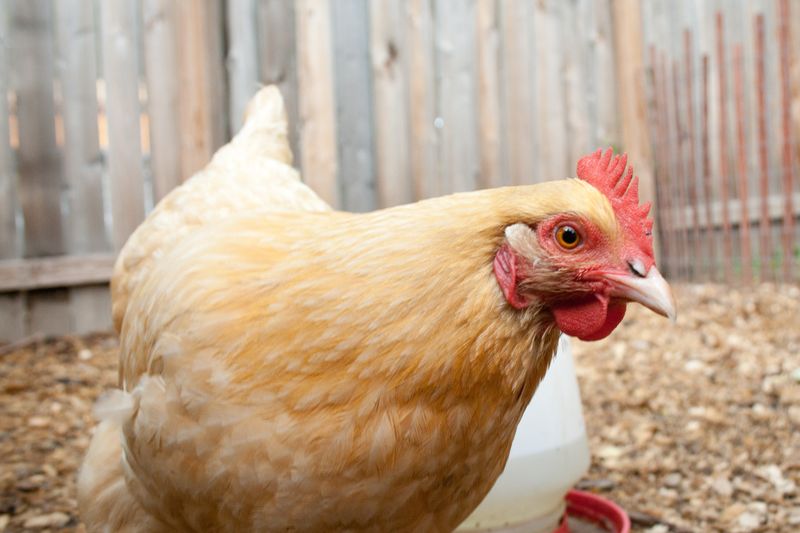
The first time I saw a chicken being killed, it was by my own hand. I was living on a commune in southeast Portland (they preferred the term “intentional community”) and one of the chickens of the flock turned out to be a rowdy rooster. He was harassing all of the lady chickens and being a menace to the children on the farm, so we decided (by consensus, of course) to make him dinner. But when it came time to decide who was going to do the deed, it seemed everyone was much too busy to be bothered. One of the community members, Sue – a supremely sweet and soft-spoken mother of three – volunteered to take on the task, and I followed suit, forgetting momentarily that I’m just a city girl from Miami who has never so much as cooked a chicken, let alone killed one with my bare hands.  Although neither of us had done this before, we both wanted to get closer to our food, and this was the perfect opportunity to get truly up-close and personal.

One bright blue summer afternoon, Sue and I headed out into the field, she dangling the rooster at her side, grasping him firmly by his coarse feet, and me boldly clutching a sharp knife. We were told that if you held a chicken upside down by their legs, they would slip into a semi-unconscious state; it seemed to be working. Sue’s thin cheeks lost their color before we even reached the butcher’s block. She mumbled to the subdued rooster under her breath as we walked, his shiny black feathers flashing in the sunlight. “I’m so sorry about this. Really, I am. But you’ve had a good life, haven’t you?”, she tried to reason with him, pushing up her glasses nervously. He remained peacefully unresponsive. At this point, I was still feeling quite resolute about the whole affair. I had decided a while ago to face the truth about my food no matter how unpleasant that might be; this experience would put that decision to the test.

We got to a spot in the field that was partially hidden by some trees. As instructed by our fellow community members better versed in the art of chicken sacrifice, we hung an empty bottomless water jug from a sturdy branch; this was where we would stick the chicken upside down after the deed was done to let his arteries bleed out. Sue shook her head miserably, clearly disturbed by what we were about to do, and handed me the knife.

My determination seemed to evaporate as I took the blade in hand. There were several ways we could do this, but I had eschewed the method of breaking the chicken’s neck with my bare hands. “You could always put its neck under your foot and jerk it really hard,” Sue offered, trying to be helpful. I shook my head softly; the knife seemed quicker, cleaner.

We knelt down in the grass. I grasped the handle of the knife while Sue held down our victim. It wasn’t a particularly big knife, so I wasn’t going to chop its head clean off, but I hoped it was sharp enough to make the necessary incision as quickly and painlessly as possible. I wanted this whole ordeal to be over, and as I stood over our rooster friend, Sue cooing her final words of remorse, I seriously regretted having volunteered for the job. We both took a deep, calming breath. She stretched out his long, black neck and I took aim.

In one quick motion, I jabbed at his rubbery neck with my blade. Unfortunately, the cut wasn’t as fast or easy as I had hoped, much to my and Sue’s horror. I stabbed again, hoping for better results, but the knife bounced back at me. At this point, the chicken was squawking like crazy, having woken up with a start from his swinging slumber. He started batting his wings vehemently and trying with all his might to make a quick getaway. Sue was having trouble keeping him down and I was pretty sure that she was going to run for the hills at any moment. Hastily, I tried a new approach and began to saw at the leathery skin. This worked almost immediately and, much to my relief, a stream of hot blood leaked out of the wound and onto his dark plumage, still glittering regally in the sun.

Glad that the killing part was over, we smiled weakly at each other over the body and worked to wrestle the chicken into the makeshift kill cone, his body convulsing with uncontrollable spasms. Thankfully, we had been warned of this frightening side effect by our seasoned chicken killer friends. “Maybe that knife wasn’t sharp enough,” Sue mused, as we watched his body jerk unconsciously. “We really should have had a bigger knife,” I agreed regrettably.

Once the blood had stopped dripping and the body had gone limp, we took the chicken up to the house to be “processed”. On the back porch, Hans, the burly German nurse who lived in a teepee on the land, showed us how to properly skin and eviscerate the chicken. Sue and I watched intently but didn’t offer our help; we were still shaken from our experience in the field. I, for one, was extremely grossed out by the mere idea of sticking my hands inside the chicken’s body, so touching the slippery and slimy internal organs was out of the question. I had already summoned the courage to take this chicken’s life, and that was enough emotional stress for one day.

Once the bird had been stripped down to something that you might find at the grocery store, it was taken into the kitchen to become dinner. A few hours later, we all sat around the big, round table, enjoying our extremely local chicken meal. As I chewed thoughtfully on my rooster friend’s flesh, I thought about the scrappy life he led here on the farm. He wasn’t as fatty and full-bodied as a supermarket chicken would be; in fact, his meat was a bit tough and stringy. But I felt good knowing where he had spent his days, scratching around in the yard, pestering his flock mates and putting on a dramatic display of machismo to anyone who crossed his path.

Taking his life hadn’t been easy, certainly not as easy as picking up a frozen bird from the local grocery store, or better yet – an expertly seasoned, crisped to perfection, golden brown rotisserie chicken ready for immediate consumption. But this way felt uncomplicated, somehow, true and real. Biting my lip as I readied myself to go for the jugular, dull blade in hand, I had to dig deep within to find the strength to go through with the motion. Unlike so many things today that come far too easily and with casual convenience, I had to give a bit of myself to get something in return, and I’m thankful that I did.

Carmella Guiol is a community food activist and writer from Miami, Florida.  Read her blog: renouncerejoice.blogspot.com.

Book Review: Consider the Fork, A History of How We Cook and Eat

By Bee Wilson
Publisher: Basic Books
Released October 2012

by Larissa Zimberoff

“There are fork cultures and there are chopstick cultures; but all the peoples of the world use spoons.”  And so, after an introduction on the usefulness of wooden spoons, we dive into Consider the Fork, A History of How We Cook and Eat by Bee Wilson. In this book, Wilson, a food critic and historian, tackles what she calls the technology of the kitchen; namely why we use what we use to prepare, cook, and eat, and how that has evolved both our cultures and our diet over the past centuries.

But before we talk spoons, let’s dish about knives. I had never given much thought to the utilitarian utensil before reading this book, but knives are inherently dangerous. In fact, as Wilson points out, they are tools of violence. In medieval and Renaissance Europe you carried your knife on your body at all times. Wilson tells us, “Almost everyone had a personal eating knife in a sheath dangling from a belt.” These knives could be used to eat as well as, perhaps, pin someone against a wall. Yet times began to change, knives got duller, which both altered social skills (no picking food out of your teeth with your dagger) as well as the food (the duller the knife, the softer the food). What were these knives made of?  Metal, of course. However, most metals have adverse reactions to certain foods, namely fish. This wasn’t resolved until the advent of stainless steel, in the twentieth century, which Wilson calls “another step towards domesticating the knife.”

The chapter on knives is an excellent example of the breadth of research that Wilson brings to her subject, as well as her knack for storytelling and her ability to take us through the history of a tool along with its impact on the world around it. We’re given this same comprehensive treatment in all eight chapters in the book: pots and pans, knives, fire, measure, grind, eat, ice, and kitchen. At the end of each chapter an implement is highlighted for its key stakes in the category. Such as the toaster, which was invented by Charles Strite, a mechanic from Minnesota who was fed up with the burned toast he was served at his work cafeteria. His patent, issued in 1921, introduced one of the first tools into the American kitchen that allowed you to turn your back on the cooking at hand.

The curious facts we learn throughout the book are worth the price of admission alone. Like did you know that before kitchen timers people used different songs (think Ave Maria) to judge how long a dish needed to cook? Or that a fourteenth-century advice book instructed a chef making pancakes to beat the ingredients “long enough to weary one person or two.” Two! And that sugar used to come in solid lumps or loafs, and were cut up into smaller bits using sugar nippers. Let’s not forget our namesake: the fork. Did you know that the first true fork, a two-pronged gold version was used by a Byzantine princess and possibly harder to believe, that it wasn’t until the seventeenth century that forks were considered anything but odd. The Italians of course were the earliest adopters. I mean, who eats pasta with spoons?

Wilson’s voice throughout, both light and engaging and educational, draws you along the history at a nice clip. She’s at her best when sharing historical stories, as seen in a delightful exchange about kitchen and communism between Nixon and Kruschev in 1959. While her movement through the subject matter felt too brisk at times, and in others a bit repetitious, her prose will certainly keep you engrossed. This sweeping book covers a great deal of ground and I could envision Wilson tackling a similar book with as many pages about one item: fork, spoon, knife, you name it. While reading the book you’ll find you want a pen handy to underline quirky and interesting and unique facts of our culinary history, maybe to look up later or maybe to dazzle dinner guests at your next meal. You might also want a snack within reach.

Larissa Zimberoff is a freelance writer living in Manhattan. She is currently working towards her MFA at The New School. Her writing has appeared in Salon, Untapped Cities and The Rumpus.