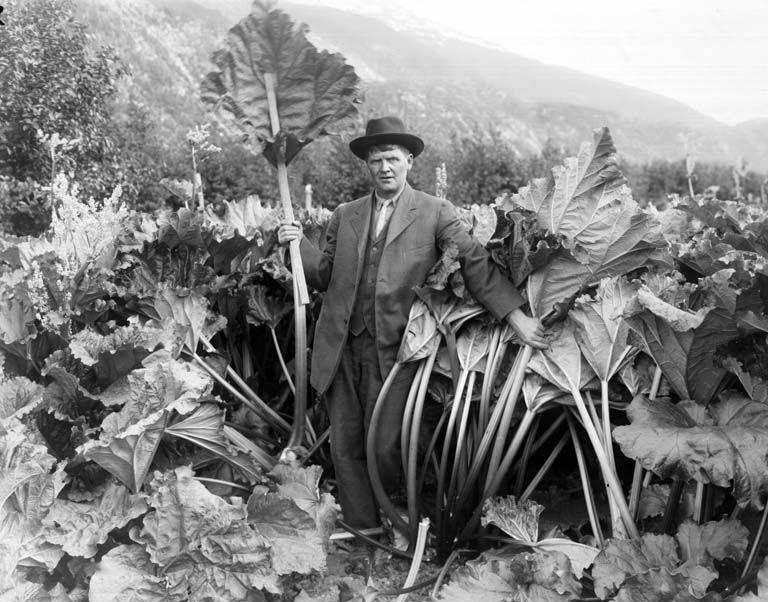
To check on your rhubarb I tuck my sharp knife double-wrapped in plastic bags under the bungee of my paddle board and head out to your dock. Summer is soup right now— hot, viscous. I find the rhubarb— great stalks as thick as my wrist long as my thighs. I pull out my knife to make the clean cuts. I know why I cannot restrain myself— I’ve had your rhubarb on my mind ever since I last summer— your gift—so large, so plentiful. Don’t think I’m crazy talking to a dead man. Don’t think I’m stealing what would go to waste. I’m hoping I honor your life, to taste the sour in the pie.
Applesauce
How crisp the apples that resist the knife. How sweet the pale yellow flesh to bite. How the apple, smaller than my fist pretends at symmetry when I slice. One seed split by my cut peers out like a new tooth from the core. I steady the apple half and dice think of how each piece each wedge of flesh fits together like a puzzle and when I pour water in to simmer sprinkle cinnamon from a jar without taking time to measure I think how imprecise this process is—the making of the sauce— no matter the number of apples no matter how much water— while I wait for the cook down. For how long? Who cares? For this moment I cover then simmer then mill.
Filmmaker and photographer Carla Schwartz’s poems have been widely published, including in The Practicing Poet (Diane Lockward, Ed) and in her collections “Signs of Marriage” and “Intimacy with the Wind.” Her CB99videos youtube channel has 2,400,000+ views. Find her at carlapoet.com, wakewiththesun.blogspot.com, or on Twitter, or Instagram @cb99videos. Recent publications appear in The Ear, Channel, The Poet’s Touchstone, Ibbetson Street, Paterson Literary Review, The MacGuffin, and Leon.
Does everyone fall in love with their ex–brother-in-law? I did for a moment.
He came to my house to eat this man-cook who knows the fishmonger, the fisherman (never a woman in his world)
buys the tuna, slaps it on the grill maybe fires up a few potatoes. Asparagus or greens and there’s dinner — the best I ever had.
Oh, what would I make this tormenting god of the grill? I opened a cookbook from France a country he would never see and followed directions.
Peppers, heaps of bloody red ones, scorched until their skins popped, could be peeled off, their painful tender, raw flesh exposed silky and tender wet, vulnerable. Soft and precious.
Into the processor steel blades whirled, sliced spun them with more olive oil than anyone but the French would dare use.
Oh, the delight, better than a kiss on my own raw, red tender lips, his sigh when he scooped up the last pool of it.
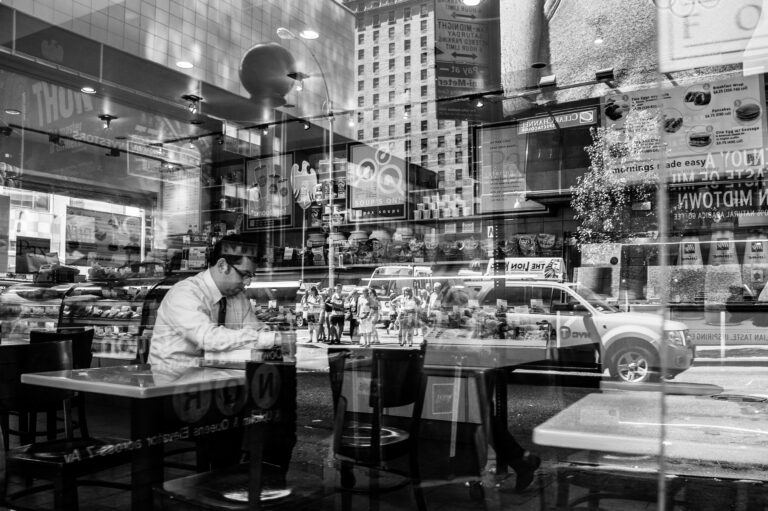
I would give anything just to sit down to dinner at a restaurant tonight my friend and I are texting each other from our apartments blocks away I miss oysters too glasses of champagne even a table for one on a Tuesday night, deviled eggs each one a gift passed from dozens of hands to mine the farmer upstate who surely misses a bottle of wine now, sitting down for dinner and the truck driver dreaming about pulled pork from a place he knows to stop at off I-87, south into the city where a thousand line cooks dream about after work shift drinks steady paychecks the bread they used to make and the bartender, twirling an empty coup glass in her kitchen missing that girl who used to come sit at the bar alone who ordered anything to drink but always deviled eggs.
Keri Smith grew up in Florida then saw the world playing in punk bands. She has her MFA in Poetry from the New School, and her first book, Dragging Anchor, was published by Hanging Loose Press in 2018. She works as a bartender in Brooklyn and can often be found at Rockaway Beach with her chihuahua.
For far too long I’ve listened in silence to those espousing Kalamata supremacy, (which, admittedly, I wholeheartedly concede), or to others vaunting the virtues of Castelvetrano, (God help those misguided dupes); I’ve patiently endured insufferable disquisitions on the buttery flavor of Cerignola, the tartness of Picholine, the meaty richness of Gordal, most beloved as a tapa beside slivered jamon and a glass of sherry. With unbridled lust have I gazed at jet-black Nyon, plump and wrinkly, dry-cured then aged in brine, and I hereby confess that where my eye wandered, alas, my faithless fingers soon followed. Granted, I’ve nibbled my share of Nicoise tapenade and reveled with abandon in its herbal fragrance graced with faint notes of licorice; its petite counterpart across the Alps, the Liguria, cannot withstand comparison (very sorry, but my decision is final). My palate has also thrilled at the tart, citrussy taste of Gaeta, whose tender flesh enlivens the tongue; I’ve swooned whilst savoring the sour bittterness of Alfonso, supple after maceration in red wine. Naturally, I’ve had my way with many a Manzanilla, almondy ovals pitted then stuffed with pimiento or else cracked and dressed with fresh garlic. Full disclosure: I whored through handfuls of the rare Beldi, sumptuous as a tagine garnish, and like a glutton gorged myself on more Amfissa samples from the hills by Delphi than the local oracles surely ever did. And yet, for all my shameless promiscuity, I refuse to avert my view from the grassy Mission variety, oft overlooked and neglected by lesser connoisseurs, but not by me, not this time, so once and for all let me set the record straight, for in truth, I must insist, black olives matter.
Brandon Marlon is a writer from Ottawa, Canada. He received his B.A. in Drama & English from the University of Toronto and his M.A. in English from the University of Victoria. His poetry was awarded the Harry Hoyt Lacey Prize in Poetry (Fall 2015), and his writing has been published in 300+ publications in 32 countries. www.brandonmarlon.com
A memory: my father angry in Disney World, his hand cold & damp around mine as I fly behind him like a severed rope through a sea of costumed families, in a frantic search for a kiosk, a Coke, anything to feed his blood. Finally we find chocolate which he swallows without joy,
closes his eyes
and breathes, presses both hands on the yellow counter & hangs his head & sweats & breathes until his hands are dry and he’s saying sorry I’m sorry
As my vision wobbled & bubbled into blackness I became abstractly aware of the teeth in my mouth & even though this is not what you’re supposed to do when fainting, I gripped the counter, desperately searching for a door back to my feet. Fireworks crackled, still & vibrant, staring back
Photo by Pete Perry
Emily Zogbi is a writer from Long Island who earned her MFA in poetry from The New School. Her work has been published in Chronogram, Tinderbox Poetry Journal, RHINO Poetry, Half Mystic, and Ocean State Review, among others. Emily was the recipient of the 2021 Sappho Poetry Prize from Palette Poetry and is a poetry reader for The Adroit Journal. Her debut book of poems, “all the time more than anything,” is forthcoming from Finishing Line Press. She wishes she had been a dancer.
When mango mania strikes, I ditch my apple pie and neglect my wife and my children. The history of Lexington dims and the street I live on, where Paul Revere once galloped on his horse, no longer ties me to this town. India reigns in my mind – the accordion pleats of a sari, orange jasmine blossoms against ebony hair, the red sindoor on foreheads, the competitive cry of vendors, the clanging of temple bells summoning late-comers, the devout singers with their seductive, spiraling notes, the dancer’s jangling anklets reaching a crescendo as she hurtles forward on a brass plate, the monsoon rain urgently pounding on rooftops, the wafting scent of biryani that refuses to be banished from minds, the calming fragrance of sandalwood in handicraft stores, and the once elegant ancestral house, decaying in the midst of the scaffolding of residential buildings rising around it like futuristic towers of doom.
As the craving becomes an obsession, I know I must head to the place where the ovoid fruit thrives and is artfully reproduced on brocaded saris that brides wear on their wedding day and where the auspicious leaves of the mango tree are strung along the entrance of homes on special occasions. All one needs in life is a mango, smooth or pitted, small or large, to be eaten or pureed into dessert.
At my uncle’s dining table, I watch my reflection greedily devour Alphonso mangos. I wipe the mango juice that dripples down my chin with my hand and then I suck my fingertips. My aunt remarks that I haven’t changed nor have I forgotten my mother tongue. You’re not stuck-up either, she says, watching me wipe my chin with the heel of my hand this time. The fruits taste like the ones I used to pluck from my mother’s garden when, as a child, I’d ensconce myself on a lower branch and balance a stainless steel container dotted with chili powder and salt. In my absence, the urchins would aim their slingshots at our fruit and wander off with their spoils. A week later, satiated with my uncle’s mangos, tired of the ceaseless hammering of laborers, the nocturnal braying of dogs auguring death, the relentless sun creating beads of sweat, the never-ending stream of visitors coming to see me, and the stench of overflowing garbage on the streets, my thoughts flit across an ocean to America. I miss my adopted town, where sounds, sights, and scents are more subtle and where mangos can be bought or gifted, but none are as flavorful as those plucked in my ancestral home. In my mind I’m already in Lexington, where the Chinese, Brazilians, Pakistanis, Armenians and others have also made themselves at home and where we indulge in the American passion for frozen yogurt even in chilly temperatures, our portions widening with the years until we feel the need to practice austerity. On my last evening, my uncle chuckles, drums his fingers on the table, and says he won’t see me until mango mania strikes me again. Then he winks, knowing he can depend on my cravings to guide me back to his table.
Tara Menon is a freelance writer based in Lexington, Massachusetts. Her poetry is forthcoming in “Tiger Moth Review.” The following journals and anthologies have published her poetry: “Yearning to Breathe Free,” “Blue Minaret,” “The Bangalore Review,” “voices ofeve,” “Calliope,” “Lalitamba,” “AzizahMagazine,” “Aaduna,” “Yellow as Turmeric, Fragrant as Cloves,” “the view from here,” and “10×3 plus poetry.” Her nonfiction has appeared in “TheCourtship of Winds,” “The Boston Globe,” “The Kenyon Review,” “Green Mountains Review,” “Fjords Review,” “Na’amat Woman,” “Calyx,” “India Currents,” “Parabola,” “India NewEngland,” “Lokvani,” and “Hinduism Today.” Her fiction has appeared in several journals and anthologies.
Full of green Spicy bite Heart’s zing Rich appetite
Brittle dust Green smear Lying in sun Maple tear
Missing leg Mean and sweet Dipped head Saturated treat
Breaking limbs One by one Sweet and mean Isn’t it fun
Hannah Updegraff is a wellness blogger, vinyasa yoga teacher, and a Food Studies student at The New School. Find her on social media: @theheartbeet.co and @hannahkupdegraff
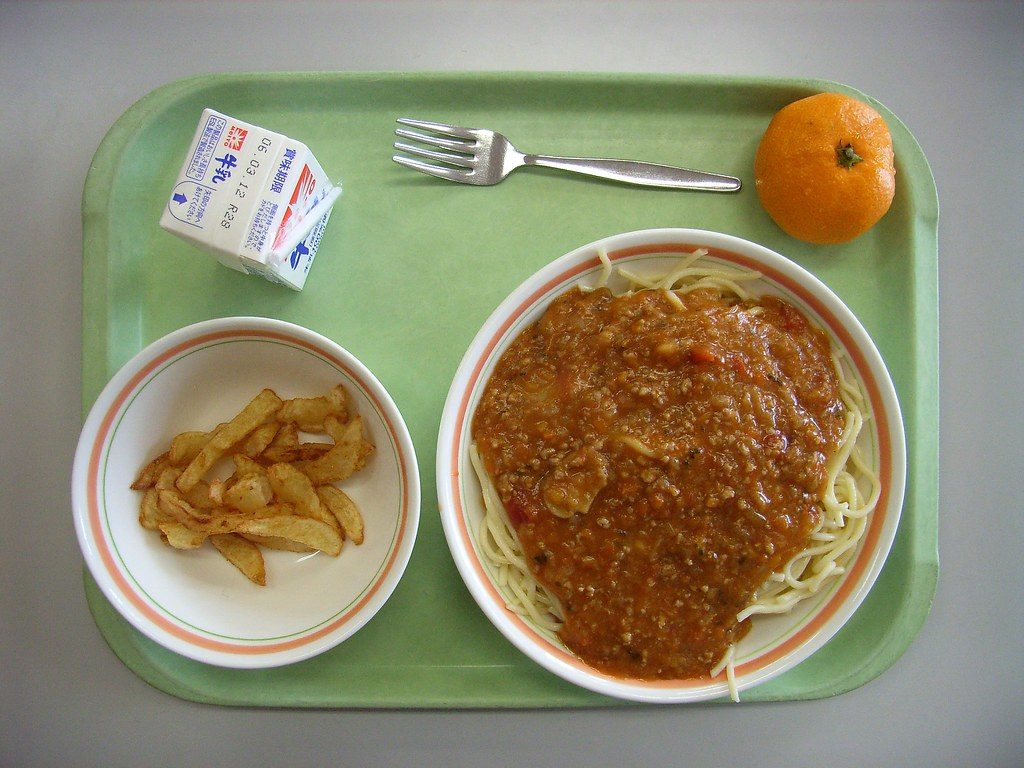
we sit down on the mat / the one with motorways and highrises and grinning families sprawling over it / and Mrs Tanner does the register / and if you’ve brought food from home you say SAMWICHES / even if it’s a bag of crisps you’ve brought / and if you’ve brought 50p you say FREESCHOOLDINNERS / pass your 50p to Mrs Tanner / she puts it in the envelope / and if you’re not eating until sunset you say RAMADAN / at lunch / if you’re a SAMWICH or a RAMADAN you eat up in the park / or don’t eat / with all the other SAMWICHES and RAMADANS / if you’re a FREESCHOOLDINNER you line up in the hall and take a tray / the colour of an avocado bathroom suite / you wonder what an avocado is / the dinner ladies / Emma’s mum and Llewellyn’s mum / the other Llewellyn / they ladle out the dinner bits / indifferent to the different tray compartments / flakes of their impasto makeup sometimes fall in too / the best days are the days / when it snows / we can all get here pretty easy on foot but the dinnerdriver can’t get the van out the valley when the road’s blocked / school is cancelled altogether / the next best days are the days / when there’s BASKETTI / usually it’s ROASBEEF / translucent slices / of boiled something / lost verruca socks / with GRAY-V / don’t worry mind there’s always CHOCOLATE CONCRETE / and it always comes with PINKUSTARD / sometimes it’s green / not really for eating either way / just for softening the slab / the first thing what you have to do / before you even looks at your ROASBEEF / is smother all six sides of CHOCOLATE CONCRETE in PINKUSTARD / let it sit / maybe our recipe has extra lime / maybe it’s just stale by the time it gets here from the valley / but no knife / not even the metal knives / while the metal knives last / before the other Llewellyn goes and gets them banned by throwing one at Mrs Tanner / is any match for FREESCHOOLDINNERS CHOCOLATE CONCRETE / not something you can just politely slice away at like some SAMWICH / the only way to cut through CHOCOLATE CONCRETE / jam a fork in / while the forks last / and TAP TAP TAP against the back end with the salt shaker / a master mason chiselling down the fortress / hit too hard and the whole slab explodes / you end up with a few crumbs on your tray / and everyone else’s brimming full with your CHOCOLATE CONCRETE / make sure the shaker lid is on real tight / people undo them see / chisel with a loose lid and drop whole pillars of salt on your tray / hilarious like / definitely the funniest thing to happen all day / unless it happens to you / do you even like the FREESCHOOLDINNERS CHOCOLATE CONCRETE though / I mean without the salt / not really the question though / is it / sublime indifference to all our tastes / the consistency / the presence / the unshakeable stability / comforting really / whether you like it or not
Oscar Mardell was born in London and raised in South Wales. He currently lives in Auckland, New Zealand, where he teaches Classics, brews beer, and practices Aikido. His poetry and essays have appeared in a variety of publications, including War, Literature & the Arts, The Literary London Journal, 3:AM Magazine, DIAGRAM, Terse, and Queen Mob’s Teahouse. He is the author of Rex Tremendae from Greying Ghost and Housing Haunted Housing from Death of Workers Whilst Building Skyscrapers.
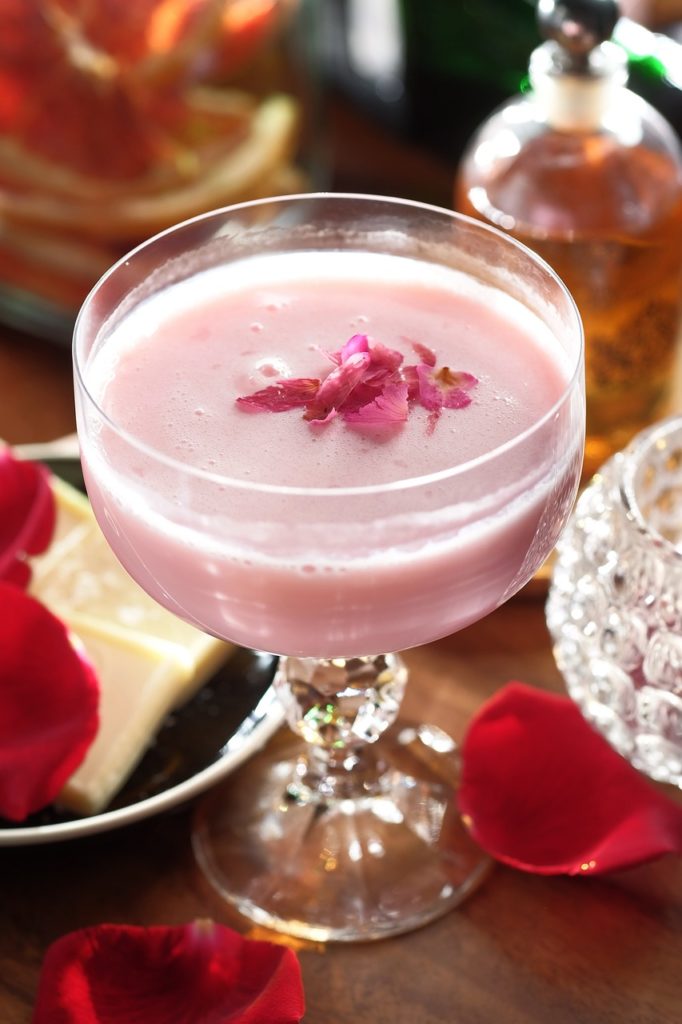
Satiating tears The only ones Delicate petals pressed Steeped invisible fun
A drink that hugs you A soothing twist Magic potion pour Hydrated eyelids
In your body And on your skin A liquid bouquet A floral swim
Shrinking almonds Maple saltwater Blending a dash Dissipating dropper
Sweet petal cream A healing skim Squeezed fluff Beige bubbles the brim
Hannah Updegraff is a wellness blogger, vinyasa yoga teacher, and a Food Studies student at The New School. Find her on social media: @theheartbeet.co and @hannahkupdegraff
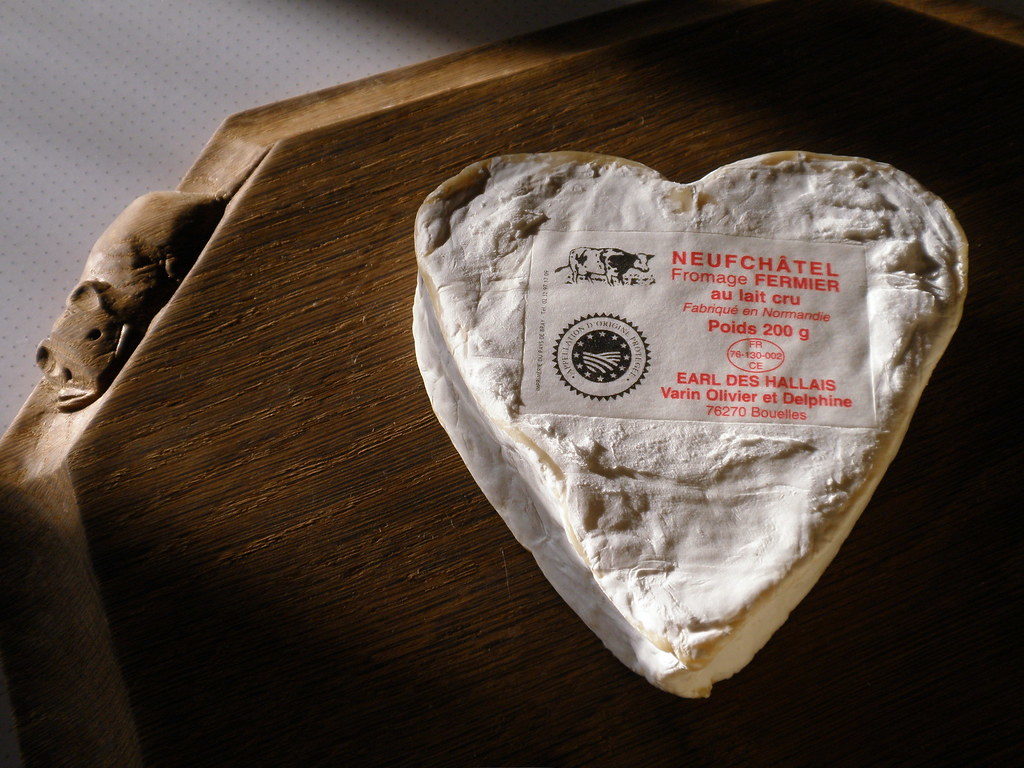
cause I just bought the cheapest cheese which happened to be a blue brie in the shape of some stupid heart
cause when they asked you does it remind you of home you kindly pointed out that blue brie’s not a thing there and the heart shape is for Neufchâtel where farm girls fell for foreign soldiers in the Hundred Years War
your family keeps one in the cave in memory of your grandma who was born in Neufchâtel
the soft bloomy rind and that distinctive mushroom flavour which you don’t really like you say not as much as blue brie anyway
Oscar Mardell was born in London and raised in South Wales. He currently lives in Auckland, New Zealand, where he teaches Classics, brews beer, and practices Aikido. His poetry and essays have appeared in a variety of publications, including War, Literature & the Arts, The Literary London Journal, 3:AM Magazine, DIAGRAM, Terse, and Queen Mob’s Teahouse. He is the author of Rex Tremendae from Greying Ghost and Housing Haunted Housing from Death of Workers Whilst Building Skyscrapers.