Author

Anya

Browsing

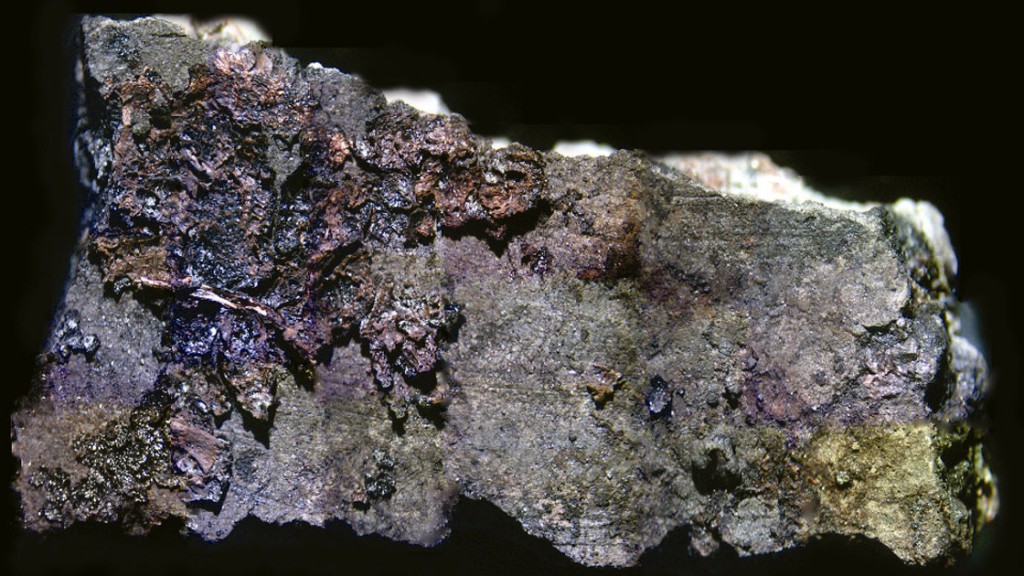
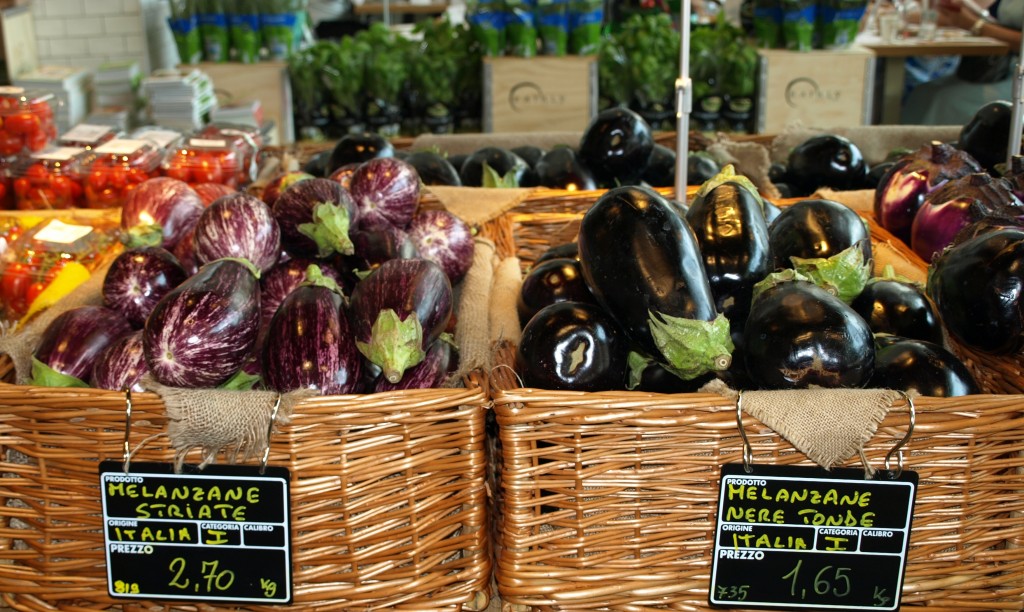
The French may have coined the term “gourmand” a few hundred years ago, but it looks like humans were flexing their foodie muscles thousands of years before that. Scientists have found the first direct evidence that European hunter-gatherers flavored their roasted fish and meat — probably deer — with at least one spice: garlic mustard seeds.

Click here to read more on TheSalt.com.

how can i get viagra overnight

by Fabio Parasecoli

levitra on line pharmacy

Whether a college education in the liberal arts is worth effort, time and, above all, financial investment, has become a pressing question with wide social repercussions. The recent comments by President Obama underlined the urgency of the issue. In an economic environment where student debt is on the rise and the job market seems stuck in low gear, these are legitimate concerns. They also extend, of course, to those engaged in food studies. Why should young people decide to dedicate their time and money to study food and what are their professional perspectives once they graduate?

A recent — and apparently unrelated — article in the New York Times offers opportunities to reflect on the topic. In the article, economists David H. Autor and David Dorn discuss the impact of technology on middle-class workers while hypothesizing on the cause behind the increasing disparity in income between high-paying occupations and low-wage jobs.

Autor and Dorn argue that the growing mechanization in many productive sectors increases the demand for workers who can count on “problem solving, intuition, persuasion and creativity,” as well as “high levels of education and analytical capability.” At the other end of the spectrum, there is a great need for “so-called manual tasks,” which require “situational adaptability, visual and language recognition, and in-person interaction,” basic skills that most humans can perform in “low-wage, in-person service occupations.” Autor and Dorn suggest that middle-class careers will expand in sectors that require manual skills and the capacity of interacting with other humans, together with more abstract aspects of problem solving. They join Harvard economist Lawrence F. Katz in predicting growing numbers of “new artisans,” “those who combine the foundational skills of a high school education with specific vocational skills.”

I believe that food studies programs in the liberal arts — rather than in vocational training institutions — complicate this approach, which assumes that the “new artisans such as medical paraprofessionals, plumbers, automotive technicians, and customer service representatives do not require a college education.” A growing number of careers that have the potential to employ food studies graduates challenge the neat separation between intellectual and manual expertise. Some students already have a background as chefs, cheese makers, food stylists, and PR communicators. Others are interested in sectors ranging from policy making and nonprofit to international institutions and NGOs focusing on food system change, rural development, or social justice.

I propose that these young professionals, who often generate new employment opportunities as they develop their own research, projects and startups, fall in a different category — the “liberal artisan.” I thank philosopher Lisa Heldke (also past editor with Ken Albala of Food, Culture, and Society, the journal of the Association for the Study of Food and Society) for this definition inspired by John Dewey, one of the founders of The New School, where I coordinate a Food Studies undergraduate program. Dewey wrote, “The present function of the liberal arts college is to use the resources put at our disposal alike by human literature, by science, by subjects that have a vocational bearing, so as to secure ability to appraise the needs and the issues of the world in which we live” (LW 15,280).

In the seminal book Cooking, Eating, Thinking, which she edited with Deane W. Curtin, Hedlke considers food making as a “thoughtful practice,” a “mentally manual activity” or a “theoretically practical activity” that bridges the separation between “inquirer and inquired,” between “timeless truths about unchanging reality” and “the transitory, the perishable, the changeable.” I would extend the argument to many occupations dealing with food, which challenge the distinction between theoretical and practical knowledge and introduce innovative ways to relate to the world and to society.

In our program, we are going beyond the distinctions that Heldke identifies — for instance, creating the structure for chefs to come back to school and get their bachelor degrees. They can hone the analytical abilities that Autor and Dorn identify as essential for high-paying jobs without discounting the manual and practical skills they already have. We network with institutions and organizations that offer internships straddling the theory/practice opposition, from communication to activism, from urban agriculture to marketing. The goal of our public events is to create opportunities for practitioners and scholars to come together and exchange ideas and experiences as peers. As John Dewey did, we are confident that a new generation of “liberal artisans” will be able not only to find satisfactory careers, but also to have a positive and creative impact on the environments in which they find themselves operating.

from Huffington Post

by Erin Hutton

On Wednesday nights, Kevin makes me dinner in his Wilkinsburg apartment, on the edge of Pittsburgh. The apartment is almost all white. The kitchen cabinets were once a pure, new white, but over the years they have begun to yellow, matching the once-white linoleum floor. The fridge and stove are bright white, new appliances Kevin scrubs every weekend with a wet rag. The living room carpet is off-white and the walls are painted eggshell or cream or some other fancy word for white. One wall is covered in mirrors that reflect the apartment’s whiteness.

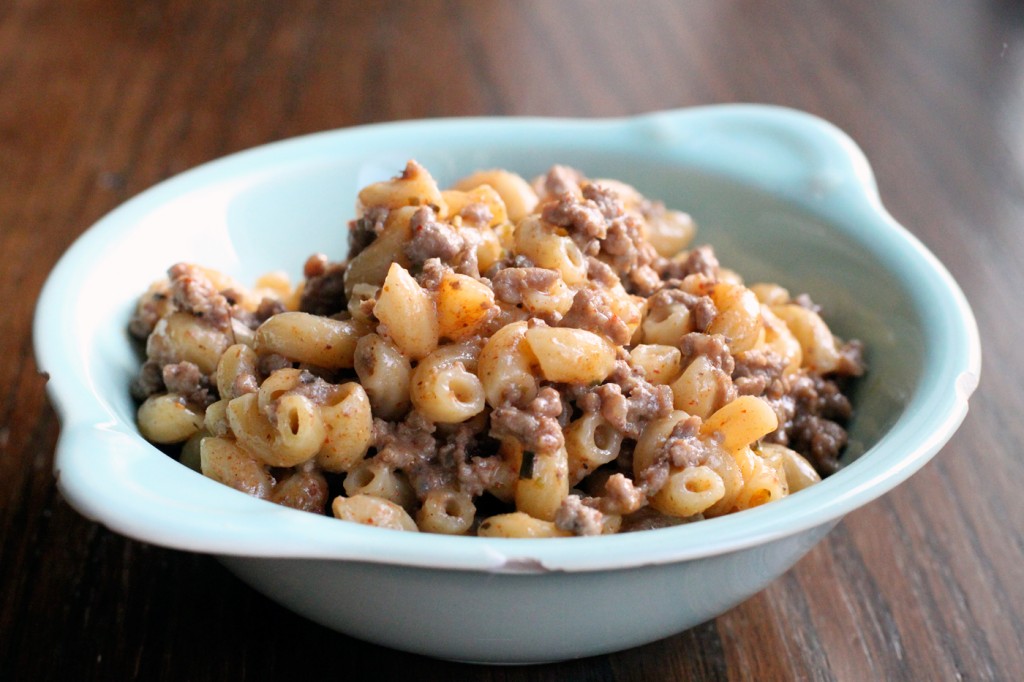
Kevin makes me off-white food from off-white boxes: Tuna Helper with a side of Pastaroni or Hamburger Helper made with venison (his father is a hunter) and a side of canned corn. Sometimes, he makes Kraft Macaroni and Cheese, the box a blue buoy in an off-white sea.

I have not eaten this kind of food before, food from boxes. Kevin’s cabinets are filled with boxes. Hamburger Helper in different varieties: Classic Cheeseburger Macaroni, Stroganoff, Beef Pasta. Tuna Helper: Creamy Broccoli, Tetrazzini, Cheesy Pasta. Pastaroni: Butter and Garlic, Angel Hair Pasta with Herbs, Tomato Parmesan. Kraft Macaroni and Cheese. Beside the boxes there are cans of tuna, corn, and peas. They’re organized in perfect rows. When he runs low, he goes to the grocery store and buys three boxes of each pasta-based meal, as well as two cans of corn, two cans of peas, and six cans of tuna. He also buys a gallon of milk, a jug of Sunny D, and three boxes of cereal. Sometimes there are bananas, peanut butter, bread, taco fixings, and a box of some new quick-fix dinner he wants to try. There are no spices, not even salt and pepper.

I come from a family of cooks. My mother baked cheesecakes and apple pies from scratch and sold them to fancy restaurants. My father makes Caesar salad with whole anchovies and smokes his own bacon. My brother takes the time to de-seed, salt, and drain the tomatoes for his tomato-basil bruschetta. I learned to make coq au vin before I learned to scramble eggs, and long before I was old enough to drink the wine in the sauce.

Kevin dances when he cooks for me. His iPod is filled with Britney Spears, Shania Twain, and Stephen Lynch. He belts out it’s rainin’ men! Hallelujah it’s rainin’ men! as he reads the ingredients on the Hamburger Helper box: hot water, milk, butter. When the venison has browned, he drains off the tiny bit of fat in the tall-sided skillet, and then adds the carefully measured liquids and butter, dried off-white noodles, and a packet of “Sauce Mix.” I do not read the ingredient label.

For a side dish, Kevin will often mix up a batch of Pastaroni: dehydrated noodles with a white powder flecked with green that turns into a sauce when you add milk and simmer. Noodles with a side of noodles. I prefer it to the canned peas and corn, but I can’t help but wonder what makes Pastaroni a side dish to a main dish of pasta with meat sauce? Perhaps the lack of meat makes it “different enough.” Perhaps it’s just that it’s easy and different from canned veggies. Perhaps it’s that Kevin doesn’t like to keep anything perishable in his apartment, so he just buys a lot of noodles.

I could make better pasta with herbs and cream. I could make thick noodles from scratch and smother them in Alfredo sauce, serve it with white wine and a salad. If I could, I would spend the whole day cooking for him. I would make him homemade gnocchi with pesto. I would prepare tiramisu al limone that I learned to make when I lived in Florence.

Kevin sets the timer on the microwave and opens me up a beer. Just a few minutes until it’s time to eat. The beer is usually a carefully chosen micro-brew from Church Brew Works:Pipe Organ Pale Ale, Celestial Gold, or Pious Monk Dunkel. When Colbie Caillat’s Fallin’ for You comes on, he twirls me around the kitchen. These are the moments that I’m not worried about anything, the moments we are both singing and waiting to eat. We go through all the motions of a serious relationship together, but we don’t say, this is it, this relationship might just last.

When the song ends, I skip back and start it over again. I see colors, sunny yellow and green grass and big blue skies, the colors of warm days and holding hands walking along the Allegheny River.

Every Wednesday, Kevin invites me over for dinner and makes me off-white food that he serves on off-white plates with pink and blue flowers in the center. He opens craft beers from Pennsylvania breweries and we eat at his maple table and then watch movies on his black futon covered in a pink sheet. He never has seconds. I always do. Sometimes I have thirds. The cream sauce on the Pastaroni and the cheesy Hamburger Helper are comforting. I welcome how full I feel, how lazy, how slothful, how safe. Sometimes he makes popcorn or opens a box of cookies during the movie and opens a second or third beer.

Kevin knows that I’m in my first year of graduate school and I have very little money. He knows I was stubborn and didn’t borrow enough student loans to live on. It’s just so much debt, I tell him. He knows I’m too stubborn to ask my parents for help, even though I know they would. He knows that I wait for oatmeal to go on sale and then buy it in bulk, but he doesn’t know that sometimes oatmeal is the only thing I will eat all day. He also doesn’t know that I drink cup after cup of hot tea, using the same tea bag until I’m just drinking hot water, and write wearing my ski hat because I keep my heat set at fifty-eight degrees. But he guesses.

On Thursday mornings, he pours me a bowl of off-white cereal and a glass of Sunny D before dropping me off at my chilly apartment. He is the man I turn the heat up for. I turn the thermostat to seventy-three degrees a few hours before he visits. When chicken goes on sale, I make him chicken and yellow rice. When the coupons are right, I bake brownies and write on the kitchen floor next to the oven where it is warm. Mostly, he comes over after dinner and I feed him oatmeal with brown sugar for breakfast.

Even with the heat turned up, my apartment won’t quite warm up until spring, but Kevin doesn’t complain too often. He wears his red Ohio State sweatshirt and sleeps over anyway. He kisses me on my red couch that it will take me a year to pay off. He calls me beautiful and talented and never says but how will you make a living as a writer? He never says how will you feed yourself? He never says what are you going to do with an MFA? He never says the things I worry about at night as I try to sleep in my green ski hat under all my blankets.

Instead, he makes me dinner.  Sometimes, he invites me over on weekends, a bonus meal.  He’ll make slightly more labor-intensive dishes like tacos or venison sloppy joes. Sometimes he broils a venison steak until it is what my father would call “shoe leather.” He mixes up a side of mashed potatoes, instant; they stick like glue in the pot. I’d never seen how instant mashed potatoes were made – they are on my mother’s list of banned foods, along with Miracle Whip and Kraft Parmesan Cheese. But I never complain about the chewy steak or the powdery potatoes. He always has barbecue sauce to help the flavor. Kevin makes me everything I do not eat and I always ask for more.

I do not know that, years later, I will ask him to make me Hamburger Helper with venison because I miss those first days of our relationship when he cooked me bland food in a bland apartment and it tasted like bright colors. I do not know that years later he will admit that he doesn’t get what I write, but he knows it’s important to me, that he’s sure other people must like it, even though to him my work is bland as canned peas. I do not know that I will publish and give readings and find work that will pay for food and leave time for writing. But that winter Kevin knows that if he feeds me, it will help. All I know is the beer is cold and the  food is warm and a meal made just for me is fantastic.


Erin writes the loosely food-themed blog Don’t Forget to Eat! Her essays and poems have appeared in Ophelia Street, Underwired, and other publications. She lives in Pittsburgh with the man she turned the heat up for and their cat and dog.

Last week, Amedeo Arachide, known to most of the world as Mr. Peanut, filed a lawsuit against Planters, the peanut company, over its continued use of his likeness after his spectacular departure from the company in 2012. I met up with Amedeo on a dilapidated billboard to find him, not surprisingly, grinning like a Cheshire cat and naked but for his signature white gloves, spats, monocle, and top hat. “I’m going to take those accursed peasants for all they’ve got,” he told me conspiratorially.

Amedeo joined the company as its mascot in 1916 and served in that capacity until late October 2012. “I wanted to be a model,” Amedeo said, “but I was too much man for the era’s taste so I went with the whole peanut what-have-you on a lark. Selling peanuts made me feel like a prostitute, but I loved the attention. I guess that’s why I put up with it for 96 years.”

When I asked Amedeo why he had left the company when he did, he began to look physically ill. “They wanted to add this ugly bow-tie to my ensemble and give me sunglasses,” he said, shuddering. “Can you imagine? The bow-tie didn’t go with these shoes and how are sunglasses going to sell peanuts?”

Since his departure, Amedeo has been keeping a low profile and has not been seen in public since last October. “I’ve had my pout and now I’m ready to kick ass and take names,” Amedeo said exuberantly. “Who doesn’t love a little scandal?”

Will there be more peanuts in Amedeo’s future? “I’m all about pistachios now, honey,” he chortled rakishly, and added with a wink, “Brazil nuts when I’m feeling dangerous.”


Charles Rubendall is a freelance writer and professional eater residing in the West Village. He enjoys scrimshaw and shooting marbles. He doesn’t have any pets.

by Fabio Parasecoli
from Huffington Post

“Three home cooks compete to prove that their product has what it takes to become the next supermarket brand.” That’s the concept of the new Lifetime reality show Supermarket Superstar, as explained in the first episode by host Stacy Keibler while images of consumers’ favorites — from Chef Boyardee’s canned beef ravioli to Orville Redenbacher’s Pop Up Bowl — roll on the screen. From the get go, viewers fully understand what’s at stake. Participants are not talking about fancy gourmet food or a celebrity chef’s restaurant. They are giving a shot to the real bread and butter of food business in the U.S.: the packaged products that can be found on the shelves of your local bodega, grocery store, or supermarket. The show tries to bank on the growing popularity of food and on the equally increasing numbers of people who decide they have the vision, the abilities, and the chops to take their love for cooking or their side activity — for which they receive compliments from family, friends, and at most a small circle of clients — to the next level.

Every episode is dedicated to a different category of food product. Competitors pitch their idea to a panel of professional mentors: the founder of Mrs. Fields Cookies, Debbi Fields; renowned chef and (in the words of the host) “retail visionary,” Michael Chiarello; and “branding guru and food product pioneer” Chris Cornyn. Taking into account their comments and advice, the participants then get the opportunity to tweak and perfect their proposal in a professional test kitchen (with the help of a real-life R&D expert), present it to a focus group of consumers, and design the packaging.

In each episode, A&P supermarket buyer Tom Dahlen decides who will win $10,000 in cash and $100,000 worth in product development to get professional samples of the contestant’s creations. In the end, the winners of each category get a chance to have their product picked and distributed in the A&P supermarkets and their affiliates all over the U.S. It is the same attempt to connect reality TV with the real world of business that we have seen in shows like the short-lived America’s Next Great Restaurant and Fashion Star, both on NBC. Winners do not only hope to achieve TV fame, but may also get an opportunity to make it to the big time.

In the first episodes, we see competitors vie for the win in the categories of cakes and global cuisine (whatever that means in a supermarket aisle). Peach cobbler cupcakes, alcohol-laden “cake buzz,” and kung pao chicken chimale (Chinese tamale) are among the products that are offered for the audience’s enjoyment, alongside their sometimes colorful makers. With her big smiles and her warm demeanor, Ms. Fields plays the cheerleader for the contestants who get their dose of reality check (quite an oxymoron, as this is a reality show) from Chiarello and, above all, Cornyn. But then again, the roles of the sweet and harsh mentors in reality competitions have long become a mainstay of the genre, allowing for drama, tears, and overall good entertainment. That said, Chiarello’s and Cornyn’s observations, together with Dahlen’s questions, provide a window into the actual business of selling food.

However, anybody working in the food business would understand the shows lives in the realm of fantasy. No single entrepreneur simultaneously works in research and development, marketing, and packaging design unless they are at the very beginning of their adventure, in which case their products would definitely not land in the big distribution. The negotiation skills necessary to simply secure circulation and introduce a new product on supermarket shelves are not part of the competition, although they would be a great talent to master. As we are in the realm of televised fantasy, Dahlen plays the role of the fairy godmother, as the winners for each category compete for the final prize that will take them from the small screen to the reality of supermarket shelves all over the country.

The show allows the audience a glimpse of the brutality of the food business, beyond the romanticism that often surrounds the sector. Pricing is the bottom line, beside good ideas and great flavor. Food trends come and go. By the time a new product hits the shelves, after the necessary time for research, manufacture and distribution, it may already be out of fashion. It is a cutthroat business, fought to the last cent in front of the “masses,” the Holy Grail that this reality shows dangles in front of competitors.

Last month, to little fanfare, a thinktank called the Earth Policy Institute announced that humankind is on the verge of crossing a remarkable threshold: For the first time in history, we’ll soon be eating more farmed fish than wild-caught seafood.

American eaters are notoriously disconnected from our seafood’s origins, which is why McDonald’s can get away with offering a sandwich as nondescript as Filet-O-Fish (it’s Alaskan pollock, in case you were wondering) and seafood restaurants can cavalierly swap tilefish for red snapper. Still, even accounting for the fact that most farmed fish are grown in the black box that is China, I’m astounded by how quietly our diets have shifted, and by how anonymous most farmed seafood species remain.

We all know what cows and chickens look like, but can anyone reading this pick out a tilapia from a lineup? How many people have ever seen a salmon or shrimp farm? What the heck is barramundi? Branzino? Pangasius?

Though our eating habits are evolving rapidly, most consumers are flying blind. For every sophisticated pescatarian with a color-coded seafood card and a hankering for line-caught Pacific cod, there are a dozen other fish-eaters who buy what’s cheap and convenient — which is completely understandable when time is short and the kids are hungry. ­­ But this also means we’ve paid little attention to the ascent of aquaculture, even as it has overtaken our markets and groceries.

Of course, aquaculture’s rise is only half the story. The other half is that wild fisheries catches have been stagnant at about 90 million tons per year for the last three decades, even as worldwide fishing effort has increased. As the Earth Policy Institute report puts it, “The bottom line is that getting much more food from natural systems may not be possible.” Treating the ocean like a dumping ground for oil, plastic, and sewage probably hasn’t helped, either — just a hunch..

With the high seas unable to keep pace with escalating seafood demand, it’s no wonder that farmed fish has stepped into the breach.

But aquaculture’s takeover is problematic on many levels. Many fish farming operations are certifiable environmental disasters, none worse than salmon farms: all those crammed-in fish spread disease, produce waste like nobody’s business, and escape from their pens to compete and breed with wild fish, weakening their gene pool. And in what crazy world does it make sense to use five pounds of delicious, Omega-3-rich sardines to grow a single pound of pallid salmon meat?

Wild fish are a lot tastier and more diverse, too — if you live in the northeast, would you rather feast on a smorgasbord of swordfish, flounder, cod, croaker, tuna, porgy, mackerel and striper, or force down a hunk of tilapia every day for the rest of your life?

But farmed fish isn’t going anywhere, and it would be shortsighted to discount any potential source of protein on a planet that will soon be inhabited by 9 billion very hungry humans. What’s more, as aquaculture has matured, it’s also gotten cleaner. Raising fish in land-based tanks instead of ocean pens, feeding them vegetable matter instead of wild forage fish, and growing several species together in polycultures are just a few of the techniques through which aquaculture is expediting its own rise.

Still, in Alaska, where I’m living for the summer, singing the praises of farmed fish will get you shoved off the dock. I’ve seen the bumper sticker “Friends don’t let friends eat farmed salmon” more than once. Alaskans don’t hate farmed fish because of what aquaculture does to the environment — they hate farmed fish because of what aquaculture has done to fishermen.

In Bristol Bay, the distant corner of western Alaska that’s host to the world’s greatest sockeye salmon runs, fishermen told me repeatedly that the explosion of farmed salmon had proved disastrous for their business. There was a time, said Tom, a thirty-year industry veteran, that Bristol Bay’s fishermen got almost two dollars a pound for their catch — until cheap, low-quality farmed salmon hit the market and undercut their wares.

“2003 was the year it really hit rock bottom,” Tom told me, flipping through a well-worn journal in which he’d tabulated three decades of prices and catches. “We were probably getting forty cents a pound. Just about everybody in Bristol Bay was losing money.”

Fishermen aren’t the only ones to suffer when markets crash. Every fisherman is a small business: he (or she) employs two or three crewmen, and his boat helps prop up a vast, interconnected marine economy. The marine supply storeowner, the ice vendor, the fuel vendor, and dozens of other local entrepreneurs depend on the business of fishermen; without them, vibrant waterfronts degrade into ghostly, rotting pilings.

When the Canadian government shut down collapsed cod fisheries in Newfoundland and Labrador in 1992, for example, 10% of the population fled inland. The fish haven’t come back, and neither have the communities. And while fishermen often get blamed for facilitating their own demise through overfishing, they’re just responding to perverse government regulations and subsidies and the demands of global markets. Hate the game, not the player.

Fortunately, consumers are gradually learning to distinguish between the facsimile that is farmed salmon and the delicious, wild-caught, genuine article. Prices have rebounded: most of the fishermen I spoke with in Bristol Bay were getting somewhere between $1.30 and $1.50 per pound. That’s enough to keep salmon fishermen well in the black — although it makes you wonder exactly whom you’re enriching when you pay $19.99 per pound at a seafood counter.

IMG_0877

These wild Alaskan sockeye salmon didn’t make it back to their home rivers to spawn, but never fear: Bristol Bay’s fisheries are some of the world’s most sustainable.  

IMG_0621

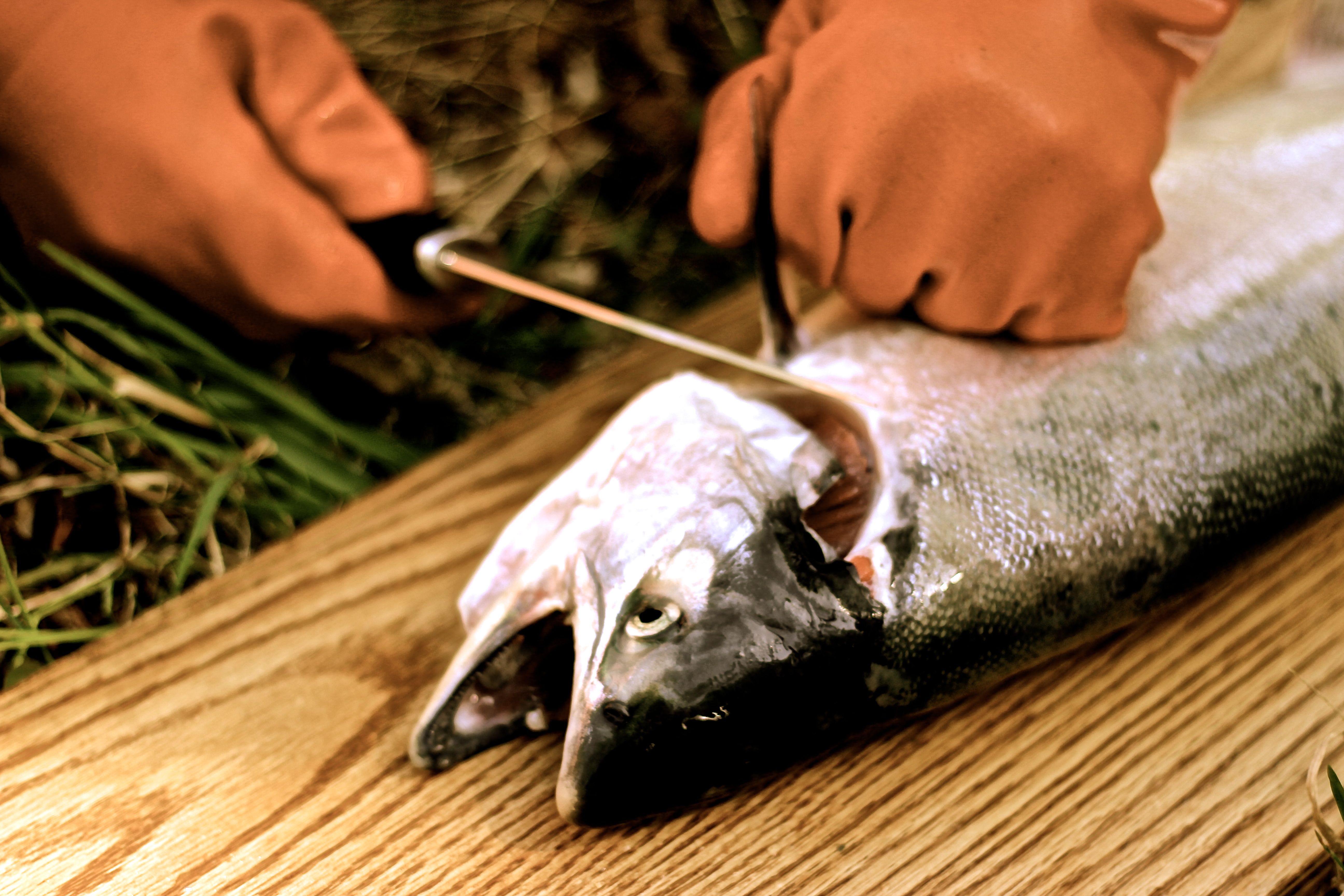
A Bristol Bay fisherman prepares to cut fillets from the first sockeye salmon of his season.

IMG_0861

Not every sockeye salmon caught in Bristol Bay makes its way to market — after all, fishermen have to eat, too.


Ben Goldfarb is a freelance writer and the former editor of Sage Magazine. This is the first installment of Fish for Thought, a monthly column about the seafood we eat and the men and women who catch, grow, and harvest it for us. 

Just because my clients keep a strict kosher household does not mean that they do not follow food trends. Whatever is new and cute, they want to eat too and it’s my job to figure out how to make it. Kosher, that is. When I first started cooking for these clients, the kosher world and its strict laws were completely new to me. They would point at pictures in cookbooks like The French Laundry or Bouchon Bakery and say, “I want that, but make it kosher.” They would, of course, be pointing to the most dairy, pork, or shellfish infused dishes possible.

One of the basic kosher kitchen rules (and there are many) is not to put milk in anything that has meat. It’s not brain surgery to realize that one should baste a roast with margarine (a flavor disaster), but finding appropriate substitutions for dessert ingredients is more complicated.

Recently, I was asked to recreate the Cronut, which, if you have been hiding under a social media rock, is a cross between a croissant and a donut. After being written up in New York Magazine, a publicity storm ensued documenting lines outside Dominique Ansel Bakery in Soho. The bakery makes only three hundred of the coveted fried dough a day creating an underground black-market with scalpers reselling Cronuts at up to one hundred dollars a pop.

I have never had a Cronut myself. In fact, I have never even seen one in person, nor do I really care to. But, apparently, my clients do, because after ignoring their requests and hoping that they would forget about the fad and find something a little simpler for me to recreate, I finally caved in and tried to figure out how to make the Cronut kosher.

If you have ever wondered why the typical kosher dessert looks so heavy and dense, it’s because most desserts are made under a parev designation, indicating that that no dairy or meat ingredient or utensil (spoon, bowl, pan, oven, etc.) has come into contact with said item. Parev is a neutral designation. Once the item is prepared, it can be eaten with a meat meal, which is necessary since the majority of the large scale, multi-coursed dinners that I prepare are centered around huge hunks of meat.

A few years ago when different flavored marshmallows were trending all over the place, I was given the task to figure out how to recreate them for my clients. Homemade marshmallows are not that difficult to make, but because the typical industrial strength gelatin is made from ground up pig hoofs (which is decidedly not kosher, even to the lay person) the trick was finding an appropriate substitute. After two weeks of trial and error, I ended up using a kosher brand of fish gelatin. I panicked when the smell of gefilte fish hit my nostrils as I poured boiling hot sugar into a furiously whipping Kitchenaide mixer filled with foaming fish bones. But when the marshmallows cooled and set, the smell subsided. Not only were the marshmallows super cute, but they tasted good too, or so I was told.

I must note that there are now a few good brands of kosher gelatin that do not smell like fish and a few good kosher candy makers who specialize in making kosher marshmallows. But because marshmallows are not so special anymore, my clients, of course, don’t want them.

Working for these clients, I have had to come to terms with the fact that their desires are based on how unusual a dish or treat is and what it looks like on the plate, not because of how it tastes or how good it is for you. For the first few years, I tried to talk them into using only seasonal ingredients and sustainably raised meat and fish products. I perused the local Greenmarkets and searched out organic grass-fed kosher meat, but this was uninteresting to them. When the culture of the household is more, more, more, what’s the use in trying to limit your product to seasonal and organic?

I now choose menu items based on the degree of difficulty, and more over, the hopes that they will be the only ones to have this item on their table. There is a lot of entertaining in this ultra-orthodox community, all centered on food. It’s its own form of entertainment. A successful meal is where one or more guests exclaim: What’s that, and how can I make it too? (The secret is rarely shared.)

Obviously, because I have been working for these clients for close to seven years, I feed on this energy as well. I often agree to make something that I have never attempted before, kosher or not, and when faced with the challenge of outdoing myself at every meal, I obsess about the process. When I am running in the park, I think about infusing oils and curing duck breast. When I am sitting on the subway, I think about how I am going to organize my time when I have four different pastry doughs to make and let rest before I have to use them all at the same time.

Much of my process also involves calling friends regaling them with stories of, “you will never guess what I am trying to make for my kosher clients now.” I get totally wrapped up in the drama of how many times I tried and failed to make something, and the process that finally works. It’s like I am at war and every little battle counts.

My clients have a serious sweet tooth and are hooked on fancy treats. According to them, one would think that all the goyim in New York are walking around chomping on Cronuts when I have yet to meet one person who has actually seen one in person, let alone tasted one. But it’s my job to create the best knockoff possible and I take it very seriously. I am like the Chinatown designer handbag maker. Give me the pattern and I will recreate something that looks pretty damn good, that is, if you have never seen the real thing.

I think that the reason I have lasted so long with these clients is that on a deep level, I totally get the desire for the forbidden. Tell me that I can’t have something, and I want it more than ever. Craving and desire is a drug in and of itself, not contingent on getting the object (man, job, handbag, Cronut). I get high on the thought that once I obtain my desire, I will somehow feel better or more complete. In reality, when I do get a little taste of what I thought I was missing, what I am usually left with is a sickeningly sweet version of a prize and a spiritual stomachache to match.

After finally caving into clients desires, I faced the challenge of creating the kosher Cronut. I spent a few days of research and experimentation involving more oil sodden flat dough than I care to elaborate on. The reason why croissants are so light and flaky is that butter is folded and refolded into yeast dough creating very thin layers that steam and puff in a very hot oven. Butter has milk solids, which creates the steam; margarine, my parev substitute, does not. Needless to say, I finally came up with a passable knockoff.

New York Magazine describes Cronuts as “tast(ing) a lot like a classic glazed doughnut, but pretty much more awesome, and its layers peel apart like those in a mille crepe cake.” My version was decidedly not as flaky, with an almond cream on the inside and a raspberry and vanilla bean glaze on top.

I displayed my little jewels on a long rectangular cake stand and set them on my client’s granite countertop. Like the Chinatown knockoff, they looked pretty good from afar. And at the end of the day, that’s all that really mattered.

Anya Regelin is a  freel-lance writer, private chef, and the Deputy-Editor of The Inquisitive Eater. The Tasteless Chef is a regular column chronicling her exploits and misadventures in (and around) the kitchen.

Nicole Brownstein

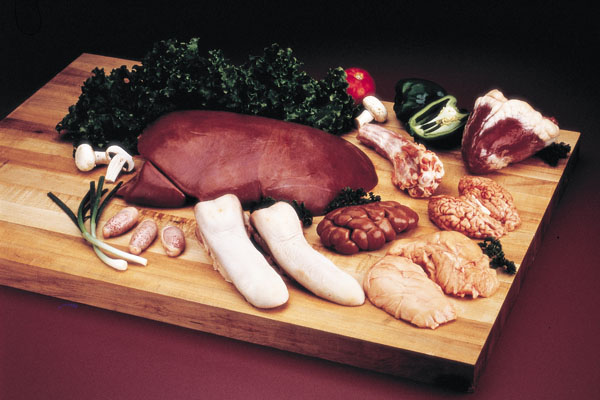
As a vegetarian, owning a book about edible entrails may seem unusual, but nonetheless, Nina Edwards’ Offal – a Global History rests conspicuously on my bookshelf. This book is hardly a tome at 108 pages, yet it manages to give a very comprehensive history of one of the world’s more controversial cuisines.

The book begins with the definition of the word offal.  Rhyming with awful, it’s classified by Edwards as “organ or variety meat, entrails or viscera, innards and extremities…it can be brazenly meaty or subtle and refined. Consumed all over the world, it exists both as a staple food and sought-after delicacy”.  In regards to pronunciation, Edwards says, “it could be said to make a seductive shape in the mouth: the open vowel; the gentler sound of the ‘ff’; the pleasing closure of the ‘l’”. I feel I need a cigarette after sounding that out loud.

But this sexy definition is where the author stops complimenting offal and starts assuming that the readers are, despite their interest in the topic, actually disgusted by the very idea. Westerners, especially Americans, are the “least enthusiastic” consumers of offal. In modern American culture, lovers of offal are apparently a very special breed of people with “rural roots”. After reading that, I wondered if I should tell my Brooklyn-born grandmother that her appreciation of tongue and chopped liver could be attributed to her country lifestyle. I think she’d laugh at me and would go back to playing canasta on her iPad.

On the other hand, the religious ties to offal are strong and may be why it sits so conspicuously at the same grandmother’s Passover seder every year. Offal is prominently featured in the diet of many religions: it was a gift to clergymen, a staple for both Sephardic and Ashkenazi Jews, and on the table at the Muslim Eid feast.

On the flip side of the table, Edwards claims the other big offal eaters are those who feel a strong need to assert their masculinity by eating so-called disgusting things. In the 1980s, Regional Testicle Festivals began popping up in the United States, but sadly this is as far as Edwards goes in describing these festivals.

This lack of elaboration is a trend in this book, which is Offal’s biggest drawback. One sentence about impregnating a cow just to slaughter it when its udders swell is not enough. And learning that Liberian culture suggests there is value in sacrificing a child and eating its brain for strength is not sufficient either.  Why touch upon these juicy anecdotes without getting to the meat of the issues?

The main point of the book seems to be the food’s social balance between the highbrow and low brow—simultaneously regarded as a delicacy for the very wealthy and respected, as well as the caloric grist for the ultra-poor. I think this book should have been marketed more as a comment on the edible class system (using offal as an example) and less as a comprehensive history. At the same time, I would definitely read a sequel solely on the various pseudonyms people have given offal, like prairie oysters or headcheese. Even sweetbread is an interesting twist on inner organs.

So, would I recommend this book? Yes, but with a pinch of salt. And also probably with a brown paper bag, if you’re queasy.

Nicole Brownstein is a Milano Urban Policy and Management student with a passion for food. When not in school, she works as an Education and Farm apprentice at the Battery Urban Farm and is constantly found with dirt on her knees and radishes in her pockets.

by Christina Szalinski

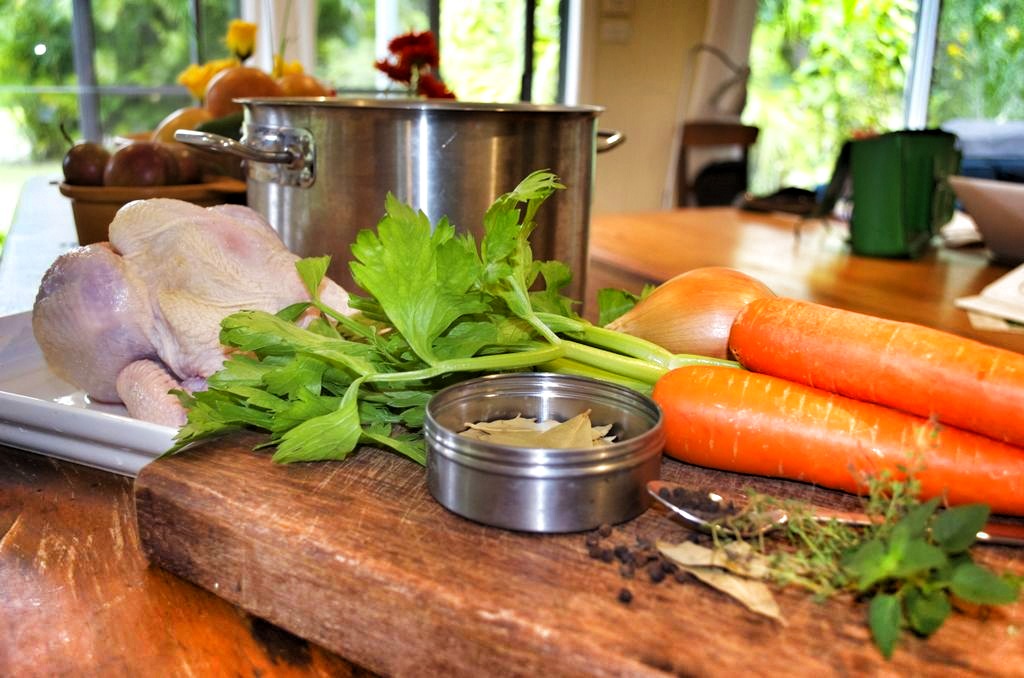
The scent of bubbling chicken stock permeates my small old home. I inhale the memories of childhood holidays; my father simmering the leftover turkey carcass the morning after a day of feasting; a heartwarming broth of bones, onions, carrots and vegetable scraps. But I have a different reverence for the chicken simmering in my pot, because I sliced off its head.

I have attempted to make my home a rural patch of Pittsburgh. However, urban farming has proved to be more difficult than my Urban Farm subscription makes it seem. My shady city yard barely manages to produce scrawny herbs and a few stubs of kale. The city dashed my hopes for a few little egg layers by making them illegal on my lot just as I was drawing plans for a coop.

I fantasize about my future backyard: a garden brimming with vegetables, rows of fruit-bearing trees and shrubs, chickens pecking and scratching at the ground, perhaps a goat whose udders are heavy with milk. The earth’s bounty will be visible, audible, and smellable. Abundant fresh food will be a few feet away.

However, a backyard is not requisite for every aspect of hobby-farmer training. During my stint in the city there is plenty to learn; seasonal cooking, cheese making, canning, fermenting, rendering, composting, charcuterie, and most recently, butchering.

The sun streams in through my kitchen window, avoiding my garden, and I stand at the sink looking down at my work. I pick every edible morsel of the chicken’s boiled body so nothing is wasted. I think about the last moments of his free-roaming life and how he came to be in my kitchen.

Whenever possible, I interrogate a hobby-farming coworker, Andy. I search him for bits of experienced hobby-farmer wisdom. What chicken varieties are your best layers? Why do you prefer oxen to draft horses for plowing? Do you have chickens available for meat? Andy eventually invites me to his hobby-farm to help him process chickens.

I drive an hour north of the city to Andy’s home on a wet weekend morning, astonished at the length of his daily commute. His driveway is lined by a fence enclosing geese on the left and goats on the right. Behind the goats is a studio-sized chicken coop. Striped, black, red, white, and iridescent chickens strut freely all over the property, softly murmuring between quick attacks on insects and seeds.

I usually see Andy in blue scrubs, but here he is dressed in a stained white shirt and splotchy denim overalls tucked into rubber boots. Farmer Andy introduces me to his wife then shows me around his ten-acre farm. I breathe in fresh country air laced with scents of mud and fresh cut grass. I study the detailed and practical construction of his large coop. A large rectangle box protrudes from the side of the coop. I lift the hinged roof and a black hen, busy laying an egg, twists her head to peer at me with one round eye.

Andy takes me into a pasture with two giant red oxen. I pretend not to be fearful of the potentially disemboweling long horns while I rub the sleek coat of an ox. I watch the ox curl its smooth tongue into its nostril as it stomps and shakes away flies. We leave the pasture, walk past the untamed sunflower field, and meet the unlucky birds quarantined in an animal carrier.

Deftly, Andy reaches into the cage and grabs a young rooster by the legs, hanging it upside down. He ties orange synthetic bailing twine above its scaly yellow feet and strings it to a white and blue spiral-striped swingset frame. The upside-down bird is remarkably calm and still, its hanging wings resemble a wide W.

Andy holds the chicken’s head with one hand and quickly slices through its neck with a sharp knife. The headless fowl suddenly becomes animated, flapping wildly, spraying blood from the writhing stump all over the grass. Andy repeats the process with two more birds. With one rooster remaining I ask, “Do you mind if I do it?”

Creases form in Andy’s forehead as his eyebrows rise. He expected help with plucking and cleaning the birds, not with butchering. Having never killed a land animal before, I am nervous that I might cause the rooster more pain than necessary. But for the sake of my future farm, I believe this is something I need to learn.

Andy hands me the weapon. The tranquil rooster sees an inverted, lanky, virgin-butcher approaching it with a dagger. I put my left hand around the rooster’s thin neck. His dark red feathers are downy and soft. The bird remains completely motionless despite my contact. The misty rain feels cool on my face and hands.

I position the knife at his neck, take a deep breath, and silently thank him for his life. With full force I slide the knife into his flesh, meeting resistance at the spine. My heart pounds, not wanting him to suffer. I grit my teeth and push the knife though the dense cartilage of his vertebrae. Severing the spine feels like cutting through wet rope.

I let the head fall to the ground and step back from the spewing blood. I expect to feel sadness and grief for having taken an animal’s life. Instead I feel grateful; grateful for the rooster providing food, grateful for Andy giving him a good life, grateful for the opportunity to experience the sacrifice of eating meat.

Once the rooster’s flailing subsides, Andy takes him down and dunks the body in a tub of boiling water on an outdoor propane burner. The drenched bird shrinks instantly as the puffy feathers become heavy and wet. Big raindrops smack my head and shoulders. Andy suggests we complete the process in the kitchen.

We set the birds on the granite island. I glance around the recently built home. There is hardly any furniture or objects, the walls are naked and neutral, and there are no appliances on the countertops. The few objects I notice are intended for the baby on the way. Evidently, Andy and his wife take more interest in their outdoor activities.

I grab a handful of wet feathers and pull. Dark red quills poke out between my fingers. I repeat the motion until the fowl is nearly stripped. Then I tweeze the last stubborn feathers with my thumb and index finger. The bare bird looks nothing like its relatives at the grocery store. It’s lean and covered with dark fuzz from the downy feather shards that won’t wash off.

Andy shows me how to delicately cut around the anus and loosen the entrails. The greenish ribbons of intestine fall from the cavity. The guts reek, not surprisingly, like chicken shit. Andy’s hand disappears in the carcass and comes out with tiny organs. With Andy’s guidance it’s my turn to eviscerate a chicken.

The warmth of the carcass is startling, having always handled meat straight from the refrigerator. The firm folds of intestines come out easily. My fingertips probe to detach the dense and slippery kidneys. I penetrate the thin diaphragm to remove the spongy lungs and almond sized heart. The esophagus, slick and membranous, separates from the body with the force required to unplug a toaster. I rinse the hollow carcass, put it in a bag, and drive home.

Back in the city I roast the rooster and baste him with Amish butter, rosemary, and garlic. I purée the cooked heart, liver and gizzard with cream, shallots and sherry and enjoy the bold and pungent flavor of the pâté on a baguette. I eat my meal slowly, letting each bite linger in my mouth, appreciating the full flavor his life provided. The meat is moist and rich from his diet of sunflower seeds and insects. The leftovers of the chicken become fragrant stock with onions and carrots from farmer friends, Jane and Jeff, and herbs from my garden. I have never felt more connected to my dinner.


Christina Szalinski is a science writer for the American Society for Cell Biology and recently earned her Ph.D. in cell biology. She also writes about eating local on her blog, Locavore for Life.