Author

Anya

Browsing

by Erin Eisele

One of the most recognizable and symbolic phrases ever attributed to royalty could be Queen Marie Antoinette’s infamous quote, “Let them eat cake.” Although there is no historical record of these words having ever been uttered by the Queen, the quotation is claimed to have been voiced in response to the widespread famine under the reign of her husband, King Louis XVI. Bread, a staple for the peasant population, was scarce at this time in France due to a countrywide grain shortage, among other injustices. As the popular story goes, when alerted that the peasants had no bread, Marie Antoinette replied, “”Qu’ils mangent de la brioche.” This translates into “Let them eat cake,” as “brioche” is a bread made with eggs and butter. During famine, finding any food, let alone eggs and butter to make brioche, is an outlandish notion. “Let them eat cake,” whether truly spoken or not, serves to demonstrate the obliviousness and ignorance of the French monarchy to the peoples’ plight during that time. Marie Antoinette, in particular, became a symbol for the excess and overconsumption of the nobility while the poor suffered under the monarchy’s regime.

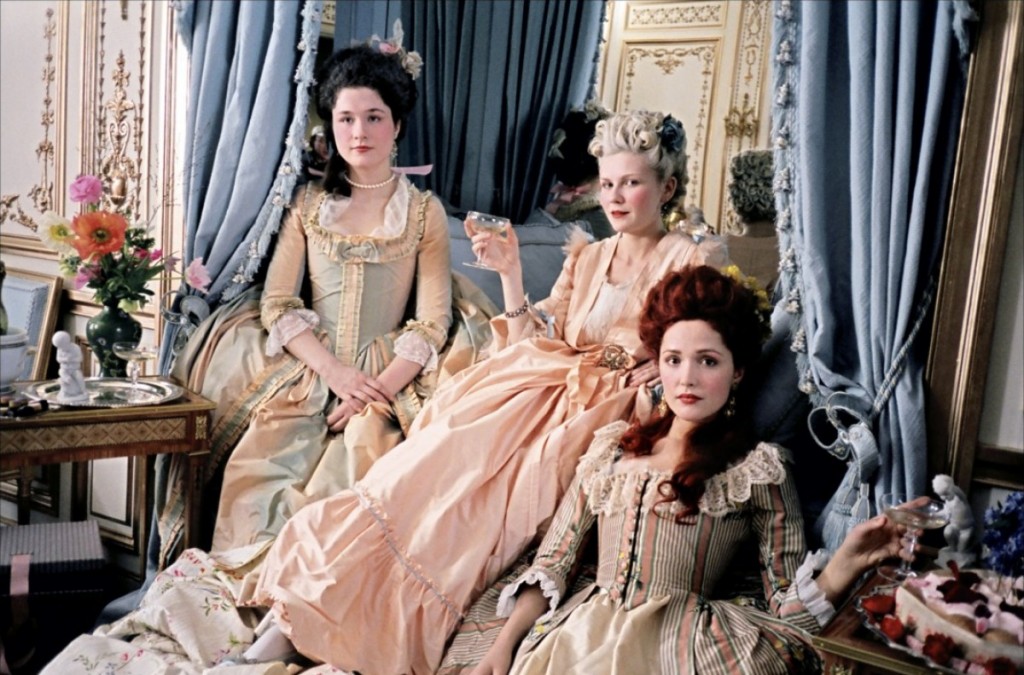
Fast forward to the 21st century, and the wanton extravagance of the 18th century monarchy splashes across the big screen in Sofia Coppola’s loose adaptation of Marie Antoinette’s life in her 2006 film, “Marie Antoinette.” Coppola’s Hollywood treatment of the French Revolution is more about style than substance, with lavish French pastries featuring prominently on the Versailles set. Marie Antoinette unabashedly pops beautifully made bon bons while she spends thriftlessly on haute couture gowns, shoes, and jewels. These pastries are the picture of sweet perfection, and are enjoyed immensely by Marie Antoinette while people go hungry outside of the gates of Versailles.

The language Coppola chooses to tell the story of the rise and fall of the notorious teenage bride is akin to a music-video style format. With this audiovisual design, Coppola captures the fantastic corruption and excess of the French nobility of that time with a modern approach. Antoinette’s outrageous sense of style, rebelliousness, promiscuity, and couture sweet tooth are presented larger-than-life for the viewing audience to indulge in. Food, boutique pastry creations in particular, feature in the film as metaphors for sexuality, extravagance, and materiality. Coppola uses the colorful, lavish creations from the famous French luxury cakes and pastries brand Ladureè. While tickling the fancy of viewers, these pastries make a statement on the privileged life of Antoinette and the French nobility, as well as the excess of contemporary Western society and material culture.

One of the film’s key scenes with the use of food is the “I Want Candy” clip. Set inside the Queen’s extravagant dressing room in Versailles, Marie Antoinette and her ladies-in-waiting prepare for a grande fête for later that evening, picking garments, trying on jewels, getting their hair done, playing cards, and eating sweets. Accompanied by a re-make of the popular song “I Want Candy” by Bow Wow Wow, the scene acts as an entertaining yet voyeuristic pause in the narrative of the film. Opening with the recognizable “Bo Diddley” drumbeat and guitar riff of “I Want Candy,” the camera sweeps across a line-up of designer high-heels, one pair after the other of jewel-toned and outrageously embellished shoes. Next, beautiful hand-embroidered fans and gorgeous fabrics tantalize the ladies, as they sit tapping their heels to the rhythmic beat of “I Want Candy.” Antoinette is flanked by her “girls,” and while checking out the merchandise and eating a bon-bon she exclaims about the merchandise, “Oh, it’s like candy!” Cue the pastry porn. A close-up of a Laudre confection echoing the same designer attention to detail as the shoes, fans, and clothing appears on the screen. To the beat of the music, champagne pops open and spills over the tops of flutes, as the girls swig and nosh, giggling amongst themselves while playing cards. The scene culminates with Antoinette’s hair-do for the party, a ridiculous up-do that is as tall as her husband King Louis XVI, with ringlets, curls, ribbons and bows symbolizing the apparent excess of the Queen who seems not to notice the plight of her subjects outside the gates of Versailles. “It’s not too much, is it?” she asks her fabulous hairdresser.

Coppola uses modern music video filming techniques in this “I Want Candy” clip, such as rhythmic cross-cutting, contrasting long shots and close-ups, and unusual shots and camera angles. This language, accompanied by the song, immediately signifies to the viewer that this sequence is akin to a promotional piece to sell the decadent goods (the pastries, shoes, jewels, the lifestyle of the rich and famous) to the characters as well as the audience. Layers of pastel and jewel tone colors, varying textures, patterns, lighting, and sound construct the richness and decadence in this scene. The sweeping shots give the impression of a hand-held camera, used often in music videos, and this motion continues to build and create excitement throughout the scene with Coppola’s use of accelerated montage. Shoes and pastries flash across the screen in quick succession, in time to the rhythm of the music. These shots are reminiscent of the pages of a Vogue magazine, or a Playboy, except shoes and cakes are titillating the audience, not women. Women are the main consumers of the goods in this scene, which is a shift in power and gender role reversal. In fact, the men in this scene are homosexual. Antoinette’s hairdresser marches in fuchsia shoes to the “I Want Candy” beat, coming to do the Queen’s hair. He is her trusted confidant to take charge of the important duty of her hair, and she air kisses him with gratitude after he’s finished.

The Ladureè pastries enter this clip center stage with a provocative close-up early on. The camera shoots still from above, down onto an over-embellished, lavishly decorated, perfectly arranged pastry atop a fine china plate surrounded by pastel almonds, golden accents, and fresh flower petals. Pastries are given grand attention throughout the scene, in almost every shot as a close-up or part of the interspersed action shots. The scene closes with an anonymous lady-in-waiting biting into a hard-shelled cake with reckless abandon, then finally a close-up of a pastry dish with open-sliced strawberries and powder sugar-dusted ladyfingers flanking a pink mound of mousse topped with a raspberry.

The “food” looks more like the shoes, jewels, fans, and fabric than anything edible. Close-up pornographic pastry shots are interspersed with action shots of Antoinette and her ladies-in-waiting devouring the sweets. Other erotic shots and sounds include erect champagne bottles, moans of gastronomic pleasure, “cum shots” with remnants of cream on a cheek, and overflowing bubbly. Short action-shot clips are placed in between the long-and-short still shots of the “merchandise.” Champagne, which Antoinette is reputed to have a special affinity for, flows endlessly and the women drink with reckless abandon while they play cards and try on jeweled necklaces, which could be seen as foreshadowing to the “Diamond Necklace” scandal that eventually brings the Queen to her demise and unofficially signaled the start of the French Revolution.

The choice of songs is clear—Antoinette wants “candy.” The denotation of “candy” is a sweet treat usually consumed and desired by children. In pop culture, the word “candy” the connotation of “candy” is something to satisfy one’s desire, not need.  Whether the desire is food, booze, sex, fashion, the word is generally used to express gluttony of some sort. For Antoinette, “candy” is shoes, “candy” is clothing, jewelry, fans, fabrics, champagne, big hair, and haute macaroons from a famous French bakery. Antoinette wants all of the candy. Coppola uses the pop song and its cultural connotation of “candy” to communicate ideas about Marie Antoinette and her ladies-in-waiting, as well as the larger problems of the French monarchy leading up to the Revolution of 1789. Yet the cultural connotations of “candy” can also be applied to Western pop culture and the modern-day obsession with food as fashion. The “candy”/”cake” that Antoinette actually consumes is fetishized and elevated to the status of the haute couture shoes.

In the terminology of semiotics, as extensively studied and discussed by Roland Barthes, the sign in this clip is the “candy,” communicated through the medium of music video filmmaking technique, and the signifier is the wanton extravagance of the French monarchy under King Louis XVI and Queen Marie Antoinette’s reign. The popular symbolic message attributed to Marie Antoinette, “Let them eat cake” is embodied in this scene, with Ladurée confections an obvious metaphor to the sugary-sweet life of privilege of the Queen. But Coppola uses a medium that also signifies the obsession our contemporary culture has with gastronomy.

The material culture of Western society is emblazoned in the subtext of this film. Food becomes a part of this material culture in Coppola’s adaptation of the life of Marie Antoinette. The budget for the film is apparent in the beautiful set, costume, and food design. Food plays a major role in this film, certainly at banquets and parties, but also in Antoinette’s more intimate moments of solitude. While lying in a room, having her toes painted, Marie Antoinette is surrounded by lavish cakes that that rise around her like totems. Her expression is listless and bored, and the cakes do nothing to delight her. They are plastic. Antoinette, dressed in her extravagant garb, looks very much like a confection herself. The lines of materiality are blurred, as in the “I Want Candy” scene of cake and shoes, and reflect a discourse of materiality and consumption in contemporary culture and society. Marie Antoinette could be Paris Hilton, or another real or invented socialite, heading to the Upper East Side to grab a dozen cinnamon-raisin macaron from the Maison de Ladurée. Coppola capitalizes on the fantasy and spectacle of modern-day socialites to tell the story of Marie Antoinette.

Furthermore, the 149-year old haute house of macarons, Ladureè is an interesting choice for the desserts featured in the film. Right away, there is distinction in this choice, distinction because Ladureè caters to a middle-upper social class in France and in the US. The average viewer has not or will not ever eat a macaron from Ladurée, in fact they may even confuse macaron with the coconut and evaporated milk “macaroon.” But viewers can experience the thrill of pastry porn and the nobility who consume them by watching this film. Similarly, in contemporary culture, many viewers who watch cooking shows never actually make the recipes featured on a particular show, which is a curious phenomenon.

“Marie Antoinette” can without a doubt be considered as representative of pop culture because of its music video film techniques, spectacle, fantasy, eroticism, and play on the current culture’s obsession with food as fashion and fashion as food.   “Marie Antoinette” is also an especially enticing act of voyeurism because no one alive has seen or experienced life at Versailles, and this representation taps into the recesses of the imagination with stunning eye candy. The plight of the people is secondary to the music video treatment of the French Revolution and the haute couture style of the people of Versailles, mainly the scandalous beauty, Marie Antoinette. With political disregard and/or ignorance for the disadvantaged classes of society around the world, perhaps the 21st century version of the infamous phrase, “Let them eat cake,” would be “Let them eat macaron.”

Erin Eisele is a budding gastronome studying food culture and communications at the University of Gastronomic Sciences in northern Italy. She’ll graduate with a Masters degree in November, 2012.
by Mandy Beem-Miller

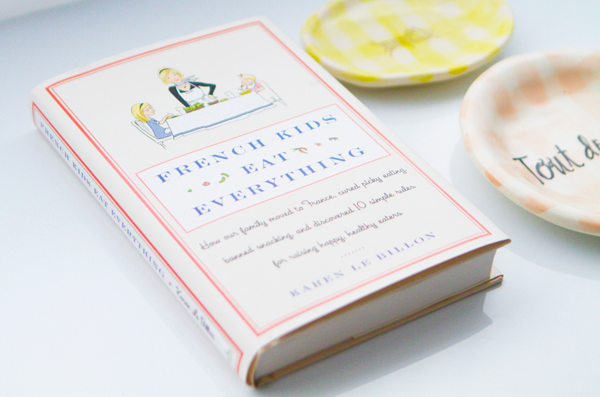
French Kids Eat Everything is a journey: part memoir, part research analysis, with a touch of “self help” mixed in, following author Karen Le Billion and her family as they relocate to France. The one-year experiment begins with a self-admitted romantic vision of French life and a legitimate desire to expose her young family to a new cultural experience. But, it quickly becomes apparent that fresh baguettes and butter -while enticing even to her young daughters, is not solely what the French experience is made of. Vacationing is not the same as living in her French husband’s quaint seaside home town. The reality sets in when the children are enrolled in school. Seven year old Sophie and three-year old Claire are faced with an entirely new set of standards in their French classrooms, the most challenging of which involve an unspoken list of food rules. Starting as early as pre-school, the French, both at home and in the classroom, spend a great deal of time and effort dedicated to ensuring young people develop healthy eating habits, in addition to proper manners surrounding meal times.  As Le Billion tells us, “The French think about healthy eating habits the way North American parents think about toilet training or reading.”  The result is, the author noted in her year abroad, a society in which even the youngest citizens recognize the importance of eating well. The underlying concept of the French food education model stems from an adamant respect for food. Respect not just for the ingredients, but for the mealtimes themselves.

As Le Billion tells us, “The French think about healthy eating habits the way North American parents think about toilet training or reading.”

Le Billion’s own two children are, much to the chagrin of her French husband and his family, particularly picky eaters. While this type of behavior is quite common among American children, their finicky eating habits are not well received in France. In addition to being expected to eat whatever is put in front of them, the girls are faced with new meal-time etiquette. At social dinners with their parents they are expected to sit through long meals.  In school the many snack times often afforded American children, are unheard of in their new country, but for one late afternoon gouter, usually consisting of fresh fruit. This seemingly stringent new policy is not a welcome challenge, for either Le Billion to enforce or her daughters to follow. As the mother herself confesses, one way to ensure the girls were getting enough calories was to supplement their meals (and refusal of certain healthier foods) with mid morning, mid afternoon, late afternoon and bedtime snacks. Before coming to France there was lots of “short order cooking” to please her daughters, and very little, if any, of the “gentle authority” Le Billion observes in France, at getting the kids to eat the items they were refusing.

The distance from her comfort zone allows Le Billion a fresh perspective, and with new eyes she begins to re-examine the relationship her own family has with food. Ultimately she realizes that beyond being unacceptable for cultural reasons in France, the eating habits they have become accustomed to are detrimental to the health of her family. Snacking, in place of being expected to eat what was on their plates at meal times, was only giving the girls an opportunity to fill up on less healthy foods.  Le Billion jokes that before their year in France, Gold Fish Crackers were considered a food group in her family. More broadly, she surmises, some of these behaviors are likely contributing factors to the obesity crisis we as a nation face in the US.

In concert with the inclusive French education model, the Le Billion and her husband are determined to “reeducate” their children, French style. Accordingly, the family embraces a set of “French food rules” constructed by Le Billion herself, attempting to qualify and quantify the many universally accepted French cultural norms.  With much protest from Claire and Sophie, Le Billion attempts to adopt this new way of eating. She swears off short order cooking for her fussy eaters (the kids will eat what the adults eat), she puts a kibosh on the incessant snacking, and she attempts to enjoy first cooking, and then eating, the dinner meal, as a family, every night.

In the meantime, Le Billion comes to terms with her own particular eating habits and how these behaviors affect her children. Before her French experiment, she tells us, she too had many foods she refused to eat, she also snacked between meals and rewarded her children with sweets for good behavior.  Likely in an effort to avoid a condescending tone when harping on all of the “bad American habits” she reminds the reader that she, too, is guilty on all accounts. The self-deprecation becomes tiring, even coming off somewhat fabricated, but ultimately does not detract from the underlying message: quit snacking so much, eating so fast, refusing to try new things, eating alone, and missing family dinners because we “just don’t have the time.”  We can always make time, we just have to prioritize.

We learn from Le Billion’s book it is not common for the French to snack, or eat meals alone. They generally don’t eat in their cars or on the train, or drink coffees on the street. The families in the Le Billion’s adopted village eat long meals together, at both lunch and dinner, and their kids join them and eat everything on their plates. There are no specials meals for the youngsters or kids who will only eat pasta or cheese.  But the French work hard at achieving this. As humans we all have a penchant for the salty, the sweet, the fatty.  But in France, they start from a young age, instilling a few basic tools to help navigate the food world. The official food guide for the country warns against snaking, and snack food ads on French TV come along with banners warning against eating between meals. The French emphasize restraint. Simplicity. Enjoyment. The children are encouraged to try everything and given no alternative options. Additionally, they get support- from school, from home, from society- to enjoy meal times. To savor their food. To slow down and just eat. The average lunch period in American schools is 30 minutes.  In France, it’s a full hour, sometimes more.

Though Le Billion is met with resistance from her children at every turn, the girls do eventually slowly become more open to vegetables and trying new foods. With some parental enforcement, the kids learn to sit through family dinners together, and even enjoy this new activity. The book is encouraging: here is a “regular” North American family able to alter their bad food habits: couldn’t we all learn from them?

Perhaps with an altered view of food, and consumption, we could steer ourselves away from the cliff, shrink our collectively expanding waistlines.

We hear about the obesity crisis a lot these days. But maybe we don’t need to create laws taxing sugary beverages or banning particularly unhealthy oils, as some health advocates are pushing for.  Perhaps with an altered view of food, and consumption, we could steer ourselves away from the cliff, shrink our collectively expanding waistlines.  Food behaviors, like other good and bad habits, are learned. We do have some modicum of control over what our kids do (and don’t do), will and won’t eat. Still, as the author herself admits, the French “rules” do not always translate well back home. Short of some type of cultural revolution, complete with education reform and the restructuring of the American work/school schedules to include time for longer French style lunch break, many of the French food rules become difficult to comply with. But Le Billion makes it clear: there is an art to raising healthy eaters, and you can never start too soon. Our nation’s children are becoming increasingly overweight and French children are not. In 2008, the CDC reported that more then one third of American children are obese, a number that has more then tripled in the last three decades. These troubling statistics are inspiring the re-introduction of scratch cooking in many school districts, a Farm to School movement, and legislation like the Healthy, Hunger Free Kids Act, which aims to improve the quality of the National School Lunch Program. Still, what Le Billion’s book reminds us is that the food education of our children needs to be comprehensive. It must start at home, around our own kitchen tables.

If, like myself, you too have fantasies of living abroad, French Kids Eat Everything may revitalize your own dreams of becoming an expat.  Along with the author and her family, you may picture yourself eating fresh warm baguettes with butter and mussels caught that day and bathed in little more then a crisp white wine. At the same time it could make you think twice about this romantic notion , exposed to the possible isolation of a big move. Though the book is centered on kids and nutrition, the take away is something more. At the core it discusses is “mindful eating”- a practice that both the author, myself, and undeniably many other Americans do not always adhere to. While the book, in title and content, will undoubtedly appeal to parents of young children, the message is ultimately universal: it’s hard to deny that we could all benefit from snacking less and eating together more, essentially practicing the ingrained cultural idiom, long one of the stalwarts of French culture, of enjoying, savoring, and truly appreciating the food we eat. In this fast paced world sometimes a good meal is the best way to slow down. And I for one, am OK with that.

Mandy Beem-Miller is a recent graduate of The New School where she took classes in the Food Studies Program as well as several in the Writing Program.

by Trey Teufel

Variation on a Summer day
                  (after Wallace Stevens) 
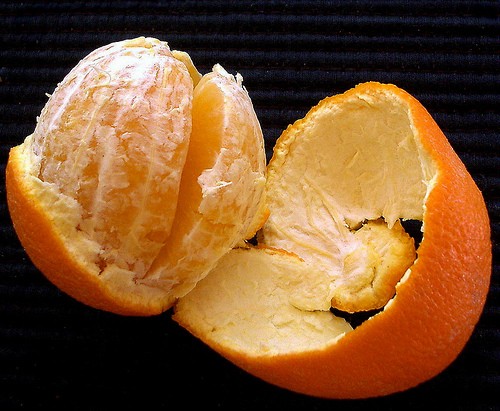
Last Tuesday we shared an orange
             Took turns and ripped off the skin
             Peeled away its textured coat
Rind collected under our fingernails
             We fed each other wedges
             Wiped juice from our chins
 Later
             Your hands on my face
             The smell of orange 
             Still under your nails

Trey Teufel is a writer, actor, and personal trainer living in Los Angeles, CA. He works out, acts on occasion, and writes far less frequently than he would like.

by Fabio Parasecoli

from Huffington Post

Japan occupies an interesting place in Western popular culture: as one of the most developed countries in the world, its presence is warranted among the major players in the global economy and in international politics. Its industrial and technological products are among the most common household names in consumer culture across the globe. Its popular culture, especially when it comes to fashion, design, anime, and manga, has a considerable following outside its borders. The disasters following the recent tsunami have also contributed to a prominent spot for Japan in the global imagination.

Yet, when it comes to food, Japan has lost some of its mystery. Restaurant patrons are conversant with sushi, sashimi, and tempura, and shoppers are less and less surprised to see wasabi, seaweed, green tea, and even mocha in the “international aisles” of their supermarkets. The recent documentary Jiro Dreams of Sushi reflects the interest of Western gourmets in a culinary tradition that, until a few decades ago, was shrouded in exoticness. Now we have access to delivery sushi; we can pick sashimi off little conveyor belts; and cookbooks, TV shows, and other media are contributing to make Japanese cuisine accessible and comprehensible. Still, there are still layers and layers that some Western foodies have yet to consider, including the many local traditions that stubbornly survive in parts of the country, the kaiseki dining and cooking style, and the ongoing evolution that has created relatively novel approaches like the Japanese-inflected wafu pasta.

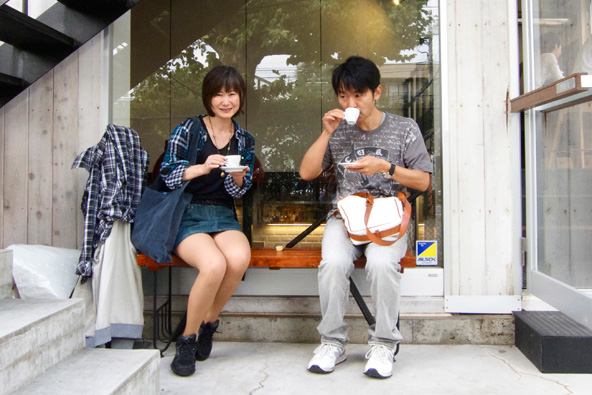
Merry White’s new book, Coffee Life in Japan guides us along as we discover a visible yet quite unexplored dimension of Japanese consumer culture. An anthropologist by training and by trade (she teaches at Boston University), the author takes us from coffee house to coffee house, uncovering a whole world that would be hidden from those wrongfully believing Japan is only about tea. As a matter of fact, it is the third largest coffee-importing country in the world, with an internal market shaped by high prices, high quality, and high costs of production. Although the country’s love affair with the drink is more recent than Europe’s, cafes were thriving long before the arrival of Starbucks.

White proves that the drink has played a significant role in the process of modernization in Japan through its ability to adapt to political earthquakes, changing urban structures, and evolving behaviors. Cafes turn out to be places where people can take a break from social pressure and express one’s individuality outside the harmonious consensus that many perceive as a defining trait of Japanese culture. Throughout the book we get to explore wildly different establishments, meeting a curious cast of characters that have dedicated their lives to preparing the best café possible, each embracing quite different standards. Preparations, design, techniques, atmosphere and soundscapes may vary, but all the café owners portrayed in the book seem to take coffee and customer care with the greatest seriousness.

Kodawari, the disciplined dedication and attention to detail that these individuals display, is far from being the stereotyped perfectionism (bordering on the pathological) that many attribute to Japanese culture. As White points out:

“A café in Japan is not a ‘global space’ -unless one counts the Seattle-based chain stores – nor is it usually a deeply local place, forbidding to newcomers… There is no single model for the café… The very openness of definition, along with the cultural parameters of services and quality that make these places ‘Japanese’ is the draw and the preservative of the café in Japanese cities… Its cultural logic is strongly Japanese, but the experience of the café can break almost all the usual rules of being Japanese.”

White wanders from café to café, from brewing master to coffee merchant, with nonchalant pleasure. At times the book structure seems far from linear, returning to topics and concepts already touched on before, but White’s affection for the world she describes is infectious. The narrative often reads like a memoir, and the author is able to transport us to places and situations that are not only described with the eye of the anthropologist, but shared with the passion of a true coffee lover.

by Nicole Santalucia

Oh Brother

I learned how to fly
so that you could see me hover over Manhattan
dropping cheeseburgers like bombs.
I aim for West 88th Street
between Broadway and West End Ave.
Grease splatters on your windows
and the meat is bouncing off rooftops.
The birds are at war,
let them win.
Now climb down from the tree
those branches need to grow.
Come down from there
and stop acting.
Your audience is human,
the sky above this island
has emptied itself for you.


Dear America,

There are lesbians wearing their grandmother’s wedding dresses.  America, why do I want to kiss your belly? This desire feels incestuous. America, I’m listening to Christmas music in July and frying your chicken. I’m hungry, standing in the banana aisle at the grocery store, pretending to pick up the lemons that fell so I can get a better look at my teacher’s legs; she shops here too.  America, of course I am going to be a poet. I drank all your beer before I turned nine. America, your kids smell like mustard and hotdogs. Please keep them on a leash.  America, there is no more room for any more elephants. America, when I find out I am pregnant, we’ll celebrate, and we’ll find a cure for your allergies.  America, I went to the doctor and he said the glaciers are melting in Juno, Alaska, and I’m worried we may be stuck here forever, where people are dying. America, I will cover you in plastic and get Walt Whitman to let us on his ferry. America, get out of bed, all of this is happening and I just want to be left alone.  America, your leather belt is too tight and your ass looks sexy in those pants. America, I’ve inherited my grandfather’s shotguns, thanks to you.


The Cannoli Machine at the Brooklyn Detention Center

The cannoli machine in the Brooklyn detention center is for the visitors
my dad waited in line when he went to visit my brother
he didn’t know he’d have to empty his pockets
take off his pinky ring and untie his shoes
This is the first time I saw my father afraid
but he wasn’t too afraid to stand in line with all the other fathers
in front of the cannoli machine
he ate two or three and noticed a little white cream filling on his cheek
when he saw himself on the surveillance camera
he noticed that his white t-shirt was washed too many times
and was starting to turn grey
that his socks didn’t match
I didn’t know this was how fathers were made


Nicole Santalucia is currently working toward her Ph.D. in English with a concentration in poetry at Binghamton University and she is the Poetry Editor of Harpur Palate.

by Roberto Montes

1 tbsp of butter (or margarine)
1 tsp of olive oil
2 slices of bread
2-3 slices of Provolone cheese
3 cremini mushrooms (cut into ears)
An indeterminate amount of Dijon mustard
An indeterminate amount of black pepper

First impale your butter onto the point of your knife and, thusly, coat a warming skillet with its skin. In another skillet dollop oil. Heat. Move towards your cut mushrooms. Admire your handiwork. (‘A regular Van Gogh, this guy’ may ring your dome throughout these proceedings. This is normal.) Lightly toss the shrooms onto the oiled belly. There will be screaming. To silence this manipulate the skillet over the stovetop in a manner that vaguely resembles what you see chefs do on TV. It should be about 4 minutes before you remember you are not a chef on TV. Perfect. The ears are now shriveled from a loss of water. You will not see the water. The water’s gone. This is one of the few remaining arguments for mysticism in the 21st century. Enjoy.

In the butterskinned skillet place a slice of bread. You will want to keep track of time and/or the state of the bread from this point forward. The benefits of keeping track of time are obvious but bring with them the horrors of age. You will want your bread to mottle with a caramel color. You will want a lot of things. You will want and want and want and you will know when the mushrooms are sufficiently cooked because they’ll appear to strain themselves listening. For anything. For just one sign. (The sign will be your pepper, the amount of which you may add to your heart’s content, though be careful not to overpower.)

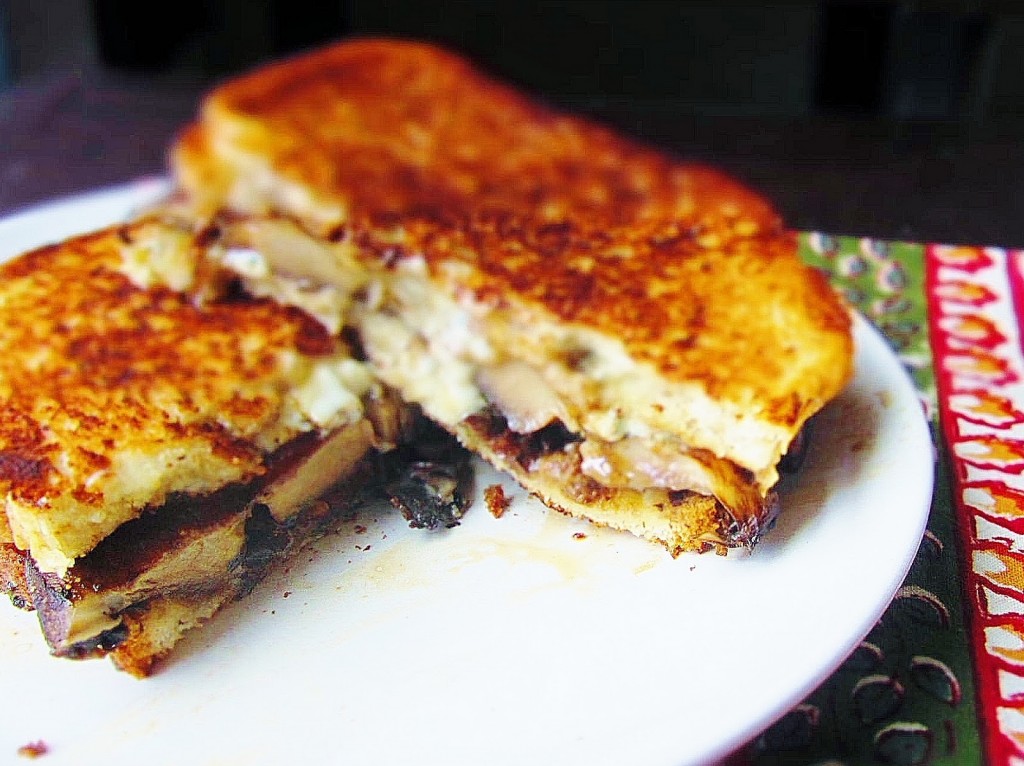
Your slice of bread is now Sahara’d with color. Well done. Delicately lay the cheese atop the bread as you would your lover. Fold any overhanging edges inward as you do your affections: to keep from harm. Hold back your tears. From the tilted lip of the second skillet pour forth your fungal ears. They will bounce and settle atop the softening.   Spread (or squeeze) the Dijon mustard over their dirge. This can result in a picture if you want. If you don’t it will happen regardless as it often does.

The second slice of bread should tarpaulin the first, the cheese, the mushrooms, the pepper. Flip your sandwich over (it is now safe to call it a sandwich.) This newly-searing slice will brown at a much quicker rate, as if recalling its brother’s crimes. Once tawny, spatula it onto a pure white plate.  Use the spatula to divide the sandwich diagonally, as you’ve used so many.  Serve it to the one you love and throw your love away.

Roberto Montes is currently urging an MFA at the New School. His work is at or forthcoming from Forklift, Ohio; the Best of the Net 2011 anthology; Sixth Finch; The Good Men Project; and Vinyl Poetry among others. 

by Valeria Necchio

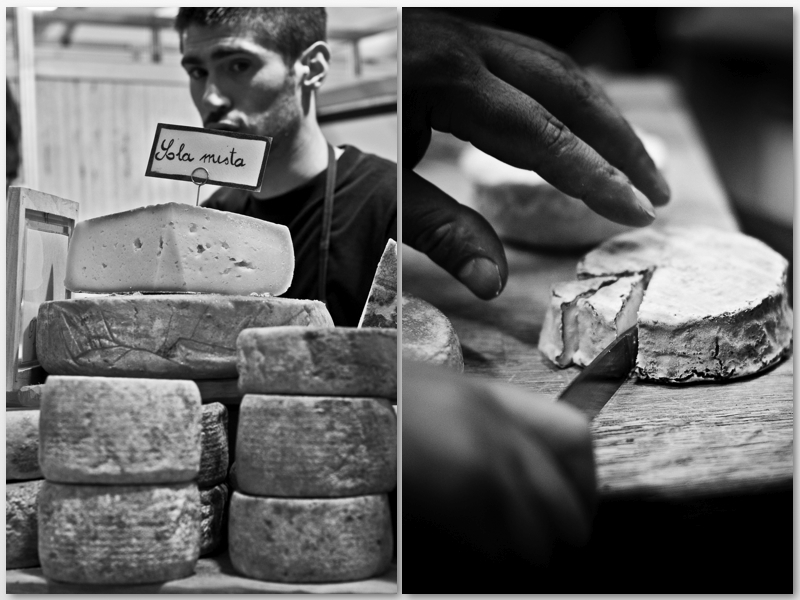
Cheese –milk, salt, starter culture, rennet. Four ingredients for endless results, shapes, aromas, flavors. What makes the difference is the intangible ingredient, the human element. Centuries of culture, traditions, secret recipes and know-how influence the future of the curd, whether it will be a Comte or a Parmigiano. When you taste real cheese, you taste a piece of that culture, of that place, of that genius.


Valeria Necchio graduated from the Unviersity of Gastronomic Sciences with a master’s degree in Food Culture and Communications. Based in London, cheesemonger for eight hours  a day and thinker for twenty-four, she is inspired by the food and traditions of the place she lives in, by seasonality, farmers and local markets. Believing in the “good food looks good” credo, her pictures celebrate the natural beauty of food and attempt to communicate flavors, culture and sense of a place, all in one image. 

by Deanna Dorangrichia

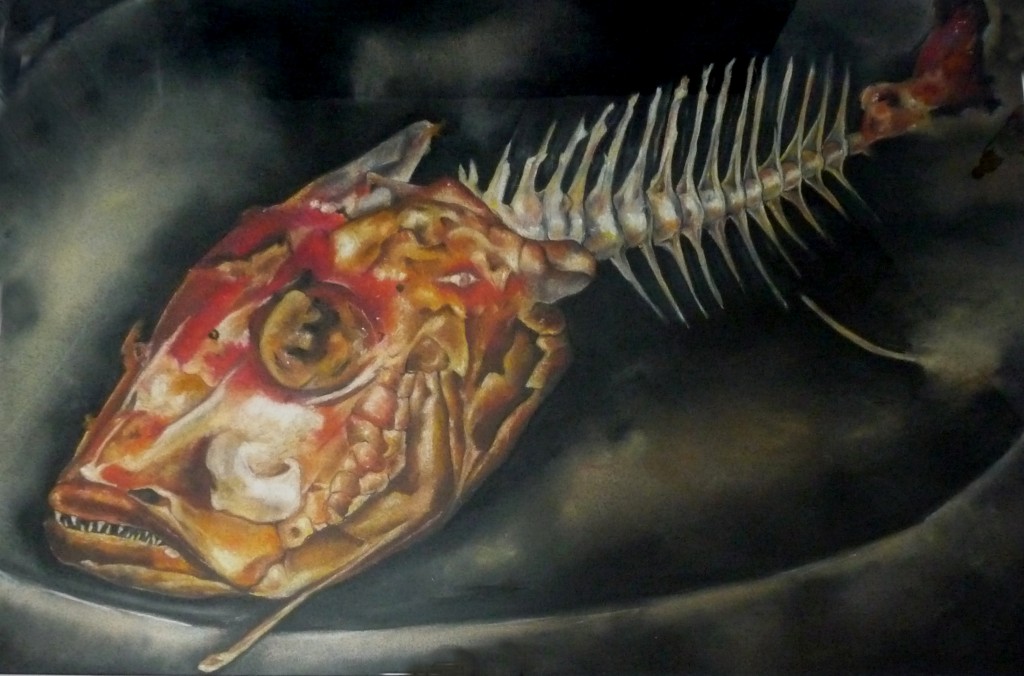
Deanna Dorangrichia studied at the Art Institute of Boston and Binghamton University where she graduated with a BA in Studio Art. After almost ten years of living and working in New York City, she is back in Binghamton, New York dedicating her time as a visual artist.

by Jen Choi

Sweet Dot Home

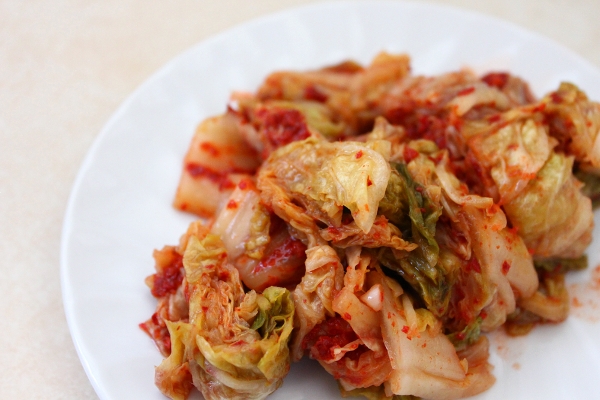
The rice cooker chirps polite, formal speech,
Beside the fridge made just for kimchi:
“Excuse me. Your rice is ready to eat.”

Thirty parts for special bosam kimchi.
Halmonie watches me closely as I eat.
I smile back, foreign to this country’s speech.

Then, praise: “She’s a good girl. Knows how to eat.”
She speaks with red hands, dyed by kimchi.
Here, food is mother tongue, our sacred speech.

Chopsticks cinch kimchi leaves on bright white rice,
And silently I eat—there’s no speech for this taste.

Jen Choi is a Nonfiction MFA student at the New School for Creative Writing.  She lives and writes in Brooklyn.