Author

Anya

Browsing

by Sophia Bosselmann

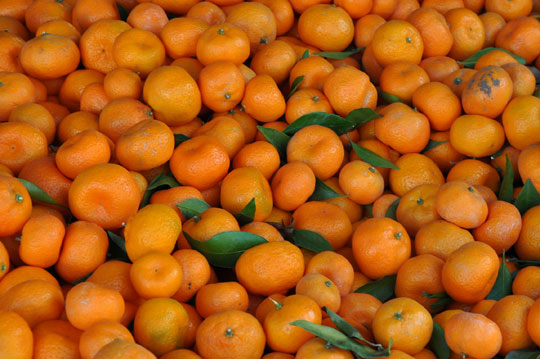
For Valentine’s Day last month, my parents sent me care packages. My mother sent chocolate and baking implements as she knows my sweet hobby. My father sent me a package filled with kishus.

A kishu is petite, round, and bright orange, resembling and tasting much like a tangerine but sweeter. Its proper name is Citrus Kinokuni Mukakukishu. Kishus descended from Ruju, an ancient mandarin variety found during the Tang Dynasty.  They were popularly grown in Japan, and in the 1980s took a trip to America where they were bred by the University of California for mass production, and have since become a California gem.  I fell in love with them last summer, while working at a Chez Panisse in California.

There, in the chilly walk in, I first encountered this tiny bright orange globe.  After taking the boxes of citrus out of the walk in, and carrying them upstairs, I began my task: to find 300 perfect kishus.  I had been instructed on what to look for and how to sort through them. Lifting up my first box of kishus, I pulled open the cover to reveal their bright orange shining faces. I picked one up and held it to the light for inspection: I looked for scratches, bumps, bruises, any trace of mold discoloring— most notably white spots, which change the taste slightly—or anything else that would make the kishu in my hand imperfect. The first one had a bruise, the second was too firm, the third had another bruise, and the fourth was just right; I tucked it into a hotel pan I had already set up, the cold metal softened with blue napkins, to prevent the kishus from bumps, bruises, scratches, or woes of discomfort.  Only 299 more to go.

To my left was the pastry cook who would not let any imperfect fruits pass onto service. To my right was the pastry chef who performed an extra inspection before arriving to the waiters upstairs, who were the last check the kishus before they arrived at guests’ mouths. Those kishus that are imperfect are sliced in two and then juiced to make kishu sorbet or peeled, pithed, and sectioned for coulee. The sorting process is to be done every day by the pastry intern, who I happened to be for the duration of kishu season. So you could assume under such conditions I would grow tired of the little buggers.

But I love them; I love the scrutiny, the care, and the downright ridiculousness of the sorting process. Because I can trust that these are the best and most loved fruits—the sweetest— and, at least at the restaurant, I knew exactly where they had been grown: Churchill-Brenneis Orchards located in the Ojai Valley in Southern California, my home state. And it is the most fun to say, “Kishu.”

The day I received a very squishy package in the mail, a white box with a brown bag filled with kishus, I grinned ear to ear.   I peeled one and pop the whole thing in my mouth. I tasted the sweetest citrus and thought about people surging across the globe, fruit found on one side of the world being popularized in another country, and then made for mass production. As I ate I thought about how kishus embody both my Californian and Asian culture.

Work Cited:

“Kishu Mandarin Information, Recipes and Facts.” Specialty Produce Is San Diego’s Best Wholesale Distributor. Web. 20 Feb. 2012.

“Chez Panisse Cafe Menu.” Chez Panisse. Web. 20 Feb. 2012.

“Churchill Brenneis Orchard.” Churchill Brenneis Orchard. Web. 20 Feb. 2012.

Sophia Bosselmann is a Eugene Lang Senior studying both Global Studies and Creative Writing. She has been working in restaurants since she was eighteen. She currently works at Craft.


James Beard
James Beard, called “the quintessential American cook” by Julia Child, laid the groundwork for the gastronomical revolution that surged in the second half of the 20th century. Beard trained as an actor but found his life’s work in food: he was the author of 27 cookbooks, founded his own cooking school, and made history in 1946 by hosting the first cooking show on television. Anointed the “dean of American cookery” by the New York Times, Beard is now associated with the best in American restaurants and cooking. His most important legacy is his celebration of American food and food traditions.
This event, which took place in February 2009, was sponsored by The New School Food Studies program and featured a panel discussion with Mitchell Davis, Betty Fussell, Judith Jones, Barbara Kafka, Dana Polan, and Andrew F. Smith (moderator).
Click here for an online video recording of the event.

by Nicole Steinberg


I Need a Bill Murray

Mostly to turn off
the lights and make eggs.
To take silent milk baths.
To tell me I’m the jerk.
To lie apart in bed because
there are enough tangles.
With eyes that speak only cruel
or amused—sometimes both,
because mean’s okay—and
a comb over, but I won’t
let that come between us.
To remind me I’m the girl
with these fucking rosy lips
and all these serious veins.


Getting Lucky with Meryl

There was something about that time—
the beach was a civilized affair, waiting
to be put away. All winter, I reminded myself
that someday soon I’d be lying on my yacht,
magically turned to gold by an excoriating
sun. A fisherman’s net conjured a miniature
ballerina, prim and delicate, huddled inside
a nautilus shell. The size of a cocktail
ring, a pistachio, twinkly and beautifully
flushed, she requested a proper lunch:
a touch of apricot, a pour of milk. The sweet
taste of liberty stained her lips. She died
in an accidental way—a tiny epiphany
seduced by the sea, its unforgiving froth.

Nicole Steinberg is the editor of Forgotten Borough: Writers Come to Terms with Queens (SUNY
Press, 2011) and the author of the chapbook Birds of Tokyo (dancing girl press, 2011). She’s
the founder of Earshot, a New York reading series for emerging writers, and she currently
lives in Philadelphia.

[youtube=http://www.youtube.com/watch?v=Iuc3l4d77z8]

Restaurants are ubiquitous, but few of us reflect on the number of workers and the labor issues involved in the industry. How well does the restaurant business do in providing good jobs, with decent wages, fair promotion policies, and health insurance and other benefits? What more could be done?

Members of the Restaurant Opportunities Center of New York (organization of restaurant workers working to improve wages and conditions in the restaurant industry) will engage in a multi-stakeholder dialogue with a common objective of improving conditions for everyone involved in the restaurant and food business community. The discussion will focus on three important topics — wages and benefits, labor practices, and consumer engagement and sustainability.

Speakers include owner and employee representatives from restaurants (Bogota Latin Bistro, Craft, Good Restaurant, International Gourmet Kitchen, La Palapa, Mexicue, One if by Land, The Green Table) and community groups (Union Square Hospitality Group).

by Courtney Watson

“You’ll be wanting some pie.”

It wasn’t a question. At Leatha’s Bar-B-Que Inn in Hattiesburg, Mississippi, it was never a question. I was so full of their smoky-sweet pork ribs that I could feel my own ribcage crying ‘uncle’, and yet, I couldn’t say no. Gluttony be damned, of course I wanted some pie.

You haven’t lived until you’ve tried the pecan pie at Leatha’s. I’d happily spend eternity rolling around the third circle of hell with the rest of the gluttonous if only I could have a whole pie to myself. It’s that good. With a flaky, buttery crust and golden pecans suspended in syrupy goo, it has a taste that I can only describe as warmth. I still remember the first time I tried it, not long after I moved to Mississippi for grad school. Like an amateur, I ordered the barbecue chicken plate which, though very good, pales in comparison to Leatha’s rich, savory ribs and pulled pork—but that was a lesson for another day. That night, I was comfortably full and ready to enjoy a warm, lazy Southern evening when I heard those magic words, “You’ll be wanting some pie.”

The thing was, I really didn’t want any pie, and, after eating half a barbecued chicken with a full complement of sides, I sure as hell didn’t need it. For whatever reason, I nodded my assent and after that nothing was ever the same again. Original sin, that pecan pie. Once I knew of its existence, I could never un-know it. It was my apple, my forbidden fruit. Expel me from the Garden of Eden, fine, whatever. Do what you will, but the pie comes with me.

“The crust, it’s so…perfect. It must have a lot of butter in it,” I hedged, picturing my internal calorie counter pulsing red, the sirens blaring like a nuclear reactor going into meltdown. The waitress laughed loudly enough to shake the walls of Leatha’s ramshackle barbecue paradise.

“Bless you’re heart, sugar, that’s lard.”

Bless my heart, indeed.

No one does sin like the Deep South, especially where food is concerned. Let’s be clear on that. Something about the way the humid steam that passes for air captures a scent and holds it close, so that the smell of barbecue, or whiskey, or smoke lingers. It’s a place that demands immersion, surrender—a land that lets your id run wild and succumb to your basest desires for salt and bread and fat and more. Always more. Have a drink, then have another—steamy evenings in the Deep South never end. Everyone knows that.  Guns and butter are revered with the fervor of the saved, and the most egregious sins of the flesh involve the sheer amounts of it that are fried or slathered in sauce and consumed after church on Sunday. The degree of indulgence would make Caligula blush and your cardiologist tremble. Eat to the point of pain and then have just a bit more. We’re talking temptation and decadence and surrender to culinary delights so dangerous that you may need a safe word. Or at least some beta-blockers.

While we’re on the subject of sin and barbecue, I would be remiss not to mention my own brush with the devil while traveling through the lonely town of Clarkesdale, Mississippi. Like the legendary blues man Robert Johnson, I too found myself down at the crossroads of 61 and 49. Legend has it that, in a fit of Faust, Johnson made a deal with the devil and exchanged his soul for musical prowess and, some say, a guitar strung by Satan himself. It was a deal that gave birth to the blues, and I was curious to see where it all went down. Instead of meeting the devil at the crossroads, however, I was greeted by Abe’s Barbecue Drive-In.

After touring the Delta Blues Museum, I was the sort of hungry that can only be satisfied by a lot of something, and nothing sounded better than barbecue. Abe’s didn’t disappoint. The restaurant, which was, interestingly, founded by a Lebanese family in the 1920s, serves up piles of meat drenched in a rich, tangy tomato-based sauce that I would happily drink. Apparently, Abe’s also serves tamales—great ones, I’m told—but there was nothing getting between me and that barbecue. The smell of this place alone is irresistible enough to send the staunchest vegan tumbling off the back of the tofu wagon: liquid fat crisping pork skin over a low, smoky flame for hours and hours, rendering charred black bones and tender flesh.  If the Devil had a dinner party, you can bet that Abe’s pulled pork would be on the menu with buckets of sweet tea and Robert Johnson singing the blues as we all settle in for a nice, toasty evening.

Though Southern food is sinful enough on its own, in order to truly be a heathen you must partake of Dixie’s finest libations. While living in Mississippi, I learned three important lessons about drinking in the South. The first came courtesy of a poet named Miranda, who cautioned that, “moonshine doesn’t mix.” She’s right. The second is that, below the Mason-Dixon line, the preparation of a mint julep has been elevated to an art form. The third, and perhaps most important bit of wisdom I gleaned while living in the Magnolia State, is that bourbon goes with everything.

One of my best memories of grad school is of a road trip to Oxford with my Southern literature class. We stuffed ourselves with the best po-boys this side of New Orleans and then trekked over to the local cemetery where we drank a fifth of Gentleman Jack while sitting around William Faulkner’s grave. It was the witching hour when my friends and I settled ourselves on the steps surrounding the author’s plot, which was littered with offerings to old Bill’s drunken spirit: cigarettes and lighters and bottles of booze. We poured a splash—just a splash—of bourbon on his headstone in deference to that great man of letters and in the pearly moonlight, amidst the mossy cypress trees and cold gray headstones, we remembered Faulkner (who was, by many accounts, quite the bastard) in his own words.

Everyone had a different beloved passage, remembered with a clarity that some people recall Bible verses. For Jennifer, it was a line from The Sound and the Fury (that seems particularly apropos to the topic at hand): “I’m bad and I’m going to hell and I don’t care. I’d rather be in hell than anywhere you are.” For Dan, it was shouts of, “Caddy! Caddy! Caddy!” as the ever-lighter bottle of bourbon made its way around our misfit crew. And then there was mine, a quote from Shreve in Absalom, Absalom, my personal favorite: “Tell me about the South. What’s it like there. What do they do there. Why do they live there. Why do they live at all.” It’s a deep question to wrestle with, but the night was long and we had plenty of bourbon.

The following night was cold, and we were on a witch-hunt in Yazoo City. We brought flowers from Eudora Welty’s garden in Jackson to place on Willie Morris’s grave, but we had trouble finding it. We wandered around the cemetery for an hour or so, passing around another bottle of bourbon. There was no moon that night; liquor and excitement were the only things keeping us warm. The bourbon tasted like smoke and fire and oak, with a devilish hint of sweetness. It gave me the feeling of being lit from within. My friend Fred ran between headstones with the spring of a gazelle, and we finally found the small monument dedicated to the beloved children’s book author. Not far from it rested his greatest creation, the Witch of Yazoo City, her long tombstone cracked in two and surrounded by broken chains, her wicked spirit freed.

I enjoyed many such weekend excursions throughout Mississippi and the Deep South, led into temptation time and again by the delectable local specialties. Crawfish season is never long enough, and I now find myself craving the tender, spicy bites of those delightful little monsters all year round. And don’t even get me started on Mardi Gras. The road to hell surely travels right down Bourbon Street, and I must confess to eating King Cake for breakfast every day for the duration of Carnival season. The doughy cake with white icing and bright bits of citrus is a slice of carbohydrate heaven, and I prayed at the altar of C’est La Vie bakery every morning, promising to repent my sins at the gym after the damage was done. Laissez les bons temps rouler, and all that…

Southern food is simply too good to be resisted, and I certainly didn’t put up much of a fight. There’s a reason why it’s called soul food; the flavors get into your blood, your marrow, feeding your spirit. And your ass, but that’s another matter entirely. Of all the culinary demons residing in the South, though, the one with whom I transgressed the most is the Archangel Canola, the creator of fried things. And how. From po-boys in New Orleans to catfish in Biloxi and fried chicken everywhere in between, my desire to sin with Southern-fried favorites was exceeded only by the opportunities to do so. However, none of these foods (not even the pie!) inspired my lust like the seemingly-humble fried green tomato.

The first time was an accident; we were at the Crescent City Grill and I agreed to split an order of fried green tomatoes to be polite, but I was skeptical. My friend, born and raised in Arkansas and Southern to the bone, made a case for them while we waited for our order.

“Are they really green? Like a tomatillo?” I asked.

“Yes, they’re really green. But not like a tomatillo. They’re just picked early.”

“So they’re not ripe?”

“Well, no, I guess not. But when they’re fried, the flavor mellows. You’ll see.”

I doubted that. At the time, I still wasn’t on board with regular tomatoes. I didn’t like the seeds, the wetness, the watery flavor. I imagined that our forthcoming order would be a soggy mess, and I was glad that I had also ordered the gumbo, a new discovery. I didn’t have high hopes for those fried green tomatoes. I’ve never been so wrong.

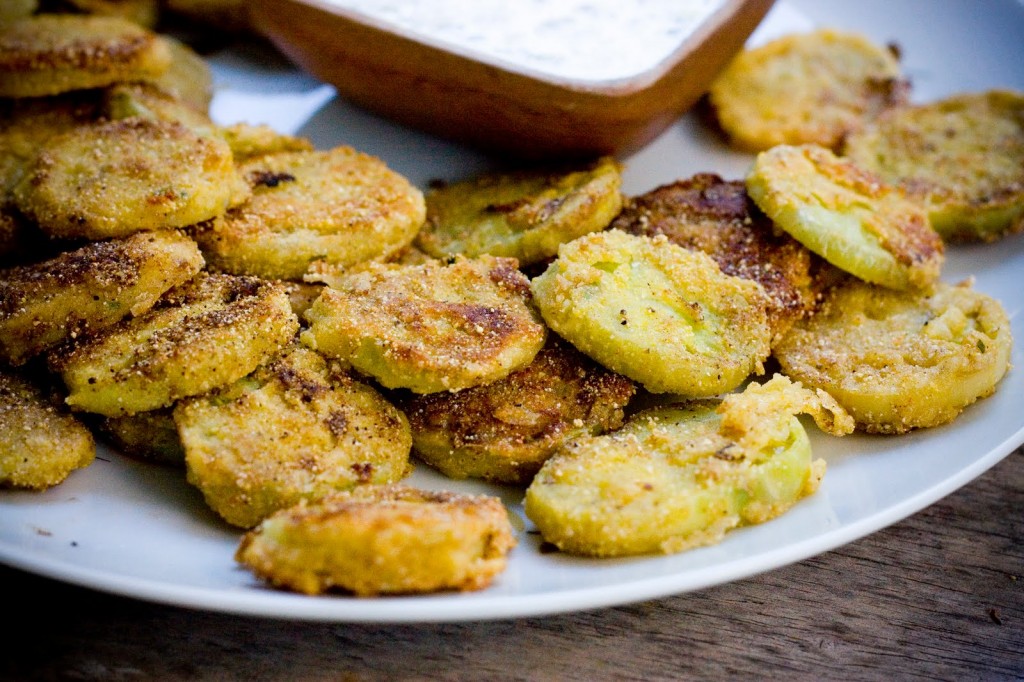
They were magnificent. The tomatoes were just soft enough to give beneath the crispy golden coating and they were tart in a bright, surprising way. It’s the avarice-inspiring sauce, though, that makes them truly sinful. In an act of voodoo that makes the dish nothing short of transcendent, the fried green tomatoes are topped with sautéed shrimp, mushrooms, and a spicy creole buerre rouge that is so good you’ll want to lick the plate. The result is sublime, and even now I would do very bad things to get my hands on those tomatoes.

The fried green tomatoes at the Crescent City Grill really are extraordinary, and for a long time I remained faithful to them. Sure, I strayed occasionally when another restaurant’s version sounded particularly appealing (I’m only human), but they were never as good as the ones served by the Crescent City Grill, where my friends and I wiled away many an evening at the restaurant’s Mahogany Bar after our seminar classes and writing workshops. We drowned our sorrows and fed our souls in the bar’s ivied secret garden, worn-down grad students seeking the comfort of our vices: cigarettes, alcohol, and all manner of tempting menu items. Among my friends, favorites included Creole nachos with crawfish and fried jalapeños, oysters grilled on the bar’s patio, and vast quantities of seafood gumbo. For me though, it was always the fried green tomatoes.

My loyalty to the Crescent City Grill’s fried green tomatoes wasn’t truly tested until a recent adventure to Monroeville, Alabama. My friends and I were on a literary pilgrimage to the hometown of Harper Lee (and childhood haunt of her best friend and next door neighbor, the ever-wicked Truman Capote) to visit the courthouse where Lee set her novel To Kill a Mockingbird and poke around the archives. After taking pictures in the courthouse and visiting the ruins where Capote’s family home once stood, we headed to a restaurant recommended by a local. It’s called Radley’s (as in Boo) Fountain Grill, and once we were seated the waitress told us about a sandwich that is surely the devil’s handiwork.

“It’s called the BLT Supreme, and it’s on a list. 1000 Sandwiches to Eat Before You Die,” the waitress.

My traveling companions and I looked at each other. Whose list? Did it really matter? If someone thought highly enough of a sandwich to put it on their culinary bucket list, it probably deserved our attention.

“What’s on it?”

“Well, it’s like a BLT, except with fried green tomatoes, bacon, and remoulade sauce on a croissant.”

We were sold, naturally, and the sandwich didn’t disappoint. There’s something extra-sinful about fried food being served on bread, and I swear the tartness of the tomatoes brought out the buttery richness of the toasted croissant. The tomato slices were big, with patches of verdant green peeking through crispy deep-fried coating. There was a chewy saltiness to the bacon and the whole thing was held together with a spicy remoulade, which is basically mayonnaise and Cajun spices living in sin. It was so good, so decadent, and if it were the last sandwich between me and eternity, well, I’m okay with that.

Writing by Courtney Watson has recently appeared in The Virginia Quarterly Review (online), 100 Word Story, One Forty Fiction, and more. She has also previously been published by The Inquisitive Eater. She is an Assistant Professor of English at Jefferson College of Health Sciences in Roanoke, Virginia.

by Susan Marque 

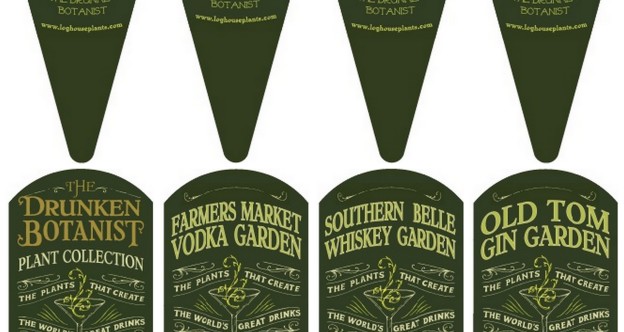
Cooking shows have replaced soap operas, and chefs have become celebrities.  Perhaps the next big thing will be a Drunken-Botanist-Cover-low-resgame show with spirits.  If that were to happen, then The Drunken Botanist: The Plants That Create the World’s Great Drinks, would be the contestants’ bible.

Amy Stewart, author of the New York Times bestseller, Wicked Plants, has turned her fun-filled horticultural knowledge on what is inside your barkeeper’s bottles.  You might never look at a Manhattan or martini the same way again.

“Warning: Do Not Add Water” the author warns on page 59:

During Prohibition, enterprising California grape growers kept themselves in business by selling ‘fruit bricks’- blocks of dried, compressed grapes that were packaged with wine-making yeast.  A label warned purchasers not to dissolve the fruit brick in warm water and add the yeast packet, as this would result in fermentation and the creation of alcohol, which was illegal.

This is just one of the antidotes Stewart has sprinkled into the text, as she highlights each of the herbs, fruits and plants that make up spirits, highlighting their history and horticultural makeup.  Grape wine, she informs the reader, almost never came to be:  “The fossil record shows that grapes were established in Asia, Europe, and the Americas fifty million years ago.  But when the last ice age, the Pleistocene epoch, began about 2.5 million years ago, vast sheets of ice covered much of the grape’s range and nearly drove it to extinction.”

Stewart showcases the perfectly intertwining realms of botany, booze and history with engaging tales (George Washington’s farm “was one of the largest distilleries in the country, producing over ten thousand gallons of alcohol in a single year”) to recipes (for a twist—no pun intended—on the original Manhattan, she suggests: “replace the rye with Scotch and you’ve got a Rob Roy; replace the vermouth with Benedictine and you’ve got a Monte Carlo; or just swap sweet vermouth for dry, and garnish with a lemon twist to make a Dry Manhattan.”) She has included over sixty recipes along with botanical illustrations and cleverly placed antidotes that break up the text.

It’s no surprise that Stewart is a National Endowment for the Arts fellowship recipient.  The Drunken Botanist is a well-researched and curated portrait of alcohol and the plants that create it, shared with a lighthearted voice to make the historical facts inviting.  You don’t need to be a drinker to enjoy it, perhaps just lover of life.

The Drunken Botanist: The Plants That Create the World’s Great Drinks will be published by Algonquin books on March 19th.


Susan Marque is an M.F.A. student in creative writing at The New School.  Her work has appeared in the NBCC awards website, The Brooklyn Rail, Petside.com, Gotham magazine, The Resident Magazine, Yogi Times and Fit Parent.

by Michelle Lerner


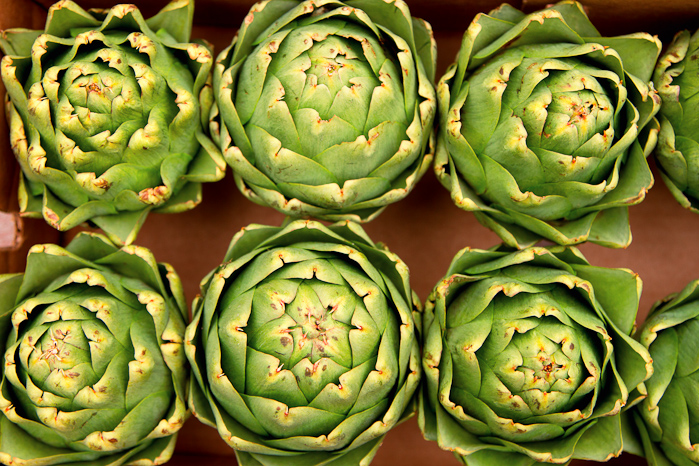
Artichoke

The softness of the heart
The sinking of the teeth
The scattered petals that were its sheath


Kiwi

Elephant skin
Stone from Easter Island
Emerald in a brown paper bag


Corn

From the Jersey jungle
Half undressed
Praying mantis


Michelle Lerner is a graduate of the New School MFA program in Poetry.  Her poems have been published in various journals and anthologies including Paterson Literary Review; Lips; Knock; The Poetry of Place; and others. 

[youtube=http://www.youtube.com/watch?v=QUSivYb1XGs]

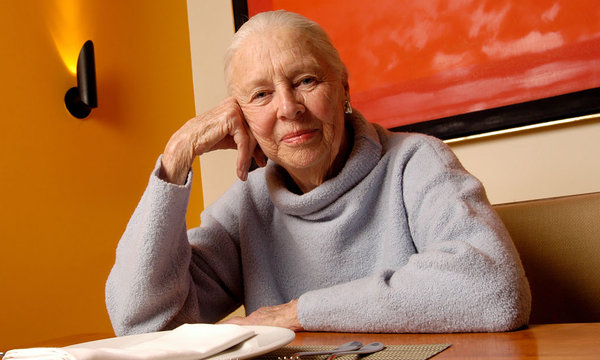
Marion Cunningham (1922–2012) started her professional career at age 50 after taking a cooking class with James Beard. He was so impressed with her cooking that he hired her as his assistant, a position she held for the next 11 years. On Beard’s recommendation, Random House selected Cunningham to edit the 13th edition of The Fannie Farmer Cookbook (1979). Its success inspired Cunningham to write her own cookbooks, including two for people who have never cooked before. Her dedication to home cooking led former Gourmet editor Ruth Reichl to proclaim, “If Beard was the father of American cooking, Cunningham became its mother.” Speakers include Judith Jones, senior editor and vice president, Knopf; Laura Shapiro, author of Something from the Oven; and Anne Mendelson, author of Milk: The Surprising Story of Milk Through the Ages. Moderated by New School Food Studies faculty member Andrew F. Smith.

The Culinary Luminaries series celebrates outstanding figures in the world of food and gastronomy. Past panels have been devoted to James Beard, Julia Child, M.F.K. Fisher, Craig Claiborne, Joseph Baum, Clementine Paddleford, Pellegrino Artusi, Robert Mondavi, and Henri Soulé.

by Carmella Guiol

The alarm went off at 10:30 p.m.  I had only been asleep for a short hour or so. I rose from my tiny bed, two mattresses pushed into a corner, and left the cozy barn room. I stopped for a spell on the back landing to take in the moon—but a wisp of light in the black sky—watching dutifully over our slumbering farm. The hens were hibernating in their red house on wheels, chuckling sleepily and shuffling endlessly to secure a space in the roost. Beyond them, the greenhouse glowed in the darkness like a fluorescent invertebrate, its belly filled to the gills with baby plants that still needed sheltering from the elements. The flat fields at the bottom of the hill were dark, but I found comfort in knowing that our vegetables were safe and sound, gently recovering from the virtuous work that is transforming sunlight into food. Of course, all of my fellow farmers were tucked away in their beds, exchanging spent energy for sweet dreams, which is probably what I should have been doing myself. And yet, there I was, alone and awake at this ungodly hour.

I wouldn’t be sleeping.

I made my way down the dark corridor towards the parking lot at the other end of the barn. I could have turned on the light, but I didn’t need to. My feet knew when to step over the missing stone and how to sidestep the crates of newly harvested potatoes obscuring my path. Outside the barn, a single lamppost stood guard over the frosty cars. It was still full-blown fall, with only the slightest whisper of winter in the air. The wind whipped around me testily, as if demanding an explanation for my nocturnal getaway, but I didn’t mind. As a native Floridian, I found cold weather enchanting, special. I marveled merrily at the first sign of snow while New Englanders griped and groaned as they dragged out their shovels.

I got into my car, switched on my brights, and warmed up the engine. I pulled out of the gravel parking lot, avoiding the ditches that I couldn’t see but I knew were there, and headed westward through the fog. I was headed to El Jardin, the artisan bakery where I had recently picked up a few overnight shifts. Several months before, a friend of a friend learned about my baking obsession and put me in touch with the head baker at El Jardin, Espiri, a sweet soul from Oaxaca. We clicked right away, two Latinos lost in frosty western Massachusetts, and I started making the late-night trek to the bakery whenever possible. He must have thought I was a bit deranged, eagerly volunteering to spend the midnight hours covered in flour, coaxing lumpy dough into the bread of life. But the truth was, I was enamored with everything about bread baking: The simplicity of the act. The magic of the rise. The healing of the heat. The aliveness of the loaf. I couldn’t get enough.

I remember the first time I came in, put on an apron, and stood at the plain wooden table. Espiri hauled countless buckets out of the fridge, each heavy with rising dough that peeked out cheekily from under the lids, as if threating to burst open and spill onto the ground. He popped the lid off the first one, heaved it onto the table, and turned it over. I watched with reverence as the bubbly white mass spilled softly onto the table, creeping toward every corner like rising water in a flood. Masa. Later, Espiri would feed the sourdough starter, la madre, with fresh flour and clean water, plunging his whole arm into the bucket to mix with all of his might. Again, I found magic in the way the thick white liquid began to froth and grow, the sleeping yeast coming alive before my eyes.

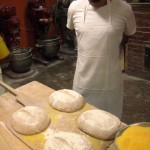
And I remember the first time I stood beside Espiri and learned to shape bread, adoring the feeling of the plump dough so supple in my hands. Alas, it wasn’t as easy as Espiri made it look. First he taught me to make a boule; I concentrated hard on rolling the mass between my hands until it became a neat little ball, rarely succeeding. That first night, most of my boules came out misshapen and weird, resembling footballs instead of softballs. Frustrated, I would fling my rejected footballs back to his side of the table so he could fix them. Effortlessly, his strong hands would form perfect boule after perfect boule, a motion that was second-nature to him having shaped several hundred breads six nights a week for the past five years. After boules, I graduated to the challenging batards, a longer oval loaf that I couldn’t seem to master for the life of me. Somehow, my fingers always got stuck in the wet dough, no matter how much flour I coated them with. But Espiri was a patient teacher, and the knowledge in those hands —priceless. Eventually, my boules became balls and even my batards started to resemble his own.

We spent countless late night hours talking about everything under the sun while our hands kept busy. Life in Mexico, his family, life in the States, politics, my life on the farm, my family back home. I shared frustrated stories of young love or funny anecdotes from the farm. He told me about his young daughter’s ongoing battle with a degenerative joint disease that had her wheelchair-bound at the age of five. Each week, he sent his checks southward to pay for medical visits and supplies, food, and schoolbooks for his children. Sometimes, in a rare lull while we waited for the dough’s final rise, he would log onto his Skype account and we would share a few moments with his smiling family through the screen.

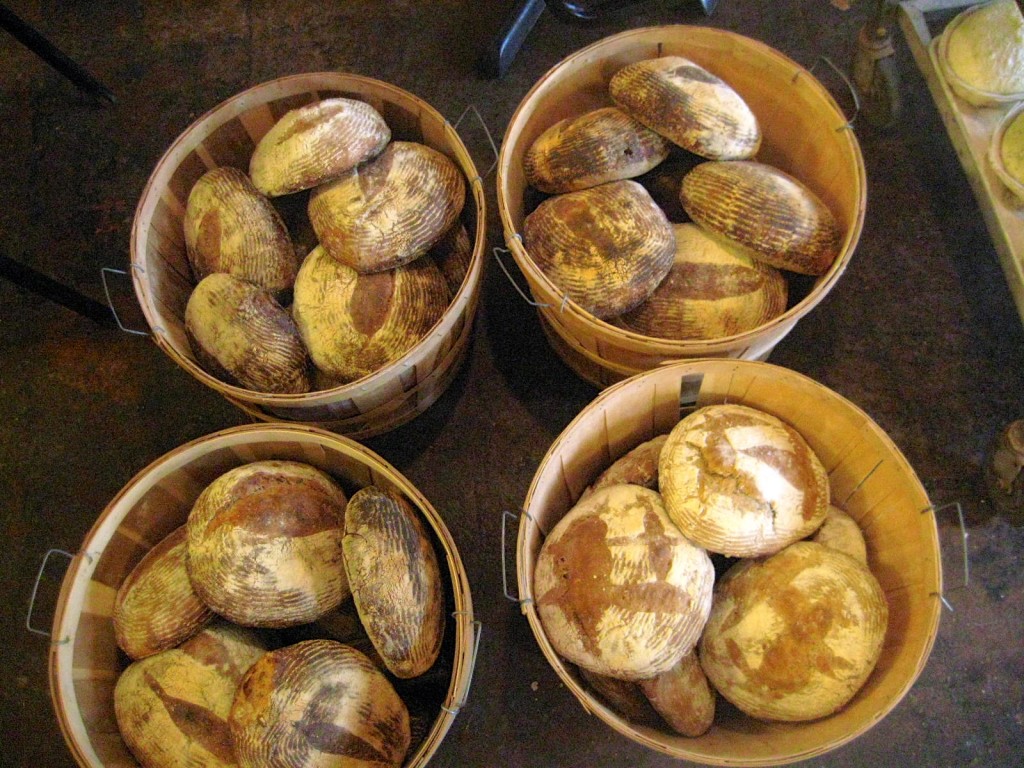
When an opening came up for an assistant baker, he offered it to me and I didn’t hesitate. Friends said I was crazy—I was already working more than full-time as an apprentice on an organic vegetable farm—but I was over the moon about my new job. Over time, I learned the nightly dance, performed like clockwork with only slight variations. Eight grain, rosemary olive oil, whole wheat, country rye, French, maybe a specialty loaf with Kalamata olives or cranberry pecan if the next morning was market day. Each variety would get formed to their specific shape, never veering from the order, which determined how much heat each would receive when they had their turn in the oven.

There were only two turns in my fifteen-mile drive from the farm to the bakery. Corn fields and more corn fields. Maybe some tobacco plantations when you get far enough west. During college, several years back, a friend and I decided to explore the fields surrounding our campus, two city girls bravely embracing the bucolic countryside. In the land of forever tall corn stalks, we snapped off a few ears to steam in our dorm kitchen, giddy with guile. But to our surprise, the golden kernels were not sweet and juicy as we had expected. Instead, they tasted as if we had just bitten into a fibrous eraser. Bewildered, we ran to the one person who could explain this strange phenomenon, our friend Sam, the daughter of a South Dakota farmer, sputtering about the offensive corn. She laughed heartily at our ignorance; “It’s feed corn, you idiots!”

I passed the ghost-lit Volvo mechanic, my cue to turn off the road, and pulled into the nondescript plaza that the bakery shared with a pizzeria and a shop selling all things Buddhist. Prayer flags fluttered inconspicuously in the haze, strung up haphazardly between two Tibetan statues set up in the middle of the parking lot. I parked beside the white delivery van that would make the rounds first thing in the morning, bestowing our hot, crusty loaves to overly locally-minded restaurants, quaint coffee shops, and gourmet grocery stores. Espiri hadn’t arrived yet so I went around the back of the building to let myself in. Again, I maneuvered around the perpetual alleyway puddles that I couldn’t see but I knew were there. Around back, the moon lingered on the heaps and heaps of cut wood that fed our oven each day. Beyond them, the anomalous peach tree stood gnarled but strong.

The heat of the oven pulsated from behind the closed door; the fire had been raging since noon that day, bringing the current oven temperature close to 900 degrees. I reached around in the dark to find our hidden key and let myself in. The warmth that had been building all day rushed out of the room like a wave, and I savored it like I would a calming cup of tea. Perhaps this was my draw to the bakery—the oppressive tropical heat that reminded me so much of home.

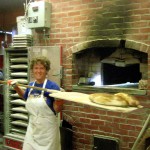
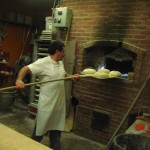
Each time I walked into the bakery, I was always taken aback by the stark minimalism of the operation. This might have been another facet that drew me to the trade; I’m a sucker for simplicity. A solid wooden table in the center, two industrial-sized mixers gleaming beautifully in the corner, a refrigerator humming happily beside them, and the gaping monster mouth of the oven, into which we would feed hundreds of pounds of dough over the course of the night.  A few scales, a sink, Espiri’s trusty wooden peel, and several metal dough cutters. Under the table, giant white bins filled with northern flour. Nothing more, nothing less. And yet, we made magic in this room. Night after night, Espiri and his helpers performed the miracle of bread-making that humans have been partaking in for hundreds of years. The enormity of it was never lost on me. The dough in my hands felt like a homecoming, the first hint of bread wafting from the monster’s mouth, a celebration.

The room was dark except for the glowing coals percolating in the oven. I was alone in my reverence, basking for a moment in the calm before the storm. Then, I clocked in, flipped on the radio to the only station whose signal we received, tied my white apron around my waist, and began pulling buckets out of the fridge for another night of making magic.

Carmella Guiol is a writer and sustainable food activist living in Miami, Florida. She runs the Garden Grove Bread Company out of her kitchen and delivers her baked goods by bicycle. You can find more of her writing at www.renouncerejoice.blogspot.com.