
I’ve never been afraid of moss before.
I hadn’t been afraid of much, honestly. What other people found frightening: heights, public speaking, tight places, foreign countries, even the dark—I found exhilarating. Life is perilous, and perilously short, no matter how you live it. Even a body who pursues the most insular and cautious of lives might fall prey to a home invasion or pancreatic cancer or choke to death on a popcorn kernel. Ten minutes of watching the National Geographic Channel teaches us that no organism on earth enjoys a moment’s safety. Why lie to myself and pursue an illusion that only guarantees me a gray, wretched paucity of life but does nothing to prolong it?
I started college but didn’t finish it. Don’t hold that against me—the starting, I mean. Everyone was doing it. At least, all my friends were. Pushed out into the world by shiny-eyed counselors eager for proteges whose success might give some meaning to their pathetic lives that stank of copy machines and cafeteria cheese, by deep-pocketed parents who counted greed next to godliness, by the whole machine that churns out die-cut consumers and corporate climbers and drops them neatly into boxes that, to me, looked remarkably like coffins.
So yeah, I ground along mindlessly for a couple of semesters, learning about how rich people could get richer and how men dead two thousand years ago argued about the definition of virtue and the names of plants in a language nobody speaks anymore before I bailed. My parents sort of cut me off, but not really. They did reduce my allowance, but I didn’t care. I’d work for a few weeks at a bar or a bike shop, long enough to buy my next plane ticket, and then I’d be off.
I didn’t have the same travel expectations as my parents. Actually, I can’t think of any more vapid and disappointing way to travel than hotel to hotel, managing to remain entirely at ease everywhere you go, comfortably air-conditioned and wrapped in soft sheets and safely insulated from learning anything at all. I didn’t want to come home with a phone full of Instagram-ready photos and tourist-grade trinkets. I wanted to plunge into something entirely other from myself and come out different on the other side.
And I have, I have.
But back when I first started wandering, that meant hostels and the front-porch cots of friendly strangers and sometimes sleeping out under the stars. Everywhere I went, I wore what the locals wore, ate what they ate, drank what they drank. Sometimes my stomach protested, but I figured it was all part of the experience. I wanted to be real. I didn’t want to be an observer, a plastic doll propped up on the outside of what was happening. I wanted to be in the scene.
I’d spend every penny I had, and then work just long enough to do it all again. Sometimes my parents would send me airfare home, when I got carried away and overspent. I refused to buy into the real estate scheme that had ensnared all my former friends, so when I was back stateside, I stayed in the family guesthouse. My parents couldn’t decide from one moment to the next if I was an embarrassment or a delightful eccentricity. With my stories and my photos, I was always good to trot out at a dinner party, but they did worry how in the world I was going to build up my retirement and contribute meaningfully to society—meaningfully meaning how was I going to suck money out of it.
Of course, I didn’t always only sleep where my backpack led me. With my dad being a corporate lawyer in the gas and oil industry, my parents had friends all over the world who were thrilled to have a world explorer staying with them for a few days. I’d pay my room and board in stories, thrilling them with tales of how I scraped my belly raw crawling through caves in South America or how sweet roasted fawn tasted fresh from a campfire atop the Rocky Mountains or how the climb to the top of Mount Fuji was littered with the bodies of the despairing. They’d fill my champagne glass and ply me for the latest news on the deforestation of the rain forest or how the glaciers were retreating in Greenland while they clucked and tutted and oohed and aahed.
So it was nothing out of the ordinary when after a few short days working on a commercial fishing boat out of Alaska—that’s a strong do-not-recommend, no-stars rating—I landed at the home of Jack Pelkey, a friend of my parents I’d never met before.
Hitchhiking is fun in Alaska. It’s arguably more dangerous here than anywhere else—this state has a ridiculous ratio of murderers to non-murderers, but on the other hand, people here live so marginally that it’s also much more common than anywhere else in the United States. Which means you get picked up fast and taken far. Pelkey had offered to pick me up at the port, but I declined. When I got to Alaska, I’d flown straight into the tiny airport of the little harbor town, and I hadn’t gotten to see the state at all, having gone directly to the boat. This was my first trip to Alaska—and it seems will be my last—and I wanted to experience it feet-first.
A crusty old person who looked more crab than female, which I thought her pink bandana declared her to be, picked me up in a rusted-out truck I doubted would survive another winter here. I didn’t have to supply any conversation—she shouted general political observations and her entire life history at me over the wheezing of the pickup until I pointed out a side road where she pulled over and let me out.
Suddenly, everything was quiet. Very, very quiet.
I’d heard Alaskan summers were beautiful, but still I had expected something much starker. This place was unspeakably lush, the eye crowded with a thousand shades of green. Wildflowers on stalks towered over my head. Huge ferns with massive fronds swallowed sound. Soaring pines and birches and cottonwoods seemed to catch any breath of wind in their branches and hold it still.
Immediately, I thought of bears. This part of the state was thick with black and brown bears alike. As dense as this undergrowth was, a bear could be standing a yard from me, and I wouldn’t know it. I fingered the whistle in my pocket and recounted to myself how to react if I saw one.
Black bear—stand and fight. Brown bear—play dead and pray.
My step had been cheery when I first dismounted the truck and waved goodbye to my erstwhile chauffeur, but it soon became a wary trudge. Muskeg—the swampland of the north—rolled away on either side of the road, its mounded tussocks and thick wildflowers hiding miry sludge and channels of black water. Although at first sight, the forest had seemed effusive with life, I now realized that was an illusion. There were fewer birds than I was used to, and most of the ones I saw were eagles or corvids, devourers and scavengers, not songbirds. No deer or fox tiptoed through the woods. Moose were supposed to be common here, but I’d be glad not to see one of those—I’d had a nasty run-in with a cranky moose in Montana, and I had no desire to repeat that. Still, the quiet and stillness of the landscape chilled me.
Everywhere I looked, huge mounds of moss and lichens dotted with mushrooms marked the landscape like the burial grounds of giants. I knew they were only fallen trees, reclaimed by the earth, but this fancy that they were bodies would not leave me. I began thinking of all the missing and murdered people of Alaska, how rarely the vanished here were ever found. Between the ever-open arms of the sea and this forest that consumed whatever fell on its floor, I marveled that any cases could be closed.
The blacktop soon gave way to dirt, winding seemingly to nowhere through the trees and swamp. Now and then, I would pass some sign of what passed for civilization here—a falling-down trailer, its roof overtaken by moss and falling limbs, its yard littered with trash and vehicles that had no prayer of ever starting again. Or a shack wrapped in Tyvek, coal smoke rising weakly from its chimney, with tied-up dogs covered in mud up to their noses.
I began to fancy that Alaska herself was some sort of consumer, an eater, a devourer of whatever came her way. And she definitely felt female—other, alien, mysterious, and hostile. Like a woman, so alluring and seductive, but there was something toxic underneath, something that sought to undo, to subsume, to break apart and rebuild in her own image. My sense of unease heightened with every step. When a spruce hen fluttered out from the underbrush with a wild flapping of wings, I screamed in an agony of terror as great as if it had been a bear setting its claws in my neck.
There would be no real darkness tonight—just a weak twilight in the wee morning hours, but still I hastened my steps along the road. I was practically weak with relief when the road abruptly narrowed into little more than a track that appeared to go directly vertical up yet another hill. Three ATVs were parked in a small clearing there. Clearly in winter there’d be little chance of scaling that wannabe road in a car or truck, so Pelkey and his guests would park their vehicles here and take the four-wheelers on up to the house. This time of year, they were mostly toys. I looked longingly at them, but only seized my backpack straps more securely and lowered my head as I worked up the last few yards of my journey.
Pelkey’s place turned out to be more compound than house. He’d waged war on the alders that even now strained toward the house with red-skinned talons, carving out a wide circle, lush with short-clipped green grass, around the house and the other buildings. Neat rows of flowers marched obediently up to a wide stone-pillared porch. On one side of the house stood a garage large enough to house several vehicles and, I imagined, a large boat. On the other side stood another building that resembled a shop. The house itself was fairly modest compared to the homes of some of my parents’ friends, but it looked like the cover of a log cabin magazine, with melodramatic dormers, Swedish-style logs, and two stone fireplaces.
As I mounted the steps, I glanced over my shoulder. I tried not to, but the feeling that something was watching me, something with hot breath and a drooling mouth, bored into my back like an auger. The driveway dropped abruptly out of view over the hilltop, and between the cut aisle of the trees, I could see the volcano Mount Iliamna gazing unblinking at me from across the bay. It was a spectacular view, and empty of any predators or watchers that I could see. Still, I shivered as I rang the doorbell.
I’d never met Pelkey before, and I was unprepared for the man who met me. Most of my parents’ friends weren’t really that much different from one another. The men and their wives tended to be florid creatures comfortably stuffed into expensive clothes, except in the cases of the wives who’d been traded in for younger models who had yet to eat their feelings in cheese and opiates. Stateside, at least, they tended to keep to one side of the color wheel and struck me as mostly interchangeable in utility. My whole novelty, my entertainment value at parties, was that I was the only eccentric they knew.
But Pelkey, I considered as he opened the door, might pose some competition in that regard.
The air was cool enough, a typical Alaskan summer day of not quite sixty degrees and one hundred percent humidity, although I’d long since taken off my jacket and had sweat through my shirt on my trek up. I would have expected that, to an Alaskan resident, the day felt comfortable and perhaps even warm, but Pelkey’s bulky frame was covered head to toe. He wore a fisherman-style hat pulled low on his forehead, and a black medical mask over the lower half of his face. Eyes whose color I could not distinguish in the dim shadows of the house glittered like sunlight on the ocean, blinding rather than illuminating.
“Mr. Pelkey?” I suddenly wondered if I’d really been invited at all, if my dad had somehow misunderstood. “I’m Ryan Everex. I—Do you want me to wear a mask? I’m vaccinated, but I might have a mask in my bag.”
He waved a gloved hand at me. “No, no.” His voice was gruff, almost garbled, and I put that down to the mask. “I’m not afraid of any germs. This is—something else.”
Something like not wanting me to be able to identify him in a lineup? If my feet hadn’t been frozen in place, I’d have taken a step back. That’s silly, I told myself sternly. Don’t be stupid. Your parents know where you are. He’d have to be an idiot to lure you here with bad intentions. He’s just a rich old weirdo. Nothing to worry about.
“Well, come in, come in,” he went on, stepping back to usher me in. “Boots on the mat. I’ll get you a drink, and then I’ll show you to your room. Water? Beer? Wine? And call me Jack.”
My mouth watered at the thought of water condensing on a cold aluminum can. “Beer sounds fantastic.”
I took off my muddy boots and followed him sockfoot through the house. I’d read that Alaskans practically worshipped the sun during their brief summer, that it was common for them to stay up all night long during the midnight sun weeks and take advantage of the light in every way imaginable. But Pelkey had his blinds down and tilted so only cracks of light shone across the hardwood floors. I wondered if he might be one of those rare people I’d heard were allergic to sunlight.
Great, I thought. I come to Alaska and wind up staying in a vampire’s house.
Reassuringly, his kitchen was way too stocked for a man who only drank blood. Dad had said the guy was divorced, maybe two or three times, and none of his kids lived in the state. So all this food had to be for him. There was bread on the counter, a basket of oranges and grapefruit, and a basket of snack-size candy bars. Something savory smelling of meat and spices bubbled on the stove.
Or the food’s for his minions, a voice in my head whispered slyly. I grinned at myself as I took an Alaskan White Ale from his hand and cracked it open.
“Thanks.” I guzzled in spite of myself. I had gotten thirstier than I realized. Pelkey—Jack—leaned heavily on the counter for a moment as if catching his breath, then heaved up and headed down the hall.
“I’ll let you get settled,” he said, opening a heavy wooden door and waving me in. “I’m not a formal guy, so consider my home your home. Come out whenever you feel like it and we can talk. Dinner’ll be ready when you’re hungry. You’ll find time doesn’t mean much when the sun never sets. Help yourself to anything you like.”
My parents and their friends all had some kind of help around the place. A housekeeper, a cook, a groundskeeper. And I couldn’t see Pelkey, with his uncomfortable bulk and apparent aversion to the sun, maintaining this property on his own. Maybe they were all away on vacation. At the same time.
I’d been beat when I showed up at the doorstep, but the eeriness of this place and Jack’s general weirdness had infused me with a sort of adrenaline. I threw my bag on the quilted, king-size bed and hit the shower in the guest room’s private bathroom. Hungry? I was starving. And whatever had been simmering on the stove had smelled amazing.
Fifteen minutes later, I was rattling back down the broad, hand-carved staircase. I found Jack in the living room, a bottle of Ardbeg Scotch Whisky and two glasses beside him. He poured one for me as I came into the room.
I motioned to the assortment of animal heads mounted on every wall. These weren’t the usual collection of Alaskan trophies, although a caribou gazed down from over the fireplace and a fully erect grizzly bear stood in the corner. I also spotted a gazelle, a zebra, and several smaller animals I couldn’t identify. A wolf and an arctic fox prowled on the empty platforms of what would have been bookshelves in any other house. Prey and predators all alike with their glass eyes fixed on us. I heard my heart pounding in my ears, felt the rush of blood under my skin, the coiling of suddenly tensing muscles. This must be how the hare feels before the coyote leaps, I thought wildly, and cleared my throat.
“Are these all yours?”
“Oh, yes.” He nodded heavily. “Once upon a time, I was a world traveler like you.”
He suggested we’d be more comfortable eating on trays in the living room than at the long, severe table in his dining room, and I readily agreed. We spooned steaming bowls of the stew he’d prepared and tore hunks of fragrant bread from an herbed loaf he told me he’d had delivered from a bakery in town. Large glasses of deep red wine stained our lips vermillion before we’d even sat down. Mine, at least. I still hadn’t caught a glimpse of his.
I nearly gagged at the first slurp of the stew, though. The meat was dark but tasted fishy—or rather, it tasted how fish smelled. All the seasonings and vegetables in the world couldn’t mask that distinctive flavor. I wiped my mouth with my napkin, trying to hide my dismay from my host.
He was watching me over the mask that he slipped aside for every bite or sip he took. I couldn’t even see if the man had a beard or not, although I suspected he did from the muffled way he spoke. I shuddered to think what the air inside that foul mask must smell like. Even now, a damp and musty fragrance emanated from him. Familiar, but unplaceable.
He chuckled, the sound creaking like tree limbs in a storm. A chill ran down my spine at the sound.
“What’s the matter? Not quite to your liking?”
“No—I’m sorry, I just wasn’t prepared. I thought it was beef or maybe lamb.”
“I’m happy to be the first to introduce you to this, then. Your dad tells me you’re quite the connoisseur of rare delicacies. This is young seal meat.”
I tried again, bracing myself this time. I closed my eyes and let the meat slide across my tongue before slowly tearing into it with my teeth. I pictured sheets of ice and colonies of seals with their pups, the frothing white icy ocean, the blood in the snow. I smiled.
Jack nodded approvingly. “Now you’ve got it.”
“How’d you come by this?”
“Ah, now that’d be telling. But you know it wasn’t that long ago that the government was paying men $3 a nose for as many seals as they could kill. Rules change, but people don’t. Let’s just say it wasn’t that hard. I knew you’d be the sort to appreciate it.”
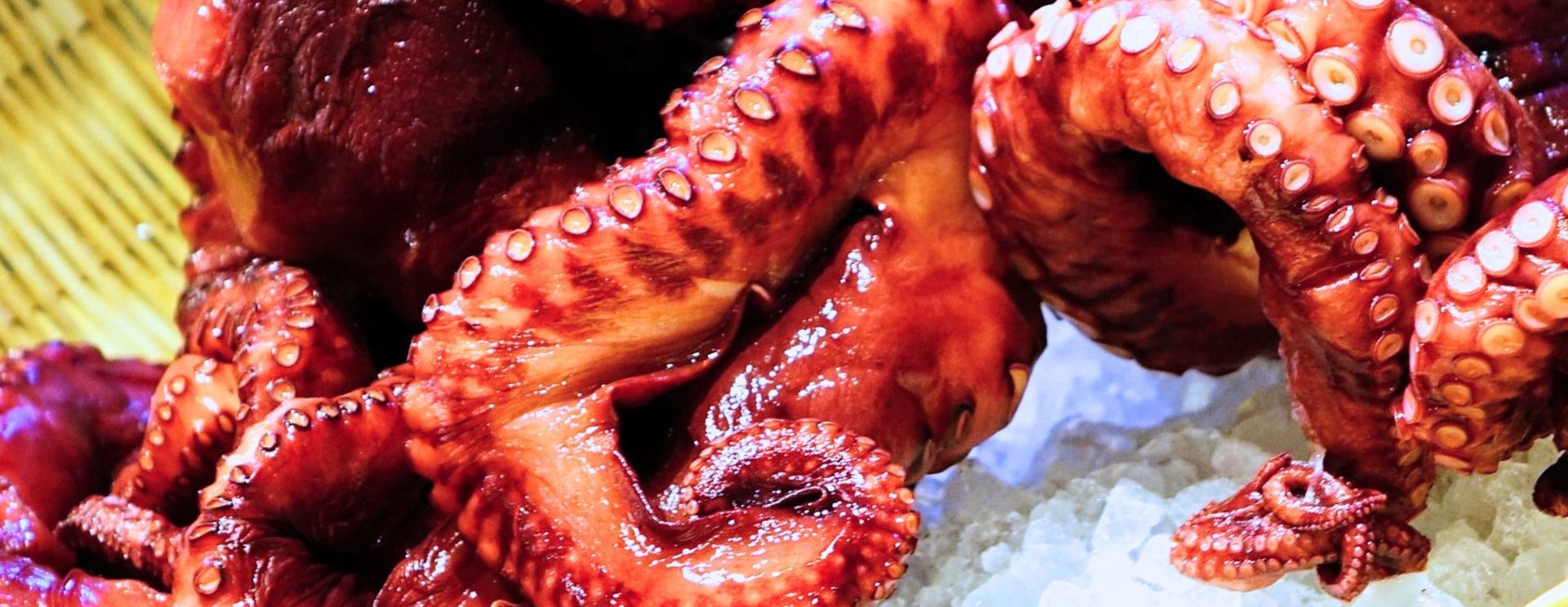
It was true. I’d made a point of enjoying the particular culinary delights of every place I visited. As we ate our meal, I regaled my host with tales of all the strange and wonderful dishes I’d experienced. I told him of eating ortolan in France, stuffing the brandy-soaked bird’s whole body in my mouth and biting down on its neck so that the blood spurted onto the white napkin draped over my face. Sannakji was a particular favorite of mine, a Japanese dish in which a baby octopus is brought to the table and, still squirming, cut piece by piece and devoured at leisure. That one is fun because it includes an element of danger—every now and then, the suckers on the tentacles stick to someone’s throat and they choke to death.
Happily, I’d escaped that fate. Much safer had been eating donkey meat in China. The donkey was tied to four stakes, and we were given spoonfuls of the freshest possible meat scraped from his belly to dunk in blood and sauces. It’d been worth it for the novelty, but I’d found the constant screams and braying from the beast detracted from the sensuality of the experience.
By the time I stumbled up to bed, limbs heavy with Scotch and head spinning with the stories Jack had shared of his own adventures, I was barely able to make it under the sheets before my eyes closed. I slept like a baby, not even bothering to close the blackout curtains against the bleak constancy of the sun. I dreamt of sandy shores soaked with the blood of butchered seals, their wailing a sort of lullaby that stultified my exhausted brain better than any opioid.
Jack was waiting for me in the same spot, as if he’d stayed rooted in place overnight, when I emerged from my bedroom the next morning. Something in his stillness alerted me. I slowed my steps.
“Jack?”
He didn’t answer, but I caught the glint of his eyes.
“Jack?”
No movement.
Gingerly, I leaned forward and tapped his shoulder. The movement inadvertently knocked aside that ugly fisherman’s cap he’d been wearing. His head looked lumpy and weird. I strode to the curtains and swept them open, flooding the room with light. I screamed at the sight of him.
Green moss and lichens and curling vines unwound from his head, as if his skull had been split open years ago and reclaimed by the forest floor.
I tugged on the elastic strap of his mask, and it sprang free. Not a beard, but more moss covered his face. Shaking and cold with terror, I stared into those glittering eyes, but I could not perceive if any life remained in them or not. His chest did not appear to rise, but moisture steamed up through the greenery bursting from his skin. My nostrils at last recognized the fusty forest odor, that miasma of woody swamp I’d failed to identify last night.
I plucked at the straining buttons of his shirt, and ferns and mushrooms burgeoned, their wet, slimy growth grazing my hands and sending me tumbling backward with a shriek. My senses fled, and with them, all rational thought. By the time I came to myself, I was halfway down that steep track to the dirt road, my backpack clinging to my shoulder by a single strap, my boots unlaced.
I left Alaska that day. Took a puddle-jumper to Anchorage and flew straight home. I told no one of what I’d seen. To my father, I explained I’d been too busy on the fishing boats to visit his old friend after all. I wondered if that old lady would remember the hitchhiker she’d dropped off a few miles away from the Pelkey compound. I wondered how long it would take anyone to find Jack, or if they’d find anything at all. If he’d be completely reclaimed like those fallen giants in the forest, just a boneless mound of moss and lichens in the living room of an empty mansion.
This morning, when I brushed my teeth, they had a green tinge that the toothpaste could not repair. I plucked a tiny lichen tube from my beard when I shaved. And the skin over my ribcage felt spongy and soft. Sunlight’s started hurting my eyes.
I’ve never been afraid of moss before, and here I am its prey.
Cassondra Windwalker earned a BA of Letters from the University of Oklahoma. Born and raised on the red clay, she’s wandered the sticky corn fields of the Midwest, the frozen seas of the Wild North, and frequently rests her wings where orange skies meet purple mountains.She’s the author of nine novels and three collections of poetry and does her best to keep fed a menagerie of stray critters, cryptids, marooned kelpies, and lost specters.
Comments are closed.