Author

Whitney Bard

Browsing

There is no recipe for Croatian lamb on a spit.

My grandfather was a hard man, a hard worker who did not write, read, or tell stories. He did cook, beginning during his time in the Navy. His life was action and decision, plainly put–even down to the meals he prepared for his family.

Stories are like recipes; they change with the years, the hands that make them, and the table that they are served upon. It seems that the margins of both recipes and stories hold the secrets, and they’re only likely to offer themselves to you in small batches, a few at a time.

Horse

I have no idea how it happened. I know it was in the Croatian Dalmatian village of Sinj, which is famous for the yearly knights tournament called Sinjska Alka. In early August, the Alkari knights in traditional garb of black, gold, and red aim on horseback at a ring shaped target—the Alka—with their lances. It’s turned into a tourist attraction, but its purpose used to signify the marking of the victory over the attacking Turks by the people of Sinj and the surrounding Cetina district (the Cetina river flows through the village quietly and most unassumingly.) The winner of the tournament has his name etched in gold letters for all to see. The crowd is ordered to observe the winner’s name “for the coming generations to remember.” The people tried so hard with their rituals to never forget. There seems to be a sin in the forgetting.

Arambaši is a local version of ​sarma (stuffed cabbage), consisting of ground beef, pork, onions, garlic, parsley cooked in a tomato based sauce, with salt, pepper, cinnamon, nutmeg, cloves, and lemon zest. ​Arambaši are served at the Sinjska Alka tournament every year, and can also be served at Easter. I do not know if my grandfather ever saw the tournament as a child or young man every sun drenched August in Sinj.

Alternatively, the Sinjska Gospa, a pilgrimage to Our Lady of Sinj, occurred on the Assumption Day of August 15th, which is the birthdate of my grandfather’s eldest daughter, Rosemarie—my mother. She was born in Manhattan, a few hundred worlds away. The Arambaši dish was strangely also connected to August 15th. Food seemed to tie them all together.

As a child, I easily discerned my grandfather’s small, but fierce green eyes. He passed these eyes to my mother, though they did not make it to me. My grandfather had a sister. Barely two years younger, she had light brown hair and a gentle beauty. When she was 16, she fell from a horse. In my mind’s eye I picture the horse to be tawny coloured. Probably spooked. Nothing more dramatic than that. She broke her arm.

As my mother tells me, “there was no Penicillin in the village. Those things killed them.”

Those things killed my grandfather’s sister. She died of infection, which likely saddened his family but did not surprise them. Life could simply disguise itself out of sight and death could take you if its whims bent in your direction. They did not question it. Her name was Lucia, which became my middle name.

Overboard

There was no Ellis Island experience to look back upon, at least on this side of my family. Like other Croatians we knew, my grandfather “jumped ship,” according to my mother. This did not literally mean he went overboard, jostling with the sharks and the mobster dumped bodies in the New York harbor. He came to New York City on a ship, yes. In a much more pragmatic fashion befitting my grandfather’s demeanor, he simply got off the commercial boat, likely coming in from Toronto—a popular route—and did not get back on.

My grandfather, once Stipe Smoljo (known here as Steve Smolich, had worked as a busboy in various cafes and restaurants in and around Sinj, and learned to cook properly in the Navy. He was the ship’s cook. I wonder if the ship of Crotian seaman were all eating stuffed cabbage in the mess hall onboard, or if he just became really good at peeling potatoes and making some Croatian version of naval gruel.

Waterfront

The Italians ran the Brooklyn docks. The Irish ran Manhattan’s. By being a longshoreman, my grandfather found the means to take care of his New York born wife Mary and his two daughters: Rosemarie, my mother, looked more plainly Ukrainian with her sallow skin, curls, and strong jaw. Her sister Joan looked more like their mother, but she was different. Her dark brown eyes, jet black hair, and small stature made her look more Italian than anything else. There was a rumor that my mother now distrusts wherein the Sicilian postman was fond of her mother Mary. Steve and Mary were in a traditional, but not all that loving marriage. My grandfather came from a rigid place and remained so. He had to on the docks.

Sometimes, he’d arrive back to their two bedroom apartment in Astoria, Queens, with the bathroom right off of the kitchen (because all facets of life were to be juxtaposed in America) with gifts including tins of Danish cookies and bottles of Irish whiskey. They came from crates that were “damaged” in transit, i.e. opened or broken into purposefully by the longshoreman.

My grandfather came to distrust personal ownership. He turned down the opportunity to purchase a house numerous times. He did spend his money on food and cooked for the family whenever he was not working. He enjoyed plucking recipes from the New York Times. We still use his recipe for gizzard infused Thanksgiving stuffing every year, along with various mid century modern roasts and stews.

He did have a penchant for exotic tastes where he was concerned. It may have come from his travels in the Navy. He would often go to the local butcher and purchase a slab of cow’s tongue and brains. My mother, her sister, and my grandmother did not partake, but my mother still shudders when she sees any shiny, mysteriously dotted grey-pink meat hiding out in the delicacies section of the butcher’s window.

Picnic

By the 1950’s, my grandfather’s work remained stable, but he never bought that car or that house. Sometimes my mother and her sister would be dropped off to their relations in Bayville, Long Island, where a bold teenage girl in shorts who was their godmother would babysit them, while my grandparents worked out their marital difficulties. They were truly becoming American in some ways.

Often, my grandparents, mother and aunt would take the train with all the other Croatians to Van Cortlandt Park in the Bronx. It was vast and green, and fresh water ran over rocks that my mother remembers dipping their cups into for a drink of water. The centerpiece to these cultural outings—Croatian style lamb on a spit. This meant olive oil, garlic, rosemary, salt and pepper. There were no rules against this sort of old world cookout and they did not go about it in any small way.
I try to picture the surreal subway car as they packed in, the men carrying huge legs of lamb over their shoulders, along with six foot sharpened sticks, firewood, shovels; the woman sacks of potatoes, herbs, bread, wine. They would dig a hole in the dirt about a foot deep just next to the spit to slow roast the meat. At least during these holidays, my grandfather’s ideology remained intact—everybody shared, no one was left out. Comrades all in food, feast, and the great American outdoors.

When my mother married my father John (born Ivan), my grandfather Steve referred to him as a “gambler.” My father hailed from the Dalmatian village of Drnis in the principality of Ruzic, not 20 miles from tourist-friendly Sinj. He was everything my grandfather was not: dark eyed, lanky, but strong, gentle and romantic. He rode horses bareback in his village as a teenager, but other than being kicked in the nose by a cow as a child, he came to America in one piece—on a commercial airplane in 1959. My father proceeded to buy land in Westchester and build his own version of an American dream in the form of a house on a hill.

More than twenty years after my grandmother died during a routine hospital stay, my grandfather was knocked down by a van in Astoria, Queens. By the early 1980’s, he came to live with us in the big house and began to suffer from dementia. As a little girl, I remember sitting at the white plastic table and chairs out on the patio by the pool, watching my father turn the leg of lamb slowly—using a hollow steel pipe as the spit—as my grandfather would sit, his body more square with age and decline, and crudely suggest alternative techniques. Still, the ideological machinations between men that rang in the ears of their children did not lessen the sweet taste of the red wine that flowed plentifully, the home roasted meat, the more casual fields we owned, or the late August sunshine that watched over us. We had our own picnics for years to come.

Easter

In 1986, my grandfather resided in a rest home in Florida. My parents had moved us to Florida, because my father had bigger dream houses to build. We had replaced our world of familiars with the destiny of something further away, as-yet-unlived, something closer to the sun.
The last time I saw my grandfather, I could see his health had deteriorated some. His dementia was at a constant incline. He usually didn’t recognize who we were and, even after my mother would remind him, he would still call us by another name, or ask what year it was, or where he sister was, noting that she was born in 1902, a mere year after him. In the wilderness of old age, facts escape like water; the mere remembering of them creates a safety net, at least for awhile. History happens how we assemble it to. Meals are forgotten, then recalled. Horses. Cabbage. Cafe. Ships. The Docks. Lamb. Van Cortlandt Park. Memory. The lack of. Recipes not written down.

Easter Sunday–evening. In a small, temporary rental house, my family’s bellies are full with colourful tin foil chocolates and wine. There is no real backyard to speak of, just a small patch of sand with man made grass laid on top. There are no hills; there is no lamb on a spit. A lamb had been roasted in the oven. My father has laid down. My mother sits at the head of the dining room table that we transported to Florida, the same one around which my grandfather, parents, uncle, aunt, cousins, brother and I yelped loudly over many meals about the names of countries, governments, land, ownership.

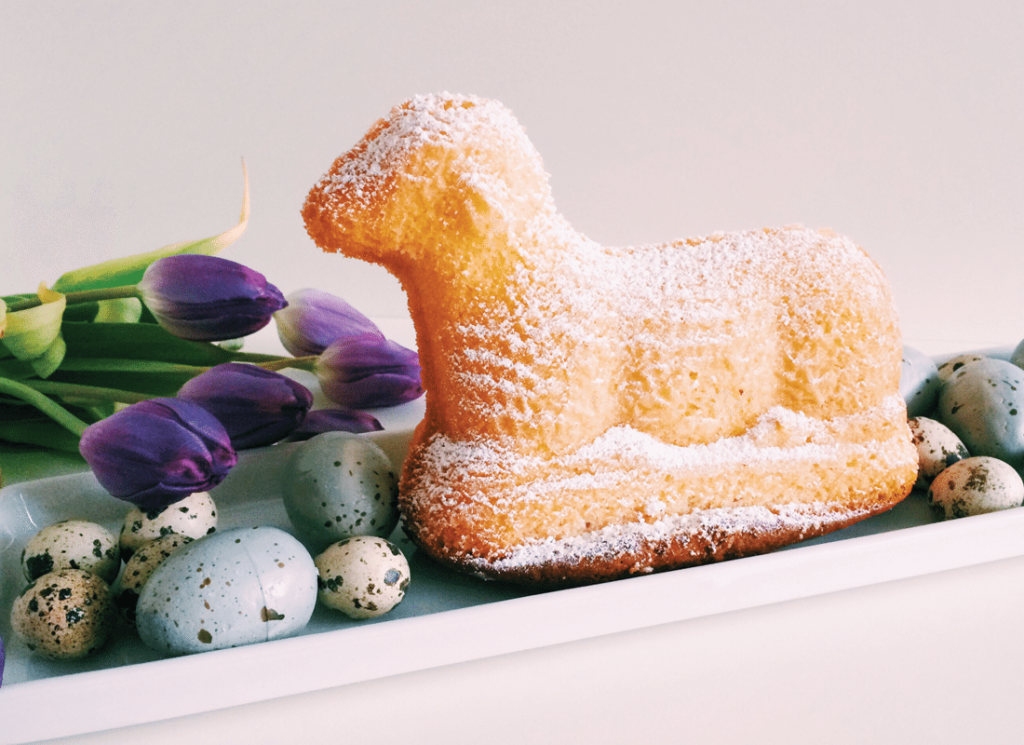
In her tan and white dress and slippers, her legs neatly crossed, my mother, without speaking, holds her hand to her forehead, her other arm supporting the first by the elbow. An Easter lamb cake sits half eaten on the table. The crudely shaped eyes made from oversized gum drops look at my mother. Next to the lamb cake are endless handwritten notebooks of recipes, many of which came from my grandfather: stuffed cabbage, Thanksgiving stuffing and turkey, Croatian roast. The dessert recipes were my mother’s doing alone. She always had a sweet tooth.

On the phone just now, word has come down that my grandfather, hardlined and healed from the broken bones, rituals, and kingdoms of his youth, has died at age 85. My mother’s green eyes behind glasses are cast down in remembrance, in thought, in defense, in consideration. She does not cry.

After graduating from NYU’s Tisch and Trinity College Dublin, Maryana worked in film, television, and publishing. She then had an early midlife crisis, becoming a massage therapist addicted to the free breakfasts at Google. Maryana received her MFA in Creative Writing (Nonfiction) at The New School in 2017, where she interviewed NBCC Nonfiction finalists, contributed to The Inquisitive Eater, worked with the Teachers and Writers Collaborative, and published in Vice (Tonic). Maryana is now a food writer, home cook/baker, and memoirist, writing mostly about her Croatian culinary heritage, food history, and a love of the immigrant meal

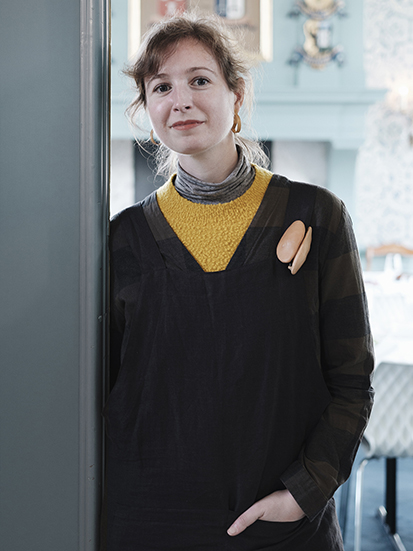
Rachael Colley is an interdisciplinary artist and senior lecturer in Jewellery and Metalwork at Sheffield Institute of Arts, Sheffield Hallam University. Her current research brings together jewellery, created predominantly using food waste, and ambiguous artefacts for eating. She invites diners to wear these visceral jewellery pieces whilst consuming food with alternative dining tools www.rachaelcolleyartist.wordpress.com

Apple,
longing
and the length of our longing spread across
airport calls, free Wi-Fi zones, 
over silhouettes and carcasses of cities, towns, countries
ripped apart by sea beds and ocean floors 
its benign weight perched all over me.


When you called me from an unknown +61 number
I could’ve cried a bucket of tears
a tornado of happiness burst within me.
I felt like writing you a grocery list
a run across your apartment to buy—
8 eggs, a loaf of bread, tetra pack of milk,
honey, ketchup squeezy, bananas, berries, nuts—
I could go on but we spent our first Sunday         apart
you, 5 hours wafted into the future, slumbering the jet lag away
and I, wondering if we’ll ever have those filmy breakfast dates.
I tossed 2 tablespoons of oats, shaved an apple off its skin


now, a breakfast smoothie of grated sin,
roasted oats, almond flakes,             cold 
milk and two teaspoons of instant coffee.
My tongue accepts bitterness before acknowledging it.
Thick with texture, it tastes of deep frosted emotions
as if desired relations can be sealed, zip locked, put away in plastic.
I pour it in a mason jar, gulp a big sip, and smile
you have a display picture on WhatsApp now
the taste of the apple swells in my mouth
you text me about your first dinner date.

Aekta Khubchandani is currently matriculating her MFA in Creative Writing from The New School in New York. Her work has been featured in The Aerogram, Narrow Road, The Bangalore Review, Skylight 47, and elsewhere. Her recent poems are published in print in the anthology, Quesadilla and Other Adventures by Hawakal Prokashana, Best of Mad Swirl: 2018 by Mad Swirl, Map called Home by Kitaab, Singapore to name a few. Her works have been long-listed twice for Creative Writing in English by TFA (TOTO Funds the Arts)- 2018 and 2019. Her spoken word poetry has travelled in India and Bhutan. She secured the first place in Mumbai Regional Qualifier and the second place in the National Slam at Waves fest conducted by BITS Pilani Goa, in 2018. She also performed her poem, “I tried to look like Ma” at TedX Bocconi for her talk, “Fiction is the truth sold as lies.”

Where else to carry love but on the lips
I silently speak your name this time of sunset
The sun sinks its last drop of honey into the sea
I put aside everything about the day
Try again in words never large enough or small enough
Thank you for showing me that wondrous garden
Crown of dandelion scattering in the breeze like flying stars
The bluebird carrying on its back the blue of heaven
Even as the sky turn black, urges every knifepoint star
To shudder:  Greetings to the lonely bride
All these internal verbalizations while the vigilant woman
Slips off her shoes, plants her feet in the garden of raw self

                                                *

If not for you I could never write such whimsy words
This talk is indeed from another world
Like Eros keeping Psyche unconscious
You see, I’ve caught the worst of it
My soul has become the charlatan selling dreams
Mellowing the rain falling like pitchforks
Tearing apart the flowers & the hive of bees
Anyone who knows me would be shocked 
To find I can’t tell the sun from a ball of honey
A singing finch from a swollen yellow melon
A flaming-red peony from an exotic bird
As final insult my soul summersaults, spits out:
Floundering is sweet in such a field

                                               *

You are sixty times the food of life
I want to look into your eyes & hear your voice
My bridegroom, you remain invisible
I still have troubling days robbing me of strength
To keep the kitchen table tidy, wash my bed sheets
There are recurring visions of a fish caught in a net
A knife slicing the creature in half
There are lucid moments & I manage to remember
I am the whole self within the self in creative life

                                              *

I buy an atlas & search the forests, a floating bottle in the river
Spread a meal of nuts & berries under the shadow of a pine
My hair is let down and flying
In the grove of wish-fulfilling trees
At last, I find you in a fierce embrace of wind arriving
As the lake swells & earth is shaken, as the sea wildly foams
Look at that!  I’m waking unburdened in the light of that dream
With the habit of thanks still in me, & a hunger for breakfast

Marisa Frasca is the author of Via Incanto: Poems from the Darkroom (2014—finalist for the Bordighera National Poetry Prize) and Wild Fennel: Poems and other Stories (2019, Bordighera Press).  Her poems and translations have appeared in numerous literary journals and anthologies, among them: The Stillwater Review, Italian Americana, TheRed Wheelbarrow, Journal of Italian Translation, The Yale Poetry Series Anthology, Making Mirrors: Writing /Righting for and by Refugees Anthology.  Frasca is the recipient of the Outstanding Riggio Scholar Award, 2010, from The New School where she received a BA, and she holds an MFA in poetry from Drew University.  She currently serves on the Advisory Board of Arba Sicula, a non-profit organization that preserves and disseminates the Sicilian language, literature and folklore.  Born in Vittoria, Italy, Frasca lives with her husband, Peter, in Manhasset, New York.

For forty years or so at Christmas
my father would make abalone salad
or that’s what it started as
before abalone became endangered
and we had to replace it
with “abalone-type shellfish”
Concholepas concholepas
until they too nearly went extinct
and we switched to conch or scungilli
or mysterious Korean mollusks.

He never used the canned jalapeños
the recipe called for
replacing them with whatever
looked good in the store
and had properly festive colors.
He’d slice and chop and mix, squeeze lemons
grind just enough black pepper
until it smelled right—
then left it for a day so the
flavors could develop.


It’s my job now that he is gone.
I found conch this year
a pricey can, but beautiful.
I sliced and chopped
reading and ignoring the recipe
olfactory memory guiding my hands
eyes judging proportions through tears
my whims choosing the peppers.


I don’t feel alone in the kitchen
though no one else is there.
I grind the pepper, give the colorful mess a stir
and forty years of memories tell me
it smells right.


I place it in the refrigerator niche
and await the transubstantiation
and the arrival of Christmas.

A natural history photo editor by day, John Kaprielian has been cooking for 50 years and writing poetry for over 40. His father, Walter, wrote and illustrated the acclaimed “Captain’s Cookbook” which contains the recipe referenced in the poem. In 2012 he challenged himself to write a poem a day for a year and published them in a book, “366 Poems: My Year in Verse.” His poems have been published in The Blue Mountain Review, Down in the Dirt Magazine, New Verse News, Naturewriting.com, The Blue Nib, and Minute Magazine. He lives in Putnam County, NY with his wife, teenage son, and assorted pets.

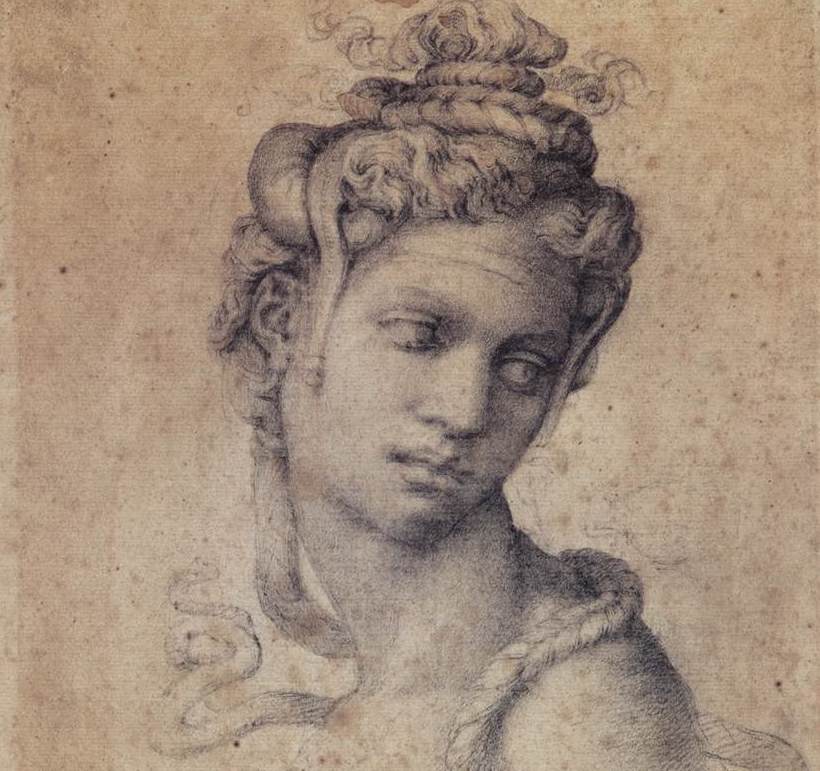
What cemented her reputation as one of the greatest, most conspicuous, famous old hos in all history? I put it down to the pigs. 

* * *

Cleopatra wanted six of them roasted—or let’s say half a dozen, it sounds bigger. Half a dozen pigs on the spit unwinds the kitchen boy’s shoulder from its socket. Each boar the size of a man, legs stretched out as if in flight. 

Now the head cook says, Make that eight.

They must be expecting so many people, a whole cohort. But the cook says no, it’s only twelve of them in the great hall. She wants it just so, they must be very special guests—

* * *

The archive doesn’t go into their names. But let’s say it’s 40 B.C. Julius Caesar is cooling in his grave, and Rome and all the client kingdoms are ruled by an itchy new triumvirate: 

* * *

The chair scraping into position at the head of the table could be Octavian, Caesar’s heir. Octavian hardly knows how to hold his knees underneath his toga, he’s that green. But he’d like to get it right. He has a feeling the number of most powerful men doesn’t need to be three. 

But a long dining table is conducive to happiness. It’s so intimate, to embrace the world and her guests at arm’s length. 

At the foot, Lepidus is shifting in his seat like a half-strung marionette. Even in Rome, the senator is infamous for his habit of adjusting his ball sack, a motion notable not so much for its regularity as for Lepidus’s fretful aspect as he counts: one, two—and then three and four! cupped fingers squeezing the girdle of money purses that chafe against his thighs. (But that’s just wicked talk.)

And in the middle of the table, presiding carver of the boar-to-be, is Antony. Bright-curled, bright-eyed, bright-cheeked, he’s been stationed in Egypt since October. A great soldier, it’s true, but his genius is in toasting the table. Antony is famous for his eulogies but he’s even better at a wedding, and he can rouse a dinner for twelve or fifty into a revel of abundant, inarticulate cheer: Charge your glasses, people! says Antony, To the New Age! Live life, every day! 

Even Octavian raises his glass of iced water. Time to bring out the pigs. 

* * *

To spit-roast a pig, build a fire and keep it burning. The whole point is to cook the pig gently for a very long time, which is why hot coals are better than an open flame. As you turn the pig, baste it in oil and something sweet to keep the flesh from drying out. The kitchen boy has been turning and basting for hours, dipping a long stick wrapped in cloth into his pot of honey and spices and painting the pig in wide strokes.

* * *

It’s not many people but it feels like everybody. Anybody you can think of was possibly there. The Nubians, the Seleukids, Glaphyra with her good wig and her wooden teeth sat in between them. Even that local guy, the one who invented the leap year. Just don’t mention that it wasn’t Caesar’s idea, that the new calendar is a rip-off—Hush. Everyone here loves Julius and his calendar. Everyone here loves Rome. And you know, the astronomer says the person who introduced him to Caesar is her highness sitting right over there—the hostess, that is.

* * *

No one’s been able to say exactly what it was about her except to agree that she wasn’t very pretty. She was a good time, she spoke seven languages, was a theatric, she was charming and mean. Another way of saying this: she knew how to throw a great party.

If you were Octavian and she sat beside you and squeezed your knee you’d look down and see a set of crescent divots left in your last baby fat and feel—you don’t know what. Look up, past a wrist, nine bracelets, a shoulder, and find Cleopatra’s eyes, struck in black and gold. You could roast a whole hog over her smile. 

Ask her why all the guests are barefoot, she’ll say the onyx floor has been a long time in the family, that since General Antony’s been in the East she’s had to throw so many parties the black rock is starting to crater. Some of this is even a true. She might offer Octavian a taste of clay-baked hedgehog, a swig of cloudy Egyptian beer. No hard feelings while we’re eating.

* * *

A spit roast is not particularly efficient. The only meat eaten at the banquet table is the meat that pulls off the bone. All the same, it’s a crowd-pleaser. A big but not enormous pig, weighing say, 100 pounds, can feed around fifty people. And painted properly, it’s dressed to perfection. The outer skin is crunchy, almost brittle, while the flesh inside is as moist as if the animal were still alive.

* * *

I’ll lay my cards down now: She’s already pregnant with the twins. It can be surprising, who you end up telling first. 

For instance, at this party, on this temperate winter evening, what if Herod arrives late, resplendent in a bias-cut mantle? Herod of Judea, not yet Herod the Great. He could, he might, what if the mantle had a purple trim? Phoenician purple squelched from twelve thousand snails.

Cleopatra kisses Herod. She’s known him since they were children. She tells him he looks handsome, like a pirate. Maybe it’s the new wife. (The first one was a nonentity, Doris Nobody, never to be mentioned.) Is this Cleopatra teasing Herod? That Cleopatra. That Herod. It really could have happened.

He says she’s looking fatter, even fruitful. Octavian, still listening, drops his jeweled soup spoon. It clatters on the onyx. So Herod might switch languages, from Attic to Aramaic. Yes, he can do that. He asks her, Whose seed is it? 

Sniffing, Cleopatra could say that the Greeks have a one-word answer for his line of questioning: Parthenogenesis. Or if a virgin conception seems ridiculous, how about this: Maybe Zeus took on the form of a pair of pantyhose and so made love to her? 

Sucking on melon rind, Herod wonders if Cleopatra really meant to say Zeus? He imagines Jupiter might be more accurate. He tilts his head towards Antony. The Roman has abandoned his boar and is watching with narrowed eyes, trying to lip-read the language he doesn’t speak. Antony the Merry has disappeared, and in his place stands Antony Strongman, language-less and muscle-bound—deaf to the laughter and the beer pouring, a guy in an animal skin, about to overturn the table. 

Then Cleopatra smiles at him—Hero, come here. Smiles, pats her fatness. Speaks to him in Latin. He’s Antony the Radiant, he might just make another toast, To the most notorious woman in the world and our—Cleopatra intervenes: he must know Herod, governor of Galilee? Herod, slightly bored, congratulates them on the baby, compliments Antony on snaring a woman with so much of whatever-it-is that she has. 

Antony gives him a happy, bone-bruising smack. Well said! Someone should make this man a tetrarch! 

Grabs their glasses (Got to charge them) and walks to the ice-bucket, grinning his head off. 

* * *

One hundred years after everyone here is dead, the biographer Plutarch will explain the eight hogs as follows. 

Plutarch had a grandfather by the name of Lamprias and Lamprias had a  buddy by the name of Philotas. As a young man going to medical school in Alexandria, Philotas was friendly with a cook in Cleopatra’s palace. The cook invited Philotas to the royal kitchen to see the preparations for a banquet happening that night. Philotas was astonished to see eight wild boars roasting, and asked if very many people were coming to dinner. The cook laughed at his innocence. Only a dozen guests—but Antony might call the boar up at any time and even then maybe change his mind and ask for wine instead. Since the pig must be cooked to perfection when served, eight were set out to roast at different intervals so that the kitchen would be ready to wait on Antony and Cleopatra at any hour of the evening.

* * *

Just one roast boar is a lot of meat for twelve people, especially if not all of the guests eat pork. Lepidus is on the floor, examining the onyx with the closeness of a man about to lose consciousness. Someone from Somewhere has an arm around the carcass of the pig. Antony and Octavian pull together a pair of paisley chaise longues, so they can gaze out on the Nile, head to head. 

In the kitchen, the remaining boars are stiff on their spits. Once the cooking’s started, they have to be finished. The last one in the formation still has a few hours to go.

* * *

Later Plutarch would say that it was in this period that Antony and Cleopatra started calling themselves the Amimetobioi, “the Inimitable Livers.” (So, Antony did speak Greek.) While some subsequent scholars have speculated that the phrase denotes a cult of Dionysus, the impression of many readers is that the Amimetobioi was a drinking club, even a whole society dedicated to debauchery. Urban legends of Cleopatra’s proclivity for bathing in asses’ milk or the blood of virgins remain unconfirmed, although ancient sources do have something to say about the story—still-circulating—of how the queen destroyed the most beautiful pearl in the world for the sake of a bet.

* * *

The tale of the pearl goes like this. The Inimitable Livers set a wager: Which of them can throw the most extravagant dinner? Antony goes first. Dancing girls, the works. He snorts when Cleopatra has him over for a simple affair, just the two of them, maybe a white tablecloth, an Old World red.  No way has she spent as much as him. Then Cleopatra takes off one of her pearl earrings and drops it in her glass of wine. The pearl, one of the two most large and glorious in the world, dissolves, and Cleopatra drinks it. With a flick of her fingers and one long gulp, Cleopatra has bested him: she has sacrificed something priceless. 

* * *

In all of these stories, Cleopatra is a woman-sized oyster: sweet, briny, creamy, spinning grit into luster, comprised of indefinite lines but closest in shape to a disembodied vagina. 

In all of these stories, the punchline is Antony’s open mouth, startled then laughing. He laps it all up.

Food for thought: an oyster wrapped in bacon is known as an angel on horseback.

One problem for the apocryphal pearl: a glass of wine couldn’t possibly have dissolved it. In the early version of incident recounted by Pliny the Elder, the glass was actually full of vinegar. And although Egyptian vinegar was known to be particularly acidic, pundits have demonstrated that dissolving an entire pearl in it would have taken hours, not minutes. Moreover, vinegar would have had to be boiling to speed up the process. All of which lends the anecdote a rather different flavor.

There’s no mention of the earring in Plutarch’s Life of Antony, though with 700 pounds of uneaten pig left over, you can see how the rumors got started. (In the case of Cleopatra, it may be that swine came before pearls.)

One final option: the pearl did disappear, but what the Romans thought they saw was only Cleopatra’s sleight of hand. Her vanishing act.

* * *

On this night in Alexandria, let’s say the ice bucket’s all water. Say they take a thirty-five-minute break in the kitchen, nobody talking. 

In the corridor, a guard curses softly, hot-fingered from reviving the torches. 

Octavian raises himself on an elbow, in time to see Herod slip out the back door and Cleopatra sink into her throne, pulling a plate of dates and a side of crackling down with her. Octavian watches her, and the chorus of servants, slaves, relatives, and stage-hands in the wings watches him watching. 

Cleopatra closes her eyes, and dies and dies sitting right where she is, as three notes of woodwind feather the night. It’s Antony’s most unexpected bonus, his music. She doesn’t need to look to recognize the marvel at the end of the last great party in the house of Ptolemy—it’s Hercules in Egypt, playing the flute. 

* * *

In the kitchen, the coals collapse into ashes. High in the hot dim air, the pigs’ black eyes shimmer. Their burnished red skin makes them look like bronze statues. 

Sources

Pelling, C. B. R., editor. Plutarch: Life of Antony. Cambridge University Press, 1988.

Plutarch. “Demetrius and Antony.” Vol. IX of The Parallel Lives by Plutarch. Translated by Bernadotte Perrin. Loeb Classical Library, 1920.

Roller, Duane W. Cleopatra: A Biography. Oxford University Press, 2010.


Ullman, B. L. “Cleopatra’s Pearls.” The Classical Journal,
Vol. 52, No. 5, Feb. 1957.

Evangeline Riddiford Graham is an artist and writer from Aotearoa. She is the author of the poetry chapbooks La belle dame avec les mains vertes (Compound Press, 2019), and Ginesthoi (hard press, 2017). She is in the second year of the New School Creative Writing MFA and lives in Queens.

I’m twelve hours out from my hysterectomy,
& the last thing I want to do is eat.
I’m 23 & in more pain than I was expecting.


My doctor tells the nurse to give me
more nausea medicine in the hopes
that I’ll finally feel like eating.


It doesn’t work. 


Nothing sounds good. I turn away
everything that is offered to me.
The salad. The chicken. The sandwich.
The potatoes. The carrots. The pudding.


But then the nurse brings in
a small carton of chocolate milk
& I immediately chug it.
It’s the best thing I’ve ever tasted.


She says if I finish this, I can have another,
so I gulp down four small cartons,
one right after the other. I consider
a fifth one, but decide against it.


The nurses keep my room stocked
with chocolate milk until
I feel well enough to go home.

Rachel Tanner is a queer, disabled Southern writer whose work has recently appeared in Videodame, Moonchild Magazine, Barren Magazine, and elsewhere. She tweets @rickit.

Prufrock measured his life in coffee spoons. I measure mine in greasy spoons. And diners and coffee shops. I love them. Always have, at least from the time I could choose where I wanted to eat.  

Sam’s

My first taste of dining independence came when I was eleven or twelve. Beginning in sixth grade, students at the suburban Cincinnati school that I went to could eat where we wanted. Most kids ate in the cafeteria: some brought their lunches; others ate the liverwurst sandwiches or tuna noodle casserole and canned green beans that the cafeteria ladies dished up. Some kids walked home for lunch. But some of us crossed Harrison Ave. and walked a block down Compton Rd. to Mt. Healthy’s business district, where, along with a couple drug stores and a bowling alley that served lunch, there was my favorite at the time, the Mt. Healthy Coffee Shop—or Sam’s, as we knew it. There, from about 11:20 ‘til about 12:30 every school day, fifty 12-14 year olds jammed into the narrow space between the counter and the wall like bees swarming, waiting for one of the 21 seats.  If there were maximum occupancy laws in Ohio in the late 1950s, nobody was enforcing them.

Mary worked the counter and got the drinks, an old man ran the grill and the deep fryer, and a second man ran the register by the door. Mary wore a pale blue waitress dress, sweat stains under the arms, old and new food stains dotting the front. She was probably somewhere between 20 and 65; I don’t know, I was 12. I knew her name was Mary, though, because everybody called her Mary. I knew the cook was an old man because he always looked unshaven. The cashier’s breath stank. All three of them had cigarettes in their mouths.

Every several seconds, the screen door slammed, either announcing a new group of arrivals or a couple open seats at the counter that were grabbed practically before the last kid got up. I was a drummer in the jr. high band and kind of liked those screen door slams: bam… bam… bam-bam… bam.

The standard order was hamburger, fries, and a Coke. The hamburgers were thin, greasy, and tough; the buns thin, greasy, and soft. In between were pickles, minced onions, and a glob of ketchup; they were greasy, too, either from absorbing the burger and bun grease or from just spending time in the restaurant. No one complained. The fries were limp and greasy and salty. No one cared. The Cokes came in those little Coke shaped glasses, full of ice and very fizzy, probably because the carbonated water was so much cheaper than the Coke syrup. In short, it was one of the most delicious meals I’ve ever had. And I had it almost five days a week for at least two years.

The floor had random stepped-on French fries, some with ketchup, that kids had dropped or thrown. The counter was uneven from the dried French fry or burger crumbs that no one had bothered to wipe off; it was sticky from the dried, spilled Coke puddles that no one had bothered to wipe off. The plates wobbled or stuck. Neither the customers nor the staff seemed to care.

When we were finished eating—usually about seven minutes after we’d arrived–some of us would wait patiently in line to pay. Others meant to wait but were less patient and eventually just drifted out without paying. And a few were chronic dine-and-dashers. Occasionally, the cashier looked up, seeing someone race out the door, and yelled, “Hey, you, come back here,” but the door always slammed shut before he got the sentence out, and he knew that if he ran after the kid, ten more would leave before he got back to the register. Maybe he was Sam; maybe Sam died 30 years earlier; maybe there was no Sam and we junior high kids were the only ones that called it that.

As an adult, I can only begin to imagine how filthy the place was, how many years of grease and smoke coated the griddle, the pop machine, the register, the counter, the walls.  

But it was the good old days, the days when parents told their kids to “be home for dinner” but otherwise let them wander unsupervised, the days before schools had locked doors and metal detectors, the days before cholesterol and obesity, the days when 12- and 13-year old boys were starting to feel grown up, the days of burgers, fries, and Cokes.  

Izzy’s

“Corned beef and swiss, please,” I said, first time I went to Izzy’s, sitting down at the counter after standing in a crush of business suits, coveralls, and work uniforms. “You can’t have swiss!” the cashier yelled at me from 20 feet away. “You never been in a kosher restaurant before?”  Oh, I thought to myself: all those Jewish delis that I’ve been eating in all my life were kosher style; this place is the real thing.

This place was Izzy’s on Elm between 8th and 9th Streets. I’d heard about it for years but hadn’t been there until that summer in the mid-60s between my sophomore and junior years in college when I worked as a stock boy a couple blocks away at Shillito’s, one of Cincinnati’s three remaining big department stores. The restaurant looked like it’d been there forever; in fact, it had only recently moved there, its third location since Izzy’s father started the deli in 1901. That summer, I was a regular.

“How much is the sandwich?” I asked the waitress that first day. There were no prices on the menu board above the counter.

“He’ll tell you when you pay,” she said, cocking her head toward the cashier.

The cashier was Izzy Kadetz himself.  The waitress, the only waitress, was his wife Rose.  The first time I ate there, I was afraid I’d walked in on the dissolution of their marriage, they were yelling at each other so much. “What do you mean you forgot her birthday,” Rose yelled across the restaurant as she threw a handful of potato chips onto a plate. “I mean I forgot her birthday that’s what I mean are you deaf?” Izzy yelled back as he rung up a customer. But that was Izzy and Rose. For as long as anyone could remember, he’d run the register, she’d run the counter, and they’d constantly bickered.

If Rose liked you, she’d put an extra pickle or two on your plate. She seemed to be a lovely person so long as you weren’t her husband.  

That first sandwich and all the ones that followed that summer were perfect, warm, extra lean corned beef with brown mustard on soft, almost gooey Rubel’s rye bread.

Afterwards, I stood in line to pay. In front of me were two men, one in a three-piece suit, the other in coveralls. 

“What’d you have?” Izzy asks the first one. “Corned beef and a Coke.” “$2.50,” Izzy says.  

“What’d you have?” he asks the second man. “Corned beef and a Coke.” “$1.75,” Izzy says. 

“What’d you have?” he asks me. “Corned beef sandwich and a Coke,” I say, reaching into my pocket to pay. He looks me over, looks at my khakis, my polo shirt, and my age and says, “two bucks.” As I pocket my change, the man behind me in a blazer and grey slacks forks over $2.50 for his corned beef sandwich and Coke.

 “Hurry back,” Izzy yelled after me as the door is about to slam shut, “we got rent to pay.”  

Hinkle’s

We used to take the kids to Hinkle’s for breakfast, occasionally.  It meant getting them up and moving a little earlier, but they were always excited to go, to sit at the counter, to spin on the stools, so it wasn’t a problem.  My wife and I would drive both cars from our house in Hanover, Indiana down the hill to Madison so that after breakfast, she could continue down Main St. and across the Ohio River bridge to Carroll County Middle School, where she taught English, and I could drive the kids back up the hill to Southwestern Elementary with time to grade a few papers before I taught my 10:00 speech class at the college.

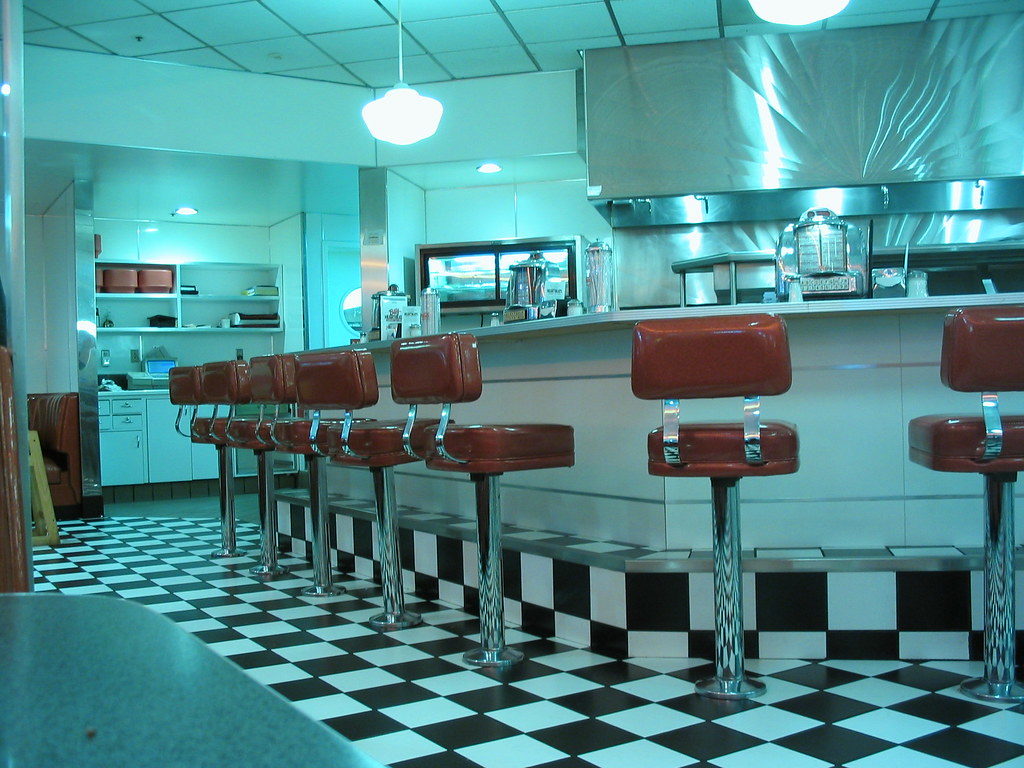
Hinkle’s didn’t have fancy neon outlining or signs; it didn’t have stainless steel. It didn’t have framed pictures of James Dean and ’56 Chevys. It didn’t have a jukebox. It just had a 16-seat counter and a radio playing WORX-AM; usually we got there just in time to hear the hog futures report, something I didn’t understand then and don’t understand now. The smell of old coffee and old grease was embedded in the walls and the stools’ torn vinyl upholstery.  It was the real deal, Hinkles. I don’t remember the waitress, except that she was one of those middle-aged women that had probably been waitressing since high school. 

I do, though, remember Tuffy.

Tuffy was the cook. 

He stood at the griddle facing the window almost all the time, rarely looking back at the customers or the waitress. If the front window weren’t so greasy and fogged over, you could have seen him better from outside than inside. He had a beer belly and old Navy tattoos on his biceps and a cigarette with a long ash stuck to his lip. His greying crewcut was short enough that you could see the folds of skin on the back of his trapezoidal head. Even though he wore a different tee shirt every day—he seemed to have an endless supply that people had given him to promote various local high school, college, and municipal events—it and his baggy jeans were always sweaty and dirty and stained. He looked like a caricature of a short order cook. 

Tuffy didn’t talk much and seemed to concentrate intensely on his job. His job, most of the time when I was there, was frying and scrambling eggs, cooking bacon, sausage, and ham, flipping pancakes, and occasionally turning the big pile of home fries at the back of the griddle.

Despite its seeming like he’d been standing there cooking eggs much of his life, he wasn’t very good at it. My standard order was bacon and eggs—over medium—and home fries. The bacon and home fries weren’t a problem, but the eggs, another story entirely. The plate always looked great: a couple slices of bacon, a pile of potatoes, and two perfectly cooked over-medium fried eggs. Sometimes, though, there was a third egg, overcooked or whose yolk had broken. That less than perfect egg was always under the other two. Sometimes there were four eggs, two perfectly cooked, over medium, on top of two that were overcooked or broken. Once, my plate had five eggs on it. It reminded me of a child who thinks that if he puts a magazine over the pieces of the broken vase, no one will notice.  Often, when he messed up my eggs, Tuffy would add an extra slice or two of bacon to my plate, as well.  

We’d finish our breakfast. Sometimes I’d leave the extra eggs and bacon, knowing—even then—that more of that kind of cooking really wasn’t good for me. Sometimes I’d take it home for later. And too often, I’d eat it all, knowing I’d have a grease-induced stomach ache for the next couple hours. My wife would kiss the kids and me and drive across the bridge to her day of Kentucky middle schoolers. The kids and I would drive back up the hill to their school and to mine. Tuffy never looked up from his griddle, concentrating as hard as he could on cooking the next egg right.  

The New Wyman Park Restaurant    

The New Wyman Park Restaurant is at the corner of 25th and Howard, across from a gas station and a car dealer’s service department and a couple doors down from the local American Transit Union office. It’s been there since the 1940s, as have some of the customers, by the look of them. The clientele represents a cross-section of Baltimore if you don’t count people with money, people who dress well, artists, and women. In fact, the regulars are mostly African American men with a respectable smattering of white men thrown in. In that sense, I guess it does reflect Baltimore’s racial proportions. Based on the way they’re dressed, they’re blue collar workers, laborers, white collar workers that have jobs in the neighborhood, and retirees, plus the occasional copse of cops. I seemed to be the rare customer from another part of town, stopping in maybe once a month or so on my way to the University of Baltimore, where I was a teacher and administrator. 

The New Wyman Park opened at six in the morning and closed at 3:00, so they did lunch, too:  grilled cheese, ham and Swiss, egg salad, tuna salad, fried fish, veal parm, BLT, meatloaf, burgers. It was all right there on the brown menu board over the grill. And they had fried chicken and pork chop platters, and even liver and onions. But I only went there for breakfast.

I saw several of the same people every time I went; I assume that they didn’t coincidentally just show up when I was there but that they were regulars. The waitresses called them Mr. James, Mr. John, Mr. Lonnie, Mr. Cletus, and the ubiquitous “hon.”  “How ya doin’ today, Mr. Lonnie,” Karen would say, plopping a big ceramic mug of coffee in front of him as the elderly Black man carefully laid his cane along the foot rail and sat down at the counter. “Well,” he’d answer back slowly, “I’m just blessed to be here with you.” “You just blessed to be anywhere outside the cemetery,” the man next to him said, and three or four of them nodded their heads and laughed. When one of the regulars walked in, Peggy or Karen would say, “Mornin,’ hon; you want the usual?” 

It wasn’t like the Dutch Valley in Sarasota, where a few days a week, my Uncle Jimmy would sit down and say to the waitress, “the usual,” knowing very well that she’d only worked there since 2:00 the day before and had no idea who he was. Peggy and Karen have been at the New Wyman Park as long as or longer than a lot of the regulars, Peggy for 23 years and Karen for 14. 

Sometimes Peggy and Karen didn’t even have to take the order, much less write it down.  Sometimes the cook would glance over when the bell over the door rang, see who it was, and pour some batter onto the waffle iron or crack a couple more eggs onto the griddle.

The cook’s a tall, slim but solid Black guy; he looks to be in his 60s. He’s bald, but you wouldn’t know it because he’s always wearing an Orioles cap except occasionally when he lifts it up to wipe his head with the handkerchief from his back pocket. The New Wyman Park is clearly his place; by that, I don’t mean that he’s the owner—although he may be, I have no idea—but he’s the person in charge, not only cooking, but telling the busboy he needs more plates or another loaf of white sandwich bread, telling the assistant cook to butter that toast that just popped up, making sure that Karen knows that Cletus needs more coffee, and all the while, his back to the counter, flipping eggs and pancakes at just the right second and keeping up a steady stream of banter with the regulars: “How ‘bout them O’s last night,” “Tell me about it,” “They just gotta admit Flacco’s gettin’ old and come up with a new plan,” “You can say that again, brother,” “That Donald Trump’s gonna be the death of all of us!” The cook looks like Cal Ripken in the 2001 All-Star game, snagging the bacon, throwing it onto the griddle to heat it up, and then lobbing it onto the plate with some pancakes or eggs, sometimes setting Peggy or Karen up to deliver it, sometimes spinning and sliding the plate down the counter, unassisted, to Mr. Keith or Mr. Cletus or me. 

The assistant cook doesn’t wear a cap, never makes eye contact, never says anything.  

Occasionally, I’m there on Bacon-Cooking Day. Bacon Cooking Day is the day that the assistant cook stands at the secondary griddle cooking bacon. And cooking bacon. And cooking bacon. Slabs and slabs and slabs of bacon. A couple days a week, it turns out, they pre-cook three days’ worth of bacon, refrigerate it, and then use it to refill one of those rectangular stainless steel bins as the cook’s supply gets low.  

I said earlier that I stop by the New Wyman Park about once a month. I used to. That was back when I ate bacon and sausage and real eggs pretty regularly, back before my triple bypass.  I still eat eggs but much less often. And I can’t remember the last time I ate bacon, although occasionally, I’ll get turkey sausage with my Egg Beaters. I mention this only because the Wyman Park doesn’t do turkey sausage. They don’t do Egg Beaters. I ordered egg whites once, and Peggy gave me a “where do you think you are, the Ritz Carlton?” look. When I asked if they had any “um non-dairy, you know, non-actual-butter stuff to um put on my toast,” the cook turned around and gave me The Eye, as if to say, “This is the New Wyman Park Restaurant. We ain’t no gourmet restaurant or health food store, but we still got our pride, and we sure as hell don’t got no margarine.” I still go every few months and get a couple eggs over medium and grits and wheat toast—dry—and coffee. The food’s always great, but without the bacon and the home fries and the butter and the grease, it never feels like the real thing anymore.   

The Big Generic Greek Diner

There was a time when I’d stop at Pete’s Grille on my way to work or on Saturdays on the way home from the Waverly Farmer’s Market, but once Michael Phelps started winning Olympic medals and people found out he ate breakfast at Pete’s after practice, it got more and more crowded with celebrity seekers. Phelps not only ate there a lot; he ate a lot there.  His standard breakfast was a few egg sandwiches, a three-to-five-egg omelet, a bowl of grits, three slices of French toast, and three chocolate chip pancakes.  The food and the service at Pete’s were great, but not good enough to make up for the increasingly long waits for one of their 28 stools.

There was also a period when I went to the Double-T Diner on Rte. 40 between Baltimore and Ellicott City, usually on Sunday mornings.  We’d drop the kids at Sunday School and then hang out, eating, reading the Sunday Times, and grading papers ‘til it was time to pick them up.  The Double-T was one of these big Mid-Atlantic diners that causes culture shock if you’re from the Ohio Valley. The host always has a strong Greek accent, as do the cashier, most of the waitresses—they’re virtually always waitresses and not waiters—and often the busboys.  The reason for that, I guess, is that at least in Baltimore, these diners all seem to be owned by Greeks:  the Kourtsounises own the Towson Diner; the Korologos family, the Double-T; the Vasiliades family, the Sip’n’Bite in Canton; Marc Tsakiris owns the Boulevard Diner in Dundalk; George Kavourakis, the Broadway Diner in Middle River; Jimmy Filipidis, the eponymous Jimmy’s in Fell’s Point; and Ted Efstathiou owns the Nautilus Diner in Timonium.

Lately, I’m spending more of my diner breakfast time at the Nautilus. Timonium’s a nice middle class Baltimore suburb, too Republican and vanilla for my taste, but the Nautilus is convenient, efficient, and a good place to go when you have a bunch of people and need to scoot tables together—like when my son and his wife are in town, and they and my daughter and her husband and kids and we all meet for breakfast. There’s always a respectable number of people at the Nautilus, but except for Sunday mornings, it’s never so crowded that you can’t linger, whether to continue a business meeting, visit longer with the family, or in my case, now that I’m retired, spend a little longer reading the paper or that library book that’s almost due. And it’s relatively quiet, unlike so many restaurants, where even with my hearing aids, I can’t follow the conversation. At some point, those kinds of considerations became just as important to me as the funkiness of counter diners.

And then there’s the food. One of the reasons people spend more time at the Nautilus than at the smaller diners, I think, especially if they’re new to the place, is to read the menu, 11 pages spiral-bound. The breakfast section alone is four pages. Categories include Pancakes and French Toast, Waffles, Farm Fresh Eggs, Around the Clock Omelettes, Cereals, Bunnery, Breakfast Wraps, Breakfast Sandwiches, Other Breakfast Items (where else, after all, would you put creamed chipped beef, sausage gravy and biscuits, and cheese blintzes?), Side Orders, and Beverages. The waffles section offers—among other things—malted waffle with ham, bacon, sausage, or scrapple; Canadian bacon; strawberry, blueberry, or cherry preserves; two scoops of ice cream; fresh strawberries; or apple-cinnamon-raisin compote. And for people more fully awake, there’s the Soups and Appetizers section, the Sandwiches section, the Salads and Diet Delights section, the Saute and Pasta Specialties section, the Entrees section, the Desserts section, the Senior Citizen menu, the Children’s menu, and the Beer, Wine, and Spirits list. At the Nautilus, there’s always somebody there to refill your coffee cup or water glass. The floors are always clean, the tables always wiped, the bowl of complementary individually-wrapped mints at the cashier’s station always full.

Truth be told, it’s healthier, too.  The other reason I go there more these days is that I can order Egg Beaters or egg whites. I can order Egg Beater omelets. I can order veggie Egg Beater omelets with low-fat cheese. I can order my eggs poached and my potatoes with no extra salt. I can get tomatoes instead of potatoes. I can order multigrain toast. And I can order any or all of those things without feeling like I just stepped off the bus from Why-the-hell-did-you-bother-to-come-to-a-diner-ville.  

That, unfortunately, is the new, old, post-heart-surgery me. I’m thinking more about what my doctor will say about my blood pressure. I’m reading more and more about the “obesity epidemic” in America and am aware that I can’t shovel it away like I used to and not put on even more weight. Some days, I think I’d rather be eating greasy spoon bacon and eggs and home fries for breakfast every day and cheeseburgers and fries for lunch, just like the good old days, and resent the egg whites and tomatoes on my breakfast plate, the turkey burger and side salad for lunch, when people all around me are wolfing down 12-oz burgers with bleu cheese and bacon, duck fat fries, and a large Coke. I find that most of the time now, when I “break over,” as my Weight Watcher friends used to say, and order what I really want, my food just tastes greasy and heavy, and afterwards, I don’t feel so well.  

There are, though, those rare occasions when I just throw caution, arteries, and waistline to the wind and order the Hercules Omelette (three eggs with beef and lamb gyro meat and feta) or just my usual—two eggs over medium, bacon, and home fries, all swimming in grease, white toast dripping with butter, and coffee—and think, “Ah, life doesn’t get any better than this.” 

Jon Shorr has written for the Discovery Channel, JMore, Tricycle, Today’s Education, Social Education, and more. His fiction and creative nonfiction have been published in Passager, Defenestration, Stories That Need to Be Told, Joe, Welter, Bluntly, Psychopoetica, The Baltimore Sun, and elsewhere. He’s a Professor Emeritus of English and Communications at the University of Baltimore

The Italian sparkling wine’s high sugar content could leave frequent drinkers with rotten teeth, dentists are warning.
Prosecco has taken the nation by storm as a cheaper alternative to champagne, but young women in particular risk gaining an unwelcome ‘prosecco smile.’
Daily Mail


her smile’s so lovely her laughter is bubbling

her hair is frizzante her perlage is perky 
fresh light and simple she’s frothy uncorked above 

all she’s social she’s pouring out plenty but two 
is enough she goes straight to your head—her every 
hiccup sounds like a yes her arms are like bottles

cold hard and brittle but her center’s a pillow,
she’s old-fashioned stuff rap her back tenderly hold 
the white napkin tent-ly while we thumb her top off 
then she’s pissing prosecco fizzing and sighing 

let her breathe as you nose her effervescent hic-
cough and if the label says Cava she calls it 
prosecco meaning cheapest of specials last on

the rung now she’s tranquil and sparkling she’s swill-gilled 
with sulfites we can’t have her turning it’s sweetness 
we want her smiling and smiling her blanc de blancs 
gums you should drink her with food but nobody does

and her smile is crumbling incisors jumping 
three years on the rack then her vintage is up her 
whistle is showing, her laughter’s abraded tell 

her to shut up still her mouth moves to much chalk it 
down to her drinking her red palm to the bar top—

she smiles prosecco! it’s prosecco she wants

Evangeline Riddiford Graham is an artist and writer from Aotearoa. She is the author of the poetry chapbooks La belle dame avec les mains vertes (Compound Press, 2019), and Ginesthoi (hard press, 2017). She is in the second year of the New School Creative Writing MFA and lives in Queens.

MS: Thanks for agreeing to do this.

HE: Yeah, no worries. 

MS: You got your MFA in fiction, but wrote a nonfiction book. Was that something you were always intending? 

HE: I didn’t go into my fiction program thinking I was going to publish nonfiction books. But things happen pretty haphazardly when you’re actually out, both in the writing and publishing process. When I finished my MFA I was kind of burned out, so I went from hating my thesis and never wanting to look at it again to moving to Los Angeles and trying to start over, working in restaurants like I had my entire life. That led back to writing and then to the nonfiction project. It definitely wasn’t by design. You write about whatever sets your mind going. I got really obsessed with the bar world and that translated into a freelance career and the book. Fiction requires, for me, more self-discipline to finish, because you mostly have to write it on spec. There’s something really gratifying about being able to send a pitch to somebody and them saying, “Yes, that’s a good idea, you should write that.” I’d always written both genres; I think most writers do. They might not publish in more than one, but if you’re a word person, you write about everything. That’s how you process the world. 

MS: When you’re writing nonfiction, you have to use your imagination in a different way. You can’t invent anything, but at the same time, you want it to be interesting and gripping and not just, “I met this person and here’s all the things she told me.” What techniques did you use to make nonfiction pop?

HE: It’s something I struggled with. You do have to craft some sort of narrative and connection. Some people are masters at this; that’s why they’re superstars. Michael Pollan is amazing at taking all of this research and weaving it together to make a cohesive fabric. That’s the skill, that’s how you’re using your imagination. Write as you go along and have an idea of how you’re going to get to your thesis, before you start your research. That may change through the course of the research. The material will inform the structure. But you get to shape that. 

MS: You mentioned Michael Pollan; I’m curious if there were any other food writers you looked to for inspiration during the process. 

HE: I have recommended reading at the end; people like Sarah Bowen who wrote Divided Spirits. She took all of this extremely academic research and found a really interesting way to tie it all together. Alice Feiring was another one. A lot of the people I drew inspiration from are people I wound up interviewing because of that. Even people who write about the hospitality industry in fiction format; I read Sweetbitter and that’s like pure crack, cotton candy, but it was a great cherry picking of the best parts of this industry. I liked that guideline; what’s interesting to people who don’t care how rum is made? 

MS: What made you want to write this book in the first place? 

HE: My undergraduate studies were English and Women’s Studies and I’ve always been trying to tie a feminist angle into everything because it’s always there. There’s always an element of, “This is why it’s harder for women. This is why it’s harder for people of color.” That’s always been in my mind, as well as looking at the cocktail renaissance, which is an outcropping of the slow food movement, which is so tied to the environmental movement. So I was in this very niche place where I was making cocktails and just nerding out about it and calling up my parents and saying, “Did you know that this cocktail was invented in 1850?” So wanting to take that and tie it into these other things that I was interested in and at the same time, meeting my editor from Unnamed and her saying, “Hey, I have this idea and I want someone to write it.” It was really serendipitous in that sense, of just meeting a publisher who had the same interest and ideas I did. 

MS: From when you first had the idea to submitting the final manuscript, how long would you say that was?

HE: It was about two years. 

MS: That’s a lot shorter than I thought you would say.

HE: Yeah, you talk to most people and they say, “I spent ten years writing this book.” This was a personal narrative with research kind of project, which I think this is an appropriate timeline for. I did interviews for about six months and then I wrote for about six months. I quit all my other jobs and lived in a stress bubble all the time. From my first meeting with my editor to submitting the manuscript was almost a year. Which was not enough time. 

MS: You wanted more?

HE: Everybody always wants more time, but definitely, I would have less grey hair now if I’d had a year more to do it. 

MS: As I was reading, I wondered how you go about starting to write a book like this. You interviewed Teri Fahrendorf, from Pink Boots Society, and she talked about trying to find other female brewers and it made me wonder how you found any of these people, because the industry seems like such a boy’s club. 

HE: It’s fitting that you started with Teri because she’s part of one of the largest professional associations of women in brewing in the world. I knew about the Pink Boots Society from the local craft beer brewing community, so I shot them an email asking, “Hey, who wants to talk to me?” I already had people in mind, even from the beginning. The cocktail community is not that big. I went to some organizations and really sought people out. Sometimes people were in the news and I would track them down. That was the case with L.A. McCrae from Black Star Line Brewing because I saw that Vice article. Being in that freelance-y, clickable headlines world, you think, “I could see how that would happen and it might not be totally insidious, but if I have a platform to tell a less clickbaity story, I would like to do that.” I went to Tales of the Cocktail, which is a giant convention with lots of events full of people in the business in various capacities. I would walk in ask, “Where are the women?” Most people were really receptive. Although I will say, I did meet some resistance from people who were like, “I am so tired of these segregated lists, I’m tired of segregated spaces.”  They don’t want to be in the book of all the women.

MS: Right. I did want to ask about that, because there’s a quote from Neko Case that I always think of, where she says, “I’m not a woman in music, I’m a musician in music.” 

And I was wondering if you had encountered that resistance from women or if women cooperated but gave the impression of, “We’re tired of being a spokesperson, we just want to do our job.”

HE: Absolutely. Pretty much across the board, everybody I spoke to had that sense of “I’m tired of being the girl bartender.” There’s a huge sense of wariness about that. There were definitely people I approached to be in the book who didn’t want to be part of it for that reason and I can’t blame them. But on the other hand; I was talking to a bar director named Gaby Mlynarczyk who just wrote a book called Clean and Dirty Drinking. I had mentioned this to her at an event and she said, “Well yeah, you don’t want to be recognized because of your gender. You don’t want to be singled out for that, for good or for bad. You don’t want to get special attention or to be discriminated against; that’s two sides of the same coin.” But because there’s a lack of representation, the people that were part of this said, “We don’t want to be segregated but there needs to more representation and if this is how that happens then…” And it appeals outside of your own industry, because it’s something that people who are interested in feminism will take notice of. That was the point of Speed Rack too. They said, “We’re not trying to see who’s the best lady bartender, we’re trying to show the skills of people who are really good at this.” Having a bunch of examples of people who are like you and are doing something you want to do is hugely relevant. If you’re the only woman or the only queer person in a completely male, bro-ey environment, there might not be anyone around you who you can bring your concerns to. 

MS: Was there was a subdivision of the wine and spirits industry that had the least women? 

HE: Definitely alcohol distribution. It’s definitely the area where I encountered the most dudes in suits who are just now learning that you can’t approach a female bar director and talk down to her about whiskey. 

MS: I was struck by how much food science there is in this book. Did you find that tricky to write? How do you take industry terms and break them down for the layman?

HE: How did I do with that? Because I have no idea if anyone could understand it. 

MS: I was getting it. And I’m a person who enjoys drinking alcohol, but if you ask me what I know about it — very little. 

HE: That’s the adjunct professor in me. I got into the alcohol space because it was becoming really fun if you were interested in science but not that good at math. It’s fun to learn about all these things and that’s why I included so much of it. That’s why it worked, because I wrote it from a layperson’s perspective; I took things that I think are interesting as a person who listens to a lot of Radiolab and then I asked actual professionals if I’d gotten it right. 

MS: There’s a lot of discussion about the obstacles these women faced to get to where they are. Did you find that they’d faced similar issues or did it depend on the specific part of the industry they were trying to break into?

HE: There are the same stories, over and over again. Lots of people being underestimated or having to pay their dues harder than their male colleagues. I interviewed the head of a tequila company and she was talking about people being blown away that she had such knowledge and she was like, “I make this!” It was the same story again and again, trying to be taken seriously, trying to have your credentials affirmed. Sarah Bowen talked about how sometimes, that really helped her. She was researching regulatory corruption in the tequila industry and these officials would just talk to her like she was dumb, they’d tell her things that were really incriminating, not ever thinking that she’d understand them. 

MS: When you were working on this, it was pre #MeToo movement, and you mention in the book that, after a famous man in the industry retired, a significant number of women came forward with accusations of misconduct but that ultimately, nothing really happened. Do you find that, in the midst of the #MeToo movement, that’s changed?

HE: For sure. The emphasis now in the bar industry on preventing harassment and creating safer communities has become huge, and I think a lot of it is due to Me Too. If you harass someone, you’ll get called out and people will believe the accuser. We’re talking about the hospitality industry here, which is famously sexualized. A lot of the workforce is part time, it’s entirely at will, there’s no job security and it’s famously top-down. There’s no bartending school like there’s culinary school. It’s still something that’s based on mentorship and who wants to train you. It does open the door for a lot of abuse. But I think we might have a leg up; in our space, there’s an intoxicating element by definition; the industry has been thinking for a really long time about how to keep the consumer safe because, at the very least, we’re liable. If you see something shady happening, it’s your responsibility as a human being, but also because you could be sued. That’s already been firmly ingrained in the culture and I think spreading that same sympathy to your staff is a recent development, but is something that’s happening. 

MS: Mary Bartlett has an all-female team and she mentioned that whenever they meet, they talk about the business side but people also ask about what’s working, what’s not; this idea that women are raised to make people comfortable, to be amenable — in the hospitality industry, it’s exactly what you want.

HE: That was her point too; my job is to make people happy. It’s something that people are discovering now, not to look at these other approaches as a sign of weakness. Looking at a more “feminine” approach, which is stereotypically more group based, where there’s sussing out. The bar community in the early 2000s was top-down; this is the boss, what they say goes, there’s no room for discussion. If you have more women in the room, the culture shifts, and for the better. 

MS: You touched on a lot of really intense social issues; sexism, which is to be expected, but also ageism, white nationalism, homophobia. Were those things you were expecting to tackle when you started this?

HE: I hope so. I didn’t want to write a book about all the challenges straight, cis, white ladies face. I was seeking out a variety of experiences, because I knew that that was going to lead to a greater diversity of stories.

MS: You can’t talk to a writer and not ask about process; do you have a schedule? What does an ideal day of writing look like?

HE: I’m still trying to figure that out. I really hate those writers who are like, “I wake up at 7 and I write for three hours and then I go for a run and then I eat papayas and I have amazing self-care.” My process is to go on a blitzkrieg of research and read everything and have lots of conversations with people who don’t care about the topic. That’s stage one. Stage two is transcribing and trying to synthesize. Then, when it actually comes down to putting the prose on the page, yes; getting up, having breakfast, sitting down at the computer, shutting off the internet and writing for about ten minutes, getting up, stomping around my bedroom in a state of angst, thinking I can’t do it, making frustrated exclamations to the dog, then sitting back down again and doing it for another few hours. It’s very stop and go. And trying to find the earliest possible time where I can justifiably take a break. Getting really into it by mid-afternoon, like three or four, getting in the zone. And then yelling at my partner when he wants to talk about dinner because I’m so in the zone that I’m not ready to leave it yet. I guess that’s a good day of writing. 

MS: Is there something you wish you would have known while you were getting your MFA? 

HE: I wish I’d had a more cohesive final project in mind. I know people who went into the program with their novels locked in and finished them. I did not do that. I went in with a vague notion that I wanted two years to figure out who I was as a writer and I did, or I figured out who I wasn’t; I wasn’t an academic. You’re there to cocoon. Be in the community and make connections, that’s very important. But it’s also very important to stop talking about what you’re working on and just work on it. I wish I’d answered less when people asked me what I was working on. As I do more projects, I find that overtalking things kind of kills it for me.

MS: So I won’t ask my next question, which was, “What are you working on?”

HE: (laughing) It’s fine. I’m back to having four jobs because that’s the norm. Myself and three business partners are launching a brand of canned cocktails. I’m researching sustainability in the spirits industry to try to develop it into a longer project, but we’ll see how that works. 

MS: I’m excited about the canned cocktails. I always think, they have canned beer, they have canned wine. Where’s the canned cocktails? 

HE: Exactly! We’re trying to remedy that.

MS: You bartended in New York City so I was wondering if you could recommend a bar in NYC and also some female-made booze.

HE: Leyenda, which is Ivy Mix’s bar.

MS: I love Leyenda.

HE: I mean, she’s just so cool. And Lynnette Marrero’s Llama Inn; grab a Pisco sour there. Natalka Burian’s bars, I think, are tremendously underrated. Natalka wrote the forward for my book and I realized that my first life-changing cocktail experience was at her bar, Elsa. And her bar Ramona, in Greenpoint, is one of my favorites. That’s the stop whenever I’m in Brooklyn. Women made booze; definitely Montanya rum, it’s super tasty and their commitment to environmental responsibility is above and beyond. There’s two piscos everyone should try; Macchu Pisco and Capurro. Yola mezcal is amazing… there’s lots. It’s become a selling point, it’s something that these brands will tout instead of burying. It’s front and center because people are looking for it. 

Masha Shollar is an MFA candidate at The New School. She loathes writing about herself in the third person, and loves puns, useless trivia, and independent bookstores. Her work can also be found in GRLSQUASH. She lives in Brooklyn with a thousand books and, sometimes, a dog named Lily, who is a very good girl.