We waited for mom to open you. We shook you until your pit gave
a note, music from the crib of your heart
that was still whole but waiting
to come loose, the yellow knotted walls.
All we needed was your black pit split
to make earrings.
Silvia Bonilla holds an MFA in poetry from the New School. Her work has been featured in/is forthcoming from Pittsburgh Journal, Green Mountains Review, Rhino, Reed Magazine, Cream City Review, and Pen&Brush, among others. She has received scholarships from the Vermont College of Fine Arts, Colgate Writers Conference, and The Frost Place. She recently received a Fellowship from The Saltonstall Foundation for the Arts. You can find her at: https://www.bonillasilvia.com/about.html
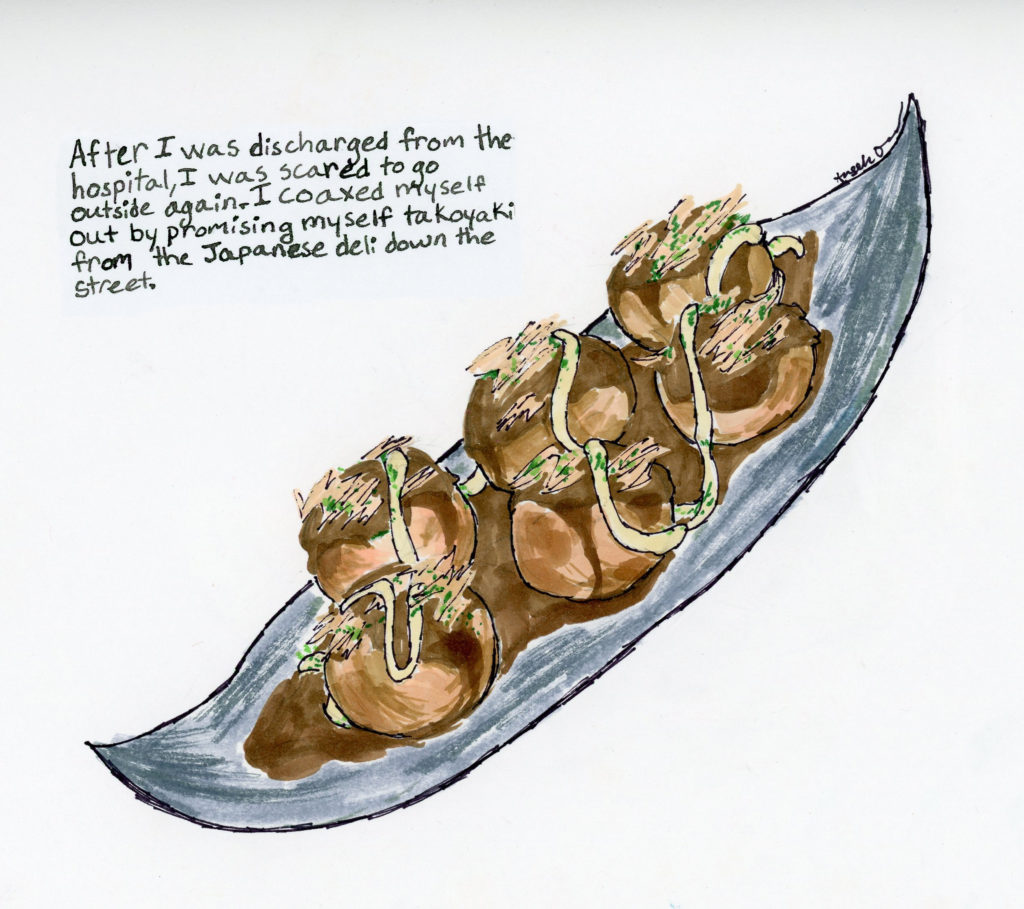
Angela DiLella is a writer and artist. She graduated from the New School’s MFA Creative Writing program in 2017, and continues to work on the graphic novel she began there. You can check out more of her work on Twitter @shanksspeare.
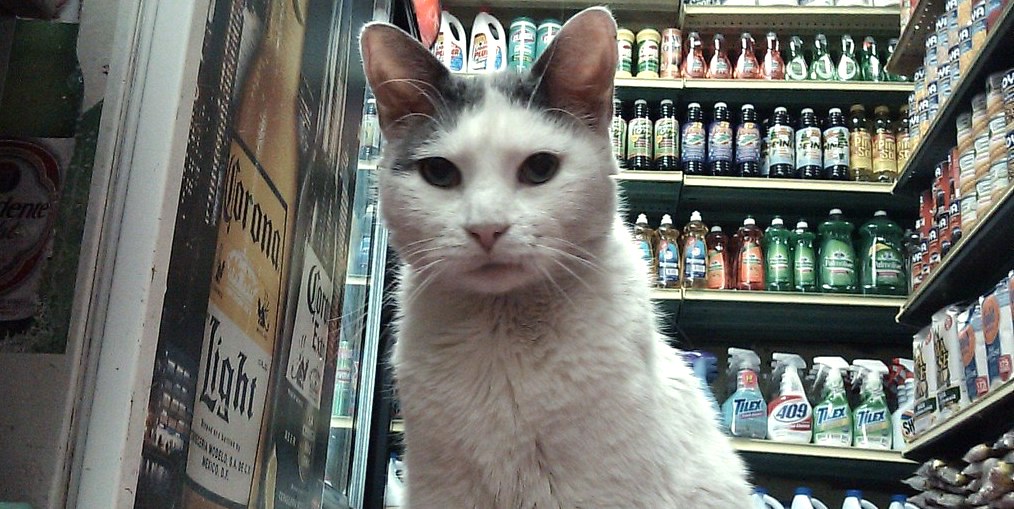
Bodegas: what more can be said? They’ve become high concept art installations. They occasionally act as low budget movie sets. They’re the home to New York’s bravest felines. But mostly, they’re where New Yorkers do their snacking. Some of it upscale (I’m looking at you, British chocolates) and some of it, not so much (Please. Step away from the Slim Jims). But whichever snacking option we choose, it’s really all about our mood.
I decided to take my love affair of snacks in wrappers and pair it with my narcissistic obsession with my own general feelings. What drove me to which particular snack, and what was my mindset when I bought and consumed it? Was I feeling happy? Confused? Heartbroken? Gloomy? Reflective? Murderous? Romantic? Whimsical? Follow me on this journey—won’t you?—through processed food, bought exclusively in bodegas, and how it gave me “all the feels.”
Of all the snack foods that can be purchased at a bodega, Pocky definitely lives on the more sophisticated end of the spectrum. First of all, it comes from Japan, not a conveyor belt at the Hostess factory. The packaging design is subdued—chic. There’s very little shame in having them in your bag. Oh, this? Just an artful little snack to get me through my Uber ride. On this late afternoon I am in a hopeful mood. Perhaps it’s the warm weather. Perhaps it’s because I’ve figured out the perfect project to distract me from my real obligations. Life is good.
DAY 2:
Food: Little Debbie Swiss Cakes Rolls
Mood: Shame
Day two and it’s come to this? Little Debbie is the trash of snack cakes. Fifty cents for god’s sake. What could be in here? Chemicals, it turns out. I eat one and it’s fucking delicious by the way. Which makes me a little ashamed of my taste palette. It could be worse. I could throw in a pack of smokes and a $2 lottery ticket, but I don’t smoke and I don’t have cash. Oh my god. Shame.
DAY 3:
Food: Sour Cream and Onion Pop Chips
Mood: Flirty
Oh, hello, handsome fellow bodega shopper. Yes, I am buying chips but they are popped, not fried. Whatever that means. I hope you think it means I am a regular exerciser, which I am not. If this bodega flirtation goes anywhere, I might regret the flavor choice (sour cream and onion). My hand hesitated over the Sea Salt flavor, but in the end I had to go for it. I’ll throw in some breath mints.
DAY 4:
Food: Kinder Egg with Toy Inside
Mood: Amused
I have often wondered about these Kinder Eggs. Are they a distant cousin to the polarizing Cadbury Creme Egg? Well, these sound German and Cadbury is British, right? No matter. I have to have it. (They’re from Italy by the way. Thanks, Internet). I am excited to learn these were once banned. Edgy. Apparently, any treats containing plastic toys were banned in the U.S. until recently. Much like Prohibition, I celebrate that this silly rule is now over. The Kinder is sort of good and there is a plastic Daisy Duck in it. Amusing.
DAY 5:
Food: Candy Buttons
Mood: Nostalgic
I have to confess, I did not buy these in a bodega, so I’ve already broken my onerule. I bought them in a hipster card store in Brooklyn. But I couldn’t pass up this weird childhood favorite, bringing back waves of nostalgia as I sucked the buttons off the paper while walking down the street in public. This reminds me why I am single and then I am nostalgic for some past relationships (but not all of them).
DAY 6:
Food: Pink Hostess Snowball
Mood: Restless
Do I want to take a trip? Should I move to a new apartment? Should I dye my hair (never)? What is this life anyway? When existence seems like an endless rerun, sometimes you have to do something ridiculous. Instead of getting bangs, which is never a good idea, I get a Snowball to fight this ennui. It’s both disgusting and kind of good. I eat half of it.
DAY 7:
Food: Hippeas, Vegan White Cheddar
Mood: Regretful
As an adult woman, I should not be eating pink foods, making yesterday’s choice regrettable. Today, I go healthy, with “Hippeas” in Vegan White Cheddar. That’s right. These are organic chickpea puffs and I don’t mind them. I feel my regret pass with each handful.
DAY 8:
Food: Smartfood
Mood: Calm
Smartfood, I like you. I am calm. I am vaguely satisfied with life. I am walking from my job to my evening class. Maybe Smartfood is the Normcore of snacks. Do the kids still say “Normcore”? I don’t know and I don’t care. Calm.
DAY 9:
Food: Oreos
Mood: Sad
Today, I feel a little sad. Things are not going my way. Fortunately, there are Oreos which are both delicious, and oddly enough, vegan, which makes me happy because I like critters. It also makes me suspicious because what is in the cream filling if it’s vegan? I am a medley of moods but I love Oreos. I eat two.
DAY 10:
Food: Low Fat Cheez-Its
Mood: Grumpy
I am on the Long Island Railroad and the only thing that makes me feel better about this painfully long ride to my parents’ house is Cheez-Its. I console myself that they are low fat, although I know deep down that just means they are also full of something very wrong.
DAY 11:
Food: Lenny & Larry’s The Complete Cookie (Peanut Butter)
Mood: Stressed
I am at an airport and I have pre-packed these cookies because they looked good and I hate airplane food. When I’m in airports, I often buy the Sabra hummus and pretzels package because it is reliably good. I am stressed because I am running late but I now congratulate myself for getting TSA Pre-Check a year ago and quietly celebrate with a cookie.
DAY 12:
Food: Think Thin High Protein Bar in Creamy Peanut Butter
Mood: Frugal
Is frugal a mood? Regardless, these Think Thin Bars were free in the kitchen at work, so I did not buy them in a bodega, which I know was my one rule. But I want to a) Think Thin and b) save money. So here we are. It is sort of good for something with zero sugar.
DAY 13:
Food: Moon Pie
Mood: Wistful
Well, here is something you don’t find every day. I love Moon Pies. My ex loved Moon Pies. We bonded over Moon Pies and he would buy them for me. We’re divorced now. Wistful.
DAY 14:
Food: Twinkies
Mood: Excited
I am excited that my self-imposed project is done. I am disappointed that I no longer have an excuse to snack every day. I am relieved I have gained no pounds (okay, two). I go for a classic. It tastes like a sad sponge. I eat it in three bites.
Jenny Ryan Bowman is a 2nd year MFA, Fiction student at The New School. Her writing focuses on characters who desperately want things they shouldn’t and also prefer to do their unraveling publicly. She often does inappropriate things just for the story and her most overused phrase of 2019 is “this is going in the book.” She lives in Brooklyn.
I can recite to you the ingredients I need to make a nice pernil and some toasty garlic buttermilk buns
I can tell you about the woman unfamiliar with the concept of personal space on the train as she eats a crumby croissant
I could spend hours wondering why the house is frigid and the heat doesn’t go on until 3
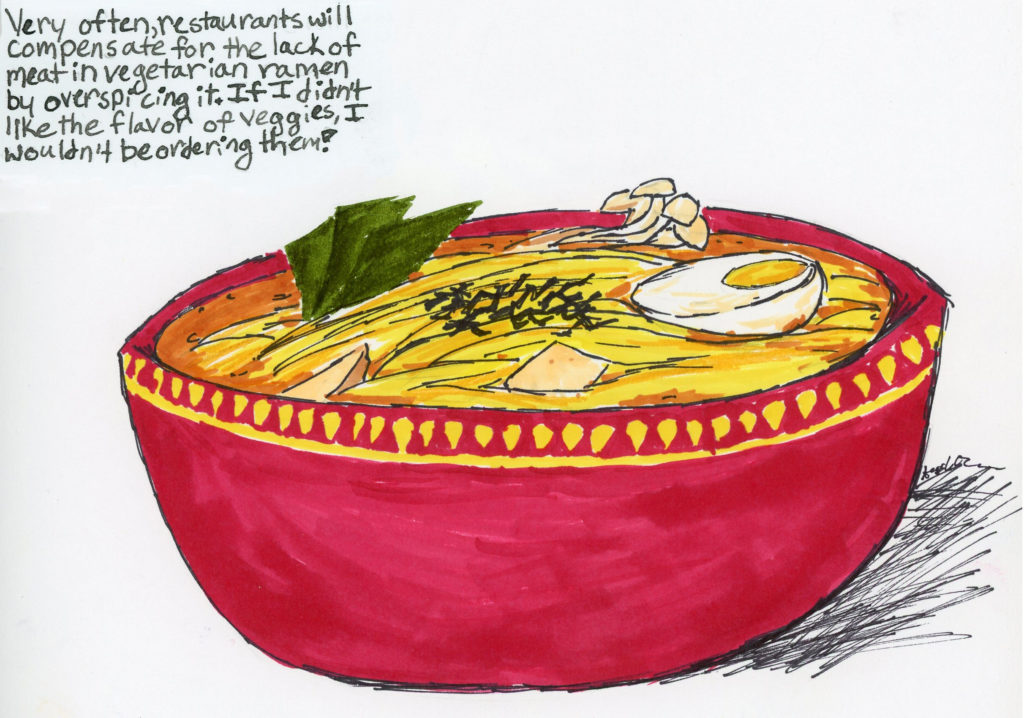
I could tell you I eat more ramen than I should and in too short of the time
I should tell you I tore the top of the pashmina, pretty sure there’s a hole in it too
I can retell the plots of romance novels I haven’t read in over five years and tell you about every scene where they have tomato soup and a cheese sandwich in bed
I can dissect why I continue to scarf down chocolate
I can tell you I spent over an hour making collages for my desktop screen which I think all turned out quite spectacular
I could tell you I already have an idea for a short story although I should try finishing the book I’ve been writing
I can surely tell you I wrote this while I was starring down your text, ignoring your offer for a pizza date Friday, my finger hovering over the option to delete it.
Isabela Cordero is an undergraduate student at Eugene Lang, The New School, majoring in literary studies and minoring in history. Her primary genre is fiction, with a secondary genre of poetry. She’s passionate about the art of storytelling and hopes to one day publish a novel.
The street lamps kept dangling from disrepair, the balconies crumbling, the unemployed young men shuffling from café to aimless walks, yawning even in their thoughts—a scene worthy of Fellini’s neorealist film, I Vitelloni. Fellini at his ironic best sets overgrown teenagers in a coastal town, a band of young bulls taunting road workers and pulling immature pranks on girls and women. My father said his kids needed a different future. Frasca Studio would soon close and one more family, my family of four, would become a statistic of the Sicilian diaspora. I had never heard the word “diaspora” until I came to America. In my hometown that history was not taught in school, far as I know. People just left. Like seeds transported by the wind one day they disappeared. Occasionally I’d hear my mother say that so and so, the American, was in town. That so and so could have a surname familiar to us, or one that had been Anglicized. The mysterious Mr. Nicholson might be searching for a distant relative—Nicosia. We saw types on the streets of Vittoria during summer months. Mr. Nicholson in plaid shorts, white sweat socks and laced-up spectator shoes, walking with a small dictionary in hand—trying his best to ask for directions to somewhere his fourth cousin might be living. My friend Anna & I made fun of that guy. What was up with those tube socks paired with elegant leather shoes? But his Ray-Bans were more than acceptable to two girls wanting to tint the world a splendid green. O how we wanted to rip those aviators off the foreigner’s nose and take turns sporting them at the beach. Leap from one rock to the next, lean on every yew tree, look foxy sniffing the northern wind—Tramontana—coolon the skin. And we’d throw in some Paul Anka —Put your head on my shoulder, Baaaby, feeling euphoric though we didn’t understand the words. It’s hard to convey how that singer’s dreamy voice on my transistor gave rise to lidless imagination. Opportunity for a pose, look a bit coy. Tilt your head. There. No. It was better before. Keep the sunglasses in mind. Can’t you think of something more miraculous?
Here and therewe’d see another American but demanded nothing from the Showoff, Buffuni—one hand pushing back his thick swirls of hair, the other spread on the steering wheel of a Peugeot convertible too big for cruising our narrow streets. The Buffuni wore his shirt unbuttoned. His gold necklace was thick as a fishermen’s rope. This clown made tons of money flipping pizza dough, my older brother said. One good bet he came back to look for a wife who cooks like his mother. She’ll polish his shoes, his teeth, his nuts and his toenails just to get to Brooklyn or New Jersey. My eighteen-year-old brother, Aldo, who could not openly hold a girl’s hand, carried around his little angry monsters and made Anna and I laugh until we almost suffocated.
If this isn’t important, nothing is, Aldo said. In the beginning God created an American for us to see on Via Cavour. A nostalgic old man, teary eyed, in and out of cafés, tasting every flavor of gelato until the metal shudders shut. The bogus noble in suit jacket with the widest lapels you ever saw and polyester pants that never lose their crease, UBabbu Amiricanu, the Dumb American. All over town the air is thick with rumor that a speeding motorcycle flipped him in the air and he thumped on the ground like a 65- kilos sack of potatoes. Aldo could not get his mind off how mannish that violence was. Anna asked to hear more. My motherslapped herself hard on the forehead, called her son Malacunutta, a word I find impossible to translate. It doesn’t mean not being polite—more like a fired-up entertainer setting hungry wolves to attack a poor captive bear.
I was nine years old, it was the place I happened to live in and be the victim of. What did I know about Mr. Nicholson longing to find his ancestral roots? What of those who had not quite died in the old country and not yet been born in the new, how they disassembled, reassembled, flying back and forth like the osprey’s need to return to its birthplace. Each had a personal survival at stake but who could see any beauty in that? This doesn’t quite answer the question: why are people obsessed with stereotyping? In my hometown we thought of all Italian Americans as “dumb” outsiders who dressed badly. They thought of us as their precious heritage.
Marisa Frasca is the author of Via Incanto: Poems from the Darkroom (2014—finalist for the Bordighera National Poetry Prize) and Wild Fennel: Poems and other Stories (2019, Bordighera Press). Her poems and translations have appeared in numerous literary journals and anthologies, among them: The Stillwater Review, Italian Americana, TheRed Wheelbarrow, Journal of Italian Translation, The Yale Poetry Series Anthology,Making Mirrors: Writing /Righting for and by Refugees Anthology. Frasca is the recipient of the Outstanding Riggio Scholar Award, 2010, from The New School where she received a BA, and she holds an MFA in poetry from Drew University. She currently serves on the Advisory Board of Arba Sicula, a non-profit organization that preserves and disseminates the Sicilian language, literature and folklore. Born in Vittoria, Italy, Frasca lives with her husband, Peter, in Manhasset, New York.
I hold in my hands a slice of watermelon. I hold within me entire summers, orchards, seas & continents, red juicy jubilance running down my chin. Under the shade of a fig tree I carry not the shade but the sun. I carry the old street vendor by the roadside Watermelon Watermelon, pulp for eating, rind to polish your shoes. Let me translate how some days we live with a dual purpose & in two world at once. Some days loss is nowhere in sight.
Marisa Frasca is the author of Via Incanto: Poems from the Darkroom (2014—finalist for the Bordighera National Poetry Prize) and Wild Fennel: Poems and other Stories (2019, Bordighera Press). Her poems and translations have appeared in numerous literary journals and anthologies, among them: The Stillwater Review, Italian Americana, TheRed Wheelbarrow, Journal of Italian Translation, The Yale Poetry Series Anthology, Making Mirrors: Writing /Righting for and by Refugees Anthology. Frasca is the recipient of the Outstanding Riggio Scholar Award, 2010, from The New School where she received a BA, and she holds an MFA in poetry from Drew University. She currently serves on the Advisory Board of Arba Sicula, a non-profit organization that preserves and disseminates the Sicilian language, literature and folklore. Born in Vittoria, Italy, Frasca lives with her husband, Peter, in Manhasset, New York.
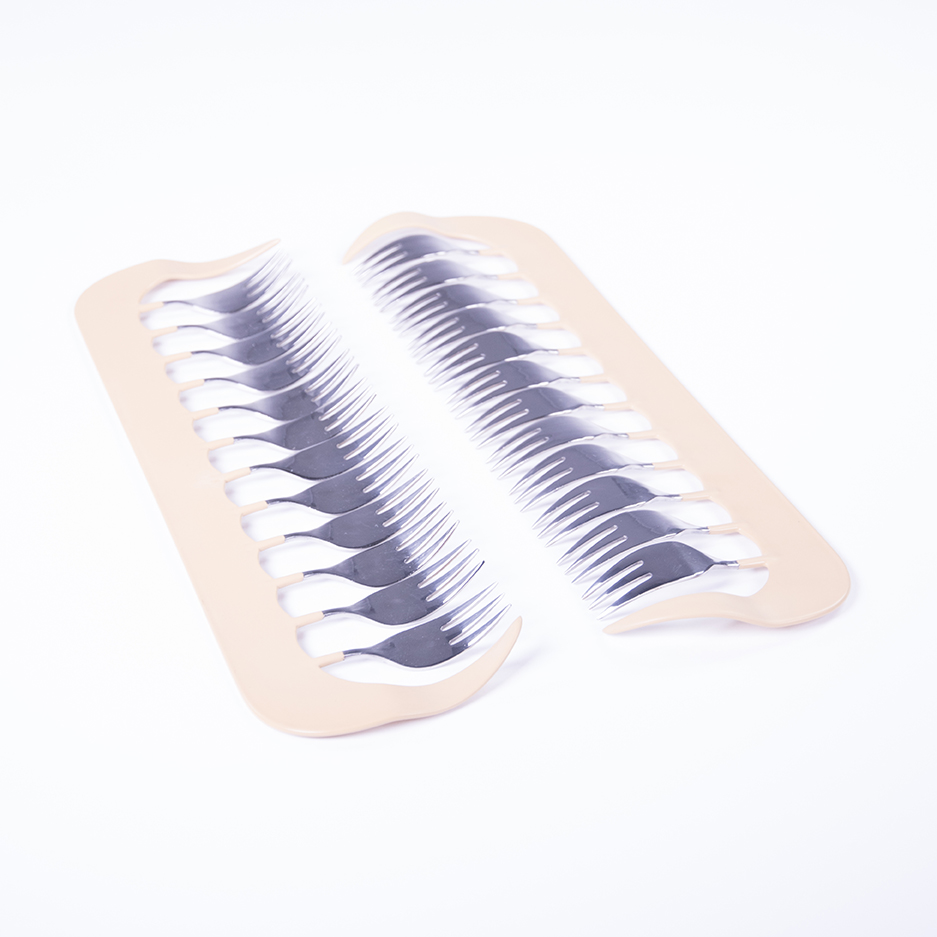
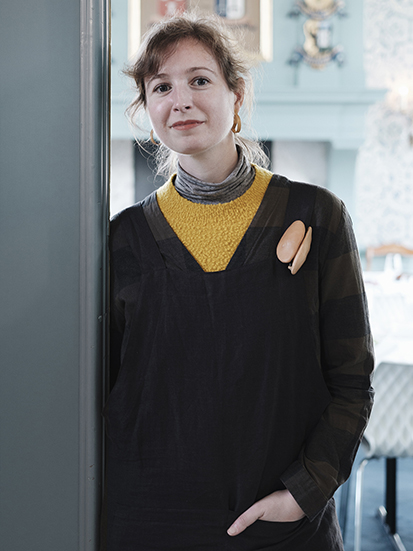
Rachael Colley is an interdisciplinary artist and senior lecturer in Jewellery and Metalwork at Sheffield Institute of Arts, Sheffield Hallam University. Her current research brings together jewellery, created predominantly using food waste, and ambiguous artefacts for eating. She invites diners to wear these visceral jewellery pieces whilst consuming food with alternative dining tools www.rachaelcolleyartist.wordpress.com
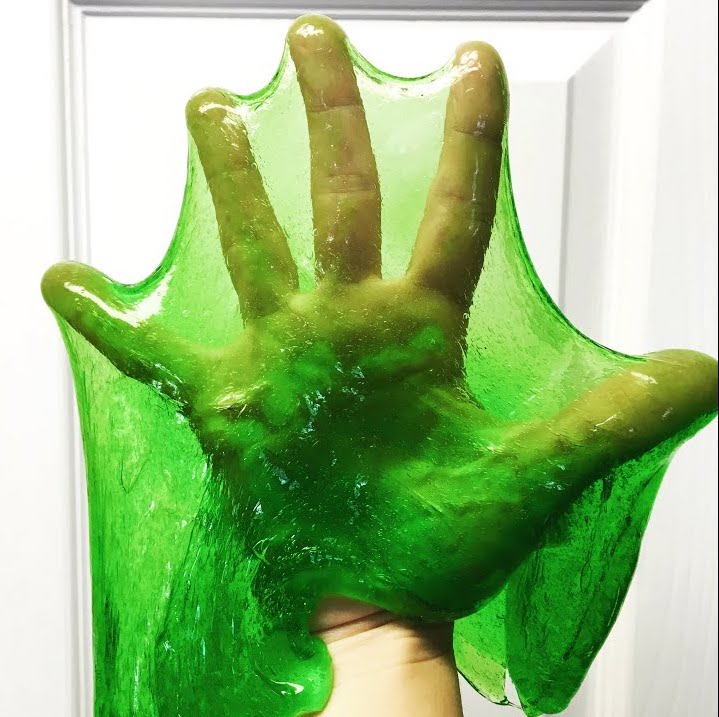
Once upon a time they fell in love quite fast even by today’s standards. No app was used. They were injected with ghostbuster green goop that melted down their elbows to grease
lightning and john travolta married them in an ambulance because elvis was busy eating peanut butter. In the end that’s all that matters. The happy couple honeymooned on
an eclipse and had sex but went blind. They conceived a child, definitely a pisces, likely vegan, who will end up as a poet or, at least, gluten free. In the darkest moment of their hangover, they buy her a notebook with a quote
no one knows. When she is old enough, they’ll send her to boarding school and she will learn how to surf or skate, but mostly how to complain about other people. She’ll choose hufflepuff to be politically correct and
at one point become a thin mint. Her parents will be proud prima cream puffs and throw her ivy league & housewifery themed birthday parties. The gift bags will contain make your own meme kits. Satire is crafty, moms love it.
She will break her heart and her liver on sleeping beauty’s anxiety meds, realizing that women’s clothing has no pockets. Her father will practice quarterback religion and she will love advertisement jingles
over poetry. She will laugh at every pun and find sadness only in empty pie crusts. She will breathe in silly puddy to make herself matronly, reapply personality by MAC on the hour, be spongebob’s best friend, but less pink. So vogue it will tear her apart,
that notebook will be melted down to compost and fed to worms for her vegetable garden in which she will meet a real human being. An app will be used to speed up the process, but this time, with elvis.
Anna Antongiorgi is a writer, choreographer, and dancer originally from Redondo Beach, California. She received her B.A. in English cum laude from Harvard, Minoring in Theatre, Dance, and Media, in May 2019. Her poetry has been previously featured in The Dying Dahlia Review. She is working toward her MFA in Creative Writing at The New School while pursuing dance and choreography in New York City.
Angela DiLella is a writer and artist. She graduated from the New School’s MFA Creative Writing program in 2017, and continues to work on the graphic novel she began there. You can check out more of her work on Twitter @shanksspeare.
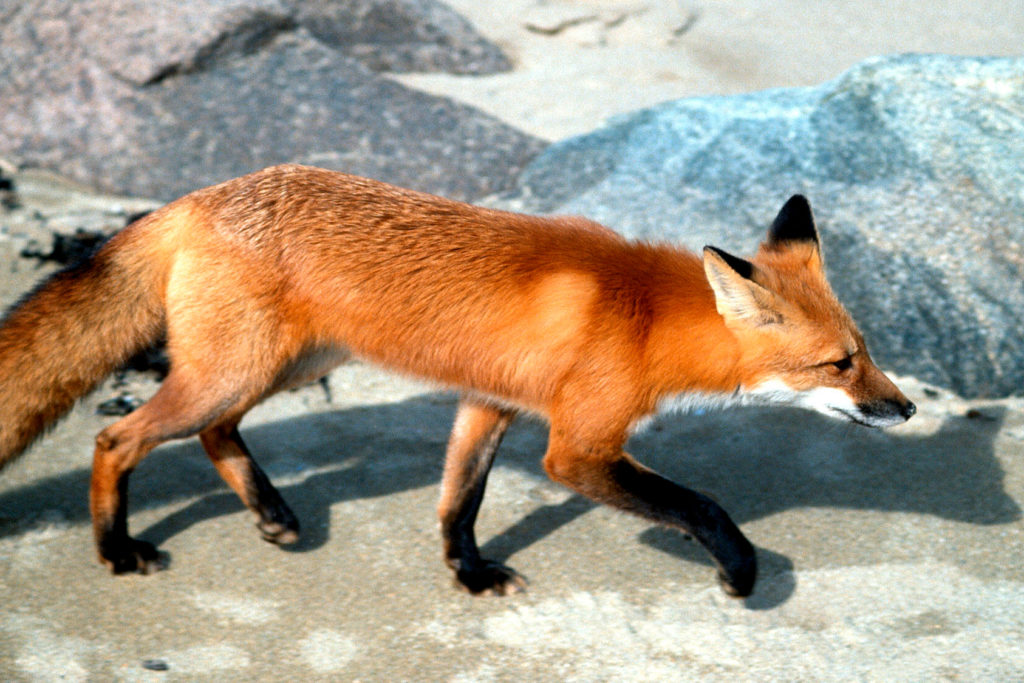
Long ago & yesterday an orphaned fox Entered a lonely hunter’s neighborhood
Removed her skin & became woman-wife Cooked meals, cleaned house, mothered children
Arranged flowers for the table, made money In advertising on 7th Ave.—like you wouldn’t believe
The hunter thought his wife beautiful & so crafty He’d placed his happiness in her hands
Looked at her naked body like a body of water For twenty years the pair merged as wave and sand
But outside of bed he complained about her smell Could she peel off that underlying wild musk? Tattoo his name & rank on each of her breasts Where’s my this & my that, the food’s too peppered
Got so bad, his wife schemed the perfect crime Her mid-life brain caught feral fire
She remembered foxes smell like violets & she turned & turned depleted in her bed
Until knowing was ripe—a dream—a tree Heavy with apples: Eat, creature of appetite
Her soul beneath the sheets leaped out like a bean Jumping & howling Fox Fox Fox
A hailstorm marked the road for her to follow Deep into the forest—juggling apples on her nose
In the forest there is no deodorant. Foxes are foxes Grace you with their presence
Marisa Frasca is the author of Via Incanto: Poems from the Darkroom (2014—finalist for the Bordighera National Poetry Prize) and Wild Fennel: Poems and other Stories (2019, Bordighera Press). Her poems and translations have appeared in numerous literary journals and anthologies, among them: The Stillwater Review, Italian Americana, TheRed Wheelbarrow, Journal of Italian Translation, The Yale Poetry Series Anthology, Making Mirrors: Writing /Righting for and by Refugees Anthology. Frasca is the recipient of the Outstanding Riggio Scholar Award, 2010, from The New School where she received a BA, and she holds an MFA in poetry from Drew University. She currently serves on the Advisory Board of Arba Sicula, a non-profit organization that preserves and disseminates the Sicilian language, literature and folklore. Born in Vittoria, Italy, Frasca lives with her husband, Peter, in Manhasset, New York.