Author

Whitney Bard

Browsing

“So, what’s my surprise? Spill!” In the voice message, Tai sounded flirty, but Tai always sounded flirty. 

“Coq,” Andi recorded and hit send, waiting for the laughter she knew was coming. 

Tai’s next message was just that: a long, deep cartoon-villain cackle. In the next message Tai was still laughing, but managed to get out: “Liar. If you had a cock, I could stop dating.” Another signature cackle and, “See you at seven, girl.”

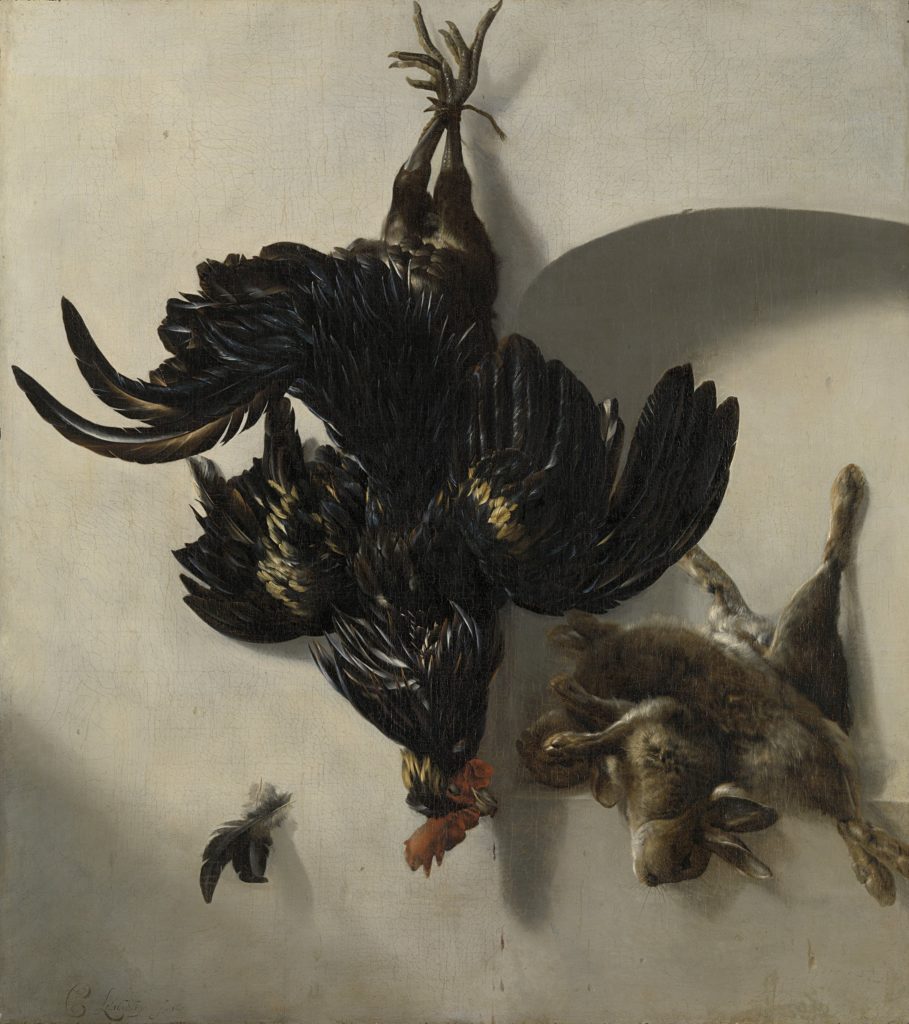
“I can get one.” Andi deleted the recording immediately and wondered if spending her entire Saturday dismembering a four pound, “free-range,” plucked and disemboweled “coq,” had somehow broken her brain. It was possible. When she’d been separating the bird one body hinge at a time she’d swung between frantic giggling and dry heaving into the garbage – the small click that meant the bone had snapped from its joint a too-literal reminder that attachments aren’t permanent. But when she had browned the pieces of the chicken, turning them with care, one at a time, to make sure they crisped up evenly, that had been nothing but peaceful, nothing if not an act of love. 

Making the Coq au Vin for Tai was a first. Well, sort of a first. Andi has always brought Tai food, but she has never made her dinner, not like this. When they were fifteen and Tai’s first boyfriend dumped her, Andi stayed up all night making apple cinnamon cookies, which was not a real thing, but something Tai had said one time that she wished was a real thing. After school they’d sat in Tai’s basement on her tie-dye bean bag chairs eating cookies and talking about how much boys sucked. 

Junior year they’d gone camping down by the river and Tai had brought a tent that was much too small, and Andi had pretended not to be tired to avoid the close space. She discovered that Tai didn’t know how to roast a marshmallow without burning it and so she spent the night making Tai a seven course meal of perfect s’mores, lightly browned marshmallows bursting onto melting chocolate all pressed between graham crackers that she warmed on one of the rocks surrounding the fire. When the fire was only a glow Tai had silently leaned over her shoulder, cheek to cheek and shoved the final, sticky bite into Andi’s mouth. Andi’s stomach had dropped so hard she’d choked and Tai had laid back in her camp chair giggling until she cried. 

All night, Andi’d curled into the corner of the tent trying not to think of Tai’s fingers in her mouth or to wonder if her tongue would taste like chocolate and marshmallow. 

 For Tai’s graduation, Andi had made a crepe cake, which she hadn’t known was a thing, but Tai had seen it on TV and freaked out and so Andi figured out how to make one. Tai had come over on Saturday and led with the news that the night before she’d finally fucked Danny as a birthday present to herself even though “he’s a total player, but ohmygod he was really good in bed and whatever I never have to see him again.” And Andi had gone hot, like a lit twist of newspaper was pushing up from her gut into her chest and maybe if she opened her mouth she’d breath fire or something worse, She ran to the kitchen pretending she’d forgotten something. 

She’d gripped the edge of the counter until her fingers hurt and thought about grabbing Tai and fucking her right on the living room floor, of showing her that Danny wasn’t even close to “good in bed.” Even thinking about it started the pins and needles sensation that began at her extremities and worked inward anytime she let her head go there, but by the time Tai had come looking for her, she was taking the cake out of the fridge and Tai had screamed and kissed her on the cheek. Something snapped in her, disengaged her body and mind like a dislocated shoulder joint. The rest of the day she felt hollowed out like a cheap plastic mannequin — unbothered by Tai’s body for the first time in years. It was a relief, and she thought, “this is it, I’m finally over her.” And she wondered if maybe she could finally have her friend back. 

But six months ago, three weeks after graduation, Tai had taken a turn too sharply and her car had careened into the gully, which at that particular part of the road was fifteen feet deep and filled with kudzu. And now it was Tai’s birthday, the one the doctors never thought she’d see, and she was up and walking and as close to back to normal as she was going to get, and Andi made Coq au Vin because it was the fanciest thing she could find in her cookbook, the only way she could think to fill Tai with the unsayable things that had welled up in her during the weeks waiting for her to wake up. The meat turned a bruised purple in the dark wine and Andi had to swallow again and not think of Tai in her hospital bed the first time they’d let her in to see her. She fished out the bundled the herbs, she’d used white thread because they didn’t keep cooking twine around and that had turned purple too. 

In the Saturday-sleepover thrillers of their childhood, the world was threatened by asteroid strikes and tsunamis and volcanoes, but Andi realized her world was far more fragile –

 could have been blasted, sunk, and burned if Tai had not opened her eyes.Tai showed up to dinner on crutches, laughed at the candle-lit table and the music and the bottle of wine Andi had smuggled in. She hugged Andi hard, sat, and let herself be waited on. 

Andi poured wine, spilled a little – watched Tai wipe it up on her finger and lick it, making a worse mess. She almost knocked over the whole glass trying not to look at Tai’s mouth, at the pink tip of tongue darting out around the pad of her finger. She served: scooping out first, pieces of chicken, then onions and mushrooms and salt pork, then the rich purple red juice on top, finally balancing a slice of baguette on the edge of the bowl, a shaky precipice above a dark sea of carnage. Andi listened to the scraping sound of Tai’s fork on the chicken bones pulling away the soft stringy wine-purple meat, let her eyes lay on Tai’s jawline as she chewed. 

Tai held a pearl onion in her pursed lips and waggled her eyebrows at Andi, who was reminded of the slow, gentle roll of the pan while she’d caramelized the onions and she’d thought  how she wanted to kiss Tai like that, unhurried and careful. She faked a laugh and pretended that she wasn’t imagining what it would feel like to take piece of mushroom and press it into Tai’s mouth, let her suck the juice off of her fingers. Tai reached across the table and squeezed Andi’s hand. Andi wanted to wrap her arms around the sloping shoulders and jutting shoulder blades and say, “I love you more than anything.” She knew she could have, that that was allowed, but also knew intimately the pain of saying one thing and having someone hear another. She squeezed back, let go, scooped out another piece of the bruised chicken, placing it in Tai’s bowl.
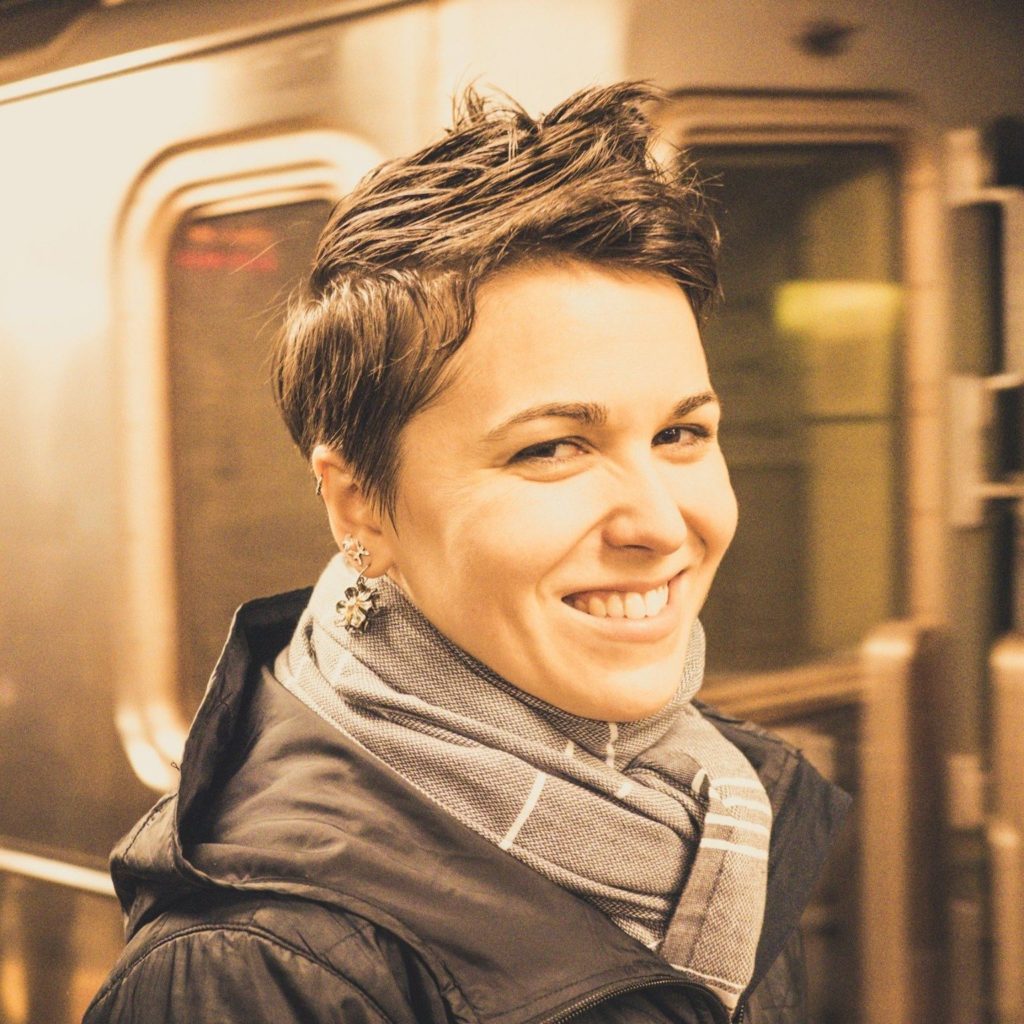
Kate Tooley is a writer living in Brooklyn with her wife, cat, and a collection of dying houseplants. Originally from the Atlanta area, she is currently pursuing an MFA in Fiction at The New School. Her writing can be found online at Longleaf Review, Apocrypha and Abstractions, erikafranz.com, and newschoolwriting.org, and is forthcoming in X-R-A-Y Literary Magazine.
Satiating tears
The only ones
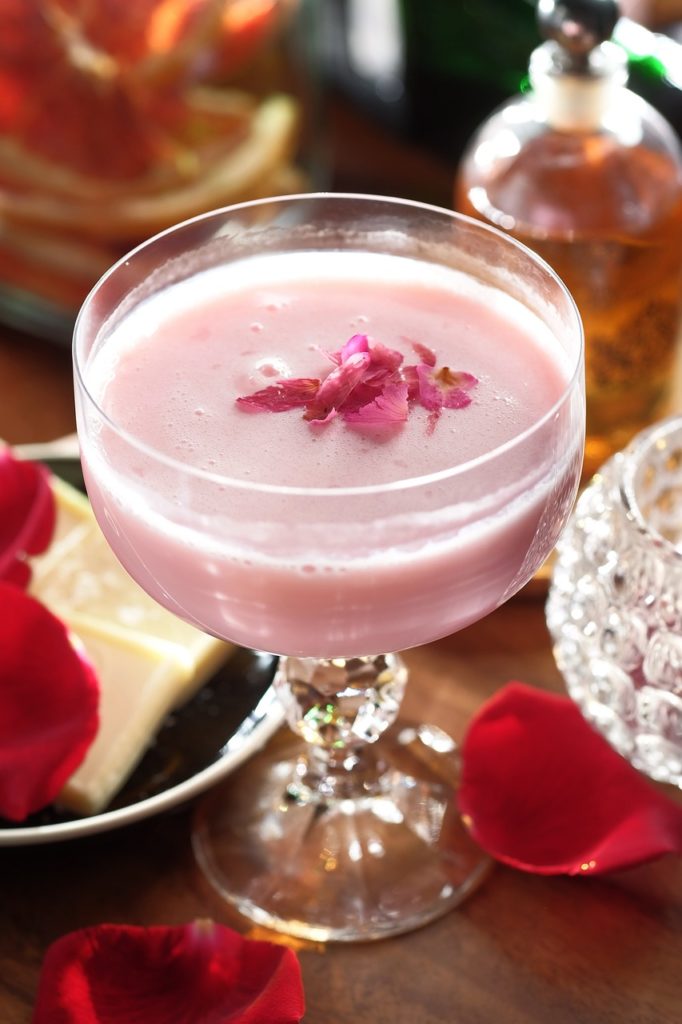
Delicate petals pressed
Steeped invisible fun

A drink that hugs you
A soothing twist
Magic potion pour
Hydrated eyelids

In your body
And on your skin
A liquid bouquet
A floral swim

Shrinking almonds
Maple saltwater
Blending a dash
Dissipating dropper

Sweet petal cream
A healing skim
Squeezed fluff
Beige bubbles the brim

Hannah Updegraff is a wellness blogger, vinyasa yoga teacher, and a Food Studies student at The New School. Find her on social media: @theheartbeet.co and @hannahkupdegraff

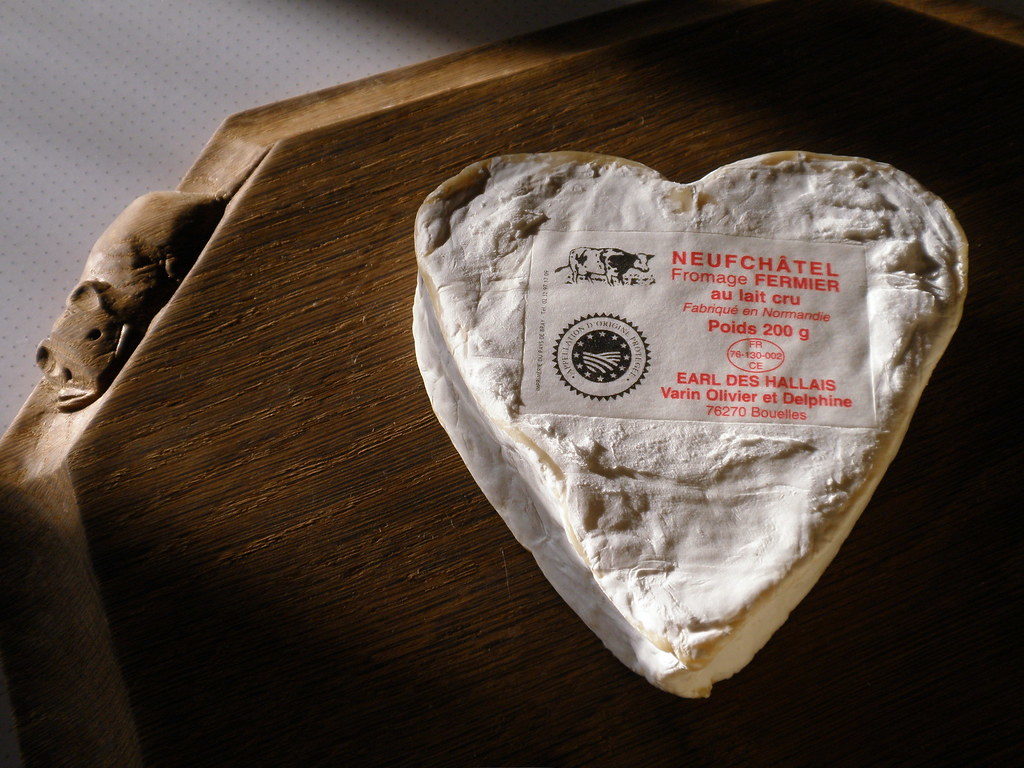
cause I just bought the cheapest cheese
which happened to be a blue brie
in the shape of some stupid heart


cause when they asked you
does it remind you of home
you kindly pointed out
that blue brie’s not a thing there and
the heart shape is for Neufchâtel
where farm girls fell for foreign soldiers
in the Hundred Years War


your family keeps one in the cave
in memory of your grandma who
was born in Neufchâtel


the soft bloomy rind and
that distinctive mushroom flavour
which you don’t really like you say
not as much as blue brie anyway

Oscar Mardell was born in London and raised in South Wales. He currently lives in Auckland, New Zealand, where he teaches Classics, brews beer, and practices Aikido. His poetry and essays have appeared in a variety of publications, including War, Literature & the ArtsThe Literary London Journal3:AM MagazineDIAGRAMTerse, and Queen Mob’s Teahouse. He is the author of Rex Tremendae from Greying Ghost and Housing Haunted Housing from Death of Workers Whilst Building Skyscrapers.

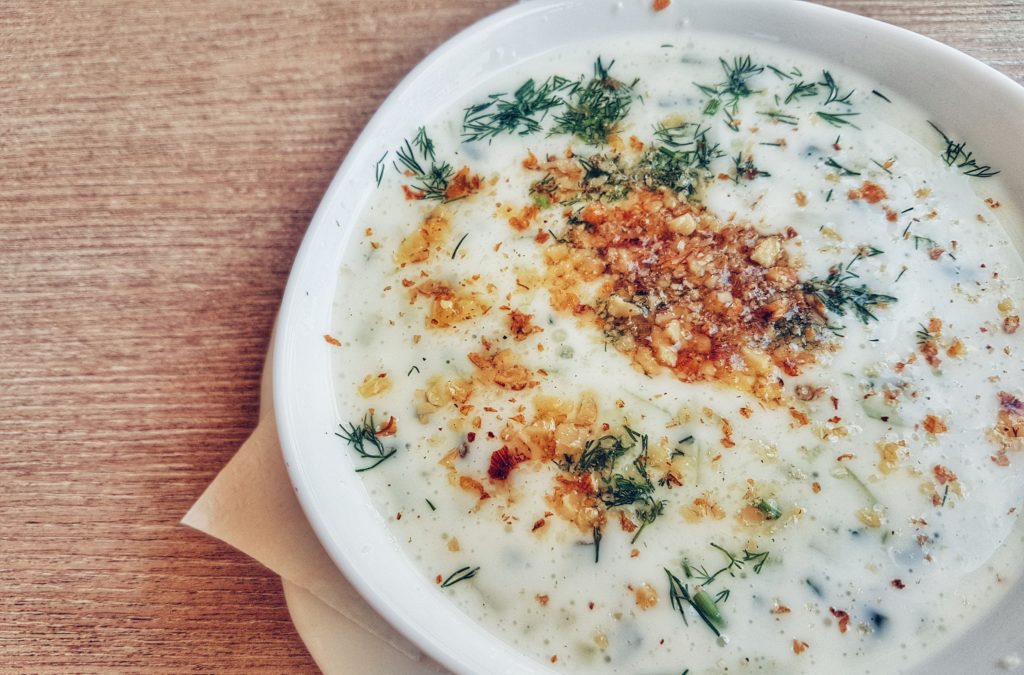
sure / but there are variants of course
near endless ways of fusing Land and Sea
Heaven and Earth Inside and Out
 
I’ve never had the pallet for fine wine
just soup to me / and smoking’s made me sick
in Frankfurt and the Rhine
and even in New England / where
I only longed


to press this little spoon of mine against 
the surface of your chowder and
to slurp / obscenely please

Oscar Mardell was born in London and raised in South Wales. He currently lives in Auckland, New Zealand, where he teaches Classics, brews beer, and practices Aikido. His poetry and essays have appeared in a variety of publications, including War, Literature & the Arts, The Literary London Journal, 3:AM Magazine, DIAGRAM, Terse, and Queen Mob’s Teahouse. He is the author of Rex Tremendae from Greying Ghost and Housing Haunted Housing from Death of Workers Whilst Building Skyscrapers.

i pulled condoms and lubricant from
a jello cake
shoving the findings into my pajama pockets
while avoiding the watch of my family


i found children’s stickers in there too
and i pocketed them away


i flattened the cake into the marble it could be
it was blue and purple in all hues and shades
leaving it free of any mark that could be


i worked at my own kitchen
and my father came in
with two jello cakes for me


one was shaped like a fruit candy
he told me it was for my birthday
my birthday was one month ago


i jumped to the height of my saltshaker
perched on the stove vent


i am thumbelina
tiny and strong

Mercury-Marvin Sunderland is a Hellenist transgender autistic gay man from Seattle who uses he/him pronouns. He currently attends The Evergreen State College, and his dream is to become the most banned author in human history. He works for Headline Poetry & Press, and he’s been published in numerous magazines such as the University of California Riverside’s Santa Ana River Review. His art has been featured by the UglyDolls company and he represented Seattle at Brave New Voices 2017, the national tournament for youth slam poetry. He can be found as @Romangodmercury on Instagram, Facebook, and Twitter.

“The sun set in the sea; the same odd sun
rose from the sea,
and there was one of it and one of me.”


A long-since rescued Robinson Crusoe speaks these lines—recounting the rituals of his island, after his shipwreck—not in Dafoe’s novel, but in an Elizabeth Bishop poem called, “Crusoe in England.” 
In the poem, a world-weary Crusoe finds himself on the other side of his adventures, living in relative comfort and boredom (bordering despondency) on “another island/that doesn’t seem like one.” There, the local museum has asked him to donate the scarce remaining items from his time as a castaway—humble effects, once critical to his survival: “goatskin trousers,” “shriveled shoes” and a knife that “reeked of meaning like a crucifix.” Though he certainly understands that his life and his experiences are a natural source of vicarious excitement and fascination for museum-goers, this survivor unmoored once again by the fact of his survival, cannot help but wonder: “how can anyone want such things?” 

This question—which seems at once, to indict the voyeurism that accompanies calamity and to diminish the significance of the heroic and extraordinary details of the personal life, caged in its relics—is at the heart of much of Bishop’s work and process.

Her own life was shaped by frequent disaster; yet, it is rare to find anything akin to autobiography in Bishop’s poems. Her father died when she was only an infant, her mother was permanently committed to an asylum by the time she was five, parentless, she spent the remainder of her childhood (and seemingly her entire life) displaced from any coherent notion of home. However, these grim details never explicitly surface in her poems—it is as though she must have always been asking of the impulse to write about her many sources of anguish: “how can anyone want such things?”

Rather, she devoted her poetic imagination to the deceivingly ordinary and impersonal things of this world—questions about travel, a caught fish, an almanac—deriving from them the profundity of insight and meaning that readers often turn to the lived experiences of memoir and biography to find. For all their characteristic detachment, her poems never register as journalistically or anthropologically removed; alternatively, even her most minor poems seem—by an alchemy belonging only to her—to be infused with vital warmth and uncanny familiarity.

For instance, she gives us Crusoe—a fictional character, infamously mistaken for true, and exported from another writer’s novel—that lives, first in the wreckage of his ship, alone and always dreaming of other islands; then, in the wreckage of his own survival, with only a small handful of items that seem to confirm, with their presence, the totality of all that he has lost; Crusoe, who comments on his own circumstance, saying: 

“I often gave way to self-pity.
“Do I deserve this? I suppose I must.
I wouldn’t be here otherwise. Was there   
a moment when I actually chose this?
I don’t remember, but there could have been.”   
What’s wrong about self-pity, anyway?
With my legs dangling down familiarly   
over a crater’s edge, I told myself
“Pity should begin at home.” So the more   
pity I felt, the more I felt at home.”

***

By the time I came to my life, my family’s traditions, talismans and rituals had all been thoroughly established. When I was younger, I mistakenly and naïvely assumed that this was true for most people. However, a few years ago, I was having a conversation with a friend who explained that he feels he has inherited nothing—no grandfather’s pocket watch, no religion, no increasingly foreign language, no rites of passage that extend beyond the succession of his surname—and that he is, therefore, always on the lookout for things that he could, one day, “pass down.” I couldn’t help but feel somewhat envious. 

My father was a deacon at our local parish. He baptized both my brother and I and administered my first holy communion. While it is common for many families to say grace before meals, prayer in our house was far from typical: we had homemade booklets (not unlike chapbooks) replete with prayers and songs to be read and sung on each and every night of Advent, Wigilia and Christmas; with holy water and incense he blessed our home as my brother and I would compose the initials of the three Magi above our doorframes during Koleda, the feast of the epiphany; and during holy week, pysanky were gingerly painted, lambs were sculpted out of cake and butter, and we spent consecutive days in church—helping him, behind the scenes— that would ultimately culminate in the epic Easter vigil, a uniquely long mass that would begin with my father singing “The Exsultet” to the hordes of gathered faithful from his wheelchair. 

Needless to say, the rituals of Catholicism—and more particularly, the many specific ways in which they are intermingled with my father’s Polish heritage and my mother’s Irish heritage—loom large in my memory and imagination. However, we did have secular traditions, too; and many of these involved food. 

***

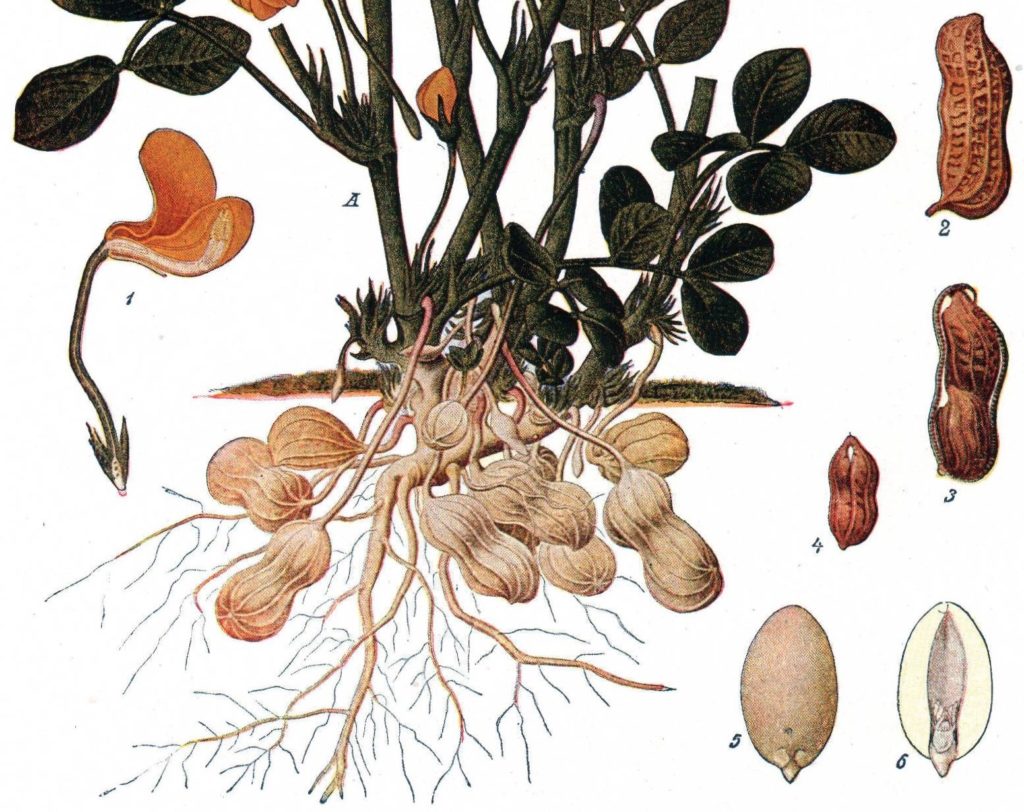
My parents traveled quite a lot in my infancy. Together, they owned a company called Whole Person Tours—a travel agency that specifically served Americans with disabilities and uninhibited ambitions to travel abroad. Though already remarkable in its aim, their decision to provide this service in the 80’s—even before the Americans with Disabilities Act had been signed—is even more so. I love imagining the things that they saw together and allowed others to see. I suspect they had many an incredible meal. Yet, for all of their more exotic adventures, their own honeymoon was spent more humbly in Colonial Williamsburg. It was there that they would come to taste, for the first time: King’s Arms Tavern Peanut Soup. 

The 1971 edition of The Williamsburg Cookbook, from which my family would reproduce this recipe, says little about the soup’s origins—only that: “Brazil is the native home of the peanut, the ‘ground nut’ that sailed with Portuguese explorers to Africa;” therefore, my assumption is that our soup is likely a variation on a much more traditional West African soup. In this iteration, its only ingredients are: onion, celery, vegetable stock, heavy cream and peanut butter. It requires that the onions be slowly simmered in butter until they are brown; that the ingredients be stirred vigorously or blended together once the peanut butter is added, and that it be served alongside finely diced peanuts and dried slices of bread called, “sippets.” It does not require much effort or time and the result is both extremely decadent and comforting. 

Peanut soup was a regular fixture of our annual Thanksgiving dinner. To this day, it is my favorite part of the meal. This past November, for the first time in my life, I endeavored to be the one to make it. And in short, I was afraid.

I wasn’t so much anxious that I’d fail at making the soup or that I’d burn the sippets. As I mentioned before, it’s really quite an easy dish to prepare and my talented wife—a professional cook and baker—would be alongside me to repair any damage I might cause. Rather, I was terrified that what I made would fail to satisfy the myriad implicit demands we make of our relics. Without explicitly being able to explain to myself why, I felt that this soup—if it was going to be made correctly—had to do more than be made accurately. Instead, it would have to nourish and satisfy my nostalgia; it would have to, in its own brief and limited way, transform my kitchen into my parents’; it would have to be able to teleport my senses from Thanksgiving 2019 to Thanksgiving 1987 and to every subsequent celebration in between—it would have to do all of this and so much more, because it has survived. 

I am not a Catholic. My father has been dead for 21 years. My brother and I are estranged. Though I am lucky that my mother would be able to taste the soup that evening, and tell me how it came out, every other seat at my table was occupied by a person different from the ones I seat at the table in my memories of this meal. Peanut soup, for better or for worse, is numbered among the flotsam of my life and in my making of it, I knew I had to honor it as such.

However, I could not help but be reminded of Elizabeth Bishop and Robinson Crusoe. I found myself asking why we continue to make demands of things to which we are already indebted for our survival; things that with us, have too survived? On the one hand, I can understand the impulse to keep such things as a means of providing the self and future generations with a sense of heritage. On the other, I can conceive of how the presence of those things that persist in the wake of so much loss, might prompt a person to desire abandoning these emblems of their painful past; to ask, dismissively: “how can anyone want such things?” Yet, in making the soup, I came to consider how ritualistically watching the sun set and rise from the sea must have immured Crusoe in the history and memory of his wreck; but how, in the risen sun’s persistent “odd”-ness—both its strangeness and its solitude— Crusoe also learned to recognize himself and his place in the universe. 

For as long as the sun continues to rise and set on Thanksgiving day, I will continue with some degree of self pity to serve peanut soup at my table; and the more pity I feel, the more I will feel at home.

Aleksander Zywicki is a first-year MFA candidate at The New School. He teaches AP English Literature in Bayonne, New Jersey. He lives & writes in Jersey City.

gossamer skin so delicate 
they must be hand-harvested. 
Rubenesque beauties, 
wrapped in fancy paper, 
presents worth praise. 
As you slice, focus Zen-like,
think pure union—outside and in, 
surface and secret core—
the most pungent,
like nuggets of a dream
that cling. Relish the feral fragrance 
of earth, grasp a hint of a story 
about loam and endurance. 


Witness alchemy in the swirl 
of butter and oil in the pan. 
Now, add the onions, 
sauté slow ever so slow. 
Resist the urge to stir, 
simply let the fire takeover, 
witness the way it coaxes 
the sugars out. 


Honor the mystery 
of transformation,
hear the sizzle 
of newborn stars. 
Finally, crown the burger
with these golden gems.
Sit and savor 
the way sweet lingers 
on the tip of your tongue 
like a truth. 
Know of meaning
and fierce magic, 
know to close your eyes 
and give pleasure more room
like a kiss.

Pat Phillips West’s poems have been published in various journals including Haunted Waters Press, Clover, a Literary Rag, San Pedro River Review, Slipstream, Snapdragon: A Journal of Art and Healing and elsewhere. She is a multiple Pushcart Prize and Best of the Net nominee.

In the name of the forehead
& of the sternum & of the left
& right shoulders, respectively;


& sometimes improvised
with lips at the end & a pinch 
of nothing held to the sky;


& sometimes mirrored,
the Shape drawn in plumes
of smoke & ceremony;


& sometimes twitched 
over & again, a compulsion 
to ward off tragedy.


“Dialing god,” they called 
it when they taught me—
“crossing yourself,”


as though upon a tightrope
strung between 
the common tongue


& prayer, we walk; 
to “bless”—the body
as with a spell,


an alchemy not 
otherwise afforded 
to such ordinary hands. 


Whatever it is called,
it is always Easter 
in the picture where


my dead father has risen
his arm to flesh in gesture 
the wrenching Christ 


above our table &
my eyes like wounds
are always opened 


as if with dreadful secrecy 
I had witnessed blood 
dripping into the food.

Aleksander Zywicki is a first-year MFA candidate at The New School. He teaches AP English Literature in Bayonne, New Jersey. He lives & writes in Jersey City.

I grew up in Manhattan where Dyckman Street meets 200th street. My apartment building was the biggest on the street, six stories of red brick bounded on one side by the Alpine movie theater and Hanson’s Ladies’ Lingerie Emporium on the other. The Richter family lived on the fifth floor in apartment 5A and my father’s dental office—apartment 2R— was on the second floor. (I was convinced that the “R” stood for Richter.)

We had a set approach to calling the family together for dinner, driven by the fact that my father both worked and lived in 200 Dyckman Street. At six-thirty in the evening on most weekdays, my brother Marvin and I sat down at the kitchen table, which my mother had already laid with the everyday place mats, silverware, water glasses, and the first course— a mixed green salad studded heavily with cherry tomatoes, partnered by a bowl of my mother’s Russian dressing waiting to do its business. Sliced rye bread, fragrant with caraway seeds and surrounded by bits of crispy chocolate-colored crust jarred loose by the knife, rested on a plate in the middle of the table.  And always, to complete the tabletop montage, one bottle from the case of seltzer water that was delivered weekly to the apartment stood next to my father’s water glass.
 
We waited; nothing was touched. Soon the magical intercom that connected apartment 2R to apartment 5A came alive and I heard Phyllis, my father’s receptionist announce that, “Dr. Richter is on his way up for dinner.” Moments later the key turned in the door, my father appeared, removed his jacket and took his seat at the table. The seltzer bottle hissed and dinner began.

Dyckman Street was a veritable shopping mall, home to Joe’s Pork Store, Nash’s Bakery, Martin’s Homemade Ice-cream Shoppe, Cohen’s Newspaper and Cigar Store, this last where I routinely treated myself to the world’s best egg cream, seated at the counter, perusing the new Classic Comic that I borrowed from Mr. Cohen’s magazine rack. (I received special treatment because Sally, his daughter, was my best friend.) 

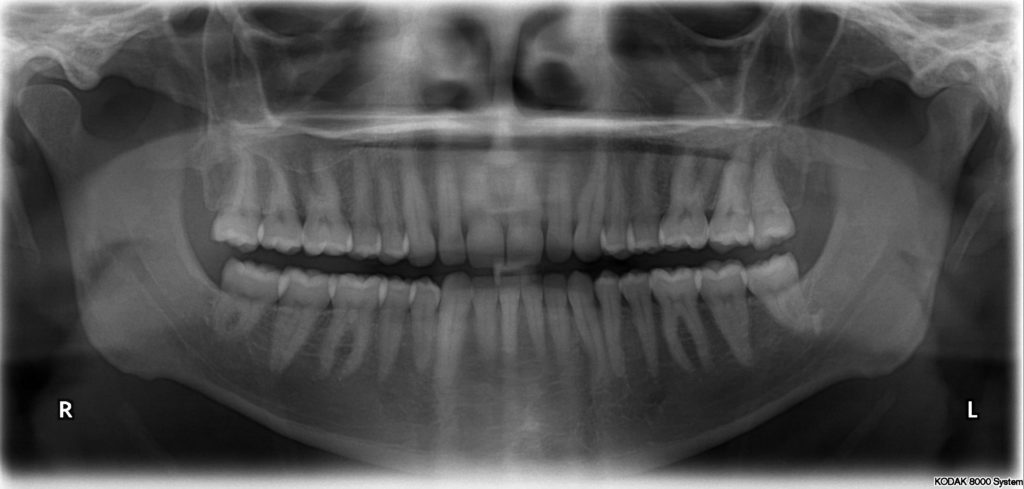
Cold cuts figured prominently in my gustatory life in the guise of the Famous Delicatessen, to the right of the entrance to the building and next door to Personal Cleaners. My mother would buy a whole salami from Famous, wrap the string on the top around the doorknob of a kitchen cabinet, and let the fat “dry out.” What emerged after hanging for two weeks was salami that was all beef and spices, so firm that it posed a dental challenge.

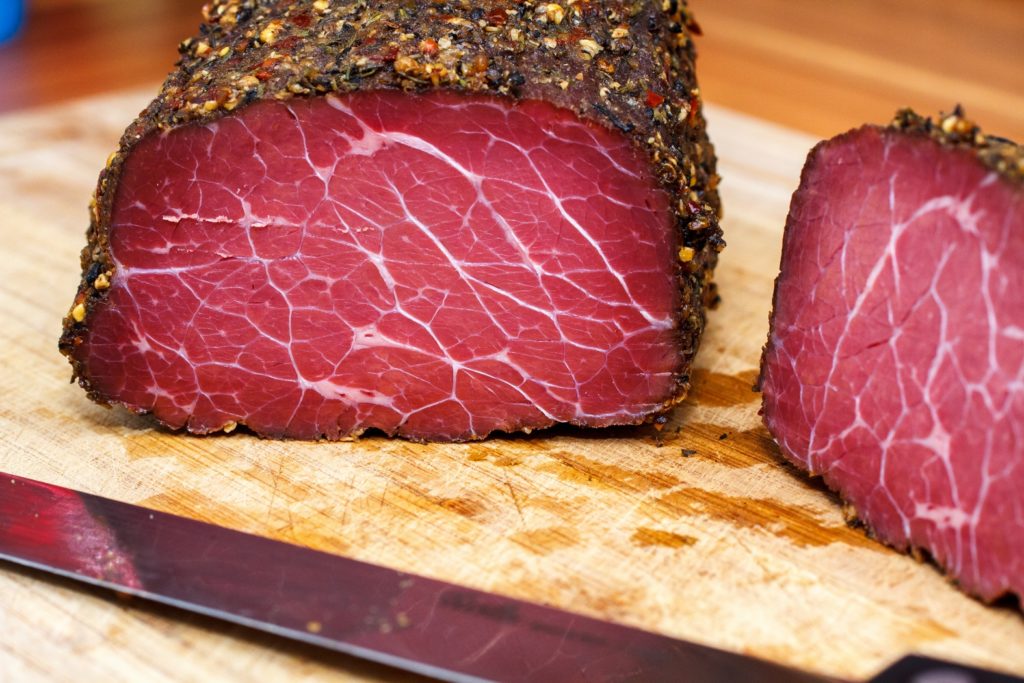
One of the perks of living in 200 Dyckman Street, at least to me, was the persistent smell of pastrami as you entered the front lobby; pastrami— that end product of a generations-old process of seasoning, boiling and smoking a whole slab of rich, fatty brisket. Most residents didn’t see it my way.

When I turned eleven, my mother allowed me to go to Famous by myself, sit at a table and order something to eat. Those were mostly the days when my dad’s office stayed open late and the family wasn’t having dinner until after eight. Waiting to eat from three o’clock in the afternoon until eight o’clock at night warranted a snack, she felt. We both agreed that an ice cream cone from Martin’s, homemade and delicious as it would be, wasn’t going to do it. The situation demanded something substantial and profoundly satisfying —like a pastrami sandwich? I asked her which, at four dollars, was one of the priciest items on the menu.

All the waiters at Famous knew my family. We were neighbors. Moe, the owner, was a patient of my father’s. But when I walked in, I was a customer, not Dr. Richter’s eleven-year old daughter, Ellen. Sol, my waiter, guided me to a clean table already set with a crisp white napkin and a knife and a fork, handed me the menu, and filled my glass with water and ice. (He was careful to ask in advance if I wanted ice.) He waited as I studied the menu, even though I saw him begin to write the check before I put it down, looked up at him, and said,

“A pastrami on rye with a half-sour pickle, please. Not too much mustard.”

Several minutes later Sol put the check on the table. I asked to borrow the pen he always kept tucked into the breast pocket of his jacket and confidently wrote, “charge to Dr. Richter.”

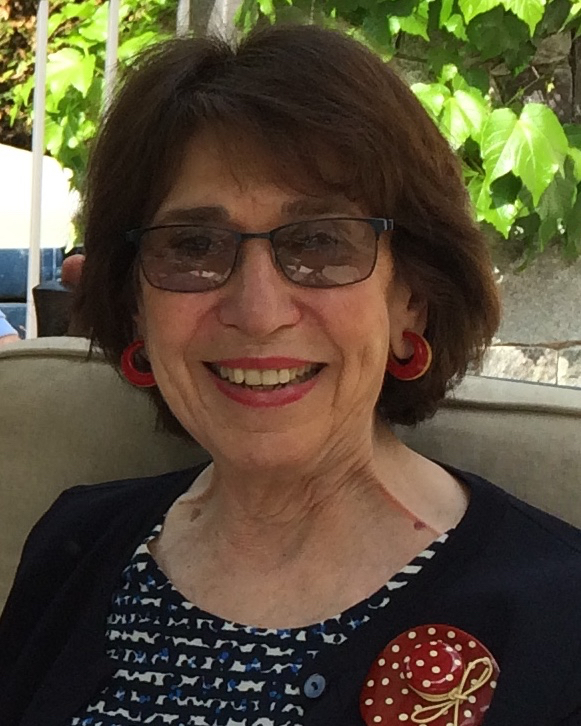
Music student at the High School of Music and Art, piano student at the Julliard School of Music, Economics/Philosophy major at Mount Holyoke College, M.A. in Urban Planning from the New School for Social Research, writer and editor at McKinsey & Company, member of the Board of Mater Voices, a not-for-profit performing arts institution, and writing workshops at the Fine Arts Work Center in Provincetown, MA. My most recent writing workshop has been at the Sarah Lawrence Writing Institute. I find a profound connection between telling stories through music, a great passion of mine, and telling stories through the written word. My work has been featured in the live literary forum “Read 650” and the Sarah Lawrence Writing Institute Newsletter.

What you all along have known, 
I now, too—all these years,
I have felt around its prophet’s
mouth, looking for its tooth.


You would speak its tongue;
you would mock its sound; 
with its own key you would unlock 
translations of its most sacred songs
 
lending bone, breath & artery
to its ghost, clothing in part 
memory/part fantasy the marbled 
floor in the wet open maw 


of the Shape, before which I 
have fasted in bounty & bonny 
harvest; fasted in sacrifice, while 
others cunningly did feast.


But your devotion does not make
you the Shape; & as its guardian
you were right to refuse me 
& bite down as swiftly as you did; 


for having forgone all, with these 
hungry & treacherous hands 
I would have nicked & pawned 
its holy relics for cheap, 
so I could temporally eat.

Aleksander Zywicki is a first-year MFA candidate at The New School. He teaches AP English Literature in Bayonne, New Jersey. He lives & writes in Jersey City.