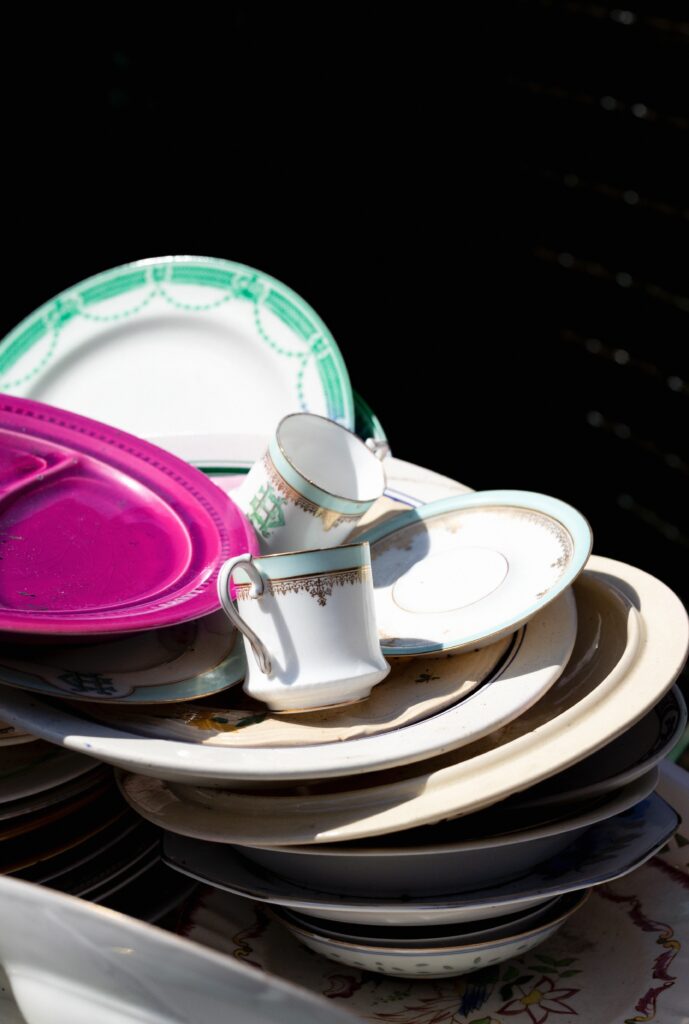
so, I’m spinning around the room circling my kitchen island like Billy Collins searching for the perfect metaphor like a shark in quest of cheese covering my plates with crackers and cocktail onions marinated mushrooms, their little heads popping up one eyed olives winking red prosciutto flopped over like it only just realized you can’t be in shape with all that fat smoked salami smirking at how carefully it’s preserved
grab the glass and take a big swig company is coming and the mood needs to build the words need to flow, language like lava sweeping the entire village in its hot wake even though you threw a sacrifice of rum which reminds you of the bottle you dropped last night, red sidling into all the cracks, it took hours to clean that up and still you have your doubts something surely must be lurking in the corners like a stale cocktail peanut crouching under the stove
the fire goddess said it wasn’t enough, it will never be enough no matter how high you pile the plates, something always comes up short carrying the guests down the lazy river where everyone is laughing and everything is all right where everyone always comes up cold in the end shivering in their damp clothes, rushing hard for their cars leaving you alone in the kitchen where mountains of plates totter, like Vesuvius on the make
hands red, the victim of a thousand pyroclastic flows parties that ran just a little bit late like a bargirl who let her cigarette burn down too low you scrub at your silverware, wondering what ever was the point in the first place, why you throw your heart on the altar, just to find it tossed back at the end of the night only picked at, never devoured so sigh and scrape it into yesterday’s trash with the rinds and the plastic all your dirty, broken treats
Kathryn Leonard-Peck writes poetry, plays, short stories, and novels. She also paints. She graduated from Dartmouth College and Columbia Law School, and is an attorney. She currently lives on a farm on Martha’s Vineyard with her family. Her work has been published in numerous literary journals. She was the second place winner for the Martha’s Vineyard Institute for Creative Writing (MVICW) Vineyard Writers Fellowship, and was accepted to the Aspen Autumn Words juried workshop program.
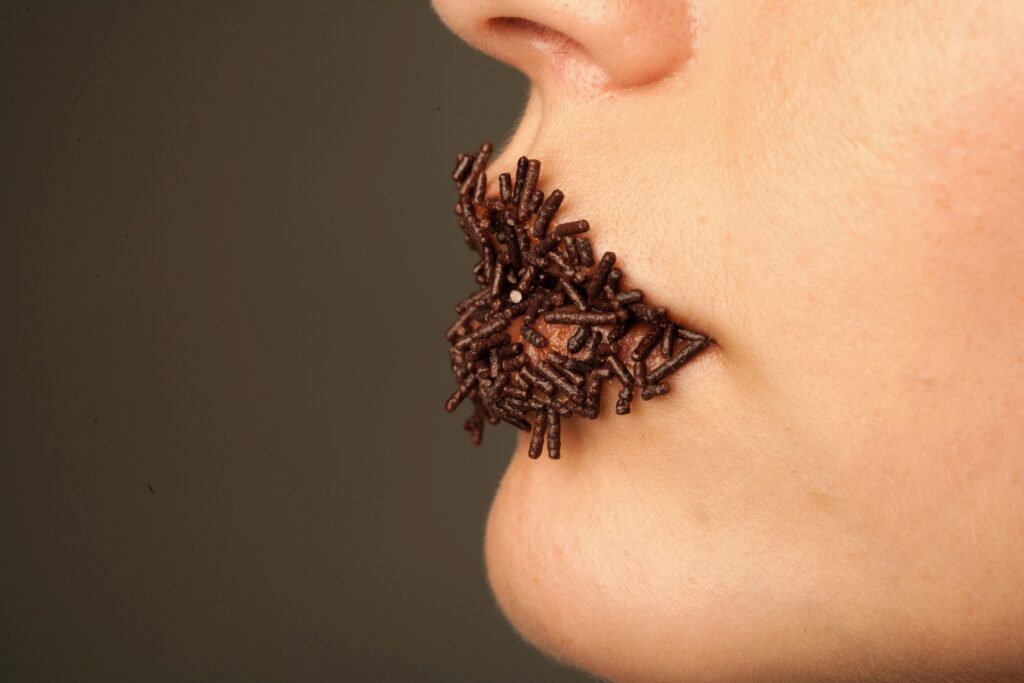
Out of temper, stirred to a mantra of degrees I repeat to keep myself awake in the kitchen, where I might be blistering tomatoes or toasting bread in the rich kind of fat for a midnight snack, chocolate reaches a point where I can only feel the weight of it on my lip. Sometimes your body against mine passes through this moment, stirred down and sprawling.
Vanessa Young is a poet, cooking instructor, and the founder of Thirsty Radish (https://www.thirstyradish.com/), where she shares recipes and inspires a creative approach to life in and out of the kitchen. Her poetry has appeared in Chronogram, Juked, The Monarch Review, Ginosko Literary Journal, and elsewhere.
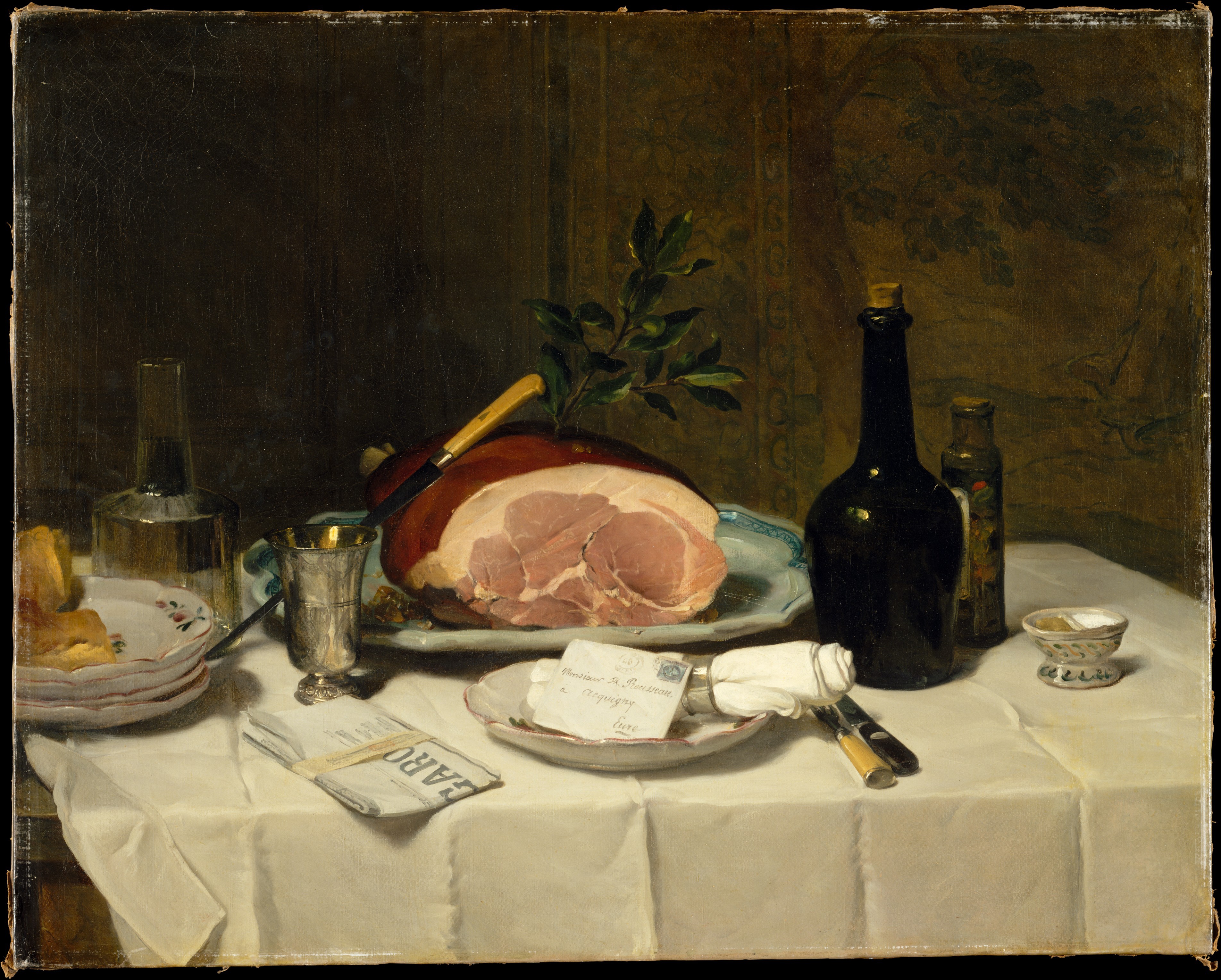
funky aged ham pale as a Christmas star like skiing in Aspen mashed potato gilding off cornices cranberry gems collapse dinner roll walls and greased gravy ponds cannot hold back the trash when they stand on forked feet of molded, mangy mushy fat ham centerpiece left to accidentally slow cook (thanks Uncle Fred, we really didn’t need that) abandoned, collapsing now the night breaks us with it
French Toast and a Live DJ too early to wake up too late to sleep too sober to get down breakfast is meant to be silent near solemn over my French toast I grit furred teeth as the café is wracked by a DJ’s table-rattling milk-curdling egg-scrambling beat box to hell, howling garbage disposal, demon despoiling my syrupy communion lost grace on my tongue
Tain Leonard-Peck is a writer, actor, monologist, and model. He paints and composes music, and is a competitive sailor, skier, and fencer. He is the Poet Laureate for West Tisbury, Martha’s Vineyard. Among his awards, he won #ENOUGH: Plays to End Gun Violence, the first place Poetry Fellowship to the Martha’s Vineyard Institute of Creative Writing, and Honorable Mention for the Creators of Literary Justice Award, by IHRAF, the largest human rights art festival in the world. His work has been published in numerous literary journals. He is completing his first novel.
Kelly Lindell is a photographer, writer, and an MFA candidate at The New School. Her photographs have appeared in Westport Lifestyle Magazine, on WestportNOW.com, and on social media for The Connecticut Office of Tourism, Whole Foods Market, Kimpton Hotels and more. She resides in New Haven County and has been a Connecticut food photographer for over seven years. More of her food photography can be found on Instagram @FeedMeCT
When mango mania strikes, I ditch my apple pie and neglect my wife and my children. The history of Lexington dims and the street I live on, where Paul Revere once galloped on his horse, no longer ties me to this town. India reigns in my mind – the accordion pleats of a sari, orange jasmine blossoms against ebony hair, the red sindoor on foreheads, the competitive cry of vendors, the clanging of temple bells summoning late-comers, the devout singers with their seductive, spiraling notes, the dancer’s jangling anklets reaching a crescendo as she hurtles forward on a brass plate, the monsoon rain urgently pounding on rooftops, the wafting scent of biryani that refuses to be banished from minds, the calming fragrance of sandalwood in handicraft stores, and the once elegant ancestral house, decaying in the midst of the scaffolding of residential buildings rising around it like futuristic towers of doom.
As the craving becomes an obsession, I know I must head to the place where the ovoid fruit thrives and is artfully reproduced on brocaded saris that brides wear on their wedding day and where the auspicious leaves of the mango tree are strung along the entrance of homes on special occasions. All one needs in life is a mango, smooth or pitted, small or large, to be eaten or pureed into dessert.
At my uncle’s dining table, I watch my reflection greedily devour Alphonso mangos. I wipe the mango juice that dripples down my chin with my hand and then I suck my fingertips. My aunt remarks that I haven’t changed nor have I forgotten my mother tongue. You’re not stuck-up either, she says, watching me wipe my chin with the heel of my hand this time. The fruits taste like the ones I used to pluck from my mother’s garden when, as a child, I’d ensconce myself on a lower branch and balance a stainless steel container dotted with chili powder and salt. In my absence, the urchins would aim their slingshots at our fruit and wander off with their spoils. A week later, satiated with my uncle’s mangos, tired of the ceaseless hammering of laborers, the nocturnal braying of dogs auguring death, the relentless sun creating beads of sweat, the never-ending stream of visitors coming to see me, and the stench of overflowing garbage on the streets, my thoughts flit across an ocean to America. I miss my adopted town, where sounds, sights, and scents are more subtle and where mangos can be bought or gifted, but none are as flavorful as those plucked in my ancestral home. In my mind I’m already in Lexington, where the Chinese, Brazilians, Pakistanis, Armenians and others have also made themselves at home and where we indulge in the American passion for frozen yogurt even in chilly temperatures, our portions widening with the years until we feel the need to practice austerity. On my last evening, my uncle chuckles, drums his fingers on the table, and says he won’t see me until mango mania strikes me again. Then he winks, knowing he can depend on my cravings to guide me back to his table.
Tara Menon is a freelance writer based in Lexington, Massachusetts. Her poetry is forthcoming in “Tiger Moth Review.” The following journals and anthologies have published her poetry: “Yearning to Breathe Free,” “Blue Minaret,” “The Bangalore Review,” “voices ofeve,” “Calliope,” “Lalitamba,” “AzizahMagazine,” “Aaduna,” “Yellow as Turmeric, Fragrant as Cloves,” “the view from here,” and “10×3 plus poetry.” Her nonfiction has appeared in “TheCourtship of Winds,” “The Boston Globe,” “The Kenyon Review,” “Green Mountains Review,” “Fjords Review,” “Na’amat Woman,” “Calyx,” “India Currents,” “Parabola,” “India NewEngland,” “Lokvani,” and “Hinduism Today.” Her fiction has appeared in several journals and anthologies.
My final moments, I figure, will be just like in ‘Citizen Kane’: from the master bedroom of a decaying mansion stuffed with classical sculpture, I’ll stare longingly into some cheap Perzy snow-globe; as it drops from my limp fingers, a single word will fall from my lips. Only it won’t be ‘Rosebud’ but ‘Rarebit’, and some poor reporter will have to wade through centuries of culinary and linguistic history in order to decipher my meaning.
Welsh Rarebit is not the national dish of Wales – that honour goes to Cawl, a one-pot stew made mostly from leak, lamb, and (strangely enough) potatoes; but Rarebit is the favourite child. In its essential form, it simply consists of melted cheese on a slice of toast – though there are many variations on the theme. And like most British food, Welsh Rarebit is largely flavourless – or, at least its flavours are exceedingly simple. But to criticise it on these grounds is to miss the point entirely: you might as well accuse a painting of being unmusical. British food is not defined by taste, but by texture: the airy/crispy batter of Yorkshire puddings; the chewy/chalky crust on Melton Mowbray porkpies – not to mention the greasy/rubbery/gooey filling within. And Welsh Rarebit is no exception. Its appeal lies in the collision of the crunchiness of a well-toasted piece of bread and the ooziness of melted cheese – the dryness of the one providing the total opposite, and yet the perfect complement, to the semi-liquidity of the other. For which reason, Welsh Rarebit must always be served hot: you cannot make it one day and serve it the next, or else the magic is lost. Why would you anyway, when it takes only minutes to prepare fresh?
My final-moments-fantasy might not be as far-fetched as it sounds. Welsh Rarebit was the favourite meal of William Randolph Hearst – the real-life newspaper mogul on whom Orson Welles based Charles Foster Kane. In The Enchanted Hill Cookbook (1985)– a collection of recipes assembled by the staff of Randolph Castle – Hearst’s son recalled his father’s cooking habits: lunch would be about 1:30pm, dinner about 8:30 or 9pm, followed by a movie, and if the night would run, as it frequently did, for an hour or so later, the chances were better that even he would be in the kitchen either grabbing a snack of cold meat and cheese for himself, or making a Welsh rarebit for all comers. The latter dish he made with pride and some beer, but whatever the recipe, I know it was a favourite of all those who were fortunate enough to partake of it. If this seems odd – if the simplicity of Welsh Rarebit feels out of place in the Castle’s lavish dining hall (whose fifty-four foot table, forty upholstered chairs, tapestries, pennants, and guidons, served as the inspiration for Hogwarts’) – let’s not forgot that the napkins there were made of paper, nor that the sauces were served straight from the manufacturers’ bottles. ‘This’, explained Alexander Theroux in Einstein’s Beets (2017), was not an economizing feature, but rather a sentimental one. Such informalities reminded the very sentimental Hearst of the early days of the 1870s and 1880s when he came out to this very spot with his mother and father where they picnicked in the open. These were detailed memorials and reminders of his youth. It was this same sentimentality which Welles sought to capture in ‘Citizen Kane’: ‘Rosebud’, it famously transpires, is the name of the snow-sled which Kane played on as a child – that is, before his bank-appointed guardian began grooming him for life as an American oligarch. Kane’s dying breath, then, is a reminder of the homely comforts denied him in this life and longed for in the next. Did the flesh-and-bone Hearst taste that same reminder in Rarebit?
I do, anyway. Because I grew up in Wales, I was raised on the stuff. I ate it with my mother on weekends and I ate it with my grandmother during the school holidays. I ate it in cafes and, on special occasions, restaurants. Most of all I ate it with Mrs Jones, who minded me at her home after school, and whose culinary repertoire included just two dishes: the first was the bacon butty – another British staple, also unfairly maligned as flavourless (again, flavour is not the point: the butty gains its appeal from the interplay between the dry/elastic white bread roll and the greasy/crunchy half-burnt bacon tucked inside); and the second was Welsh rarebit. I don’t live in Wales anymore, and I haven’t seen Mrs Jones in twenty years, but Rarebit is still – perhaps, especially now – my home-away-from-home, the familiarity that I yearn for when everything around me feels foreign and nightmarish. But Welsh Rarebit, I contend, has something about it which makes even non-Welsh feel homesick for it – something which its doppelganger, Cheese on Toast, does not.
The first written reference to ‘Welsh Rarebit’ occurs in Hannah Glasse’s The Art of Cookery (1747), where a version of the dish (with mustard) is listed between ‘Scotch Rarebit’ (without mustard) and ‘English Rarebit’ (with wine). But this is a misleading start: ‘Scotch’ and ‘English’ Rarebit don’t appear in earlier cookbooks, and are doubtless just inventions of Glasse’s own; nor is Welsh Rarebit one of several variations on some Ur-Rarebit – Welsh Rarebit is the Ur-Rarebit. And its actual origins lie in a South-Valley version of Caws Pobi(roasted cheese) – one served on bread, and requiring the cheese to be mixed with milk and eggs prior to roasting (under the heat, the cheese softens, the milk steams, and the eggs harden, simultaneously). At some point, someone had the good sense to omit the milk and eggs. ‘Welsh Rabbit’ was the name which the English gave to the result, and it was first written down in 1725 by the poet John Byrom, who wrote in his diary that year: – Sunday, April 4th: I did not eat of the cold beef, but of Welsh rabbit and stewed cheese […]. – Tuesday, April 6th: I had a scallop shell and Welsh rabbit. […] – Saturday, May 15th: We had cold veal, a bottle of mountain, I ate rather too heartily of the veal and a Welsh rabbit. ‘Welsh Rarebit’, in other words, is simply a corruption of ‘Welsh Rabbit’ – probably Glasse’s attempt to clear up the confusion inherent in the fact that the dish doesn’t contain any rabbit. So why ‘Rabbit’ in the first place?
A good answer was yielded by Abram Smyth Palmer’s Folk Etymology: a Dictionary of Verbal Corruptions or Words Perverted in Form or Meaning by False Derivation or Mistaken Analogy (1882): The phrase [Welsh Rabbit] is one of a numerous class of slang expressions – the mock-heroics of the eating-house – in which some common dish or product for which any place or people has a special reputation is called by the name of some more dainty article of food which it is supposed to supersede or equal. Thus a sheep’s head stewed with onions, a dish much affected by the German sugar bakers in the East End of London, is called a German Duck. ‘Welsh Rabbit’, then – like Severn Capon (sole), Yarmouth Capon (red herring), Poor Man’s Goose (liver and potato stew), Weaver’s Beef (sprats), Cape Cod Turkey (codfish), Albany Beef (sturgeon), or Bombay Duck (bummalo fish) – is simply ironic, a dish named after a delicacy which it patently isn’t. But why ‘Welsh’? How does the inclusion of that awkward designation cause ‘Welsh Rabbit’ to mean something like ‘Not Actual Rabbit’?
I say awkward because the Welsh don’t call themselves ‘Welsh’, nor any cognate of that term – at least, not when they’re speaking Welsh (which they don’t call ‘Welsh’ either); they call themselves Cymro (sg) or Cymru (pl), and their language Cymraeg – words which descend from ‘kömroɣ’, a (reconstructed) term from late proto-Brythonic meaning something like ‘compatriot’ or ‘fellow-countryman’. Conversely, ‘Wales’ and ‘Welsh’ descend from ‘Walhaz’, a (reconstructed) term from proto-Germanic which descends, in turn, from the name of the tribe known to the Romans (from the writings of Julius Caesar) as the Volcae, and to the Greeks (from those of Strabo and Ptolemy) as Οὐόλκαι. But the speakers of proto-Germanic didn’t really care to distinguish among their neighbours in the South, and applied the term indiscriminately to the inhabitants of all Celtic lands which had been assimilated by the Roman Empire. Hence, ‘Welsh’ and its cognates often bear connotations of ‘non-native’ and ‘foreign’, ‘weird’ and ‘strange’. In Swiss-German, for example, ‘Welsche’ is a pejorative used to describe Swiss speakers of Italian and French; in Polish, ‘Włochy’ is a mild slander towards Vlachs and Romanians. Hence, the English term ‘Welsh Rabbit’ might be understood as something approximating ‘Weird Meat’ – a strange beast consumed by a strange people. But what kind of ‘strange’ are we talking about here?
Beside its own recipe for ‘Welsh Rarebit’ (with milk, mustard, and Worcester sauce), the 1950 edition of The Betty Crocker Cookbook cites a law forbidding the Welsh from eating rabbits caught on the estates of the (English) nobility: unable to hunt the real thing, the Welsh simply melted cheese instead. Here, ‘Welsh Rabbit’ might mean something like ‘the Welsh substitute for the game denied them’. But not just any substitute, mind: ‘Welsh’ has long been used by the English to refer, specifically, to pooror inferior versions. In Francis Grose’s A Classical Dictionary of the Vulgar Tongue (2nd ed. 1788), for example, we find the following entries: Welch comb: the thumb and four fingers. Welch fiddle: The itch Instead of combing their hair, the Welsh just run their hands through their mangy locks; instead of plucking dulcet tones from the violin, the Welsh just scratch their skin; and instead of tucking into a well-stewed rabbit, the Welsh just gnaw on hunks of cheese. On top of this, an old English stereotype holds the Welsh to be a nation of lying schemers; hence, ‘Welsh’ might further connote an inferior substitute which has been fobbed off as the genuine article. But a question remains: why was the phrase applied to a version of Caws Pobi? Surely these landless weirdos weren’t ever cunning enough to get away with serving melted cheese in place of actual rabbit?
Another old English stereotype holds the Welsh to be excessively fond of cheese. On one hand, this doubtless stems from the fact that Wales, from time immemorial, has been a prolific producer of dairy. But what’s interesting, in this respect, is that traditional Welsh cheeses wouldn’t have been very good in Rarebit. Because of the acidic soils in Wales, the milk from its cattle tends to produce soft varieties, and these don’t melt very well; to make Caws Pobi, early Welsh would have had to trade with their neighbours for harder types like Cheddar. On the other hand, calling a dish of melted cheese ‘Welsh Rabbit’ is a joke at the expense of Welsh poverty: well before it became the mark of the gourmand, cheese was synonymous with a cheap fill. Hence, also in Grose, we find the following: Welch Rabbit: Bread and cheese toasted…The Welch are said to be so remarkably fond of cheese, that in cases of difficulty their midwives apply a piece of toasted cheese to the janua vita to attract and entice the young Taffy, who on smelling it makes most vigorous efforts to come forth. ‘[J]anua vita’ is Latin for ‘the gates of life’ – a euphemism for the vagina; and ‘Taffy’ is a (still extant) slang term for a Welsh person – either an anglicisation of the name Dafydd, or a reference to the South-Welsh river Afon Taf. Here, cheese is not just a cunning substitute for rabbit; it is one whose cheapness makes it more attractive to the Welsh than actual rabbit. Welles (who once dismissed ‘Kane’as ‘dollar-book Freud’) used to annoy Hearst by publicly joking that ‘Rosebud’ was the tycoon’s nickname for his wife’s ‘janua vita’; for the bargain-crazy ‘Taffy’, Rarebit would exceed whatever comfort might have been found there.
In fact, the stereotype of the Welsh as excessively fond of cheese runs much deeper than Grose. In A C Merrie Tales (1526), we find the following explanation for why there are no Welsh in heaven: I fynde wrytten amonge olde gestes, howe God mayde Saynt Peter porter of heuen, and that God of hys goodnes, sone after his passyon, suffered many men to come to the kyngdome of Heuen with small deseruynge; at whiche tyme there was in heuen a great company of Welchemen, whyche with their crakynge and babelynge troubled all the other. Wherfore God sayde to saynte Peter, that he was wery of them, and that he wolde fayne haue them out of heuen. To whome saynte Peter sayd: Good Lorde, I warrente you, that shal be done. Wherfore saynt Peter wente out of heuen gates and cryed wyth a loud voyce Cause bobe, that is as moche to saye as rosted chese, whiche thynge the Welchemen herynge, ranne out of Heuen a great pace. And when Saynt Peter sawe them all out, he sodenly wente into Heuen, and locked the dore, and so sparred all the Welchemen out. For the Welsh, the comforts of Caws Pobi exceed those enclosed not only within the gates of life, but within the gates of paradise. Their fondness is not merely senseless but altogether ungodly.
But madness for cheese is only one of a number tropes via which the Welsh have been depicted as an unreasonable people. Elsewhere in English letters, we find Welsh characters speaking gobbledegook, obsessing over quack-astrology, being prone to inexplicable bouts of violence, and getting caught up in circular dialogues and false logic (that is, when we are not busy with our cunning schemes). Fondness for cheese might well be another item on this list, another instance of the same godless irrationality, but it might also be the source: cheese has long been held by folk wisdom to give its eaters crazy dreams. What’s more, there might be something in this. In 2005, the British Cheese Board conducted a weeklong study in which participants ate 20 grams of cheese half an hour before going to bed each night. Each participant was assigned one of seven types of cheese: Stilton, Cheddar, Red Leicester, Brie, Lancashire, or Cheshire. And of those who ate Red Leicester, 83% recorded pleasant dreams, of which 60% were of fond childhood memories (Cheddar often produced dreams about celebrities, while Cheshire usually produced no dreams). But what if you don’t want ‘pleasant’ dreams? What if you want ‘strange’ or ‘Walhaz’ visions?
Then – according to Literature, at least – you must eat Welsh Rarebit. In Edgar Allan Poe’s ‘Some Words with a Mummy’ (1845), the narrator manages to resuscitate an Egyptian mummy – before engaging it in a conversation about theology, technology, and cough drops; in H.G. Well’s ‘The Man Who Could Work Miracles’ (1898), the protagonist discovers that he is a wizard with unlimited powers – only, he does not inhabit some faraway fantasyland but the familiar streets of suburban London. Both stories begin with characters helping themselves to copious amounts of Welsh Rarebit, and in both stories, Welsh Rarebit functions as a narrative clue, as the sign that everything might have been a dream all along. The understanding here is twofold: first, Welsh Rarebit doesn’t just give us ‘pleasant’ dreams; second, it doesn’t just give us straightforward nightmares either. In a Rarebit dream, Ancient Mummies talk like ordinary people, and regular Londoners turn out to be sorcerers. In a Rarebit dream, things are properly strange – which is to say, strangely normal.
The difference between Welsh Rarebit and Cheese on Toast, then, is one of ontology. The latter can be positively defined, its existence delineated via recourse to the ingredients actually present in the dish: namely, cheese and toast. For this reason, if you add anything to Cheese on Toast it ceases to be Cheese on Toast, and becomes, say, Cheese and Onions on Toast, or Cheese and Bacon on Toast. Welsh Rarebit (like everything in Wales) has a more ghostly existence, is defined by its shadows, by what is absent: on the one hand, actual rabbit; on the other, Fundamental English Values (or at least, the Values which the English consider Fundamental to their self-identity): moderation, discernment, rationality, godliness, and a hard and fast distinction between native and foreign. This is why you can add anything (except, of course, for actual rabbit) to Welsh Rarebit – beer, mustard, Worcester sauce – and still have Welsh Rarebit. It’s also what makes so many non-Welsh feel legitimately homesick for its comforts: the dish itself is an uncanny violation of the prescribed distinctions between homely and foreign, familiar and ‘Walhaz’.
And few have known this better than the great American cartoonist Winsor McCay. On September 10, 1904, McCay began his magnum opus: a comic strip called ‘Dream of the Rarebit Fiend.’ It had no continuity, only a recurring formula: characters would eat Welsh Rarebit before going to bed, and the strip would depict their dreams. Again, these were neither ‘pleasant’ visions, nor straightforward nightmares, but something in between: flying cottages, oversized neighbours, and domestic pests swollen to grotesque proportions. But the most influential of McCay’s visions were his images of giant creatures attacking American metropolises – the precursors to the ‘King Kong’ franchise, and to the entire genre of Japanese monsters known as 怪獣 Kaiju, or ‘Strange Beast’. What made those creatures properly strange? When King Kong ravages a familiar city like New York City, it’s not immediately clear who the monster is. The giant ape from faraway? Or the city which shipped him out in chains and forced him to entertain its elite? In all good Kaiju films, the monster is weirdly familiar, the familiar uncomfortably monstrous. Perhaps it’s a coincidence that their origins lie in ‘Welsh Rabbit’ – the strangest beast of all. Perhaps it’s also a coincidence that McCay was employed – and employed very handsomely – by William Randolph Hearst.
The difference between Welsh Rarebit and Cheese on Toast, then, is one of ontology. The latter can be positively defined, its existence delineated via recourse to the ingredients actually present in the dish: namely, cheese and toast. For this reason, if you add anything to Cheese on Toast it ceases to be Cheese on Toast, and becomes, say, Cheese and Onions on Toast, or Cheese and Bacon on Toast. Welsh Rarebit (like everything in Wales) has a more ghostly existence, is defined by its shadows, by what is absent: on the one hand, actual rabbit; on the other, Fundamental English Values (or at least, the Values which the English consider Fundamental to their self-identity): moderation, discernment, rationality, godliness, and a hard and fast distinction between native and foreign. This is why you can add anything (except, of course, for actual rabbit) to Welsh Rarebit – beer, mustard, Worcester sauce – and still have Welsh Rarebit. It’s also what makes so many non-Welsh feel legitimately homesick for its comforts: the dish itself is an uncanny violation of the prescribed distinctions between homely and foreign, familiar and ‘Walhaz’.
And few have known this better than the great American cartoonist Winsor McCay. On September 10, 1904, McCay began his magnum opus: a comic strip called ‘Dream of the Rarebit Fiend.’ It had no continuity, only a recurring formula: characters would eat Welsh Rarebit before going to bed, and the strip would depict their dreams. Again, these were neither ‘pleasant’ visions, nor straightforward nightmares, but something in between: flying cottages, oversized neighbours, and domestic pests swollen to grotesque proportions. But the most influential of McCay’s visions were his images of giant creatures attacking American metropolises – the precursors to the ‘King Kong’ franchise, and to the entire genre of Japanese monsters known as 怪獣 Kaiju, or ‘Strange Beast’. What made those creatures properly strange? When King Kong ravages a familiar city like New York City, it’s not immediately clear who the monster is. The giant ape from faraway? Or the city which shipped him out in chains and forced him to entertain its elite? In all good Kaiju films, the monster is weirdly familiar, the familiar uncomfortably monstrous. Perhaps it’s a coincidence that their origins lie in ‘Welsh Rabbit’ – the strangest beast of all. Perhaps it’s also a coincidence that McCay was employed – and employed very handsomely – by William Randolph Hearst.
Oscar Mardell was born in London and raised in South Wales. He currently lives in Auckland, New Zealand, where he teaches Classics, brews beer, and practices Aikido. His poetry and essays have appeared in a variety of publications, including War, Literature & the Arts, The Literary London Journal, 3:AM Magazine, DIAGRAM, Terse, and Queen Mob’s Teahouse. He is the author of Rex Tremendae from Greying Ghost and Housing Haunted Housing from Death of Workers Whilst Building Skyscrapers.
Full of green Spicy bite Heart’s zing Rich appetite
Brittle dust Green smear Lying in sun Maple tear
Missing leg Mean and sweet Dipped head Saturated treat
Breaking limbs One by one Sweet and mean Isn’t it fun
Hannah Updegraff is a wellness blogger, vinyasa yoga teacher, and a Food Studies student at The New School. Find her on social media: @theheartbeet.co and @hannahkupdegraff
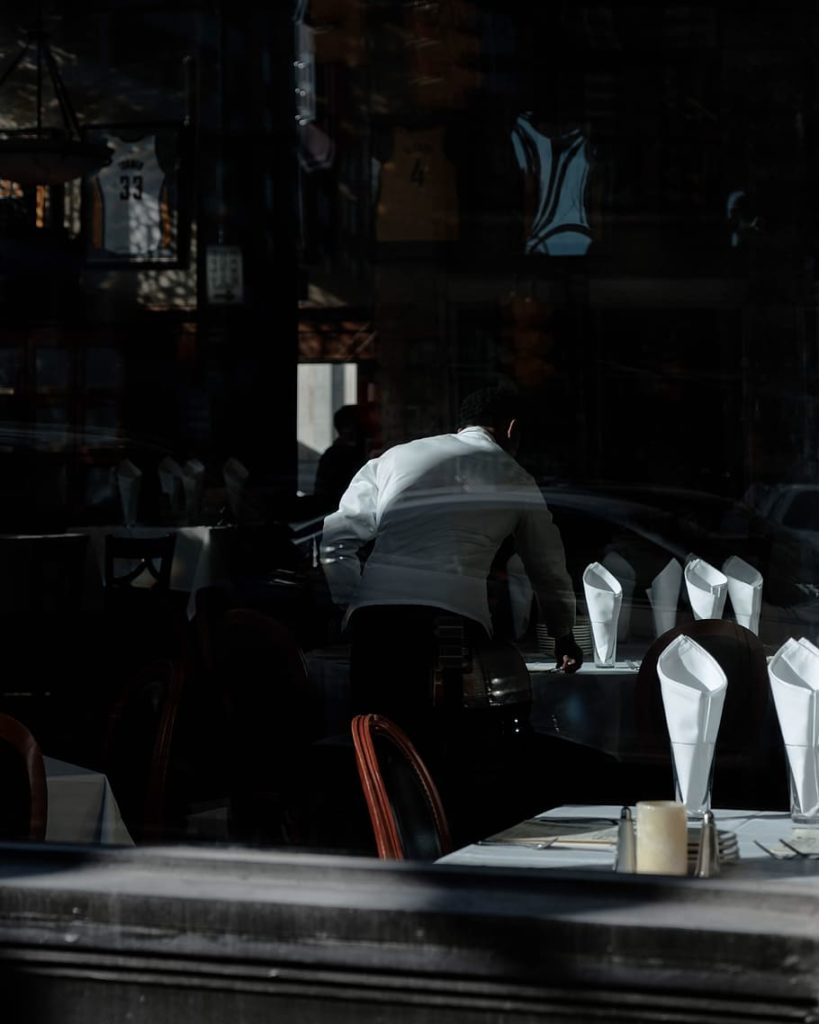
He wants to be done. He wants to be done wanting. He wants to have been done. These are his wants. He is want, nothing but want and instead he is folding the knives and the forks into the napkins so it looks like the knives and forks are being tucked into a rough white sleeping bags, like they are camping. He does this again; he does this again. The gray plastic tub of knives and the other gray plastic tub of forks will not ever be empty. More and more packets of silverware like each fork and knife have been abandoned alone on a tundra and forced to share a sleeping bag for warmth so they don’t get hypothermic. Body heat, he says to absolutely none.
This is Making the Silverware. This is one of many things he has to do before he can be done. This is side-work and side-work is the worst part of life. The rest of the shift–the enforced uniform and bright green apron, the requirements about how long his hair can be, the necessary big-smiled greetings of overly fat children, the forcing of appetizers onto families that don’t want and can’t afford the extravagances of spinach and artichoke and cheese melted together for forty five seconds in the microwave at the servers’ station—all of that is over for the night. It was terrible and laborious, and he hurts everywhere, but it is here, now, it is the Making of the Silverware that is the worst. It will take him twenty minutes. It will take him an eternity.
In the other room he can hear the bartender going through all his own side-work. The Wiping Down of the Bar, the Cleaning of the Taps, Replacing the Paper That Spools Through the Credit Card Machine Like a Blanched Diseased Tongue. The waiter stops rolling the forks and knives together because he is now, again, overcome with want. The way frosted winds can sweep down an empty avenue at two in the morning on the walk home, covering everything in a cold that is meant only and exclusively for him, the waiter is immobilized wanting the bartender.
This bartender, in particular, is special. He has a mouth full of real human teeth. His eyes are both the exact same color and shine bright and clear in a well-lit room. There is skin covering every part of his body. And while these aspects might apply to every human on the planet, they somehow apply more to this bartender than the rest of the world. He is the most person the waiter has ever known.
This want for the bartender is visceral. It hangs off the waiter heavy and wet, it drips on the floor and pools around his feet. He is ravenous and his gut is stuffed full wanting. This bartender has biceps that strain the cuff of the short-sleeved shirt when he shakes the cocktail shaker; he has legs and feet that wear shoes, and when he walks, he walks laterally behind his bar. There is a rubber mat beneath him designed to catch all the night’s spilled beer and ice, so the bartender is raised up an inch or two, so he is just slightly taller when he is a bartender than he is when he’s a normal human being.
Without all the diners the restaurant is cold. The air conditioner still assumes there are dozens of people eating and drinking and shouting loud for more iced tea. But there is nothing. It is empty and so the air conditioner is cooling only the absence of people, filling the space they once occupied. It is only the waiter and the bartender and the ghosts of the rest of the world gradually growing colder and colder.
The waiter stops making the silverware and begins The Marrying of the Ketchups. He pours ketchup from the old bottles into still older bottles of ketchup until the older bottles of ketchup are full to the top with ketchup and they are now brand new bottles of ketchup ready to be put on tables so the next day’s diners will think they’re blessed enough to receive a brand new bottle of ketchup; so they will consider this their lucky day. The waiter uses a funnel to marry; he jams the tip of the cone into the neck of the bottle like he is force feeding the ketchup, the way one might make ketchup foie gras; he feeds the ketchup its own self, a tortuous cannibalistic ritual.
The waiter once met a boy at a cookout who had a small pet pig with him. The pig’s name was Sir Frances Bacon. While no one was looking, the waiter snuck the pig a piece of ham and the pig devoured it noisily. He fed pig to a pig and the boy who owned Sir Frances Bacon was horrified. This is what the waiter thinks about as he pours ketchup into itself. He thinks about a boy bustling a pet pig up into his arms and storming out of a party. He thinks about how hard it is to storm out of anywhere holding a small pig. The whole party laughed, as the boy stormed off. He remembers wanting the boy with the pig at that moment, almost as much as he now wants the bartender. Wanting to be as angry as the boy was, to be the pig in arms full of itself, wanting to storm out of the party. Old ketchup smells decidedly different from new ketchup. It is sweeter, slicker than a fresh bottle. It comes out just that much slower; it is shy about itself, unsure if it is still good ketchup and the waiter has to knock on the side of the bottle with an insistent palm. Right on the 57, like he was taught.
The bartender is a flirt. He flirts with everyone. Everyone that moves, that drinks, that breathes, he flirts with them all. He is easy about it. Everyone wears his flirting like a soft dusting of flour. It is as easy for the bartender to flirt as it is for him to walk laterally behind his bar, strutting from one end to the other floating an inch and a half off the ground. The waiter wishes he had this capacity for interaction. He wants to be the bartender. And still at the same time he wants the bartender. The bartender is straight and therefore a piece of the waiter wishes he, himself, were straight, while another piece wishes the bartender were not straight. And so, there is now a universe where they switch, and it is the bartender who is queer and it is the waiter who is straight and, in that case,, if the bartender were pining for him the waiter wonders if he would acquiesce.
The bartender is only an assortment of sounds, glasses going in and coming out of a dishwasher; bottles of liquor being picked up and wiped down and put back; water sloshing out of sinks, of refrigerator doors being swept open and closed. At the moment the bartender does not have a name. Yesterday the bartender had one. Yesterday the bartender was a singular entity in the world, with a name and a childhood and an apartment. Today the bartender is an edifice, a cliff-face against which the waiter can throw all his lust. Tomorrow. Who knows what tomorrow’s going to be? The smell from the bar is a sweet syrup. Like oranges left to rot for a year. The waiter imagines that sleeping with the bartender would smell the same. A sickly sticky sweet. This turns him on. It then turns him off that he is turned on by the idea of oranges turned sour. Tomorrow though, tomorrow it will be different. Tomorrow the bartender will have his name back.
The waiter opens the servers’ fridge where the desserts are kept and looks at the crème brûlée. The crème brûlée looks the way it always does, pale and darker in spots, like a petri dish in a lab experiment, rife with deadly toxin that if mishandled, this one crème brûlée could set off a chain reaction of infection and disease that would wipe out the entire city skyline. He stares at the desserts thinking precisely nothing. They are mandated by the city’s health department to check and verify the quality of the desserts that are stored in the servers’ fridge. But he does not know what he is looking for or how to verify anything. None of the waiters do. So they all open the door once a shift and look at the crème brûlée as if they are making sure it has not become sentient and wandered off to start a new civilization of desserts. This is what constitutes verification. He can safely say that the deserts still exist.
His want still exists. This desire. This fog. Viscous want heavy with him panting inside of it. Full of all his intended consequences. There is nothing to see outside of this fog. Desire is wanting something so absolutely that it loses a name. that the waiter loses his name as well. He returns to the forks and the knives and rolls and rolls and rolls them into their sleeping bags and concatenates the forms of doneness. He does it. He wants to do it. Wants to be done by the bartender. To have had it done. He did. He wants to have did. He both wants the bartender and wants to be the bartender and wants to be did by the bartender and he wants to be done with wanting the bartender because want is an oyster that has lost its shell; amorphous and gelatinous unrecognizable without the hard outer crust that keeps it contained. His want untethers him from the world. The fork looks like it is having its way with the knife. All of the forks piled up are having their ways with knives. There are no spoons. The spoons are all left out. The poor spoons.
Tomorrow there will be nothing but names. The world will have a name. The whole of existence will be a catalog of names. Every tree, every frog, every piece of lichen from kingdom to phylum to class to genus to species there will be a litany of names for everything. But at this moment with the dust spiraling around the restaurant, there is nothing to name but the want and the lust. The dust is the cast off of every single diner that evening. The dust is all of the world. All skin flaked off and floating so really it is the world there with the waiter, the whole of the world lusting after this one, single, clear, actual footed and toothed bartender. This is desire. This is the stuff of want. And like that, the bartender leaves.
It is an absent leaving. It is over the shoulder. It is with a bag that is all black leather and more expensive than the waiter could afford. As he’s leaving the bartender throws behind him the name of another bar. The one he’s going to now. It is neither an invitation to join nor an exclusion. It is simply a fact.
The waiter stares at the perfectly formed pyramid of silverware, stacked like freshly cut logs might be stacked. Stacked like forty campers fucking in their sleeping bags would be stacked if one ever stacked camping children on top of each other. He’s made this pile of forks and knives only so it may be ripped apart, pulled open, used and dirtied and thrown away to then be rerolled again tomorrow by another waiter who may as well be this same waiter.
None of these forks will ever again lie with these exact knives, be wrapped in this one napkin. This is a singular experience for all of them. The bartender is gone. The waiter stares at this edifice, this new pyramid of silver. This tower of babel. This hanging garden. And he wonders if he is going to follow.
B.C. Edwards is the author of two books, The Aversive Clause and From The Standard Cyclopedia of Recipes. He has written for Mathematics Magazine, Hobart, The New York Times, The New Limestone Review, and others. He has been awarded the Hudson Prize for his fiction and a poetry fellowship from the New York Foundation of the Arts. Edwards currently serves on the board of the Poetry Society of New York and has a directorship at Mount Tremper Arts a non-profit performance residency in upstate New York . He attended the graduate writing program at The New School in New York and lives in Brooklyn with his husband.
The lime green coat of paint on the stucco outside walls of Baden Baden Hof had faded. My father’s younger brother, the oldest of my three uncles on my father’s side, convinced my father that his restaurant could use a little makeover, that it’d be good for business. My father’s restaurant-slash-pub, whose hours of operation were 6 PM – 6 AM, had been open for five years, after all. So he introduced my father to his friend Mike who was supposedly a contractor. But he wanted the estimated costs up front—a classic scam. Mike quickly ordered a gut renovation, and after a month of tearing apart the insides of my father’s restaurant, he ran away to Korea with my father’s money, never finishing the job and never to be found again.
My uncle claimed he had nothing to do with it, and my father didn’t pursue it further, always defending his “innocent” brothers. It was now up to my mother to figure out how we would reopen for business, tens of thousands of dollars in debt. My father was never a good businessman. He trusted too easily and gave everyone the benefit of the doubt, even those who hadn’t earned it, and especially anyone who was family. The outside walls were newly painted an electric blue, a color none of us—family or patrons—ever got used to.
We finally reopened Baden Baden’s doors after six long months, but it would never be the same. The halt in business and having to rebuild the restaurant out-of-pocket after already losing their initial investment to a con artist, really hurt my parents ’finances. My father hired someone he knew and trusted to step in and fix all the damage Mike had left behind. My mother asked distant relatives and old friends for money to cover the cost of repairs, renovations, legal fees, rent and accumulating debt, even going so far as pawning her and my father’s matching Rolex watches—which my mother had promised my brother and me we’d inherit once we were each married. Her pride and self-esteem devastated by my father’s failures, my mother continued calling in favors and patching up his mistakes. One of the favors she asked was of her younger sister, my 이모 (imo is Korean for ‘maternal aunt’). Would she move to the States temporarily from South Korea to help our family’s failing business? It was an exchange, really: my cousin Eric, my imo’s youngest child of three and only son, would come to also live with us, enroll in American school and learn English, while she worked for us, essentially, for free—saving my parents yet another employee’s salary.
My imo was the mother I had always wanted. Bright, upbeat, positive, she emanates positive energy, unable to hurt a fly. Her rosy cheeks puff into little pouches the size of apricots when she smiles her big shining smile. She doesn’t drink much, wakes up early, and doesn’t have an opinion on everything (or perhaps she did and was simply too nice to share it); she was the exact opposite of my mother. I would be lying if I said I wasn’t envious of my cousin Eric, who changed his name upon moving to America from Jaehoon to Eric after a South Korean boy band singer from the group Shinhwa. Eric was ten years old when he and his mother moved in with us, and he had never had to toast his own bread.
“What do you mean you don’t know how to make toast?” I asked, incredulous.
“I’ve never had to toast bread before,” he replied, looking at us with his large puppy-like eyes. “My mom makes it for me.” I was so jealous I wanted to smack his perfectly pale and handsome little face. Before my imo and Eric came to live with us, my siblings and I ate only microwaveable Costco burritos and Bagel Bites, or instant ramen if we were feeling indulgent. We had boxes of Doritos, Cheetos, and Fritos in the lunch-pack sizes stacked high in our walk-in pantry. There was no one to stop us if we wanted more than one. The “Costco Diet,” my brother calls it now when we reflect on those days. My parents were never present in our lives while they were busy tending to Baden Baden because they were either sleeping all day when we were home from school, and we had to scurry through the house in low whispers as to not wake them, or they were at work, leaving right before dinner and returning home after we had already left for school the following morning. My tired mother found it most cost-efficient and least time consuming to buy microwaveable meals from Costco. My brother used to blame my parents for his becoming overweight.
After my imo arrived, we started having home-cooked meals again. She would wake up early every morning and drive Eric to school so he didn’t have to take the bus. She would then come home and cook up a large pot of something healthy and delicious, so that lunch and dinner were ready once we all got home from school. Still, my brother would be ungrateful, missing the days of his freedom eating Doritos for lunch and Hot Pockets for dinner.
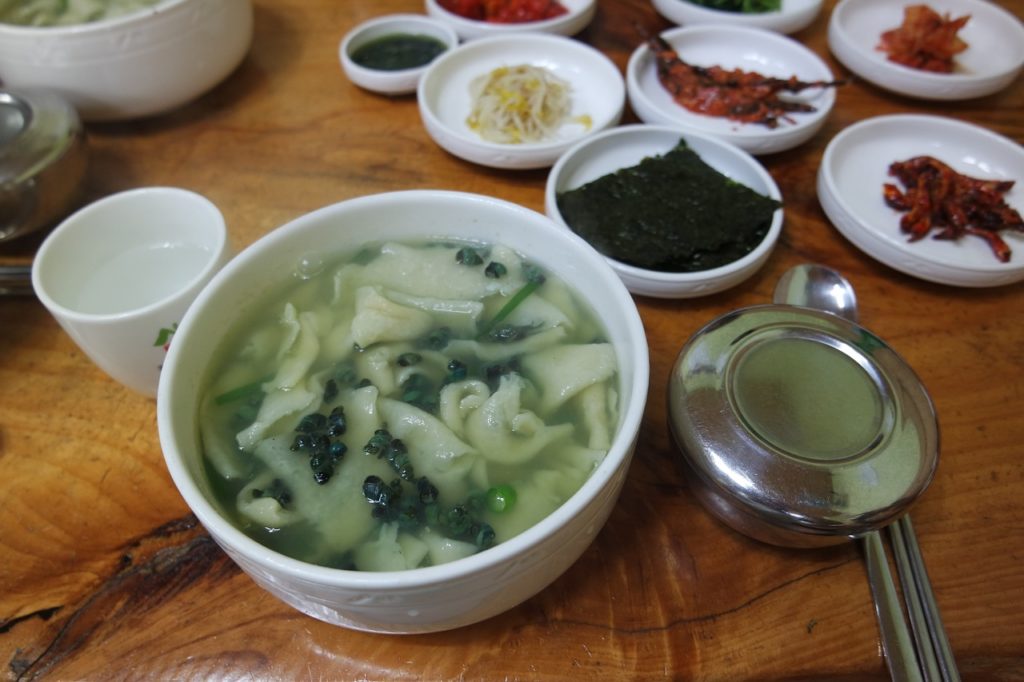
“Sujebi, again?!” my brother cried out in frustration one day after seeing that my imo had made it for the fourth time that month. “I’d rather not eat,” he said, more to himself than anyone else, before storming up the stairs into his cave of a room and slamming his door shut. The noodles in this soup are made from hand-torn pieces of wheat dough which meant my imo had massaged and kneaded the dough by hand just hours before. Everything about this dish requires deliberate, physical work. It’s not a soup that comes in a can or a box that you simply heat in the microwave or on the stove. But my imo neither scolded nor demanded my brother come back downstairs and eat his food regardless of his preference (like my mother probably would have). She just smiled with her bright eyes and told Eric and me that there was plenty for seconds.
On top of cooking, she’d also clean the kitchen and the first-floor bathroom, fold our laundry, and vacuum the living room. She’d stroll out the door at 3 PM, go to the gym, then to the spa, wash up, and go straight to my parents ’restaurant to open, work, close, come home the next morning, drive Eric to school so he didn’t have to take the bus, and do it all over again. I could never figure out when she had time to sleep. My brother and I refused her offers for a ride and would resume taking the bus. With my imo in town, my mother and I no longer had to leave the house at four to go to work. We could leave the house at five or even seven in the evening. If my mother had had too much to drink a particular morning after work, my imo would always be at the restaurant to open its doors at 6 PM sharp. She was reliable and loyal and cared about everyone but herself. I wonder if my imo gets nostalgic for sujebi. I do. Come to think of it, I don’t think I have ever had sujebi again, since. I think it would be too painful to eat a bowl now,remembering my imo’s bright smile and how she had endured all those years working for my parents despite the long hours, late nights, and loneliness—being thousands of miles away from her husband and two daughters who had stayed behind in Korea.
Cecilia Kim holds a B.F.A. in Drama from New York University and a M.F.A. in Creative Writing from The New School. Originally from South Korea, she immigrated to the states when she was 3. After living in New York on-and-off for 8 years, she is now in Los Angeles acting and teaching Creative Writing. This is an excerpt from her forthcoming memoir, Three Restaurants, which tells the story of her father’s three restaurants and the rise and fall of her immigrant family
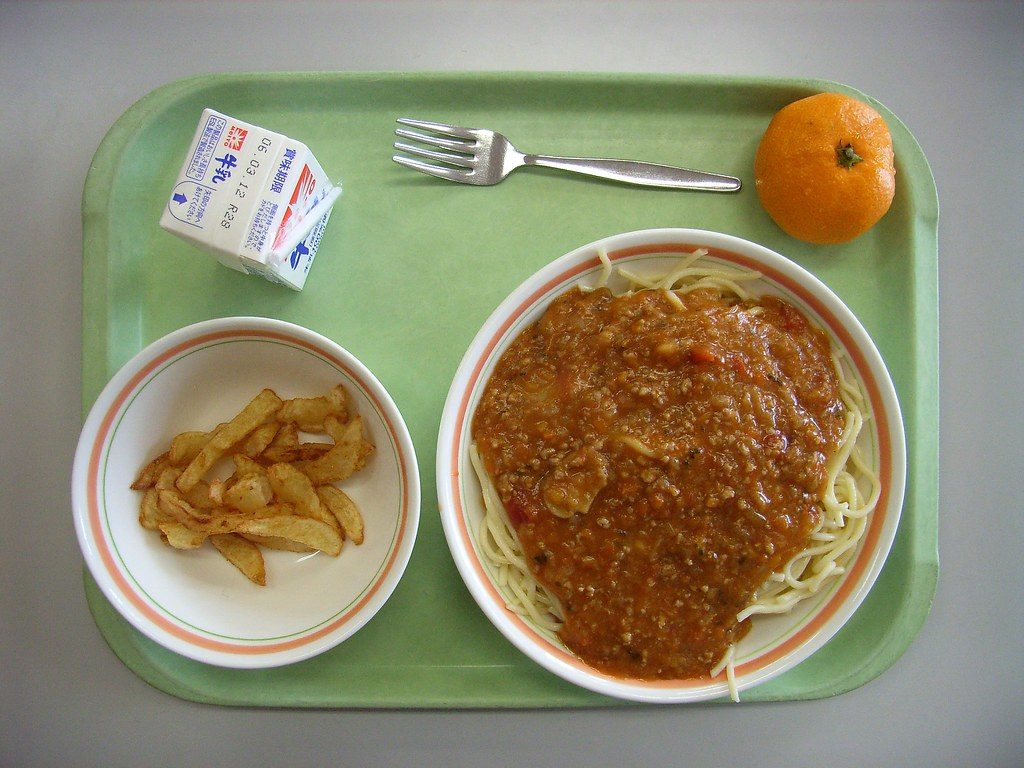
we sit down on the mat / the one with motorways and highrises and grinning families sprawling over it / and Mrs Tanner does the register / and if you’ve brought food from home you say SAMWICHES / even if it’s a bag of crisps you’ve brought / and if you’ve brought 50p you say FREESCHOOLDINNERS / pass your 50p to Mrs Tanner / she puts it in the envelope / and if you’re not eating until sunset you say RAMADAN / at lunch / if you’re a SAMWICH or a RAMADAN you eat up in the park / or don’t eat / with all the other SAMWICHES and RAMADANS / if you’re a FREESCHOOLDINNER you line up in the hall and take a tray / the colour of an avocado bathroom suite / you wonder what an avocado is / the dinner ladies / Emma’s mum and Llewellyn’s mum / the other Llewellyn / they ladle out the dinner bits / indifferent to the different tray compartments / flakes of their impasto makeup sometimes fall in too / the best days are the days / when it snows / we can all get here pretty easy on foot but the dinnerdriver can’t get the van out the valley when the road’s blocked / school is cancelled altogether / the next best days are the days / when there’s BASKETTI / usually it’s ROASBEEF / translucent slices / of boiled something / lost verruca socks / with GRAY-V / don’t worry mind there’s always CHOCOLATE CONCRETE / and it always comes with PINKUSTARD / sometimes it’s green / not really for eating either way / just for softening the slab / the first thing what you have to do / before you even looks at your ROASBEEF / is smother all six sides of CHOCOLATE CONCRETE in PINKUSTARD / let it sit / maybe our recipe has extra lime / maybe it’s just stale by the time it gets here from the valley / but no knife / not even the metal knives / while the metal knives last / before the other Llewellyn goes and gets them banned by throwing one at Mrs Tanner / is any match for FREESCHOOLDINNERS CHOCOLATE CONCRETE / not something you can just politely slice away at like some SAMWICH / the only way to cut through CHOCOLATE CONCRETE / jam a fork in / while the forks last / and TAP TAP TAP against the back end with the salt shaker / a master mason chiselling down the fortress / hit too hard and the whole slab explodes / you end up with a few crumbs on your tray / and everyone else’s brimming full with your CHOCOLATE CONCRETE / make sure the shaker lid is on real tight / people undo them see / chisel with a loose lid and drop whole pillars of salt on your tray / hilarious like / definitely the funniest thing to happen all day / unless it happens to you / do you even like the FREESCHOOLDINNERS CHOCOLATE CONCRETE though / I mean without the salt / not really the question though / is it / sublime indifference to all our tastes / the consistency / the presence / the unshakeable stability / comforting really / whether you like it or not
Oscar Mardell was born in London and raised in South Wales. He currently lives in Auckland, New Zealand, where he teaches Classics, brews beer, and practices Aikido. His poetry and essays have appeared in a variety of publications, including War, Literature & the Arts, The Literary London Journal, 3:AM Magazine, DIAGRAM, Terse, and Queen Mob’s Teahouse. He is the author of Rex Tremendae from Greying Ghost and Housing Haunted Housing from Death of Workers Whilst Building Skyscrapers.