Author

Anya

Browsing

The Feed

Have I woken up yes
having woken unfinished
not thought that before
I’ve woken up
unfinished thoughts
men with warm tongues and soft
half-opened eyes
unfinished
half-eaten late meals
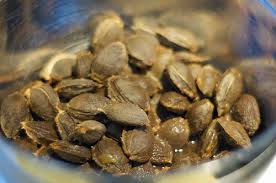
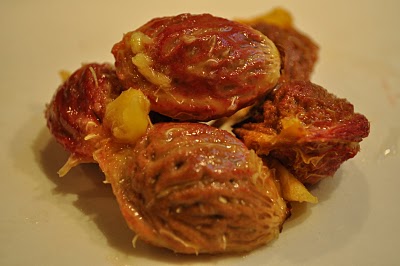
cores pits and seeds
of raw stone fruits
unripe
not ready to eat but anyway we ate
no time to wait
for the hearts of beasts to stop
those we ate with their eyes open beating
they woke up to our teeth
oh yes they did
woke up wanting
soft and warm
night
will come again soon
with bones still on plates
unfinished thoughts
unraveled in dreams
of plenty
just out of reach

DSC_0022_5636


Wende Crow lives in Atlanta, where she teaches computer literacy to refugees. Her poems and essays have appeared in New Haven ReviewPloughshares, The Bakery, and other journals.


We are proud to introduce a new feature: The Inquisitive Eater Poet of the Month.  Each month a contemporary poet will present three poems and one personal essay in which food is consumed, passed over, or reckoned with.  Wende is our inaugural poet.

by Nico Rosario

On a perfect Indian summer morning, I sat down with Liz Williams, President and Director of the Southern Food and Beverage Museum (SoFAB) in New Orleans. Over donuts and chai at the Doughnut Plant in the Lower East Side, we chatted about food traditions, the southern food diaspora, and SoFAB’s new culinary library, which opens to the public on October 30th.

SoFab 2

Nico Rosario: With today being 9/11 and New York still reeling from the effects of Hurricane Sandy, I was thinking about how people rebound from catastrophic events like these, an immediate comparison being Hurricane Katrina. One of the positive responses to 9/11 was the founding of the Tribeca Film Festival, for instance, which transformed that neighborhood and brought people back downtown. Have you noticed a similar transformation in New Orleans?

Liz Williams: Absolutely! Before 2005, which was the year of Hurricane Katrina, food was still a part of our identity in New Orleans, but there was also what I guess would be a normal homogenization going on. For example, when I was a child, a Subway sandwich shop could never have opened in New Orleans because why would you eat at Subway when you could eat a po’ boy? But by 2005 there was enough advertising on TV and other media that people were willing to accept a Subway or a Quiznos next to a po’ boy shop. They might actually choose Subway instead of a po’ boy. Not to say that New Orleans food was going away, but it wasn’t so central anymore to identity. After Katrina, 80% of the city was destroyed—that’s a huge percentage. You had this diaspora of people going all over the place because the city was closed down. [SoFAB] started getting emails asking, “Where can I get this kind of red bean?” or “Where can I get filé at the grocery store, because I’m in Minneapolis or Seattle or Memphis and I can’t find these things?” Well, because you’re not going to find those kinds of things there, no matter what. They’re just not there.

NR: I had a similar thing happen when I lived in Berlin in 2010. There was an ex-pat who’d opened a New Orleans-style restaurant and he was saying the same thing; he couldn’t get exactly what he needed and so he was getting some of it imported from the U.S. and otherwise doing the best with what he had. And I remember him saying that if he’d had different materials, he could do different things but this was the closest he was going to get and that was better than nothing.

LW: This reminds me of a story that sounds like it could be urban legend, but I think it’s actually true. There was a shelter set up in Houston for displaced New Orleanians after Katrina. Some church groups were bringing prepared foods to the shelter, but the food was so bad that the people living in the shelter couldn’t eat it! Because they had a kitchen, they requested that the food just be brought to them raw so they could cook it themselves. And they started making stewed chicken and gumbo and red beans and rice and coffee and chicory, things that people in Houston were not used to eating. But it made them feel better, because it made them feel more at home.

It was 60-90 days before people started to return home, and still only 20% percent of the city was really able to move back. You’d have people come in for the day to work on their houses but most of the kitchens were destroyed. You started to hear about refrigerator cemeteries…

NR: What’s a refrigerator cemetery?

LW: Well, there was no electricity and with the refrigerator door shut, all our refrigerators were toxic. It was just disgusting. People didn’t even open them, they just duck-taped around them and put them out on the street. You don’t realize that the seams in your refrigerator are not absolutely impervious. And so this liquid yuck would seep in between the walls and be absorbed in the insulation—there was no getting it out. It was putrid; you just could not use those refrigerators.  We all had trouble with our insurance companies; they were saying that our refrigerators were still functioning and they wouldn’t replace them. They finally came around, but it was interesting because no one’s refrigerator goes through this normally.

NR: It’s weird during times of trauma, the things that you don’t think about, stupid things that you should think about, like what happens when you live on the 17th floor of a building and you lose your electricity and water for a week?

LW: Exactly. And at some point you have to leave your apartment and go somewhere but where are you going to go? Because everything around you is in the same boat…

NR: So what have you been doing with yourself while in NYC?

LW: One of the things I did was visit the New York Public Library’s exhibit “The ABC of It: Why Children’s Books Matter.” The reason I did that was because we will be opening our stand-alone culinary library and archive on October 30.  Although we have nothing compared to what you have here—we only have about 12,000 volumes—there is no culinary library in the area. One of the things we decided to specialize, or make our mark in, was children’s culinary literature.

It’s a partnership with the New Orleans Public Library.  They have researched it, and we are the only culinary library not associated with a culinary school, a university, or a large food corporation.  We’re also the only culinary library that is a branch of a public library. We’re very, very excited!

NR: One of my favorite food experiences in New Orleans was going to Versailles, Eastern New Orleans’ Vietnamese neighborhood, and eating pho and bánh mì with my sister. My sister said, “Who would think there’d be good Vietnamese food in New Orleans?” And I told her that the only reason I knew about that neighborhood was because I’d made a Swedish friend while living in Berlin who had just moved there from New Orleans and that was one of the only foodie things she’d suggested. So I guess New Orleans isn’t just about Cajun food… 

LW: Ooh! No, it’s not Cajun at all. In fact, if you’re from New Orleans, people get very upset if you talk about Cajun food because New Orleans food is not Cajun. It wasn’t until the World’s Fair in 1984 that Cajun food had even touched New Orleans. And people don’t realize that because it doesn’t seem that long ago; it seems like it’s been around forever. But when I was growing up, you never ate Cajun food unless you left and went to Cajun Country.  Creole (which was New Orleans food) and Cajun were not the same. They are not the same. Anyway, during the World’s Fair, there was a large food pavilion with food from all over the state of Louisiana. The food writers who were there, for like 3 days or whatever, hadn’t traveled around the whole state; they just went to the World’s Fair. There’d be a crab boil or étouffee stand next to a red beans and rice stand, next to something else. The writers didn’t know the difference, or get that this food came from one part of the state and that food was from somewhere else. Consequently, all the articles that came out described Creole/Cajun food as one thing. So you’re in Des Moines and you don’t know the difference…

NR: Or New York! (pointing at myself)

LW: (Laughing) Or New York! And food writers (who are supposed to know everything) are writing about this and therefore you expect to get Cajun food in New Orleans. But you couldn’t. Tourists would come to New Orleans and ask for Cajun food and the locals would say, “You can’t get Cajun food here; you have to go to Lafayette.” And the tourists would say, “But I read this article…” So the restaurants began to serve Cajun food. But if you’re from New Orleans, you know the difference and you know those two things don’t go together, at all.

NR: But in my mind, they totally go together.

LW: Exactly! But what’s interesting is that after Katrina, when restaurants started to reopen, you would go out to eat after sloshing through the mess in your house all day, and sit around with other people. You were brought together by the food and the experience of the mess you were in. And it made it feel like you were home again because everything had felt so isolated. What that also meant was that all those Subways and homogenized fast food places didn’t come back, because our demographics no longer supported them. What came back was this great opportunity for all the Mom-and-Pops to reopen and they were doing really well. People chose to eat food to memorialize their identity, because they could. It was a reminder that we’d almost lost this. All the restaurants that were reopening were like a sign that the soul of the city was still there. And that was really important.

NR: That is really important because New York City, for instance, doesn’t have a ”New York City” cuisine; we have a lot of New York City cuisines. I don’t want to glamourize the South as being limited to this but Memphis, New Orleans… have specific types of food. Or I guess even Miami. Actually, now that I’m saying that, I wonder: do you consider Florida “the South?” I feel like there’s always a debate going about whether Florida counts as “the South.”

LW: We decided that the South is purely geographic so we’re saying that the influences, and really the Gulf Coast—Florida, Alabama, Mississippi, Louisiana, and Texas—shares so much, there’d be no way you couldn’t include Florida in there. All the food that spawns in the Gulf and then goes around the tip of Florida and into the Atlantic is really important. In fact, I want to include Puerto Rico in what we call “South” because we’re just connecting it geographically; we’re not saying that everything necessarily connects, but I know that all the things that happen in the Caribbean are very related to the South.  Even if it’s just one step removed, there’s still an influence there, even if it’s not obvious. I think in New Orleans, it’s obvious.

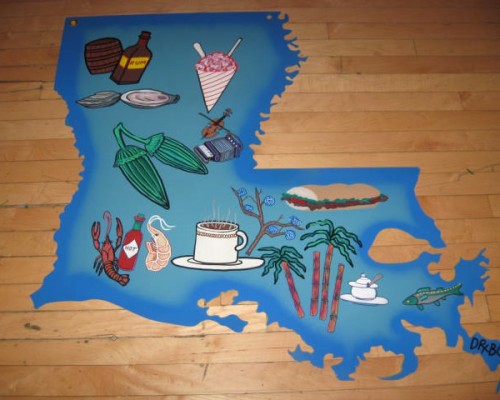
We intend to organize the museum geographically. We plan to paint a highway map of the South on the floor so that people can find the state that they wish to examine.  But there will not be hard walls between the states, because food does not recognize political boundaries.  We’ll have paper maps of the barbecue trail through the museum.  People will be able to see how barbecue is different in different states.  Corn is also used differently around the South. Beans and rice, too.

We’re also going to have a demonstration kitchen and a restaurant that will be part of the exhibit. We will allow people to eat and drink while in the museum. We don’t plan to restrict that portion of the food and drink experience!

The influence of immigrants on the cuisine of New Orleans is fascinating. The Vietnamese, for instance, came in the 70s after the Vietnam War. (New Orleans is a Catholic city so many of them came through Catholic charities.) So now we don’t call bánh mì‘s “bánh mì,” we call them Vietnamese po’ boys! And they compete in the Po’ boy Festival with everybody else. In fact, in many po’ boy restaurants, you can get pickled vegetables to put on your po’ boy instead of lettuce and tomato and everything else. And all these things come together; people are now cooking with coriander and lemongrass, things they never cooked with before. Plus, the Vietnamese eat mustard and collard greens and that also puts us together.

NR: Right! Because some people think only southern black folks eat collard greens and can’t imagine that someone else might use the same food in a different way. Or that there’s such a thing as a Vietnamese po’ boy. Like my sister and I finding it strange that there was a Vietnamese enclave in New Orleans, when what was probably equally bizarre was the fact that a Swedish girl that I met in Germany told me to go there in the first place! But that’s what food does a lot of times: it separates and unites. I’m very curious to see the evolution of your museum because of that very thing. Like, there are going to be a million people who’ll say Puerto Rican food is not southern food.

LW: Exactly! They will!

NR: And they’re right! And they’re wrong! But how do you juxtaposition those things against one another?

LW: We’ve always said: even when we’re looking at things through “southern eyes,” there are communities all throughout the south that have taken their food and adapted it using local ingredients, like your guy in Berlin, or they’ve liked the local food so much that they’ve stolen it and made their own. For example, from 1885-1915, there was a huge wave of immigrants from Sicily to New Orleans. Not Italians from all over, but specifically Sicilians and actually more than those who came through Ellis Island (again, because it was a Catholic city). Since Sicily is so close to Africa, there were a lot of touchstones that made our food more acceptable. Sicilians ate rice balls called arancini, and we ate rice balls called calas but they were both rice balls. Muffuletas, snoballs, meatball po’ boys, sausage po’ boys, all these things were part of the Italian influence in New Orleans. Once the Vietnamese have been around long enough, we won’t make the distinction between this or that. Because they also had the French influence, once again, the synergies were there. And because we love food so much, we find the connections. We might not look at each other and see the similarities but when we’re at the table, we look at our plates and find the places where we come together.

Liz Williams


When not on the dance floor, Nico Rosario splits her time between writing about pop culture, making mix-tapes, and EasyJetsetting.

Online Dating Profile

We probably won’t like each other much
There probably won’t be a spark
Or we will like each other
Just enough to wound each other now
Leave each other later
Anyway I stand in front of the fridge
And eat pickle relish from the jar
With a spoon or just
My finger
And for dessert
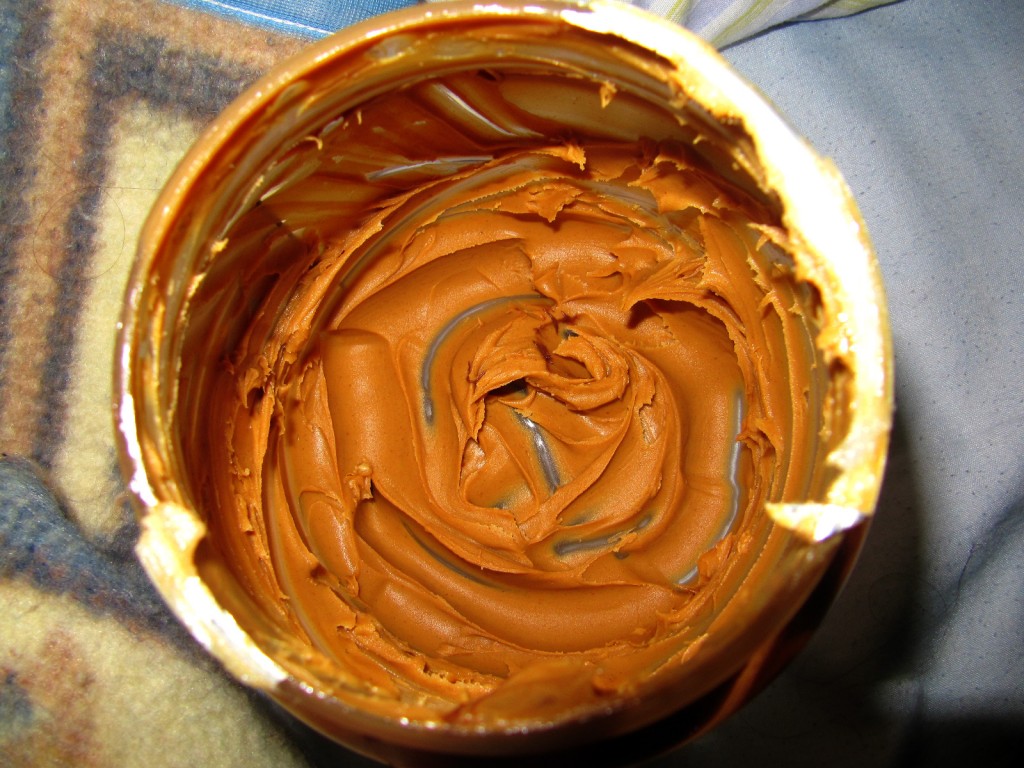
Peanut butter from the jar
Definitely just my finger
This is my two-course morning
In the glow of the open refrigerator
Eyes cruddy with mascara and liner
Not having bothered to wash my face
Before bed
Maybe your days alone are messy
Maybe there will be a spark
Two fingers in the same jar
Some messy union
But some of us are better
Off alone
Oh please
Write me just
Touch me anyway


Unknown


Wende Crow lives in Atlanta, where she teaches computer literacy to refugees . Her poems and essays have appeared in New Haven ReviewPloughshares, The Bakery, and other journals.

We are proud to introduce a new feature: The Inquisitive Eater Poet of the Month.  Each month a contemporary poet will present three poems and one personal essay in which food is consumed, passed over, or reckoned with.  Please welcome our inaugural poet for the month of October, Wende Crow.

by Nico Rosario

After an eight-year stint as the Executive Pastry Chef at Le Bernardin, a Michelin Guide 3-star restaurant that was recently named “Best Restaurant in New York” for the 12th year in a row by Zagat, Michael Laiskonis became The Institute of Culinary Education’s (ICE) inaugural Creative Director in March 2012. After meeting at the “Is Food Art” panel discussion, organized by the Food Studies Program at The New School, I caught up with Michael over email to chat about life after working in the multi-starred restaurant world, the act of cooking, and being a “hustler in the nostalgia business.”

Nico Rosario: The most obvious question would be: How much do you miss working at Le Bernardin? Not only being in that particular kitchen, but the every day routine; the pageantry of service; the feeling of relevance, staying “in touch?” (That last caveat might not apply, due to your current appointment at ICE, which I presume keeps you on your toes!)

Michael Laiskonis: I do miss certain aspects of daily life in the kitchen. After twenty years, the cooking business becomes a way of life, a subculture, and a lens through which one views the world. My role now, while perhaps more difficult to define, requires a certain discipline, but a different one than working 70-80 hours a week in a kitchen. What I enjoy most is that no two days are exactly alike. As Creative Director at ICE, a lot of what I do is behind-the-scenes. I also interact regularly with the career program students and conduct classes for professionals and amateurs. This position was created to allow for a fair amount of outside work as well, projects like ongoing restaurant collaborations, small-scale consulting, corporate advisory sessions, and my own personal research and writing.

One of the primary forces that pushed me out of the full-time kitchen was the desire to replace some of the routine with more time to pursue and realize ideas both creative and commercial. My lifelong goal was to reach the height of a Michelin three-star kitchen, but once there I began to realize I hadn’t set any goals for myself beyond that. With my current list of side projects and my affiliation with ICE I have more time and space to think and at the same time attempt to give something back to the pastry and chef community at large. I still spend quite a lot of time in kitchens, so I do get my occasional fix of restaurant service.  The quieter moments of just putting my head down and working – that was what got me into this thing in the first place, so I never want to lose that simple satisfaction! Relevance is a fringe benefit, but I resist that becoming motivation in and of itself.

NR: As someone who spent a decade working in restaurants (but almost exclusively front of the house) I can’t fathom what would make one want to be in a commercial kitchen for 12-16 hours a day. However, as a personal chef for several years, I felt like I could do that work forever, happily, for free. As I read your piece, I thought to myself: what is it about the act of preparing food – either for yourself, your family, or total strangers – that shifts the way we think about that work? Is there an innate contentment about creating sustenance that overrides the challenges of cooking and the inherent lifestyle attached to someone at that culinary level?

ML: I definitely think of cooking professionally and cooking at home for family and friends as two entirely different animals. For years, I would come home after 12 hours of restaurant work and make dinner for my wife and I. It was partly a function of my wife also being in the industry and maintaining a ritual, even if the dinner hour was 1:00am. But even though I may have been physically exhausted at the end of the day, the act of cooking dinner just for the two of us was very different. I’ve never really been able to put my finger on it, but I almost see home cooking as therapeutic, at least for me. Perhaps because so much of restaurant work, especially service, involves cooking for an anonymous slip of paper – a ticket – rather than for someone that you can connect to. For me, too, it’s the difference between spending my professional day in the realm of pastry, and then being able to come home and switch things up with a savory meal. In fact, I very rarely bake or make pastry at home. Maybe there is a subtle unconscious divide that I’ve constructed. 

NR: Related to lifestyle, how have you adapted to being out of the kitchen? Do you actually have nights and weekends to yourself now?

ML: I can’t lie, I do enjoy that little bit of extra time during the day to do things like read books without pictures! On the whole, it is nice to rejoin ‘normal’ life and ‘normal’ hours, but some aspects of the cooking lifestyle stick with you. Years of working dinner service still to this day keeps me on a late night schedule, though I’d love to be more of a morning person.

I don’t feel it as much as I did in the months immediately after leaving the restaurant, but I do occasionally remark on the novelty of being out on a Saturday night; I even feel a slight twinge of guilt knowing I might be enjoying a holiday while my comrades are deep in the trenches. As we enter what many cooks refer to as ‘the season’ – October through December – I still get a vague sense of uneasiness although my schedule now is fairly regimented and predictable.

NR: I also wanted to ask about your role at ICE. What exactly does a “Creative Director” do? How does the methodology of teaching differ in a school environment from an apprenticeship in the kitchen?

ML: There are many criticisms that are being hurled at culinary schools these days: high costs, lack of necessary repetition of basic skills, and failure to imprint realistic expectations of the industry. I think it’s difficult to generalize the efficacy of formal culinary education, because so much depends upon the individual – his or her level of experience prior to school, their goals upon leaving, and how they use the available resources while in that learning environment. It is true that a cooking school might not be for everyone, just as it is probably true that one might not be exposed to a broader set of fundamental skills apprenticing in a specialized environment in the ‘real world’.

I never went the route of culinary school, but I do value what that environment of immersion can offer someone who might still be developing that passion for cooking. What I like most about this profession is that the educational process never really stops; one can never know everything. The structured environment of a school, plus all of the additional opportunities and support that comes with it, can help young cooks navigate their first tentative steps in the industry. Again, at the end of the day, it’s how the individual uses the experience. Hard work and desire are necessary, no matter which path is followed.

As a chef running a modest pastry kitchen, with a revolving roster of stagiaires and externs included in the mix, I have considered myself a teacher of sorts for some time. What is different now is the opportunity to slow things up and really get into some of the underlying aspects of cooking that I didn’t previously have time for. It’s also been nice to circle back to some of the classics, especially being able to see them through the set of ‘modernist’ ideals that I’ve worked with in recent years.

One of my favorite tasks is giving a lecture on dairy products to shiny new pastry students on the second day of their 100-lesson program. Though I’m throwing a ton of technical information at them, the purpose at this early stage isn’t necessarily to make them memorize the exact composition and structure of milk, but rather to inspire the students to begin thinking about ingredients and recipes and techniques in a way they probably haven’t before – with equal measures of curiosity and respect.

NR: Lastly, in the “Is Food Art?” discussion, you talk about the idea of “creation” as part of retaining memory. You mentioned creating an apple dessert that referenced a cider-and-doughnut-eating experience you had as a child. Can you elaborate on that? For as long as I can remember, my mother has told me about eating apple ice cream at a HoJo once. (I’d like to emphasize that this only happened ONCE.) Every time someone mentions Howard Johnson (either word), ice cream, apple, road trip… anything that triggers that memory, she goes through this revelry. Somehow, when you related your story about the cider and doughnuts, I was reminded of this…

ML: I had never really mined the depths of the psychology or physiology of our human desire for sweet things before a discussion I shared with GQ columnist Alan Richman a few years ago. Nor had I ever considered my own personal connection to sugar. Alan posed the rather vague and daunting question, “What is the essence of dessert?” I’m not really sure that even he knew what kind of answer he was looking for. After some introspection, I noticed that the desire for sweet things is rooted deep within our psyche: the physiological, the emotional, and a sometimes ineffable sense of pure pleasure (both the hidden, guilty side, and of a sharing, celebratory nature).

Out of all this thinking I had a revelation of sorts, that pastry chefs are really just hustlers in what I call the ‘nostalgia business’. Though savory cooks might retain a capacity to tell stories through their dishes, with sweetness we tap directly into our own DNA. From birth, we’re hard-wired with a taste for sweet. Just when we might otherwise mature beyond that physiological trigger, the desire manifests itself in the realm of emotion. With sweetness we begin to associate comfort, pleasure, reward, envy, and guilt. Everyone has their own personal Proustian madeleine that lights up some fragment of sense memory, and I find my work as a pastry chef, no matter how refined, is a potential portal to one’s own childhood. A sense of responsibility surfaced with this realization, but so too did a renewed sense of play and exploration; I enjoy the challenge of interweaving those nostalgic elements in ways that might not be obvious. Each dessert must have broad democratic appeal, but a true ‘dialog’ emerges when an element of a dish tickles the guest in some ineffable way.

From the moment of birth, we seek our nourishment and comfort in the rich, sweetened form of mother’s milk; it is indeed the only taste we know in our early months (years later as adults, we’re hard pressed to identify our attraction to creamy crème brulee and quivering spoonfuls of fragrant panna cotta. Eventually our sense of taste becomes considerably more complex as the sources of our sustenance widen, but I find it interesting that for us humans, the desire for sweet endures. Personal nostalgia will vary by culture, country, region, or generation. It can be triggered by a freshly baked pie like Grandma used to make, or it may come in the form of mass produced junk food (I’m convinced that all pastry chefs have, consciously or not, tried to recreate a Snickers bar in some way or another). These associations remain through adulthood. Playing to this inner child, for a pastry chef, can initiate the creation of something new; the context of such nostalgia, especially unexpected in a fine dining environment heightens such playfulness.

Apart from the calories, we surely don’t rely on our intake of sweets; our nutrients come in the form of “real food”. While cultures differ in their dessert traditions, virtually all incorporate some form of sugar as the conventional end of a meal, or as a “street food”, or even in a ceremonial or ritualistic way. As Valentine’s Day approaches, we can also ponder the role of candies in courtship. Is it coincidence that we consider chocolate an aphrodisiac? Do we not use the word ‘sweet’ to refer to a kind and lovely person?

As adults we enjoy desserts simply for the pure pleasure of it, though it is often accompanied by a sense of guilt. For some, the bigger and more decadent the better – we still see desserts with ominous names like “Death By Chocolate”. Openly indulging these fat and sugar bombs seem to dramatize the guilt as an ironic cry for help, or to boast to others how many sessions on the treadmill it will take to absolve that sin. And even in a culture obsessed with fad diets that pays lip service to a desire for “healthy” desserts, in practice, most pastry chefs agree that chocolate outsells such desserts two to one. We’re in an age where pastry chefs are increasingly striving to create desserts that are “unsweet” (as opposed to simply “less sweet”!), sometimes successfully and sometimes not. I think it’s always important to remember that it all begins with sugar.

A very personal expression of the Proustian madeleine, the combination of spiced cider and warm doughnuts activates my own sense memory. This dessert calls to mind an early autumn Sunday at a cider mill in my native Michigan. The damp chill in the air, the early sunset, the smell of hay and fermenting apples, the crunch of fallen leaves underfoot. In my memory, that combination of tastes draped me in a thick wooly blanket of happy simplicity. To those guests who’ve enjoyed my refined interpretation of that in a fine dining setting, it’s served under the guise of sophisticated elegance and seasonality, with a wink and a nod from behind the kitchen door.

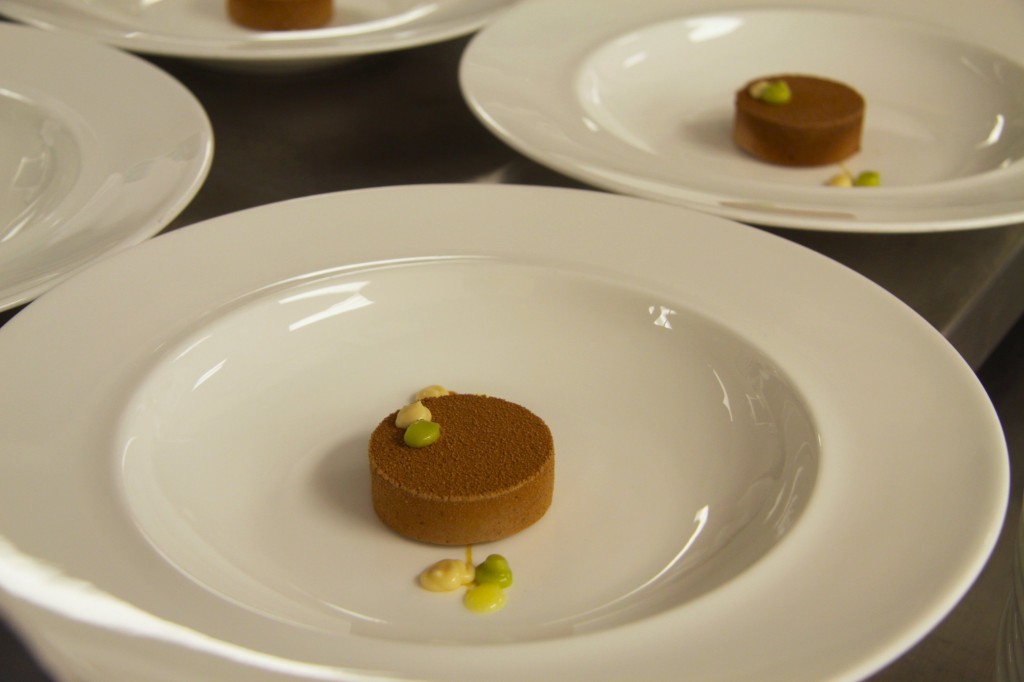
Another case in point: the tres leches-inspired dessert we added to our menu at Le Bernardin.  It was born in conversation with Jesus, one of our youngest cooks in the pastry kitchen. On the surface, it was simply an exercise; how do we refine and transform a rather pedestrian dessert into something worthy of a four-star restaurant? What new techniques can we apply to the original concept? Once manipulated, how do we maintain that reference back to the classic, with or, preferably, without an overblown sense of irony? So before we did anything, we made the original version, without bells and whistles.

As we tucked into the wet, spongy tres leches, I asked Jesus how it made him feel. Born and raised in the Bronx, he made frequent visits to his grandmother in Mexico as a child. It took a lot of coaxing, but Jesus eventually, shyly began to describe every memory connected to the tres leches his grandmother would buy from the bakery in her small town. He remembered her plates and sitting at her kitchen table. Visiting the shop itself was part of the ritual, so he also began to recall the sweet smells and even the color of its walls. “That,” I said, “is what we’re trying to do!”

No matter how much we add our clever contemporary spin, through technique or ingredients, that nostalgia is what we’re trying to access. No matter the age of our guests, whether six years old, or sixty, the potential in tapping those memories can be powerful.


When not on the dance floor, Nico Rosario splits her time between writing about pop culture, making mix-tapes, and Easy Jetsetting.

 

by Fabio Parasecoli

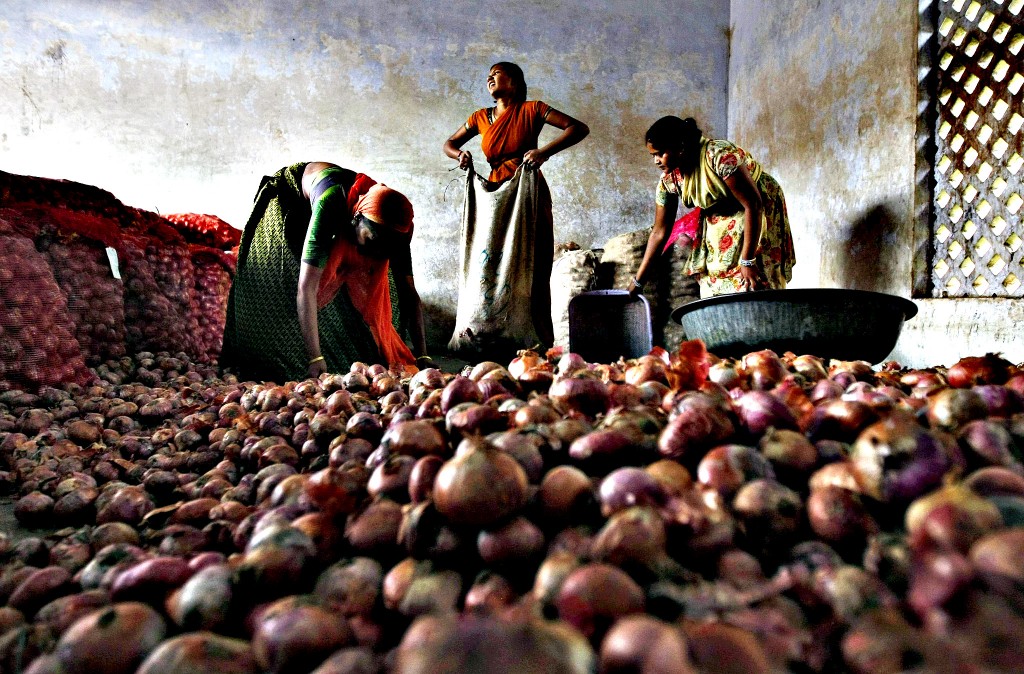
I recently spent two weeks in Bangalore, India doing research viagra online 50mg on geographical indications and on the food industry in one of the global IT capitals of the world. More about that in the coming weeks, but when I was there, I could not help but be intrigued by recurring news in the newspapers and on TV about the unexpected surge in the price of onions. The widespread coverage and the heated discussions surrounding the issue prove its enormous relevance in Indian politics.

Due to a bad crop in Maharasthra and excessive rain in Karnataka in southern India, by mid September, onions were sold at 80-82 rupees per kilo (more or less US $0.70 per pound) at the greengrocer’s, while the wholesale price hovered around 60 rupees (about US$ 0.50 per pound). In the past five years, the wholesale price has oscillated between 25 and 45 rupees per kilo, with a sudden peak in 2008 at 55, according to the Times of India. Many outside India would think that onions are not such a fundamental staple that a price increase would cause such a stir. It would be easy to discount the onions as basically cheap and the difference just as a matter of cents.

However, the onion is one of the most prevalent ingredients in many Indian cuisines, especially considering that a considerable segment of the population is vegetarian (although those following sattvic principles — as we will see in a future post — consume neither onion nor garlic). There are reports that some restaurants are slightly changing their dishes in order to make room for the swollen price of the vegetable. And the spike is likely to put a serious dent in their food budget of many poor families, raising fears of inflation.

Opposition parties such as the BJP (the Hindu nationalist Bharatiya Janata Party) are taking stock of the weather vagaries and the unusually abundant rains during the monsoon, but nonetheless they are using this sensitive issue to blame the present government and the Indian National Congress party of corruption and mismanagement. As elections for the lower house of the national parliament will take place in May 2014, the clamor about food prices is much more likely to influence a large part of the citizenry compared to the slowing economy, the falling rupee, and a high current account deficit, which more directly affect the burgeoning middle class.

There are precedents to these debates. In 1980 Indira Gandhi managed to dominate the 1980 elections for the lower house by riding on the discontent among citizens about the soaring prices of, precisely, onions. Some even attribute the 1998 defeat of the BJP in Delhi to a spike in the price of onions. It is a widespread opinion that a government that is not able to control crop prices, especially for the most modest and common foods, should not guide the nation. The argument is even stronger after the passage of a food security bill in September that subsidizes wheat and rice for around 800 million people — a measure spearheaded by the Congress party that many criticized as a ruse to increase its chances of reelection and a nail in the coffin for the rupee.

Whatever the political backlash, the law is an important step towards food justice in a country were many are still hungry or undernourished, in particular the farmers that are suffering from the corporatization of the agricultural sector (especially in terms of seed availability), state control over prices of food crops, and a complex chain of exploitative intermediaries between the farmers and the consumers. In the heated pre-electoral climate, and with food at the center of the economic and social disputes, it was inevitable that the humble but inescapable onion would make her appearance again on the political horizon.

This article first appeared on the Huffington Post.

Fabio Parasecoli is an Associate Professor and Coordinator of Food Studies at the School of Undergraduate Studies for The New School for Public Engagement. He also a Senior Editor of The Inquisitive Eater, and regular contributor to The Huffington Post. 

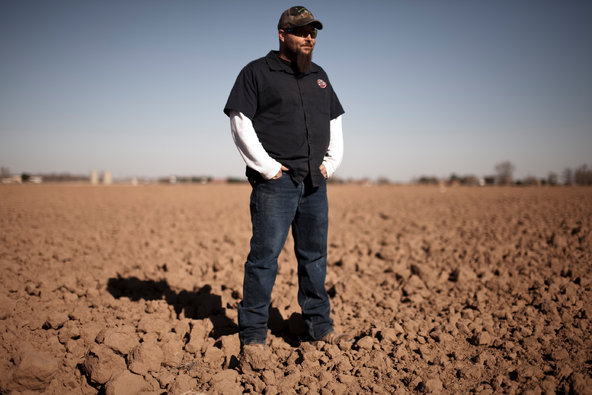
A panel of Greenmarket farmers and climate change experts explore how climate, an unpredictable element, is shaping the food available in the local marketplace, and the ways that regional farmers are learning to adjust their practices to accommodate it.

You can’t predict the weather, but the weather predicts how a season’s crop will fare. What does a changing climate mean for small-scale, regional growers and our food supply? In recent years, storms have flooded acres of crops, and rising temperatures viagra canada have caused fruit trees to blossom early, impacting the fall harvest. Will a permanent shift in weather allow farmers to extend their growing season?

Panelists include:
– Beatriz Beckford, New School Faculty
– Sonali McDermid, NYU Faculty,
– Keith Stewart, Keith’s Farm.

This panel is moderated by Challey Comer, GrowNYC/FARMroots.


We are proud to introduce a new feature: The Inquisitive Eater Poet of the Month.  Each month a contemporary poet will present three poems and one personal essay in which food is consumed, passed over, or reckoned with.  Please welcome our inaugural poet for the month of October, Wende Crow. 

 Unknown


One Day I Was Blessed

I woke up forgetting my whole childhood.
So I arrived, and then I went outside
to praise the rocks. I spit cherry pits
at the sun and shook hands with the butcher.
I praised his chops, his wife, and danced all the way
to the aquarium. I praised the fish
and the human faces shimmering
blue and falling in love with belugas.
I met a man who seemed to know
what I was about to say. I praised
what happens, what fades. I left laughing,
I laughed thirty miles. I came home sweating
and played for dinner. I fell in bed,
remembered old damage, and praised.


Wende Crow lives in Atlanta, where she teaches computer literacy to refugees . Her poems and essays have appeared in New Haven ReviewPloughshares, The Bakery, and other journals.


by Anya Regelin

The first question that I am usually asked when I say that I am a chef is if I work in restaurants. I always answer this way: no, I work privately, but I worked in restaurants for years. I don’t deny that there is a hierarchy in the cooking world, and I feel like I’m on a constant quest to prove myself. In three and four-star restaurants where I was trained, private chefs are thought of as hacks – those who couldn’t make it with the big, bad, boys.

The second question that I usually am asked is what my specialty is. For the past seven years, I’ve worked as a kosher chef. I make fancy food, food that you would see in any fine dining restaurant, but altered to fit within the laws of the kosher kitchen.

The essence of a good private chef is ability to give your clients exactly what they want. My clients often point to pictures from magazines and Thomas Keller cookbooks and ask me to reproduce dishes in accordance with their strict guidelines. Keeping meat and dairy separate is just the beginning. I quickly learned that you can’t baste a roast with margarine, and that although you can work miracles with non-dairy creamer, most of it tastes plastic and gross. But what causes me the most problems, the most heartache, and the most lost night’s sleep is the weekly pot of chicken soup.

Every Friday night I prepare a Shabbos meal of, at minimum, four courses. The fish might be seared tuna or roasted sea bass and the meat might be baby lamb or duck, but chicken soup is always the anchor of the meal. I can never get it right.

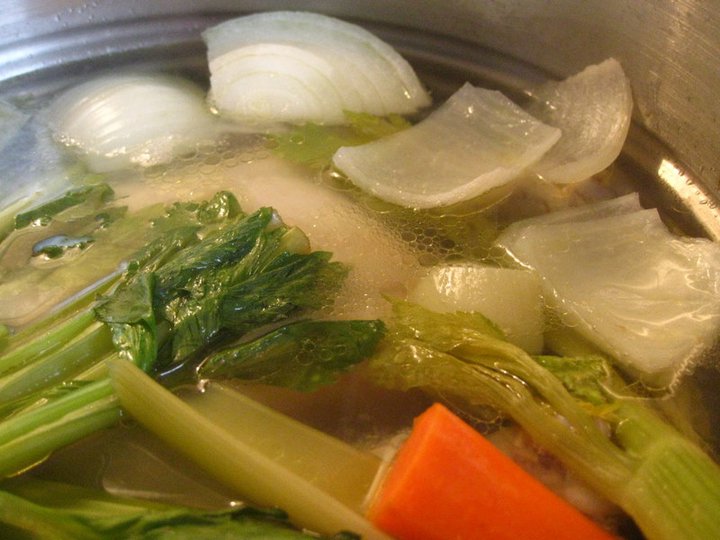
When my clients first hired me, I was not allowed to make the soup.  I worked at one end of the very large kitchen shaping perfect chocolate sable shells or pairing artichokes down to their hearts as I watched my boss give directions to her housekeepers.  It seemed simple, submerging whole chickens and a few root vegetables in a large pot of water, adding parsley, and peppercorns. But I gasped as they sprinkled the whole pot with yellow powder from a plastic container, turned up the heat, and brought it all to a rolling boil.

As time went on and I became more comfortable with the family, I suggested that perhaps I could take over the soup preparation.  I had plans to wow them, and I would do it restaurant style. I slow roasted the bones to enrich the stock and deglazed everything with white wine. It simmered gently for hours, and using a fine mesh cone, I strained a perfectly clear broth. The carrots, parsnips, and celery were cut into rectangular batons, and the chicken was perfectly poached.

Opinions were never given about the complicated fancy food that I prepared each week. But the one thing that everyone felt free to comment on is the soup. It’s too rich, not rich enough, too salty, not enough salt, too much chicken, too many vegetables, not enough carrots, and always, the wrong type of noodles.  Each kid, and there are five of them, was encouraged to voice their opinion.

One liked skinny egg noodles, one wide egg noodles, one little tubes of pasta and not egg noodles at all. Only carrots for one. Only leeks for the other. Some want white meat chicken, some dark meat. I spent an hour every Friday making mini matzo balls the size of nickels for a year before I was told that no one actually ate them.

When guests were invited, I orchestrated the serving of the meal, individually plating each course, carefully ladling out steaming bowls of soup.

“What do you think?” I heard one of my clients ask the other, spoons in hand, at one of their larger dinner parties.

When the answer was, “delicious,” full-blown neurosis set in. What did I do? What made this pot so different from all the other pots? How was I going to live up to this proclamation?

I asked my Jewish friends for pointers. I am a Jew, but not a chicken soup Jew; it was an event when my mother made a pot (although she would probably deny this). One friend told me that her sister added beef bones and “different” vegetables to the stock, so one day I added zucchini and mushrooms. My boss peered into the pot where it was cooking and gasped before I quickly fished it all out.

I attended some larger kosher catered events where food was served en mass to upwards of two hundred and found the soup watery and overly salty. I went to every Jewish deli I could think of and left with uninspiring samples. After a year of trial and error, I came up with a recipe for a consistent broth that my clients deemed passable. I separated each vegetable, each type of noodle, and chicken in containers so that the housekeepers could tailor each individual bowl according to preference, a virtual salad bar of soup fixings.

Recently, one of the housekeepers was with me in the kitchen as I was putting the last touches on the Shabbos meal. The pot of broth was warming on a low flame and I was plating the fish course when I happened to notice her dump my carefully separated vegetables, chicken, and four types of noodles into the pot.

“What are you doing?” I yelled.

‘”What do you mean,” she said, “we always do like this.”

“You mix everything together?”

“Yes, this is what she wants. Later, we go fishing.”

I wondered how the big, bad boys of the cooking world would react. Would they yell or throw something or quit in frustration? When I worked in restaurants, my job was clear. But here, I realized the quest would never end.


Anya Regelin is working on her MFA in Creative Writing at The New School in New York City where she is also a free-lance writer, private chef, and the Deputy-Editor of The Inquisitive Eater. The Tasteless Chef is a regular column chronicling her exploits and misadventures in (and around) the kitchen

Enjoy the video of the panel at The New School celebrating 20 years of the Food Network with some of its founders.

On September 27, 1993, the Food Network began broadcasting old cookery tapes. It wouldn’t start live broadcasts for another two months, and when it did, there were many viewers. From these modest beginnings, the Food Network has grown into one of America’s most successful cable network channel and in process, cheapest viagra usa it has engendered hundreds of other food and cooking shows on cable and broadcast networks, and its culinary competitions have converted food into a spectator sport. The Food Network’s continued success demonstrated that food had become a central feature in media and American life.

Speakers include Reese Schoenfeld, co-founder of CNN and the first president of The Food Network; Joe Langhan, formerly an executive at Colony Communications and currently president, Media Program Network; Pat O’Gorman, lead producer, TVFN; and Allen Salkin, author of From Scratch: Inside the Food Network. Moderated by Andrew F. Smith, faculty member of the Food Studies Program.

www.youtube.com/embed/t6TH1Bdq-ZI

Enjoy!

Wednesday, October 23, 2013 at 6:00 pm

Wollman Hall (B500), Eugene Lang College

Wollman Hall, 65 West 11th Street, New York, NY

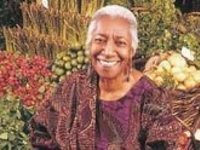
Edna Lewis, (1916-2006), a great chef, teacher, and cookbook writer, was born in Freeport, Virginia, where she learned to cook. She moved to New York and used her skills in restaurants, most notably Café Nicholson in Manhattan and Gage and Tollner in Brooklyn. Her advocacy of genuine Southern cooking inspired a generation of chefs and helped ensure the survival of traditional Southern folkways.

Her cookbooks include The Edna Lewis Cookbook (1972), The Taste of Country Cooking (1976), In Pursuit of Flavor (1988) and The Gift of Southern Cooking (2003), which she co-authored with Scott Peacock.

Great product for daily use. Buy levitra online. The most professional care at the world-class pharmaceutical factories of India.

Speakers include Judith Jones, former Senior Editor at Knopf; Michael Twitty, culinary historian of African American Foodways; Chef Joe Randall, chairman of the Board, Edna Lewis Foundation; and Tonya Hopkins, an American food storyteller, historian and audiophile. Moderated by Andrew F. Smith, faculty member of the Food Studies Program.

Sponsored by the Food Studies Program at The New School for Public Engagement.

Click here for a link to Events at The New School.