Author

Anya

Browsing

Palate

My lips graze your shoulder safe
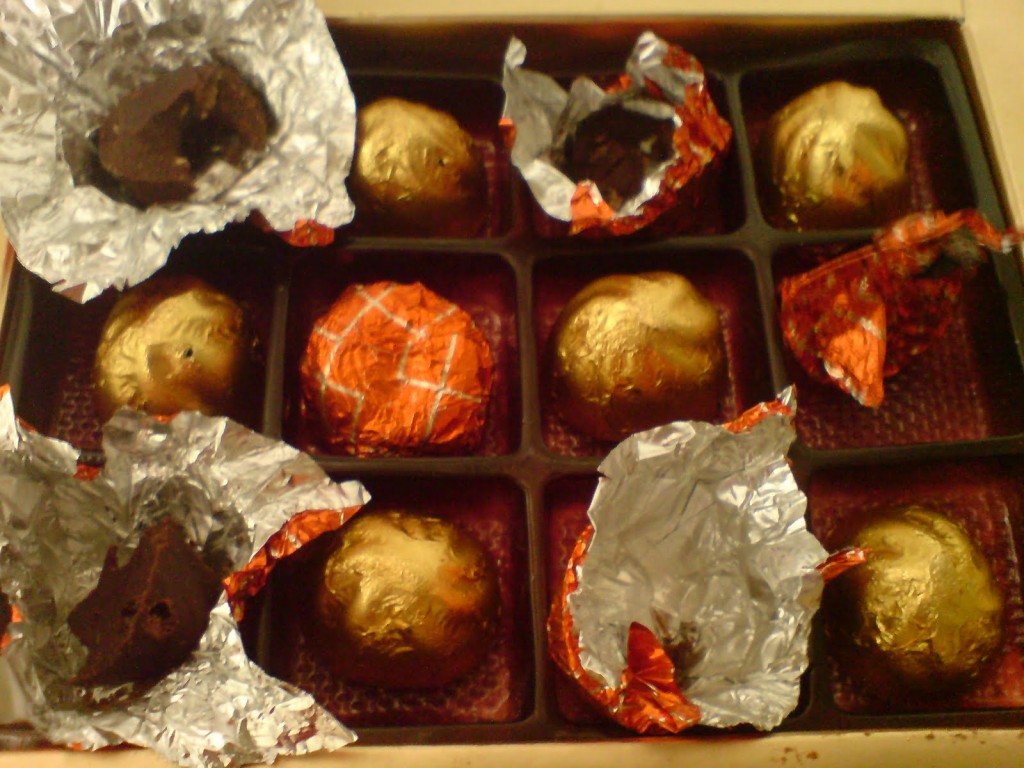
in white sheets. Our universe, a platter
of delicate sweets. I am Hatchetface
in each instance of ugly: delinquent
in a tight black girdle.

Meanwhile a mountain of candy piles
on the floor and my new lover chews.
You too can be a companion: a man
as good as a woman as good as a man
and my fate is green.  This is the feast
of tattooed men.

*

In modern times spirit beings are lunatics
uncaused overeaters, anonymous.
We are in a big cat revolution—
two hungry bodies claw for the prize.


Nathalia Perozo received her MFA from The New School, where she served as Co-Chair of the Feminist Writer’s Organization. Her current project is a collection of poems inspired by Marilyn Monroe entitled Divinity. Nathalia lives and works in New York City.

by Fabio Parasecoli

At first sight, it was just another vegetarian eatery in Bangalore, although better appointed and definitely more appealing than usual. Large groups and families, mostly in a festive mood, were enjoying a sprawling buffet dominated by a triumphant chocolate fountain, in the subdued and understated décor. Waiters in elegant grey suits quietly bussed tables and keep the food coming. Against the pleasurable background, the conversation unfolding among my table companions was curiously unsettling: I was being schooled on the meaning of the kali yuga, the era of cosmic decay and spiritual degeneration in the Vedic tradition, while savoring understated and sometimes startling vegetarian food. Apocalyptic reflections and attention to one’s physical and mental health seemed to go hand in hand at Sattvam, a restaurant that embraces sattvic food. The jet lag contributed to my sense of estrangement, having landed in India just a few hours before.

Of course, I needed guidance to understand what sattvic was about. Suresh Hinduja, one of the best-known food critics in town, who had taken me there with a friend, admitted that the food we were enjoying, subtle yet flavorful, actually would come across as unusual to many Indians as well. For the explanation of the principles behind it, he deferred to Arvind Chowdhary, one of the managing partners at Sattvam. Clearly, my knowledge of Indian religions and philosophies was showing its limits. The couple of courses on the topic I took in college, which in fact included the reading of the sacred text Bhagavad Gita, were not even remotely sufficient to understand the dishes that were being placed in front of me and I welcomed Arvind’s and Suresh’s guidance.

Many Indians—Hindus and Jains, the latter following stricter rules—practice vegetarianism for religious reasons and avoid meat, fish, eggs, and alcohol from their diets. Yes, eggs too are considered carriers of potential life and are for that reason taboo. Unlike in Western vegetarianism, dairy products, from yogurt to ghee (clarified butter) and paneer (the omnipresent fresh cheese) play a crucial role, differentiating Indian vegetarianism from Western veganism. However, Arvind clarified that the idea behind the restaurant is to bring sattvic food to an audience larger than the faithful few who may enjoy it at the temple where they meditate each morning.

Sattvic is one of the three categories that, in the Vedic tradition, define diet and contribute to an individual’s life style and attitude. Favoring spiritual clarity, sattvic foods differ from rajasic ones, which fire up passions and desires, and tamassic ones, which instead cause laziness and torpor. As spelled out on the restaurant’s website, “sattvic cialis price foods are rich and abundant in Prana, the universal life force. Onion, garlic and caffeine are taboo in a sattvic diet as they cause denseness in the body. According to the Vedas, sattvic foods are juicy, wholesome and pleasing to the heart, providing subtle nourishment for positive vitality. What makes sattvic food so unique and pleasurable is that all dishes are prepared and served fresh. Leftover food is never served or consumed. Hence sattvic foods have a very low probability of forming ama, or toxic build up in the body.”

Sounds familiar? Some might point out that this is a New-Age inflected reading of the Vedas. Despite the vastly different philosophical frameworks, I was hearing words and concepts that also pepper contemporary discussions among food enthusiasts in the West, and not only those familiar with Ayurvedic practices. Sattvic food needs to be fresh to ensure all its sustenance and, consequently, provisioning locally is not a choice, but a necessity. Organic, however, is not a priority due to the high price of that kind of produce. And although organic food is quickly growing in popularity, it is still appreciated by a relatively small segment of the public. The team members at Sattvam are also fully aware of modern nutritional science and, despite the abundant presence of ghee, the food they serve can be considered quite healthy within a Western nutritional framework, as it provides a balanced intake of carbs, fats, proteins, vitamins, and anti-oxidants. Such approach appeals to many among the Bangalore foodies, a growing community of food lovers who care about what they eat and carefully weigh quality, style, and value.

Although Sattvam’s buffet is more expensive than your run-of-the-mill vegetarian restaurant, it has enjoyed growing success. The plan is to attract patrons with tasty food and to explain why it is good for their bodies and spirituality after they have enjoyed their meals. The negotiations among business acumen, financial pressures, religious priorities, and the pleasures of the table provide a great window on the transformations taking place in the bustling, global city of Bangalore. At Sattvam, very modern concerns cohabit with a philosophy and a lifestyle whose principles were outlined a few millennia ago. I could not have had a better introduction to India.


Fabio Parasecoli is an Associate Professor and Coordinator of Food Studies at the School of Undergraduate Studies for The New School for Public Engagement. He also a Senior Editor of The Inquisitive Eater, and regular contributor to The Huffington Post. 

by Fabio Parasecoli

1971, the year when Alice Waters opened Chez Panisse in Berkeley, CA, is often cited as a turning point for American cuisine. The young woman, who had lived in France while pursuing her degree in cultural studies, had discovered the pleasure of shopping for fresh, local produce, and a relaxed yet creative way of preparing and serving food. What’s more important, she had found a way to translate those values in an American context.

Yet, something else had been stirring in France, something that would have an equally crucial impact on the development of the culinary arts in the U.S. Just before Waters’ visit in the winter of 1970, some Cialis vs viagra of the most visible and influential innovators in the American food world happened to cross paths in Provence. James Beard, Julia Child and her co-author Simone Beck, M.F.K Fisher, Richard Olney, and culinary book editor Judith Jones found themselves dining together and visiting with each other while discussing their past work and their future projects.

This is the story that Luke Barr, whose great-aunt was M.F.K. Fisher, tells with gusto in his book, Provence, 1970: M.F.K. Fisher, Julia Child, James Beard, and the Reinvention of American Taste. Barr’s narrative follows the movements and gatherings of these iconic figures, revealing their confidences, their tensions, and even some of their less lofty moments. Beard, Child, and Fisher are described in all their humanity, in a tone that avoids the hagiographic quality that is used regularly in celebrating their achievements. Much of the information that Barr includes in the story comes from Fisher’s diary that he found in a storage unit where her family members had stored and forgotten it. The diary chronicles the final weeks of 1970, when Fisher was in Provence with her famous friends and then traveled by herself trying to evaluate France more objectively and to rethink the role that country had played in her imagination up to that point. The diary is an important document, which, when read with Beard’s, Child’s, and Fisher’s already known letters, allow Barr to give readers access to an important slice of American culinary history.

According to Barr, Fisher’s personal reflections and resolutions intriguingly reflect important changes in the attitudes and outlooks of the other culinary giants she interacted with in Provence. James Beard was trying to finish American Cookery, an important book that was meant to assert the value and relevance of American cuisine without any sense of cultural or material subordination to foreign traditions. Julia Child, who had introduced French cuisine to the general public in the U.S. through her writing and TV show, had been able to make everyday cooks feel comfortable with complicated recipes and exotic ingredients. At the same time, she felt it was time reclaim a certain freedom from the strictures of total obedience to the French tradition. She was also fully aware that many elements given for granted among French cooks had to be explained and broken down in layman’s terms for many of her readers this side of the Atlantic.

Barr suggests that Beard and Child’s pragmatic approach put them at odds with Simone Beck, who was proud of the uncompromising “Frenchness” of her food and considered Julia less strict when it came to the requirements of serious cooking, and with Richard Olney, a relative newcomer in the field of culinary writing asserting himself as an unadulterated interpreter of the most authentic French food. Fisher herself realized that France was changing and many of the notions they were fondly attached to might have become anachronistic. At the same time, she had started to realize the changes in the American culinary scenes in terms of production, availability of ingredients, and social relevance of food.

With its focus on the media world, cultural perceptions, and the role of writers and intellectual mediators, Barr’s book helps us add another layer to our understanding of the dynamics that have made American food what it is now in terms of practices and ideas. The author comes back over and over again to some central concepts, as though making sure the readers get his point, but these repetitions aside, the book makes for a nice, relaxing reading, taking us back to a time and a place that still exerts a strong charm on many of us.

This article first appeared on the Huffington Post.

Fabio Parasecoli is an Associate Professor and Coordinator of Food Studies at the School of Undergraduate Studies for The New School for Public Engagement. He also a Senior Editor of The Inquisitive Eater, and regular contributor to The Huffington Post. 

Each month a contemporary poet will present three poems and one personal essay in which food is consumed, passed over, or reckoned with.  Nathalia is our poet for November, 2013.  


Hollywood Pie

“Poor is the man whose pleasures depend on the permission of another.” -Madonna

My right hand is a disciplined creature applying rouge to the mouth.
In rainbow stripes of powdered sugar, I’m on a mission from God
like Divine’s hunger for talent.  My plate is the canvas, sparking an impulse
to decorate my face.  Vanity, a humble servant and gluttonous saint.
I dab a crimson block to the upper lip. Cherry stained domestic
in a velveteen anthem of nurturing, I cradle my binge.
Consuming in pleasure, a pure act of rebel love with profiteroles
bold streaks of cream cheese frosting smeared wide across my face.
Cake crumbs and lipstick, I am sanctified pop art.
This is show business: my name high in flashing lights on the marquee.
Come see the blushing pig in her ritual self portrait.

Nat Bio Pic

Nathalia Perozo received her MFA from The New School, where she served as Co-Chair of the Feminist Writer’s Organization. Her current project is a collection of poems inspired by Marilyn Monroe entitled Divinity. Nathalia lives and works in New York City.


by G Collins

Sucrose at Seven

The further away from the wilds you taste
the more joyous a boy I’ll be. Crimson inside,
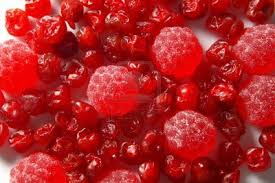
pliant river of cherry chew on the chin
& brip overrun teeth.

Stained red hands
& concentric crystalized bands
of birth year flushed down stream.
In the woods I prove to my mother

& a neighbor, my witch-craft relief savored
in heaps. Forbidden flavors deep under
nail nourishes my frail needle-
nose frame.
A yellow bulkhead shadow

paired with a caramelized guilt, ought
to bring me closer to god than thou wilt.


images-2


Gregory Collins is a graduate of the Riggio Writing and Democracy Program and received his MA from The New School’s School of Media Studies. His activity includes sound work, GPS-guided narratives compositions, poetics and humor. His interactive literary journal DRIFT INDEX will appear online in Spring 2014. 

Andy Ricker is passionate about changing how Americans think about Thai food. So passionate that he was willing to go deep into debt for it.

Ricker spent the better part of a decade eating in roadside restaurants, noodle stands and home kitchens across Thailand before opening his first restaurant, Pok Pok, in Portland, Ore. Eight years later, Ricker has seven restaurants in Portland and New York City, and he’s just written his generic viagra online first cookbook.

Read more and listen to the podcast at NPR’s The Salt.

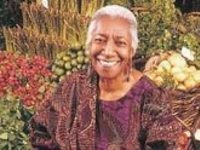
On Oct. 23, 2013, The Food Studies program at The New School for Public Engagement continued its Culinary Luminaries series with a focus on legendary chef, teacher, and cookbook writer Edna Lewis. Originally from Freetown, Virginia, Lewis rose to fame while gracing the kitchens of NYC, most notably Café Nicholson in Manhattan and Gage and Tollner in Brooklyn. Her advocacy of genuine Southern cooking inspired a generation of chefs and helped ensure the survival of traditional Southern folkways.

Her cookbooks include The Edna Lewis Cookbook (1972), The Taste of Country Cooking (1976), In Pursuit of Flavor (1988) and The Gift of Southern Cooking (2003), which she co-authored with Scott Peacock.

Speakers included:

– Judith Jones, former Senior Editor at Knopf
– Michael Twitty, culinary historian of African American Foodways
– Chef Joe Randall, chairman of the Board, Edna Lewis Foundation
– Tracyann Williams, Lecturer of Literature and Director of Academic Advising, The New School for Public Engagement
– Tonya Hopkins, an American food storyteller, historian and audiophile.

Moderated by Andrew F. Smith, faculty member of the Food Studies Program.

Please click here to view the discussion in its entirety.


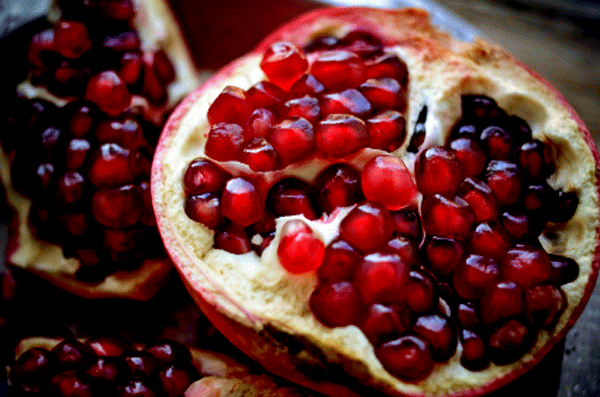
In the chambers of the pomegranate
sweet possibilities
stick together
like honeycombs,
thin parchment skin
divisive.

It stains like wine
but ruptures in the mouth,
a hard-edged sweetness.
The thousand damning things
never knowing soil
or the uncountable division of cells
as limbs stretch into air
and the thousand thousand others
emerge like rain
to feed
and feed on.

by Christina Shideler


images


Christina Shideler is a current MFA student in poetry at The New School.  She was born and raised in Texas, and no, she does not have an accent.  She worked in publishing for a few years before pursuing her life-long dream of being a writer. She is a vintage clothing fanatic, low-level connoisseur of scotch and sparkling wine, and a deep lover of science, though poetry has always had her heart.

by Wende Crow

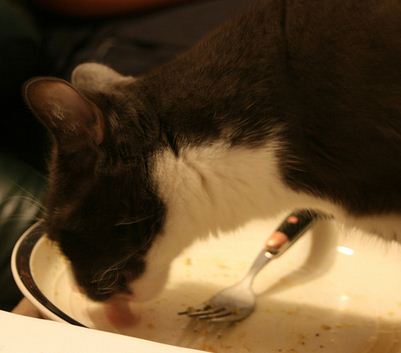
One night she appears at the gate in front of my apartment. Round yellow eyes glinting in the streetlight, two little lanterns of curiosity and longing. She rubs her thin body against the bars. I kneel down and reach out my hand and she meets it with the top of her head and closes her eyes and begins to purr.

I see her again and again, always at the gate, inside of which my neighbors upstairs have set out a dish of dry food and another of water—she is homeless, a stray. Everyone in the building loves her and wants her to be fatter, but no one wants to keep her. Not acknowledging that this kindness of feeding her will make her stay here, make her believe this building is home. I know not to feed her, for she will be mine if I do. This chaos, this noise, this expensive city to which I have just moved, this small apartment with cheap brown carpet, these are mine. I don’t know how even this much can belong to me. How I will keep them. How I will keep myself. How I would keep another creature.

But then coming home one night I round the corner from the avenue where the subway stops and she comes mewling up the street, having sensed me from half a block away in the dark. I put my bags down on the stoop and sit with her, stroking her gray and white neck, and she purrs and falls asleep in my lap. My thoughts move from the panic and noise of the day to her, to the steady magic motor in her throat. I leave her on the stoop and go upstairs to decide not to decide yet. To hope someone else will take her in.

The cocaine addict downstairs tries and fails to do so. She provides her food, but not a litter pan. The cat paces up and down the addict’s bed for an hour before finally releasing her bowels on the pillow. Right next to her face. The addict throws her out in the cold again. She tells me about this as we stand at the gate watching the cat eat from the dish the neighbors upstairs have set out for her again. She fails and I have been afraid I might fail. But this creature. She looks up at me and mewls and I know: this much can belong and be fed. I look at her and she knows. This much I can do, this is how I will keep myself. And the next night I buy her food and a litter pan and I feed her and she is mine.

She is inside with me and walking around on this cheap brown carpet. This much is mine. She and I keep these things, together. And she eats from her dish and drinks from her bowl in the kitchen. She spreads one forepaw to lick the crevices between the five toes and all around them, then places it on the floor and lifts the other paw. Sleeps at my side. She washes herself then jumps up to the back of the couch and licks the top of my head as I read. She dreams of running and twitches her whiskers. And when it snows I open the window out to the fire escape for her. She dips her paw in the snow and then shakes it wildly, the cold white fluff flying. She is lit from inside.

In the evening she watches me open the door and come in from work. She stands and stares at me in the kitchen. My crumbs fall in memorable patterns and she puts her nose to the floor to inspect them. She wreathes her body in circles around my shins, and then she runs to the bed and rolls around in the pile of freshly laundered towels. When I rub her she is electric and the sound she makes is electric and she closes her eyes and stretches and rolls her head back and chatters. We make little ceremonies that keep me. She grows fatter every day and sleeps wrapped tight around herself.

She sits in the sun on the windowsill and watches the leaves move around on the ground below. She chatters at birds. Never needing me to see her do this. She looks at me when I walk in out of a salty rain, close the door on a bewildering city. This much can belong to me. Mine, she says. I feed her and she is mine.


Wende Crow lives in Atlanta, where she teaches computer literacy to refugees. Her poems and essays have appeared in New Haven ReviewPloughshares, The Bakery, and other journals.


We are proud to introduce a new feature: The Inquisitive Eater Poet of the Month.  Each month a contemporary poet will present three poems and one personal essay in which food is consumed, passed over, or reckoned with.  Wende is our inaugural poet.


by Stacey Harwood

kitchen vixen: These were delicious. I made them over the weekend for my husband’s game night. I made them the day before, then skimmed the fat before reheating.  Then I served them with a big bowl of white rice and some spicy greens.  For dessert, I made chocolate chip cookies.  Everything was yummy and my husband was really happy.  Plus, his team won.  Can I take credit for that? 🙂

Alison: Awesome recipe!  Can’t wait to try it.

Lusty_locavore I made this too and it turned out great although I had to hit three stores before I could find the chestnuts. (Thank you Trader Joes!) Plus after I served it I realized I had forgotten the garnish but nobody noticed.  Deeeeelish!

MessyKitchen I followed the recipe exactly but for some reason the sauce was disappointingly thin even after letting it reduce for an hour so I mixed some arrowroot with water and added it and that seemed to help a lot but there were lumps so I put it in the blender.  It was OK but I don’t think I’ll make it again.

Grill king  That’s too bad MessyKitchen. I wonder what you did wrong. Maybe you added too much water at the beginning or didn’t have enough bones for collagen to thicken it up.  I’m just sayin’.  Mine were great.

LuvinSpoonful I went to that restaurant on my honeymoon!!!

LuvinSpoonful I went to that restaurant on my honeymoon!!!

LuvinSpoonful I went to that restaurant on my honeymoon!!!

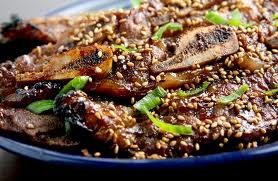
CreativeCookie My ribs are braising as I write this and my hole house is fragrant with the smell of all of the lovely ingredients marrying together.  I am grateful to the cow for providing the beef for this dish, and to the earth for growing the vegetables and to the Koreans for providing the Kimchi and especially to the genius who thought to put all of these things together in one recipe.  Every time I make this dish I will think of this first moment and remember how special it is to try something new even if it doesn’t turn out right.

LuvinSpoonful  Sorry!! My comment didn’t show up LOL!!!

이 요리는 진정한 한국지 않습니다. 한국이 없거나 음식을 먹으면 이 이었습니다. 찾지 않는 것을 이런 종류의 음식을 한국의 테이블에 있습니다.

Oat_cuisine Hey y’all.  Has anyone tried making this recipe vegan? I’m having a dinner party and want to serve it but we don’t go near the red meats so . . . . Since the ribs are the only forbidden ingredient here I figured I just ask.

Frugal_but_ fab Maybe it’s just me but this recipe represents what I consider a great failing of this Website: a total disregard for the effort required to make this dish.  Who has time to shop for all of these ingredients, spend hours chopping and measuring, then a few more hours waiting for it to finish cooking?  I had to use nearly every pot and pan I own! What are we supposed to do while our hungry kids are waiting to eat?  And don’t get me started on how much every thing costs!  Tell me what am I supposed to do with the leftover dried anchovies now that I’ve used only one iota of the ginormous bag I had to buy?  Even if the end result was good, I won’t make it again.

in60@sbcglobal.net Please check out my cooking videos. (http://www.youtubewatch?v=t2dcsi &feature=related) I’m 16 years living in Cohoes. SUBSCRIBE AND SHARE!!!!!

Grill king Oat_cuisine, are you tripping?  I don’t know where to begin. It’s a recipe for short ribs as in beef, flesh, animal.  It would be sacrilege to make this vegetarian.

VeggieMama  Oat_cuisine I was wondering the same thing.  I suppose you could sub seitan for the beef and it would be OK.  Grill king, why don’t you back off. I happen to know that the site administrators have worked hard to make this a safe space for women of all kinds (eg LGBT) to comment without fear of being attacked.  You know the old saying “if you don’t have anything nice to say . . .”

Gotta_cook:  I made these but I didn’t have short ribs so I used some frozen lamb stew meat and I browned it in the oven first. I was worried that the sauce would be bland so I used some wine and then at the last minute decided to put in a couple of tablespoons of ketchup.  I accidentally doubled the chili powder and ended up taming it with sour cream for a kind of Austrian-Korean mash-up.  I skipped the scrambled egg garnish and served it with noodles.  I’ll def make it again!

Oat_cuisine:   Thank you VeggieMama.  Grill_king:  I’m guessing you’re a man and so naturally you would have to be critical.  Has it occurred to you how much of our limited resources are used up just to create one serving of beef?  Maybe you don’t care about our environment but others do. Plus, you obviously don’t have good manners.

Grill_king:  Oat_cuisine FYI I happen to be a biodynamic farmer and I not only raise my own beef but those eggs that are the garnish?  From my aracuana chickens. And the daikon? I had a buddy bring me seeds from Korea (where he was serving in Peace Core, btw) and I’ve got a bumper crop. So much for my carbon footprint.  Do you grow your own soy beans? Make your own tofu?

VeggieMama:  Well what do you know? Being a farmer doesn’t stop someone from being a jerk.  I guess you’re emitting as much gas as your cows to befoul not only the environment but our courteous discourse too.

Imostlylurk: Thought I would chime in here because as a high school chemistry teacher I happen to know something about this subject.  That study about the cow “emissions” ruining our environment has been mostly proven to be untrue. (They can’t possibly produce as much as my 5th period chem class LOL)

CreativeCookie: Please stop fighting.  It’s not OK. 

Cheap_ polo_shirts: I really enjoyed the quality information to your visitors for this blog. I’ve been browsing on-line greater than three hours as of late, but I by no means discovered any attention-grabbing article like yours. It is lovely value enough for me.

Grill_king:  Oat_Cuisine how observant of you to guess that I’m a man. Why else would I call myself Grill_KING?? I just called you out on a stupid comment.  You don’t have to get all offended and be a (insert “c” word)

Oat_Cuisine:  More proof that you’re a D*&^head.

Oat_Cuisine:  Sorry. That comment was meant for Grill_AHOLE. Everyone else I love you and thanks for the support.

Comments deleted by administrator.

Comments deleted by administrator.

The comments are now closed.


Stacey Harwood is the managing editor of thebestamericanpoetry.com. She has published essays, poems, and journalism in The Wall Street Journal,Poets.org, Saveur, The Michigan Quarterly Review, and elsewhere.