Archive

October 2012

Browsing

by Trey Teufel

Variation on a Summer day
                  (after Wallace Stevens) 
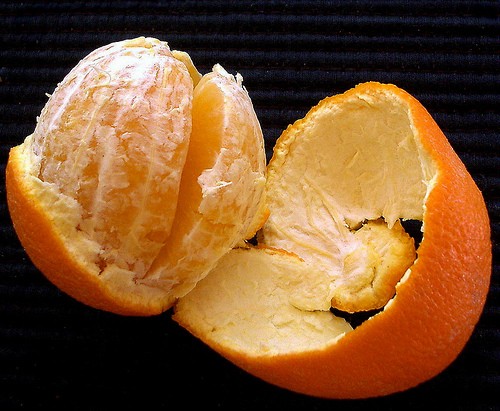
Last Tuesday we shared an orange
             Took turns and ripped off the skin
             Peeled away its textured coat
Rind collected under our fingernails
             We fed each other wedges
             Wiped juice from our chins
 Later
             Your hands on my face
             The smell of orange 
             Still under your nails

Trey Teufel is a writer, actor, and personal trainer living in Los Angeles, CA. He works out, acts on occasion, and writes far less frequently than he would like.

by Fabio Parasecoli

from Huffington Post

Japan occupies an interesting place in Western popular culture: as one of the most developed countries in the world, its presence is warranted among the major players in the global economy and in international politics. Its industrial and technological products are among the most common household names in consumer culture across the globe. Its popular culture, especially when it comes to fashion, design, anime, and manga, has a considerable following outside its borders. The disasters following the recent tsunami have also contributed to a prominent spot for Japan in the global imagination.

Yet, when it comes to food, Japan has lost some of its mystery. Restaurant patrons are conversant with sushi, sashimi, and tempura, and shoppers are less and less surprised to see wasabi, seaweed, green tea, and even mocha in the “international aisles” of their supermarkets. The recent documentary Jiro Dreams of Sushi reflects the interest of Western gourmets in a culinary tradition that, until a few decades ago, was shrouded in exoticness. Now we have access to delivery sushi; we can pick sashimi off little conveyor belts; and cookbooks, TV shows, and other media are contributing to make Japanese cuisine accessible and comprehensible. Still, there are still layers and layers that some Western foodies have yet to consider, including the many local traditions that stubbornly survive in parts of the country, the kaiseki dining and cooking style, and the ongoing evolution that has created relatively novel approaches like the Japanese-inflected wafu pasta.

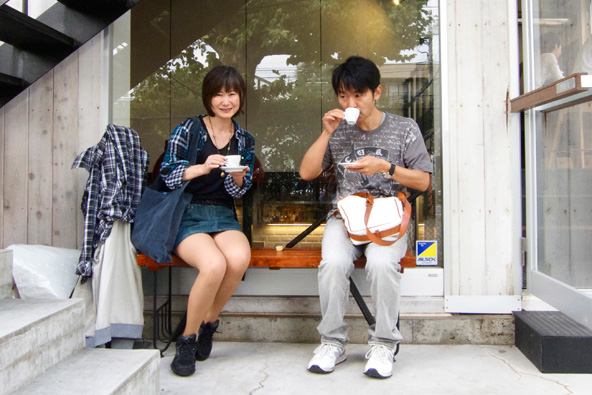
Merry White’s new book, Coffee Life in Japan guides us along as we discover a visible yet quite unexplored dimension of Japanese consumer culture. An anthropologist by training and by trade (she teaches at Boston University), the author takes us from coffee house to coffee house, uncovering a whole world that would be hidden from those wrongfully believing Japan is only about tea. As a matter of fact, it is the third largest coffee-importing country in the world, with an internal market shaped by high prices, high quality, and high costs of production. Although the country’s love affair with the drink is more recent than Europe’s, cafes were thriving long before the arrival of Starbucks.

White proves that the drink has played a significant role in the process of modernization in Japan through its ability to adapt to political earthquakes, changing urban structures, and evolving behaviors. Cafes turn out to be places where people can take a break from social pressure and express one’s individuality outside the harmonious consensus that many perceive as a defining trait of Japanese culture. Throughout the book we get to explore wildly different establishments, meeting a curious cast of characters that have dedicated their lives to preparing the best café possible, each embracing quite different standards. Preparations, design, techniques, atmosphere and soundscapes may vary, but all the café owners portrayed in the book seem to take coffee and customer care with the greatest seriousness.

Kodawari, the disciplined dedication and attention to detail that these individuals display, is far from being the stereotyped perfectionism (bordering on the pathological) that many attribute to Japanese culture. As White points out:

“A café in Japan is not a ‘global space’ -unless one counts the Seattle-based chain stores – nor is it usually a deeply local place, forbidding to newcomers… There is no single model for the café… The very openness of definition, along with the cultural parameters of services and quality that make these places ‘Japanese’ is the draw and the preservative of the café in Japanese cities… Its cultural logic is strongly Japanese, but the experience of the café can break almost all the usual rules of being Japanese.”

White wanders from café to café, from brewing master to coffee merchant, with nonchalant pleasure. At times the book structure seems far from linear, returning to topics and concepts already touched on before, but White’s affection for the world she describes is infectious. The narrative often reads like a memoir, and the author is able to transport us to places and situations that are not only described with the eye of the anthropologist, but shared with the passion of a true coffee lover.

by Nicole Santalucia

Oh Brother

I learned how to fly
so that you could see me hover over Manhattan
dropping cheeseburgers like bombs.
I aim for West 88th Street
between Broadway and West End Ave.
Grease splatters on your windows
and the meat is bouncing off rooftops.
The birds are at war,
let them win.
Now climb down from the tree
those branches need to grow.
Come down from there
and stop acting.
Your audience is human,
the sky above this island
has emptied itself for you.


Dear America,

There are lesbians wearing their grandmother’s wedding dresses.  America, why do I want to kiss your belly? This desire feels incestuous. America, I’m listening to Christmas music in July and frying your chicken. I’m hungry, standing in the banana aisle at the grocery store, pretending to pick up the lemons that fell so I can get a better look at my teacher’s legs; she shops here too.  America, of course I am going to be a poet. I drank all your beer before I turned nine. America, your kids smell like mustard and hotdogs. Please keep them on a leash.  America, there is no more room for any more elephants. America, when I find out I am pregnant, we’ll celebrate, and we’ll find a cure for your allergies.  America, I went to the doctor and he said the glaciers are melting in Juno, Alaska, and I’m worried we may be stuck here forever, where people are dying. America, I will cover you in plastic and get Walt Whitman to let us on his ferry. America, get out of bed, all of this is happening and I just want to be left alone.  America, your leather belt is too tight and your ass looks sexy in those pants. America, I’ve inherited my grandfather’s shotguns, thanks to you.


The Cannoli Machine at the Brooklyn Detention Center

The cannoli machine in the Brooklyn detention center is for the visitors
my dad waited in line when he went to visit my brother
he didn’t know he’d have to empty his pockets
take off his pinky ring and untie his shoes
This is the first time I saw my father afraid
but he wasn’t too afraid to stand in line with all the other fathers
in front of the cannoli machine
he ate two or three and noticed a little white cream filling on his cheek
when he saw himself on the surveillance camera
he noticed that his white t-shirt was washed too many times
and was starting to turn grey
that his socks didn’t match
I didn’t know this was how fathers were made


Nicole Santalucia is currently working toward her Ph.D. in English with a concentration in poetry at Binghamton University and she is the Poetry Editor of Harpur Palate.

by Roberto Montes

1 tbsp of butter (or margarine)
1 tsp of olive oil
2 slices of bread
2-3 slices of Provolone cheese
3 cremini mushrooms (cut into ears)
An indeterminate amount of Dijon mustard
An indeterminate amount of black pepper

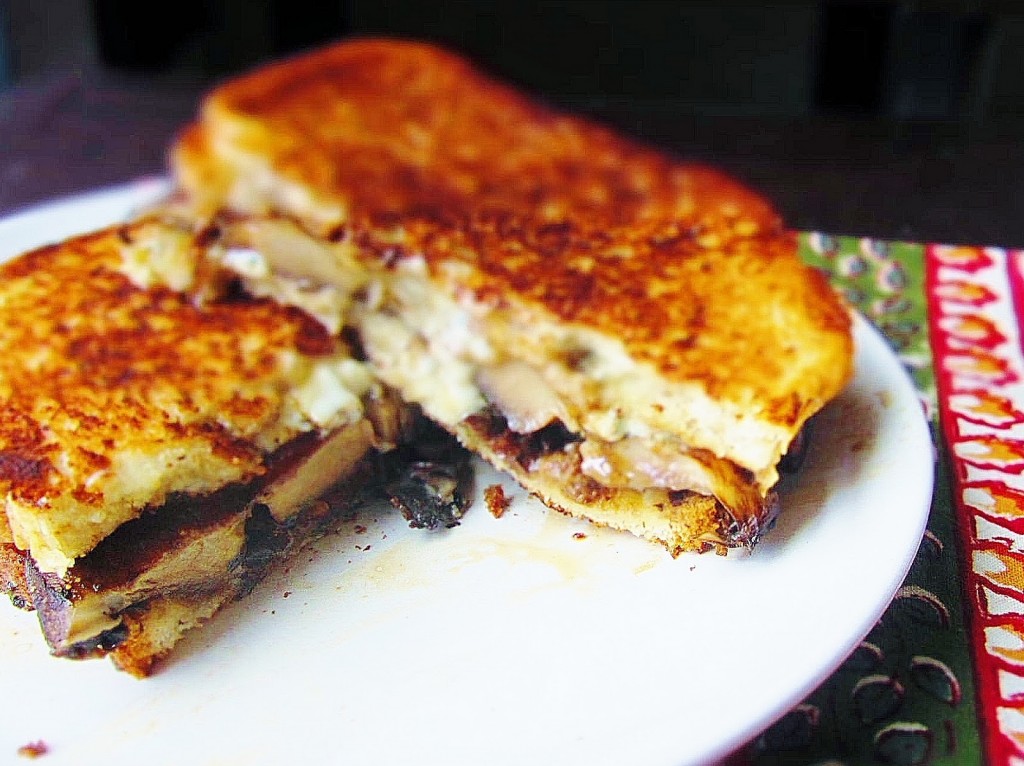
First impale your butter onto the point of your knife and, thusly, coat a warming skillet with its skin. In another skillet dollop oil. Heat. Move towards your cut mushrooms. Admire your handiwork. (‘A regular Van Gogh, this guy’ may ring your dome throughout these proceedings. This is normal.) Lightly toss the shrooms onto the oiled belly. There will be screaming. To silence this manipulate the skillet over the stovetop in a manner that vaguely resembles what you see chefs do on TV. It should be about 4 minutes before you remember you are not a chef on TV. Perfect. The ears are now shriveled from a loss of water. You will not see the water. The water’s gone. This is one of the few remaining arguments for mysticism in the 21st century. Enjoy.

In the butterskinned skillet place a slice of bread. You will want to keep track of time and/or the state of the bread from this point forward. The benefits of keeping track of time are obvious but bring with them the horrors of age. You will want your bread to mottle with a caramel color. You will want a lot of things. You will want and want and want and you will know when the mushrooms are sufficiently cooked because they’ll appear to strain themselves listening. For anything. For just one sign. (The sign will be your pepper, the amount of which you may add to your heart’s content, though be careful not to overpower.)

Your slice of bread is now Sahara’d with color. Well done. Delicately lay the cheese atop the bread as you would your lover. Fold any overhanging edges inward as you do your affections: to keep from harm. Hold back your tears. From the tilted lip of the second skillet pour forth your fungal ears. They will bounce and settle atop the softening.   Spread (or squeeze) the Dijon mustard over their dirge. This can result in a picture if you want. If you don’t it will happen regardless as it often does.

The second slice of bread should tarpaulin the first, the cheese, the mushrooms, the pepper. Flip your sandwich over (it is now safe to call it a sandwich.) This newly-searing slice will brown at a much quicker rate, as if recalling its brother’s crimes. Once tawny, spatula it onto a pure white plate.  Use the spatula to divide the sandwich diagonally, as you’ve used so many.  Serve it to the one you love and throw your love away.

Roberto Montes is currently urging an MFA at the New School. His work is at or forthcoming from Forklift, Ohio; the Best of the Net 2011 anthology; Sixth Finch; The Good Men Project; and Vinyl Poetry among others. 

by Valeria Necchio

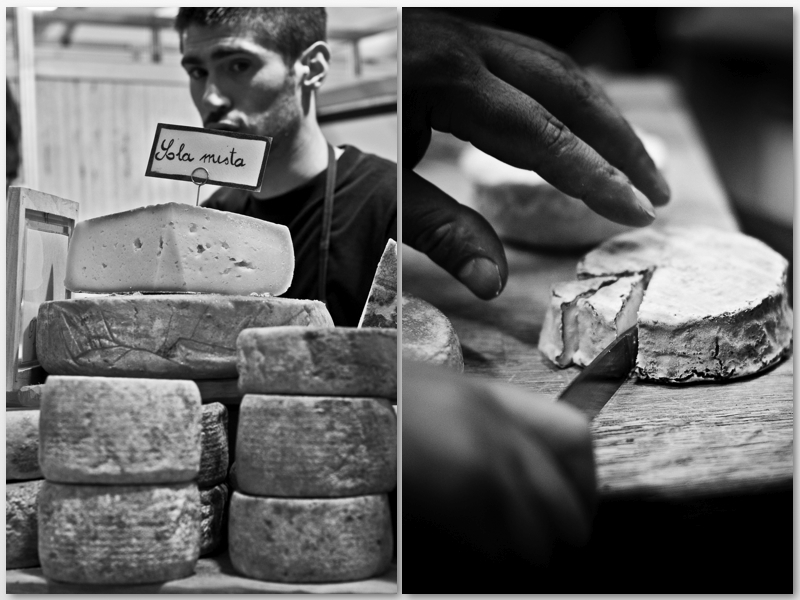
Cheese –milk, salt, starter culture, rennet. Four ingredients for endless results, shapes, aromas, flavors. What makes the difference is the intangible ingredient, the human element. Centuries of culture, traditions, secret recipes and know-how influence the future of the curd, whether it will be a Comte or a Parmigiano. When you taste real cheese, you taste a piece of that culture, of that place, of that genius.


Valeria Necchio graduated from the Unviersity of Gastronomic Sciences with a master’s degree in Food Culture and Communications. Based in London, cheesemonger for eight hours  a day and thinker for twenty-four, she is inspired by the food and traditions of the place she lives in, by seasonality, farmers and local markets. Believing in the “good food looks good” credo, her pictures celebrate the natural beauty of food and attempt to communicate flavors, culture and sense of a place, all in one image.