The obsession I used to have for boy bands and heart throb actors (mostly just Robert Pattinson as Edward Cullen, see: collage I put in my Juicy Couture wallet), has been reborn into a deeper romance with female indie pop rockers in part because they mirror me. It’s still a love affair, but it’s one I’m having with myself, reflected in these women.”
I don’t play the guitar but I’ve been keeping my fingernails short so I can learn. I bought a mahogany wall mount to hang it , a three-quarter-scale Taylor, a gift for my last birthday. Sometimes I lie in bed after having just woken up, thoughts gently seeping but not yet permeated into that pink matter, and I gaze at its sanded curves, surely, dusty, and see myself on stage, back lit with red lights, in an oversized t-shirt, a mini skirt, leather boots, and glittery makeup. I’m an amalgamation of all my favorite indie pop rock girl band leaders – my current musical haven.
I’ve never met a demographic form that has let me check off “attracted to some androgynous women and the occasional woman that just seems familiar in some way… like that girl I got lunch with after group therapy” or “went on a date with a girl that I met at a Halloween party who was dressed as Bradley Cooper’s character in A Star is Born and we went to second base” or “kissed a girl in a pool at night and felt the water between us become warmer than the air around us” or ” asked if I listen to a girl in red” (I do), which is, I only just learned, years later, code for asking someone if they’re gay (I’m not). And yet the one thing all of the artists I’ve been enjoying as of late seem to have in common is that they’re queer. Sexuality is a spectrum, we know this, so while I tried “she/her/they” pronouns and that didn’t feel quite right and I’m to gay enough to fill the “bisexual” box, I sometimes hesitate over “straight” and feel the urge to invoke my go-to anthems which happen to feature WLW (women loving women) lyrics.
Questioning one’s sexual orientation as a result of the music they listen to sounds just about as fanatical as saying listening to gay music will make you gay. But if you’re are any amount of plugged into online coversations around bands like boygenius, you’ll have come across calls for artists, Phoebe Bridgers and Lucy Dacus in this case, to prove their queerness or do what they call ‘[turn] in their gay paperwork.” Fans, too, are sometimes subject to the same scrutiny. Isn’t it possible instead to say that what is going on here is a sonic trend characterized by polished, accessible melodies and introspective lyrics that touch on female experience and expression beyond binaries or spectrums.
I’m relatively sure of this because I don’t feel that deep sense of longing I used to feel when I’d watch One Direction music videos on repeat as a fourteen-year-old, and I haven’t set my phone’s lock screen wallpaper to a photo of Miya Folick. The obsession I used to have any boy bands and heart throb actors (mostly just Robert Pattinson as Edward Cullen, see:collage I put in my Juicy Coutre wallet), has been reborn into a deeper romance with female indie pop rockers in part because they mirror me. It’s still a love affair, but it’s one I’m having with myself, reflected in these women.
orchestrated and experiment in an effort to try and understand what is about the sound of my favorite songs and bands that lights me up- records by artists like MUNA, Miya Folick, Soccer Mommy, girl in red, boy genius and the work of the latter group’s members, Bridgers, Dacus and Julien Baker:
I listened to “Silk Chaffon” by MUNA, the original band and a cover by Mia Wray, part of triple j’s Like A Version. MUNA’s has that feeling of being young and free, on summer break, with your whole life in front of you. The time before you realized that no one was going to notice your potential and take you by the hand and usher you to greatness.
Back then, my friends and I were generating our own suburban narrative of nostalgia in the moment, hot boxing my 1998 Jeep in the library parking lot. Wray’s cover is the worst part of the drive home; it’s hopeless, it’s saying goodbye, it’s sad girl folk. The piano is featured prominently; I see languid fingers pushing down on the keys. Her voice is distant, like you can
In these records, there’s an added layer of being HOT and feeling the static between your body and your crush’s and the bliss in that moment when you’re pretty sure he likes you too. I did feel free and that greatness would be easy and inevitable, but the closest I got to that staticky euphoria was wrapped in the arms of my college love the first and only night we kissed. But by then I knew too much about loss.
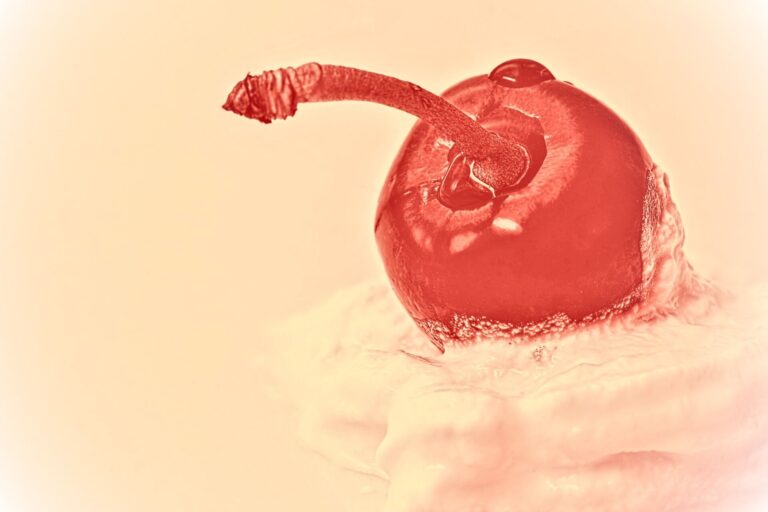
see her in front of the microphone recording the song. Kate Gavin, the lead singer of MUNA, on the other hand, feels like she’s right in your ear. It ‘s so intimate. This original version fills the gaps that love impressed but never stayed, in the form of soft serve that somehow doesn’t give you a brain freeze, spiraled with whipped cream, and topped with maraschino cherry, nestled, slightly off kilter, on top.
It’s nostalgia.
More specifically, it’s a flavor of nostalgia that represents an era I never experienced, but wished I had. It’s this that I willingly suit up in; it makes me glow.
On a technical level, a musician friend of mine told me that many of my favorite indie rock pop songs employ Jesus chords. He texted me:
Jesus chords are a style of playing
where the ring finger and pinky
remain on the same two notes
while the pointer and middle finger
move around the fretboard,
creating a high droning sound that
pairs with a moving melody. Think
“Wonderwall” and “Crash Into Me”
hahaha
Whatever it is, that’s me.
Sabrina Tenteromano –
Sabrina Tenteromano’s work explores identity through familial legacy and the human condition. When she is not writing, she enjoys taking too many photos, training her heart through Tibetan Buddhist practices, and training her body through strength conditioning. She’s a first year student in the MFA Creative Writing program in the nonfiction genre and a nonfiction editor of the Inquistive Eater (where the essay she submitted for this issue was rejected and her fellows editors asked to publish “Cherry on Top”).