Tag

food writing

Browsing

This was originally published in The Inquisitive Eater Anthologywhich you can now purchase online.


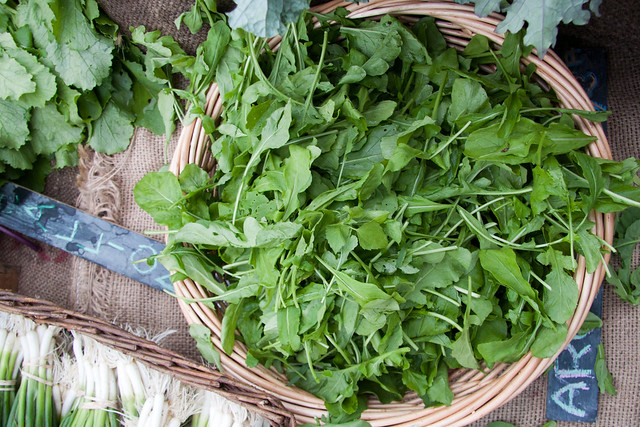
What’s your go-to snack when you’re reading or writing? Raw arugula.

What’s your favorite piece of writing that has to do with food? The Sexual Politics of Meat by Carol Adams.

What do you think is the most writerly food/drink? Scotch.

What’s a food you’ve read about that you wish you could actually experience? I have never had a Christmas goose. I’d like to try that.

If you had to live off one food for the rest of your life what would it be? Raw clams.


Sarah Gerard is the author of the essay collection Sunshine State, a New York Times critics’ choice, and the novel Binary Star, a finalist for the Los Angeles Times first fiction prize. Her short stories, essays, interviews, and criticism have appeared in The New York Times, Granta, McSweeney’s, The Baffler, and other journals, as well as anthologies. She lives in Florida.

Featured image via Flickr

[youtube=http://www.youtube.com/watch?v=QUSivYb1XGs]

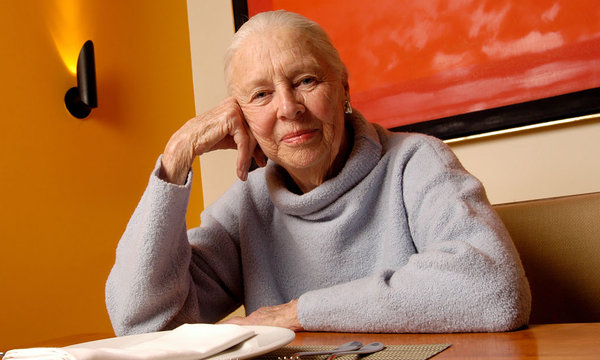
Marion Cunningham (1922–2012) started her professional career at age 50 after taking a cooking class with James Beard. He was so impressed with her cooking that he hired her as his assistant, a position she held for the next 11 years. On Beard’s recommendation, Random House selected Cunningham to edit the 13th edition of The Fannie Farmer Cookbook (1979). Its success inspired Cunningham to write her own cookbooks, including two for people who have never cooked before. Her dedication to home cooking led former Gourmet editor Ruth Reichl to proclaim, “If Beard was the father of American cooking, Cunningham became its mother.” Speakers include Judith Jones, senior editor and vice president, Knopf; Laura Shapiro, author of Something from the Oven; and Anne Mendelson, author of Milk: The Surprising Story of Milk Through the Ages. Moderated by New School Food Studies faculty member Andrew F. Smith.

The Culinary Luminaries series celebrates outstanding figures in the world of food and gastronomy. Past panels have been devoted to James Beard, Julia Child, M.F.K. Fisher, Craig Claiborne, Joseph Baum, Clementine Paddleford, Pellegrino Artusi, Robert Mondavi, and Henri Soulé.

Melissa Clark dishes about how she got to be one of the most successful and prolific food writers in America

by Brian Gresko

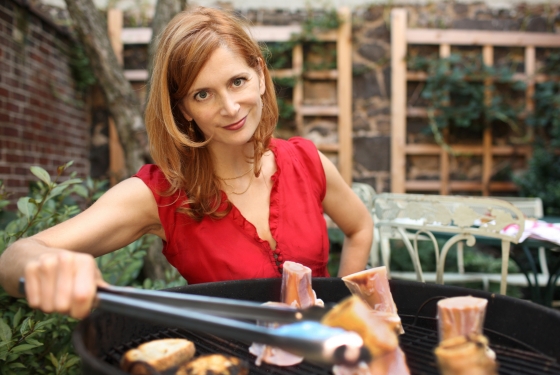
Chances are somewhere in your cookbook collection, you own a book by Melissa Clark. She’s co-written over thirty of them, causing one interviewer to dub her “the Joyce Carol Oates of food writing.” Her name also graces the pages of The New York Times Dining Section each week, where she writes the column “A Good Appetite.” The column’s long-standing popularity led to a cookbook of its own in 2010, In the Kitchen with A Good Appetite, in which Clark pairs delicious recipes with personal stories  detailing both the dish’s development and her life-long passion for food. Her latest book, Cook This Now, brings readers into her kitchen month by month, with 120 recipes that emphasize fresh, seasonal, and local ingredients.

I had the chance to talk with Clark over a rich, spicy glass of rumtopf – a liquor made by macerating fruit in rum – in a cozy sitting room just outside of her kitchen, which is, for one who spends most of her time there, a modest-sized space, fitting a Brooklyn brownstone. (Clark’s a native Brooklynite.) However, behind those clean cabinet doors teems a spice collection fitting a queen, though Clark prefers to call herself a kitchen pack-rat. The fridge, she told me, has been over-run with condiments of all sorts. This amazingly well-stocked though unassuming room serves as a metaphor for her work at large.

“I am a home cook,” she said. “It’s pretty much just me and another person working in the kitchen, and so I’m always thinking, how can we get this done quickly? When people are in test kitchens, it becomes different. You probably have someone washing your dishes and mopping your floor.”

When writing her column, “I think of myself as the cook down the block who knows a little bit more than you do”—though her years of experience means she knows more than just a little. Her modesty, however, is part of her column’s appeal. Clark’s authoritative and smart, but approachable and chatty. A natural storyteller, the essays that accompany the recipes include details about her husband Daniel and daughter Dahlia, or advice from her mother. “It’s quirky,” Clark admitted.

Often, the recipes develop by association, as she recalls great meals she’s enjoyed and lets their flavors inspire her own cooking. Not surprisingly, before deciding to pursue an MFA in Journalism from Columbia, Clark considered studying history, perhaps even writing historical novels. She ranks the books of Barbara Tuchman among her influences, which may account for the element of cultural anthropology that informs her decisions at the stovetop.

“When I travel I always see what people are doing in the kitchen. Dishes that are a part of a culture are there for a reason. They make sense on a lot of levels. The ingredients are all available or in season at the same time, they all taste good together. That’s why they go on from generation to generation. I like to think about the logic of these dishes and apply it to a spin-off, or simpler version.”

Most nights, Clark will free-style dinner based on what she has in the fridge from the local Greenmarket, or by whipping left-overs into something new. These meals are less masterpieces, and more sketches.

“If I hit upon something that’s really great, then I’ll go back and test it. I’ll have a concept. Like, ‘Remember that time I added the preserved lemons to the scallops? That was really good! So let me come up with a dish that has scallops and preserved lemons, and what could I add to that? Maybe some tomatoes and garlic…’

“With that in my head, I’ll make that dish again for me and Daniel, but I’ll write it down. That will be the beginning of a recipe. Then I’ll take the dish and test it again. It’s a several step process.”

Growing up in a house focused on food – on family vacations to France, her parents made a hobby of visiting as many Michelin starred restaurants as they could – Clark went on to cut her teeth in low-level kitchen positions, then catered her way through grad school. She learned fast that she would rather be writing. “I hated the schlepping of catering. You’re always running around! I’m very sedentary. I like to sit. I like to be at my computer. Like most writers, I don’t like to leave the house. I’m kind of asocial.”

Her dream, early on, was to write for The New York Times, something she worked her way slowly toward. In the beginning, she never turned down a job. “I wrote the boring stuff, the exciting stuff, restaurant reviews, interviews, Q&As, trend pieces. I wrote it all, because I had to.” She once re-wrote a cookbook in two weeks.

She even interviewed for a job she didn’t want, as a news assistant at the Times, just to get her foot in the door. The strategy paid off, as the food editor began offering her freelance assignments. She made the most of the opportunity. “I handed everything in on time. I worked really hard to make those pieces perfect – I showed them to my mother, made my father read them, they all edited them. The fact is, it doesn’t matter how good you are, especially at the beginning. Really, talent is so small a part of the whole success component. It’s more about being likable, and easy to work with, and handing clean copy in on time. The New York Times learned that they could call on me and I’d deliver. Even if they called the night before, I never said no.”

Simultaneously, she cowrote books with celebrity chefs like Daniel Boloud and Peter Burley (of Manhattan’s Angelica Kitchen), to just flat-out celebrities, like Faith Ford. Helping chefs capture their recipes on the page continues to play a role in her career, with a forthcoming book from Brooklyn’s acclaimed pizzeria, Franny’s.

The one thing she’s learned from all of these projects is that there’s no cookie-cutter process to collaboration. “I’ve worked with chefs who’ve basically done nothing and I’ve done the entire book. I live off their fumes – go into their kitchen and talk with their sous chefs and figure out what they cook, then write their book from that. I’ve also worked with chefs, like Claudia Flemming from The Gramercy Tavern, who was at my side every second and it was amazing. The micro-managing control freaks are the best, because you learn so much from them.”

The wonderful side-effect of these projects is that Clark received tutorials from some of the country’s best chefs, learning how their most famous dishes come together, and, over the course of extensive interviews, how they think. It’s this font of knowledge and insight she draws upon in her own recipe developing, at first in her column, and now as a cookbook author in her own right.

Underlying Clark’s delectable dishes and charming stories runs an old-fashioned respect for the hard work involved in putting together a great meal, and in using the best, freshest ingredients. “I want people to eat real food, I don’t want them to eat processed food – nothing in my books is processed. Especially in this last book, Cook This Now, it is all fresh, all real. If people could just eat that way so much good would come of it in a global, environmental way.”

She gets this message across the way any good chef would; by making it impossible to turn down. Her food’s so good, and so straightforward to execute, that anyone interested in cooking just gets it.

“When I’m cooking for me and my husband, Daniel, he’s always like, ‘Just make something simple so we can be together.’” Clark said. “And I know that everybody thinks that, cooking is really about sharing food.”

 Brian Gresko’s author interviews and essays on books and culture have appeared on The Huffington Post, The Atlantic.com, Salon, The Daily Beast, and The Paris Review Daily, among other publications. In print, he has published interviews in Glimmer Train Stories, Slice Magazine, and his conversation with author and New School faculty member Helen Schulman appeared in the paperback edition of her novel This Beautiful Life. He graduated from The New School’s MFA program in 2009 with a concentration in fiction.

by Courtney Watson

“It means depraved.”

The word on the editorial chopping block was “decadent,” which I had used to describe a rich, seven-layer chocolate mousse truffle cake, drizzled with chocolate ganache in a restaurant review that I submitted to a local magazine publisher for whom I regularly freelance. The cake was perfect, and my palate still tingled with the memory of the confection, which featured a flawless balance of sweetness mingled with bitter dark chocolate and the merest suggestion of hazelnut. It was one of those rare occurrences where high-quality ingredients met with a great recipe in the hands of a skilled pastry chef. The result was sublime, heavenly, and, I can assure you, positively decadent.

Copy Editor was having none of it.

Like almost all of our conversations, this one took place over the phone, probably while I was driving or on the treadmill, likely watching that elfin waif Giada on the Food Network while attempting to power walk off the previous evening’s caloric catastrophe. I could almost hear Ed grinding his teeth into the ether, breathing deeply in an effort to quell a self-righteous sigh.

“It’s exactly how it tasted. It’s the first word I thought of.”

“But that’s not what it means.”

Ed and I had these delightful little chats once every three weeks or so, going back and forth until I couldn’t stand listening to him any longer, usually for about 45 minutes. But not this time. This one mattered.

“Word meanings change.”

I could picture Ed, Golem-like, hunched in the cave where this particular publishing house locks away all of their copy editors (with good reason), his ragged talons digging into tufts of hard copy that feather his desk like downy snow drifts, preying on articles crippled by grammatical errors and oversights. This was a man who once gave me a 25 minute lecture on the difference between button-up and button down. He was a veritable martyr for appropriate usage. And now this—the irreverent hijacking of a word for dubious purposes. On his watch, no less! It was enough to burn any gatekeeper of the etymological congress.

I remember hearing him mumble something about an orgy before hanging up. I imagined Caligula in the kitchen with that British culinary vixen Nigella Lawson, stirring up a saucy batch of choco-hot-o pots and licking each other’s fingers and the true meaning of the word didn’t seem entirely inappropriate. The way Ed saw it, he was the only thing standing between me and the gradual erosion of the English language—food writers the world over be damned. It was a losing battle, and he knew it. Taking an argument about a decadent dessert to the editor-in-chief, who never met an alliterative pairing he didn’t like, was more trouble than it was worth. The inappropriate adjective would stay, and then who was to stop me from urging readers into naughty romps with seductive soups and luscious leeks and soon everyone would be diving headfirst into honeyed pools of sin.

Though my review of the restaurant, a beautiful old place overlooking the polo fields in the village where I live, will be quickly digested and forgotten by the magazine’s readers, the taste of that cake will remain on my palate for a long time. I am always intrigued by the way some people talk about their memories as though they can be revisited at will, like glimmering gossamer threads that can be drawn from the cerebrum and placed in an internal Harry Potter-esque Pensieve to be viewed like an old home movie. My mind doesn’t work that way. My memories come to me in unbidden sensory bursts, triggered by a familiar taste or smell; flavored recollections that are sweet, sour, salty, savory, and, yes, sometimes even decadent.

I was 19 and majoring in journalism when I got my first food writing assignment, a travel article for the Key West Citizen, which was running a series about local treasures that didn’t get a whole lot of traffic. The piece that I was assigned was about the No-Name Pub, a former brothel at the end of a dirt road on one of the lesser known Keys. The tiny bar was grimy and dark, a cult tourist attraction papered with decades worth of dollar bills. From the outside, the rundown clapboard house looks like the sort of place that if you saw it, you’d never stop. If you did stop, you certainly wouldn’t eat there. Well, I stopped, and I ate there, and it was fantastic.

When I told my editor that I ate pizza at an island restaurant known for its seafood, she gave me a look that suggested I surrender my flip-flops and Florida ID card immediately. A moment, please, before you judge me; the second I walked through the door of that dirty little restaurant, the hot scent of cheese and sauce and rising dough rendered me completely incapable of ordering anything else. The pepperoni crisped and the sauce bubbled and suddenly there was room in the food-writing universe for a new kind of logic, the sort that made pizza a rare delicacy on an island surrounded by fish. Who needed fresh mahi-mahi that had been swimming just hours earlier when there were slicks of bright orange pizza grease to be tended to?   The cheese was thick and the tomato sauce slightly tart, the whole thing perfectly complemented by a crispy and chewy (at the same time!) pan crust sprinkled with microscopic crystals of sea salt. I loved the restaurant and, more importantly, I loved writing about it.  Though I had been vaguely aware that people actually got paid to go to restaurants and write about food, that day marked a revelation.

It was at the No-Name Pub on Big Pine Key that I found a journalistic niche that truly interested me. Day after day my peers and I sat side by side tapping out obituaries for dead celebrities and mock-ups of layout while dreaming about the articles that we really wanted to write. While my classmates envisioned themselves traipsing around caves in the latest War-tornistan, hot on the heels of Christiane Amanpour, whom I admire very much, I knew that the duck-and-cover lifestyle wasn’t for me. Duck confit, maybe, but the only cave you’ll find me in is a wine cellar in Provence that’s well stocked with vintage wines and aged cheeses. I’m not one for whistle-blowing reports on bank fraud or larceny or grisly homicide beats. I prefer to seek my place as a reporter in the fireside glow on the cozy hearth of the fourth estate.

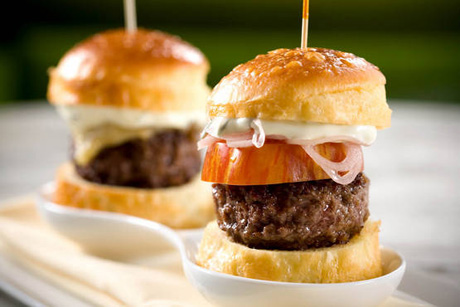
More daring journalists can keep their gods of war and conquest—Dionysus and I will be over by the bar munching on Kobe sliders and checking out the latest innovations in foam. For me, adventures in food writing have offered the opportunity to grow as a writer in a place where the hours are sweet, the wine is flowing, and the beets are often candied.

Courtney Watson’s fiction, essays, and journalism have appeared in The Key West Citizen, Black Lantern, The Florida Horseman, and more.

Clementine Paddleford was the first American journalist to take food seriously. In her legendary columns for the New York Herald Tribune and This Week Magazine, she pioneered a smart, sassy reporting style that managed to elevate food writing from the dull formulas of home economists to must-read material. Flying around the country, sometimes in a Piper Cub plane, which she herself piloted, she worked tirelessly to gather the best recipes from cooks in every region. That meant seeking out the best cheesecake in New York City, hunkering down in chili parlors in Texas, and touring salmon canneries in Alaska—and tasting everything she could find in between. It also meant that between 1948 and 1960, she traveled more than 800,000 miles in the pursuit of food—more than three times the distance from the earth to the moon. The marathon paid off: Paddleford’s weekly readership topped 12 million during the 1950s and 1960s. In 1953, Time magazine named her America’s “best-known food editor.” At the height of her career, Paddleford made a salary of $250,000—at the time an almost unheard of sum, especially for a woman. In 1960, Paddleford published How America Eats, a collection of 12 years of columns that became a seminal work. Many have regarded Paddleford as America’s first food journalist.
This panel revisits Paddleford’s contributions and discusses her legacy. Panelists include Kelly Alexander, former senior editor at Saveur and North Carolina-based author of the critically acclaimed biography Hometown Appetites: The Story of Clementine Paddleford, the Forgotten Food Writer Who Chronicled How America Ate (Gotham 2008); freelance journalist and author Betsy Wade, whose newspaper career began at the Herald Tribune, where she worked in Women’s News with Clementine Paddleford; former restaurant columnist at Gourmet magazine, Colman Andrews, who was the co-founder and editor-in-chief of Saveur; and Molly O’Neill, journalist and author of three award-winning cookbooks, a memoir, Mostly True, and editor the Library of America’s anthology American Food Writing. Moderated by Andrew F. Smith, faculty at The New School’s Food Studies Program