Archive

May 2013

Browsing

The Food Studies Program of the New School for Public Engagement is partnering with The James Beard Foundation (JBF) to launch a series of panel discussions titled Dining + Design: Conversations with Chefs and Architects on Creating the Ideal Dining Experience. This unique series will feature conversations with top toques and architects, highlighting the critical relationship between a restaurant’s culinary concepts and physical design in creating the ideal dining experience.


This is the second panel discussion of the Dining + Design series. Speakers include:

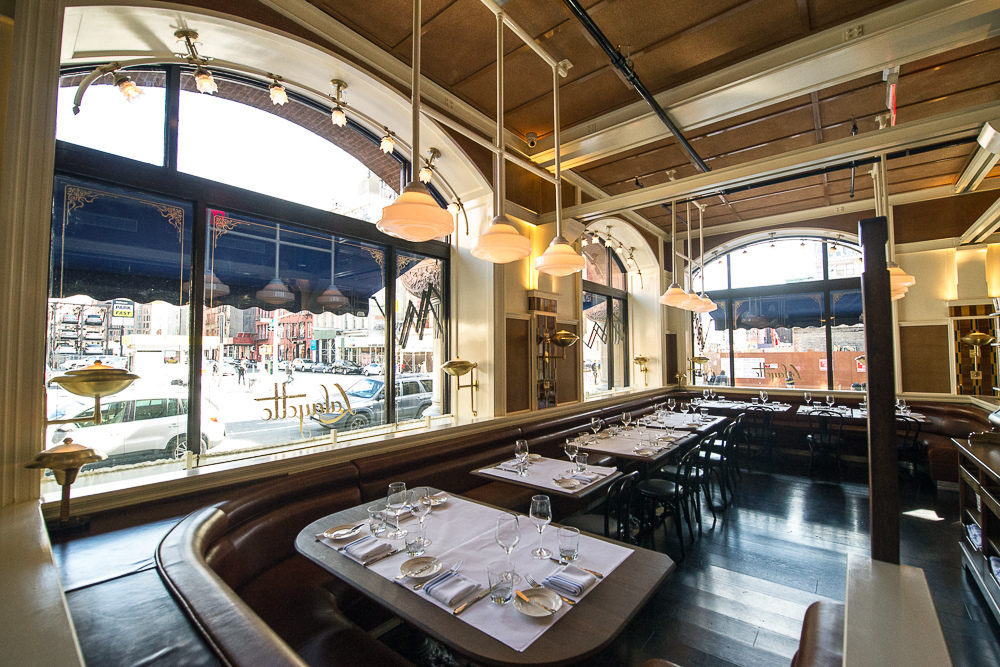
– Chef Andrew Carmellini, The Dutch, Locanda Verde and Lafayette (coming soon)
– Robin Standefer and Stephen Alesch, Roman + Williams
– Moderated by Fabio Parasecoli, Coordinator, Food Studies program

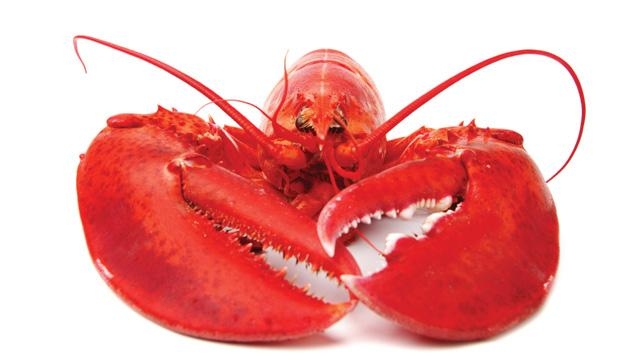
Chester swam away from the light. He liked the murk, and the cool side of the sand. He taunted and teased but never entered the pearly web of heaven when it was laid before him. He knew he was safe. No one wanted a lobster.

Until one day, while practicing his falsetto, his claw got stuck on a thread floating at the surface. He was worn. He squirmed and squawked but the others were too busy keeping house: Angela was tidying the cupboard and Reginald was teaching little Jimmy to play polo.

Up Chester went. He knew he’d be spared, as he wasn’t a Bass or a Salmon, but he started to pray. He prayed to the High Holies and clicked his claws three times. He did deep breathing, while focusing intently on his third eye.   He held on to a Holdfast, but it broke. When he reached the Euphotic  (not to be confused with the euphoric) he faced one, large, gaping mouth, and then was hit with a giant sigh of disgust, as he was hurled back into the sea-arms by the Fisherman.  He sighed, for he felt neurotic and scared but pretty much glad to be back with his friends in the Necrotic.

*

Days later, Reginald was lured by the pearly web of heaven, and he clamped on. He was getting out of this hell-hole. Sick of his kids, sick of his job; sick of the plankton; and most of all, sick of his wife. When he skivvied up that line and reached the sunlight, he gave the world’s biggest smile, and played,  The Cucaracha with his claws. He curled his mustachios, and swung his hips, but Christophe let out a hardy laugh and said, “Bottom-feeders – good for nothing!” Reginald, too, was sent back to the deep, muttering about the cruelties of life.

His wife, Angela, for lobsters mate for life, had her death-stare set on Reggie. She listened to him recount the experience, “I don’t know. All I understood was, “bottom feeder.”

Angela rolled back her teeny, and beady eyes, and snapped her claw real loud, not once, but twice and fiercely. Clams shut. Bubbles burst. Her kids, fled to the corners, for they knew she meant business. “I’m nobody’s bottom feeder,” she said, “That’s not the crustacean my momma raised.”

*

When the shine fell to the sea, she followed that glimmer and reached the sandy shore. Christophe had never seen such a good-looking lobster. She was dark as sin and with the sass to match.  When she saw his hand reach for her tail, she clipped and clawed but was too slow for his thumb cracked her tail. A sweet and salty scent rose, and filled Christophe’s nostrils.

Suddenly, he had blinders on:      all        he      saw     was        Angela.

He dove into the sea, flailing through the seaweed and the cold. Her juices were still under his fingernails. He grew delirious and desirous at the same time. He tossed off his long-underpants; kicked away his monocle, and swam like there was no tomorrow.

He saw hundreds of lobsters and lunged at the. Suddenly, he held hundreds and rose to the surface. He was a man with a thousand beating hearts. He began to salivate, and his arms grew heavy with weight, with meat and with what the future would hold.

*

I’ve got a gold mine, thought Christophe, as he dropped the lobsters in the center of the Town Square. He set a cauldron to boil.

He threw them to the floor one by one, and as their shells cracked, shutters opened; doors were unhinged; pick-pocketers came forth with palms open; horses halted and, the heavens parted.

“Eat,” said Christophe, and he showed the men the cracking. He showed the men the sucking and the peeling. He said, “sing when they start to scream.”  Soon, the town had a new delicacy and Christophe saw coins.


Leah Umansky’s first collection of poems, Domestic Uncertaintiesis available now from BlazeVOX Books. She is the host and curator of the COUPLET Reading Series and she is presently at work on her second collection of poems focusing on our technological world, AMC’s Mad Men, and life in the 21st century. Read more at http://iammyownheroine.com

Book Review: The Cassoulet Saved our Marriage: True Tales of Food, Family & How We Learn to Eat

By Caroline M. Grant & Lisa Catherine Harper
Publisher: Roost Books
Released March 2013

By Larissa Zimberoff 15797796

There are books of essays that are meant to be picked up and put down, up and down, slowly turning the pages and taking time to stop along the way. Then there are others that are the exact opposite, where you’ll want to keep reading late into the night, when you really should be asleep.  The Cassoulet Saved our Marriage: True Tales of Food, Family & How We Learn to Eat, a new book from Roost Books, is wonderfully in the second category. The bright pink cover, featuring a line-art drawing of a steaming pot with curly-cue swirls floating upwards, beckoned me like a favorite dish. I couldn’t wait to open it up.

The collection of essays, sourced by “Learning to Eat” blog authors Caroline M. Grant & Lisa Catherine Harper, is a balanced mix of names I recognized and those I had yet to know. Gleaning the histories of these writers made me feel as if I were standing in their kitchens, leaning against the counters with a glass of wine in my hand as I nodded my head along in an I-know-exactly-what-you-mean way.

The essays are grouped into three sections: Food, Family and Learning to Eat. In “Food” there are stories of  ties to one’s culinary past. In an essay by Sarah Shey, we travel from the memories of her mother cooking on a farm in Iowa, to the present-day where Shey does the improbable: she cooks for the Polish construction workers outside her apartment in Brooklyn, savoring the joy when they return with an empty plate. Keith Blanchard writes of his painful junk food addiction, which left him with a smile littered with cavities, “a double-strand necklace of silver and gold beads draped over a few remaining stalactites and stalagmites of original tooth enamel.” It made me recall those crinkly candy wrappers, hidden and stuffed in my own pockets. The section closes with an essay by Phyllis Grant with prose alive in its urgency: I wanted to be her, I wanted to be the asparagus tips she was cooking, and the poached egg she’d just speared with a fork.

In “Family” we find the eponymously titled essay of the collection—a series of letters between a husband and wife. There was clearly an argument, a stalemate of sorts, but we’re not let in to that part of the drama. Instead we learn of their annual cassoulet parties and what they mean to each partner. The most affecting of the essays is by Karen Valby, who writes of going hungry as a teenager, and of the envious pain she felt in the cafeteria every day at lunch. She writes: “If I want your food, I want more than your lunch. I want your life.” When I read that line I had to stop. This vulnerable essay of need and want will make you look at food, and hunger, in an entirely different way.

The book closes with a set of essays about “Learning to Eat,” many of which center around how we pass down our history of food to our children. New York Times writer Jeff Gordinier writes of wanting his son and daughter to eat foie gras, not for the thing itself but for what it signifies: the desire to try new experiences. Gregory Dicum, a mostly-vegan vegan, writes of feeding his new son things he does not eat, and the personal dilemma of watching his ideas of food evolve along with his son’s growth. And Edward Levine writes of anxiety in an age of over-cautious, over-educated, danger-averse parents––PTA parents like himself––who become embroiled in email threads in a “throbbing symphony of food angst.”

I liked reading the essays and, in the back of my mind, wondering what recipe the author would select to share. I didn’t necessarily want to make any of them. But as my eyes scanned the details I thought about where each had come from, feeling the nostalgia from just a few pages back, and I quickly stirred up the ingredients, making the whole thing virtually in my mind.

The Cassoulet Saved our Marriage makes you feel like you’re in your favorite restaurant, the one with the black-and-white checked tablecloths, narrow tables, mirrors reflecting the room, waiters who know your name, and a seasonal menu that includes an ingredient you don’t know yet. It’s not a book I need to read again, but it certainly begs to be shared. These days, when everything is documented digitally or featured on television in 30-minute battles, is there anything better than reading a good story?

Larissa Zimberoff is a freelance writer living in Manhattan. She has an MFA from The New School. Her writing has appeared in Salon, Untapped Cities and The Rumpus.

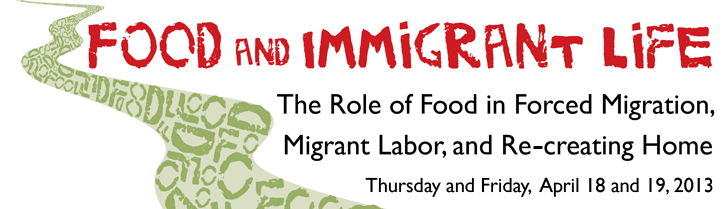
The videos for all the sessions of the conference (including the keynote speech delivered by Dolores Huerta) are now available.

[youtube=http://www.youtube.com/watch?v=rzzjPUEX1kE]

[youtube=http://www.youtube.com/watch?v=_kNjB9uAc58]

[youtube=http://www.youtube.com/watch?v=SS8_wsVlGRs]

[youtube=http://www.youtube.com/watch?v=3Fk0rY60B_g]

[youtube=http://www.youtube.com/watch?v=5G9mAapZwGs]

[youtube=http://www.youtube.com/watch?v=aHfaYALJjsg]

by Jina Song

You who step on a banana peel are unfortunate.
You who step on a loach are not.
Improperly stepping on the fish, you will slide.
The storekeeper will reject the trampled loach,
then you claim it, bring it into your sink
and let it be washed for a minute.
Boil it with water, it will be crushed then you mix
it with chili pepper and soybean paste;
A loach soup, sometimes, comes as an absolute gift.

*

You who chew a plum pit are unfortunate.
You who chew a chocolate-coated sunflower seed are not.
Not only chew but eat. Sunflower seeds are yours.
Intake vitamin E, prevent cardiovascular disease.
Be rich with magnesium and selenium,
reduce cancer incidence and bone breaks.
You are getting old.
Your body is a temple, your teeth are yours.
Have you chewed ice? No, please don’t.

*

You who rub your eyes with garlic hands are unfortunate.
You who touch your face with aloe vera hands are not.
Is your face sunburned or scarred? Even better.
It will rejuvenate your cells,
you will shine by the succulent leaves.
If you like slickness of aloe vera,
feel it inside your throat by drinking its concentrated juice.
You who have experienced all the good news,
are you ready to share with other you?


Jina Song is a MFA candidate at the New School studying Creative Writing in Poetry. Her poetry has appeared in Runaway Parade and Christmas Cowboys, Mistletoe Diners and Other Short Stories. 

by Enrique Sebastian Rivas

A steaming cup of coffee is what many have every morning, right before they begin their day. For adults, coffee is the largest source of caffeine. On average, 400 million cups of coffee are consumed each day. However, energy drinks have grown into their own profitable market, with increased popularity among younger demographics. Caffeine has also become a trending additive in various foods and candy. Caffeine provides a boost of alertness that doesn’t last. To regain another boost, another dose is needed. What’s wrong with having another mocha latte, espresso, red bull, sports drink, iced tea? Or caffeine-laced enhanced water, chewing gum, potato chips, marshmallows, jellybeans, or oatmeal? Has this mild, daily cycle groomed dependent behaviors in adults? And are adolescents and children next in line because of easy access to these products?

“Energetic,” “alert,” and “vital” are common descriptors for what most, if not all, people associate with health. Caffeine helps achieve these desired effects. Caffeine is naturally occurring in over sixty plants, in varying levels. Major sources of caffeine come from coffee beans, a worldwide commodity in the commercial market. However, caffeine is also found in tealeaves, cocoa (used to produce chocolate), kola nuts, guarana, and yerba mate, to name a few more.

These caffeinated plants have been cultivated for consumption in coffee drinks and teas for centuries. Commerce and food culture have been significantly influenced by these botanical stimulants. It was the Food and Drug Administration (FDA) that initially allowed caffeine to be added to carbonated soft drinks; the amount of naturally occurring caffeine already found in foods and drinks is not taken into consideration, because the FDA found it to be negligible.

According to Dr. Roland R. Griffiths, professor of Psychiatry and Behavioral Sciences of John Hopkins Medicine, the Coca-Cola Company once faced a lawsuit that claimed that the added caffeine in their products puts children at risk. This was in the early 1900s. Later, in the 1950s, regulatory measures were taken and the FDA categorized caffeine as Generally Recognized as Safe (GRAS) .

But caffeine is also a stimulant that falls in the category of Psychoactive Substances. Psychoactive Substances generally encompasses three categories: stimulant (i.e. nicotine, amphetamines), hallucinogen (LSD, nitrous oxide), and depressant (alcohol, narcotics, sedatives). These substances can cross the blood-brain barrier and alter brain function. This is why psychoactive substances take a short period of time to affect the central nervous system.

Caffeine can act as a mild diuretic. It can also cause psychological and physical dependence. Withdrawal symptoms are well documented. Restlessness, headaches, irritability, anxiety, addiction, and reduced fine motor functions are a few. Unlike other psychoactive substances, caffeine is legal and unregulated.

Ever since the FDA’s decision to label caffeine GRAS, the soft drink industry has referred to caffeine as a flavor enhancer, without acknowledging its role as a drug. Griffiths suggests that if there had been an acknowledgement of some kind, the regulatory measures that led to FDA approval for caffeine inclusion may have been different. Griffiths emphasizes the importance of recognizing that, “caffeine is indeed a mood-altering and behavior-changing drug that produces reliable effects.” But with the demands of a busy work life, who wouldn’t want or need energy or performance enhancements?

Today, daily routines are often jammed-packed with activities. The Huffington Post ranked New York City as number two out of the top ten most caffeinated cities; Chicago had the title that year. Walk around Grand Central during morning rush hour and a sea of handheld, white topped, coffees-to-go navigate all over, leading many to the start of their day. The Mayo Clinic points out that more than 500mg of caffeine is excessive—about six 7 ounce cups. While that may seem like a lot, many have become accustomed to super-sized coffees. Some may assume one large 20 ounce “venti” is only one serving or one cup. The National Institute of Health states that 250mg of caffeine—about three 7 ounce cups, is considered a moderate amount, though some disagree. But more on that later.

In the December 2012 FDA report, “Caffeine Intake by the U.S. Population”, conducted between 2003-2008, it is revealed that besides the average energy drink, a specialized version of energy drinks, known as “energy shots,” are the fastest growing in the energy drink market. Most energy drinks are sold in 12-16 ounce containers, and can contain up to 350mg of caffeine. Energy shots come in 2-4 ounce containers and can contain upwards of 300mg of caffeine.

There is no nutritional need for caffeine.[1] However, it’s found more and more frequently in a wide variety of products. A brief search on the website EnergyFiend  shows caffeine’s gaining popularity as an additive. It is a rather large compilation. The FDA also mentions that along with energy drinks, waffles, water, oatmeal, syrup, marshmallows, and jellybeans may also contain caffeine. CBS Miami reported that there are even potato chips that contain caffeine. To some, it’s a dream come true.

The vitamin or supplement market has plenty of products with various kinds of extracts that provide caffeine. The majority of products containing caffeine are weight management dietary supplements. In a double blind study by the Department of Human Biology at Maastricht University, subjects lost about 5.9 kilos (13 lbs.), give or take 1.8 kilos (3.9 lbs.), with a high caffeine intake. Is it any wonder that it’s a popular ingredient in many supplements?

Both the GNC and Vitamin Shoppe websites list hundreds of products that contain caffeine, ranging from beauty supplements, skin creams, performance powders, and concentrated tablets. There are many avenues where caffeine is available. And it’s profitable. NBC News reported in 2011 that the U.S. coffee market was valued over 30 billion.

The FDA recently announced plans to launch an investigation regarding the safety of caffeinated food products after Wrigley’s launch of Alert Energy Caffeine Gum. Was this the straw, so to speak? Plenty of consumable food and drink products have had caffeine added to them for many years. Why start now?

Deputy Commissioner for Food and Veterinary Medicine at the FDA, Michael R. Taylor, expressed concern at the aggressive marketing of energy drinks that include adolescents and young adults. The wide variety of new products, which would be readily available and attractive to children and adolescents, are his main concern, especially with the arrival of a pack of gum that would be like “having four cups of coffee in your pocket.”

The FDA noted in a consumer report that 80% of adults consume caffeine daily. They also noted that a study found that one-in-five junior high and high school students consume more than 100mg of caffeine per day. The American Academy of Pediatrics recommends that adolescents get no more than 100mg of caffeine daily.

Some baristas take pride in the service they provide. The coffee culture is long, and we’ve been acculturated to sip, enjoy, and savor the taste, aroma, and communal environment that surround this elixir, which provided us with a caffeinated boost. The same cannot be said with the advent of energy drinks. Griffiths points out that there’s an implicit or explicit imperative type of marketing going on. A “slam the can” type of direction comes with energy drinks.

In the Diagnostic Statistical Manual of Mental Disorders (DSM-IV), caffeine intoxication is an actual psychiatric disorder that follows “recent consumption of caffeine, usually in excess of 250 mg,” which is about 2-3 seven-ounce cups of coffee or one and a half “venti.” In January 2013, the Substance Abuse and Mental Health Services Administration reported that there’s a health concern because in recent years energy drink-related visits to the emergency room has doubled in recent years. Still, the FDA cited that 400mg a day for a healthy adult isn’t “associated with dangerous, negative effects.” There appears to be varying expert opinions concerning a psychoactive substance.

The question was posed to Griffiths about the effects of these drinks. Theoretically, the daily drinking of coffee isn’t the problem. It’s these new additives that may be contributing to toxicity. There isn’t any data, as of yet, to suggest whether or not caffeine is the cause, but he is “most suspicious about caffeine being the bad agent.”

In 2010, the FDA enacted the withdrawal of caffeinated alcoholic beverages because studies indicated that the combination of caffeine (stimulant) and alcohol (depressant) could lead to life-threatening conditions. A study at the Department of Occupational Medicine, Aarhus University Hospital, which was conducted on 2,554 young Danish men, found that those with high caffeine intake had a lowered quality of semen, but a high concentration of testosterone. There is also evidence that high caffeine intake increases the rate of bone loss.

Is there a way to calculate the dose exposure that the average person gets from all available sources of caffeine? Coffees and coffee flavored foods, teas, chocolates, weight loss supplements, skin creams, pain-relievers, candy, water, oatmeal, it seems that caffeine is coming at us at from all directions. And this is not even taking into account what drug interactions there may be with caffeine. Drugs.com indicate that there are at least eighty-two. Professor Andrew F. Smith, food writer, author and professor of Food Studies at The New School University, has stated that caffeine blocks the absorption of iron from foods, something to think about when consuming caffeinated soft drinks with any meal.

In the business-minded drink and  food industry, I can see how an addictive, “flavor enhancer,” could be seen as a potentially lucrative additive. So, should government action intervene? Worried parents come to mind when I think of how easily available some of these products are. I remember how chewing gum used to come in evenly rolled cigarette facsimiles. As a kid, I was thrilled with how puffing on them sometimes produced two good puffs of whatever the powdered coating was.

With the entire hubbub concerning the Soda Ban, many view “Nanny” type of intervention as a negative. I’m definitely not a fan of micro-management. But I also understand that if I were completely stand alone—with my own private doctor and health facility for the rest of my life—then I would have no economic impact on the medical community.

Michael Moss’ book, Salt Sugar Fat, goes into detail about how the major food companies perfected new food recipes and formulas to “Hook Us.” Plenty of questions come to mind. And this was without caffeine as a flavor enhancer.

I was in military between the ages of 18-22. I used to drink coffee—black—about 6 mugs a day. I used to also smoke cigarettes, a pack and a half a day. I enjoyed it. I began drinking coffee at 14, smoking at 16. And then I was like a kid in a candy store. My life then was even more jammed-packed than my civilian life now. I’m also very familiar with governmental micro-management. I still have an espresso every now and then. I may puff on a cigarette once or twice a year. I would probably try some of these new products. But just as I didn’t like Uncle Sam interfering with my life, I personally don’t like being manipulated by ad campaigns or by the reworking of foods in order to illicit a “bliss point.” Americans defend their right to choose fiercely. Do parents need to be aware of what their children, teenagers consume? Yes. Nutrition awareness and education is always a plus. Does a Bloomberg type of mandate need to come down? Maybe. Lots more independent research is definitely needed. Is there anything wrong with having caffeine? In my opinion, it can be useful. Can overindulgence happen? Absolutely. Is caffeine being used optimally, or is it consumed like water, which is irrefutably essential to live? That’s a question for the individual. And that’s the challenge.


[1] Though caffeine has been shown to be beneficial in some studies in the US National Library of Medicine. One study showed that caffeine improved the processing of positive words in the left hemisphere of the brain. Another study sponsored by McGill University suggested that caffeine might be useful in treating Parkinson disease. And another study, from the Departments of Nutrition at Harvard School of Public Health, showed that there’s an association between caffeinated beverages and a lower risk of Type 2 Diabetes.

Enrique Sebastian Rivas is a Riggio Honors Student at The New School for Public Engagement. He is the Nonfiction editor for 12th Street Journal for Writing & Democracy. He is also a New York-based actor, writer, and artist. He wanders around NYC looking for interesting eats.

by Kathy Curto

 TIEA.J.’s long dark hair is piled high on top of her head in what looks like a cross between a ponytail and a bun. It’s loose and tousled but still off of her face. That’s where I told her it should be, because that’s what my mother always told me. My mother would stand with her wooden spoon in hand, pink lipstick gleaming with a Rhodaesque headscarf holding her own dark wavy hair back, and bark her regular kitchen orders: “We’re in the kitchen for Chrissakes! Get that hair up and off of your face!”

But those times are long gone, twenty-eight years ago now. And my mother is gone, too, except for times like these when I give the orders mothers give. Times like these when I tell my eleven-year-old daughter to put her hair up. It’s times like these that my mother comes back to me.

But now is time for making a meatloaf. AJ pushes her shirt sleeves up to her elbows, ties the string of her apron—actually, it’s my apron—in a knot behind her and digs her little girl hands deep into the mound of cold ground beef that sits in the center of the big glass bowl, waiting to be massaged. She mixes and churns, cold bits and clumps of meat cling to the valleys in between her little girl fingers and she takes short breaks only to add an egg or two, a handful of bread crumbs and crushed garlic. I am pleased that she is unfazed by the mess around her—the crumbs, the smeared egg whites, the flecks of meat. Being focused in the midst of a mess is a skill I’d like her to have. We both laugh when she tries to scratch her nose with the back of her wrist.

“It never fails,” I offer. “Itches always come when they’re hard to scratch.”

Still going strong, and showing no interest in my wisdom about itches, she kneads and kneads and kneads what will become her very first meatloaf.

She glides from the spice rack back to the bowl. She sprinkles in some dried basil. Not a measuring spoon in sight. It’s as if she’s been making meatloaf since the day she was born. After lifting the sticky meat from the bowl and placing it in the glass pan she begins to mold and sculpt, her demeanor becoming more intense and less playful.

She’s a cook and the look in her eyes, the blackest of olives those eyes are, tells me she wants a certain shape, a particular form. She cups her small hands along the sides of what looks to be developing into an egg-shaped loaf. She smoothes out the surface, squares the ends off and pushes the pan into the oven. The aroma of garlic seeps into our air.

My mother is back again. The smell of fresh garlic softening and warming in a hot oven brings her right back to me.

I pour myself a glass of wine, move closer to the scene and gaze toward my preteen daughter, enraptured by what I see: my green canvas apron stained with drops of olive oil and raw meat, blue jeans falling just below the subtle beginnings of a waist, toenails painted colors of the rainbow.

So after washing her hands and taking my Van Morrison out of the CD player to put her Gwen Stefani in, she asks, “Can I do the potatoes now?” She is ready to start on the next dish of the meal. Ready for what’s next. Anxious. Eager.

“Mashed or roasted? I ask.

“Mashed. Definitely mashed,” she says with undiminished stamina. She empties the plastic bag of potatoes into the sink. Brown specks of dirt and dust from the bottom of the bag fly up in the air, probably landing on the tips of her long eyelashes. She starts to peel the skin off with an old stainless potato peeler that was my father’s. He’s gone, too, my father. I still don’t know why he had a potato peeler in his drawer. I never saw him peel any kind of vegetable, ever. I remember throwing the shaky metal peeler into the cardboard box I was using that night a little over two years ago. It was the empty box I pulled from his garage to hold the items from his kitchen that I would be taking home with me.

We were going through his things. I announced to my sisters and my brother that I’d start in the kitchen. I needed to feel safe. Productive. Less guilty. The kitchen would help with that. Not much has changed. Still, when someone dies or gets sick my first impulse is to warm some olive oil in my cast iron pan, add a clove of chopped garlic and fry up what will become a tray of chicken cutlets. Or if I want to bring my mother back again, I’ll say, “This will pass. Come over and I’ll throw on a pot of coffee.”

AJ’s potatoes are peeled, boiled and mashed. She’s at a standstill having tasted them for the tenth time still not sure if they need more milk and maybe just one more dash of salt. Mashed potatoes are tricky.

She runs her pinky along the inside of the bowl and a small, lazy dollop of thick, milky white hangs from her fingertip. She pops it into her mouth looking like an old pro. The texture is cozy and the curve of her mouth tells me that the taste is pleasing to her.

I make the salad. I know it’s her least favorite part of the meal, probably because she’s too young to know how complicated salad can be.

The timer for the meatloaf buzzes so A.J. slips the oven mitts onto both hands and opens the oven door. We breathe in the smells-hearty and rich, full of spice. Home. I smell home. She lifts the pan out and places it on the stove using her knee to close the oven door.

I sit down on the wooden stool next to the kitchen counter. I sip my wine. I feel my parents move through me and then through her.

AJ’s cheeks are flushed now. The meal is almost ready to serve. Potatoes have already been spooned into the deep bowl and thin lines of smoke swirl from the top. A small dab of butter sits in the middle of the white fluff and melts into thin yellow streams. The gravy, the dinner rolls and the salad, everything is out on the table. Everything except the meat.

She slices into her very first meatloaf. Garlic again. Home again.

Kathy Curto is an Adjunct Professor at Montclair State University and St. Thomas Aquinas College and an Instructor at The Writing Institute/Sarah Lawrence College. Her essays have been featured on NPR and published in The Asbury Park Press, Italian Americana, VIA-Voices in Italian Americana, Lumina, The Mom Egg, Splash of Red and several Hudson Valley newspapers. In May 2012 she was one of the featured writers in the first NYC production of Listen to Your Mother. She lives in Cold Spring, New York with her husband and four children.

by Amanda Harris

Aroma of coffee beans freshly ground,
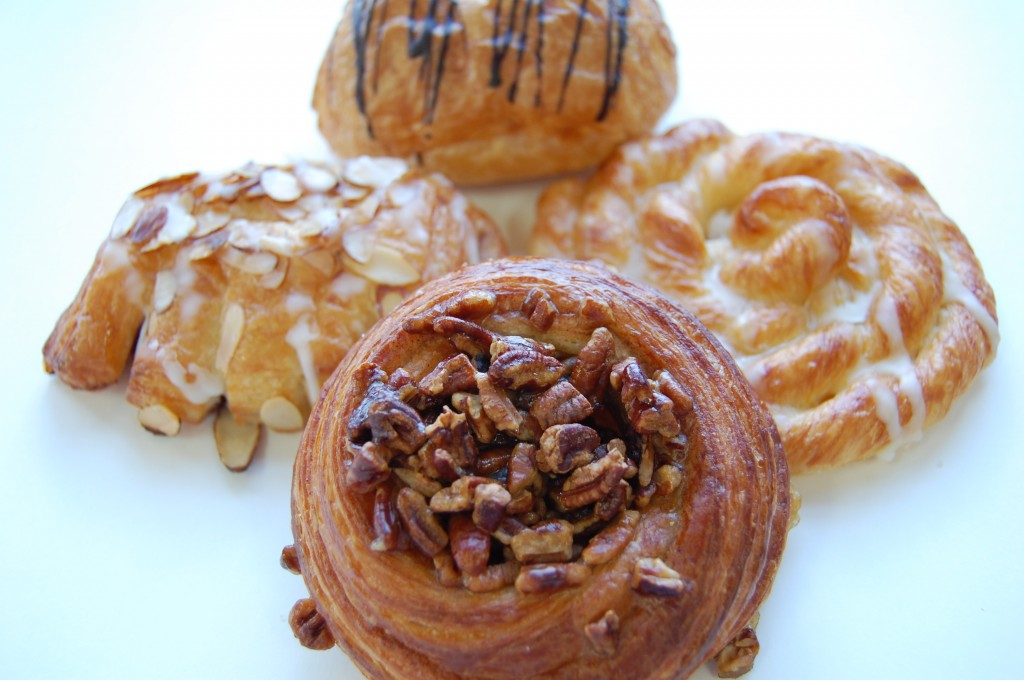
Cheese Danish: twisted little loops of rope,
Chocolate cakes chiseled like ornate tombstones.

Sharp, crisp cardboard boxes stacked like tombstones,
Everything leaves crumbs, baguettes on the ground,
Thin waxed paper, fingertips touching rope.

Half-pint of Waldorf salad, veins like rope,
Strudels are pinwheels, croissants are tombstones,
Hot breath of ovens, don’t look at the ground.

All that cradled the casket was thick rope,
Slowly lowering her past the tombstone,
Onto a bed of hard, bark-colored ground.

Amanda Harris received her MFA from The New School in 2012.  She is currently working on a story collection and a novel.