Archive

April 2013

Browsing

by Elin Hawkinson

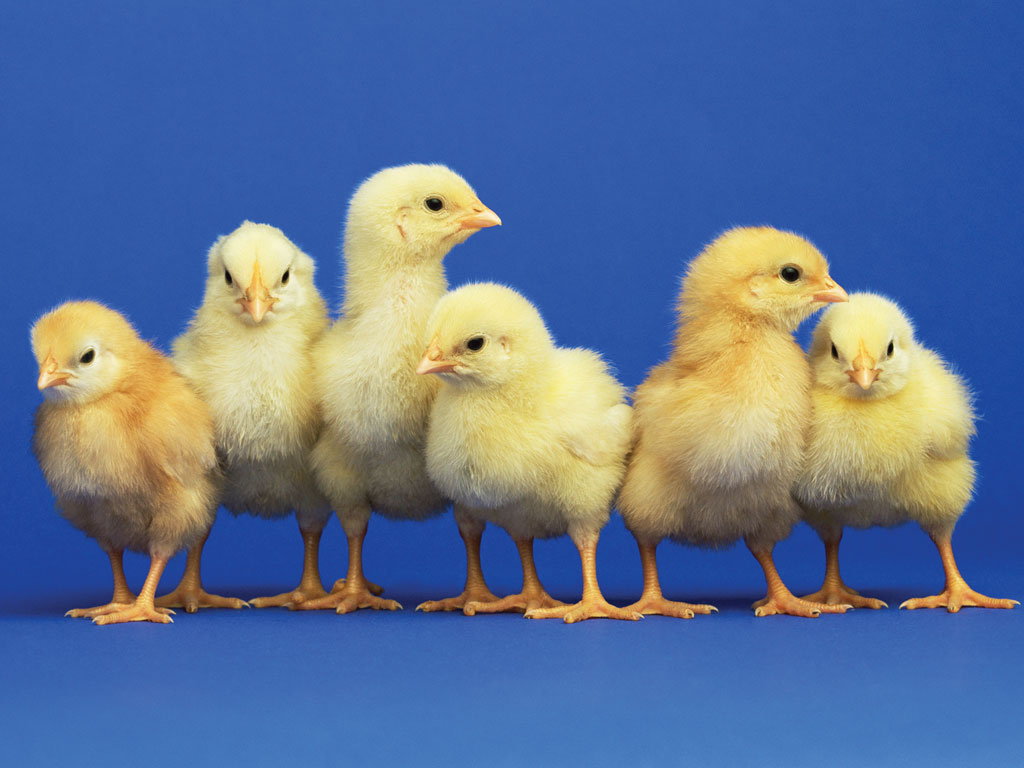
My fiancé ordered for me, and when the waiter brought the tall, metal spike mounted on a square of porcelain, threaded with baby chicks, I leaned over the wooden railing and vomited into the sand.

We were having dinner at a busy café on the very edge of the Mediterranean. The city of Netanya was spread out to the East, the sea and a feverish sunset to the West. My face still burned from the salted heat of the day.

The waiter hurried off for some water. My fiancé handed me his napkin, his forehead creased in a frown.

“What’s the matter? Are you sick?”

I licked my lips.

“Well? What’s wrong?”

The waiter returned with the water and I gulped it down while my fiancé offered apologies. He said something that made the waiter glance at me and laugh; soon they were speaking like old friends. I listened hard for any of the Hebrew words I knew. I didn’t hear them.

Toh-dah,” I remembered suddenly.

They stopped laughing. I smiled weakly. The waiter addressed one final remark to my fiancé. The words were clipped, guttural, but that was no surprise. Even love sounded harsh in this language.

“What did he say?” I asked, after the waiter had moved off.

My fiancé began yanking at the wing of one of the chicks. It put up little resistance. I listened carefully for the snap of bone but heard only a moist tearing sound. He stuffed the wing in his mouth and chewed.

“Honey? What did the waiter say?”

In the waning light my fiancé’s deep brown irises darkened, swallowing the pupil. They appeared completely black. The alteration unsettled me.

“He said I should tell you not to say thank you so much.”

My fiancé was eating the other wing now. His teeth, unusually white, pierced the crispy skin with ease.

“What about the bones?” I asked.

“You eat them. They’re still soft. Look—” With his thumb and forefinger he dug into the wing, peeling back a strip of flesh. “Cartilage.”

My stomach roiled.

“I can’t eat that.”

He licked the greasy sheen from his fingers and sighed.

“You can. You just don’t want to.”

“I don’t want to eat a baby chick.”

“Don’t be stupid. They’re a delicacy. They’re like nothing you’ve ever tasted before.”

On my first night in Israel my fiancé’s friends threw a party in my honor at the kibbutz pub. My fiancé had seemed so proud, the smile never leaving his face, as we made the grand tour.

“She’s an actress. From New York City.” His friends behaved appropriately impressed. They hugged me. The women admired my dress. We all laughed about how no one could pronounce my name.

Late in the evening they began to reminisce about their days in the army. I found it difficult to make out all of the Hebrew but was content to sip anise-flavored liqueur while nestled in the crook of my fiancé’s arm. When the whole group burst out laughing, I plucked at his sleeve and asked to be let in on the joke.

He told me that the summer he turned eighteen, he and his friend Noa had been tank commanders on an abandoned airfield near the Gaza Strip. One day another young soldier, from Hadera, was driving the tank in the field for practice when he heard a scream and felt an odd bump beneath the wheels.

The young soldier recognized the scream; it was his best friend. Convinced in that moment that he had accidentally run over his best friend and killed him, he pulled out his government-issued rifle and shot himself in the head.

“And the funny thing,” my fiancé continued, “is that his friend wasn’t dead at all. He was fine. The tank driver had just run over his hand.”

I told him I didn’t think the story was funny at all. He stared at me as though he, too, couldn’t remember my name.

The waiter was at our table again, with a bill for my fiancé to sign. It seemed to me he used too much force; I worried the nib of the pen would bore through the thin paper. When he was finished he threw the pen down and excused himself to make a call.

I sat at the table with the remains of the wingless chick, tiny breast torn open. Somewhere inside lay the heart, cooked. The lungs. The gizzard. All the parts that I thought were supposed to disappear when a living creature became a piece of meat.

Elin Hawkinson is a NYC-based actress, editor and freelance writer whose work can be seen in Our Town/Downtown and the 2013 edition of 12th Street. She is a graduate of both The American Musical Dramatic Academy and The New School for Public Engagement.
by Emily Contois

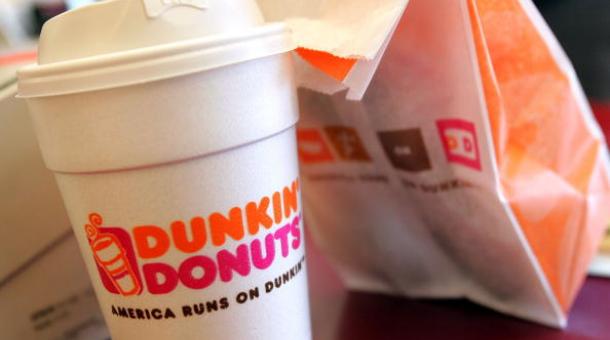
During Boston’s April 19 lockdown, it was reported that Dunkin’ Donuts stores throughout the area remained open to serve police officers and first responders.[i] The fact that Dunkin’ Donuts remained a beacon of hope during the manhunt, reveals more than a moment of courage and charity for the coffee chain.

The landscape of New England is marked by not only world-famous fall foliage and monuments to America’s history, but also the abundant pink and orange signs of Dunkin’ Donuts, which despite being an international franchise, is a powerful symbol and source of regional pride and identity. Mike Miliard links Dunkin’ Donuts with Bostonian identity as he says: “It’s a lynchpin of our identity. It’s a religion. It’s a cult. People in these parts freaking love Dunkin’ Donuts.”[ii] In fact, in a 2005 market research experiment Dunkin’ Donuts paid dozens of brand loyal customers in cities outside of New England (Phoenix, Chicago, and Charlotte) $100 to switch to Starbucks coffee for one week. They offered $100 to Starbucks customers for the opposite switch.[iii] The results were staggering, with coffee devotees from both camps so firmly committed to their brand that Dunkin’ Donuts researchers identified them as “tribes.” Particularly in Boston and greater New England, this tribal affinity goes beyond taste preference alone.

The role and meaning of Dunkin’ Donuts in New England even eclipses its local origin story. After successfully operating the Industrial Luncheon Service, serving factory workers during World War II from mobile carts, William Rosenberg opened the first Dunkin’ Donuts store ten miles outside Boston in Quincy, Massachusetts in 1950. From the start, Dunkin’ Donuts told a specifically New England story and is a chain antithetical in nearly every way to Starbucks. While Starbucks emulates a European coffee experience, Dunkin’ Donuts proudly promotes itself as American coffee, emphasizing the value of hard work. Furthermore, Starbucks is framed as a product of “posthippie [sic] capitalism”[iv] and often critiqued in an elevated way as a “cultural institution” akin to higher art, located within a “historical trajectory” of long standing tradition.[v] Conversely, Dunkin’ Donuts is a franchised chain built upon the American Dream story of William Rosenberg, a hardworking New Englander with an eighth-grade education, who successfully built a coffee empire.

Throughout decades of expansion, franchising, marketing, and repositioning, Dunkin’ Donuts emerged and remains a regional power brand, operating one store for every 5,000 to 6,000 people across New England.[vi] In addition, Dunkin’ Donuts outnumbers Starbucks ten to one in Massachusetts.[vii] Across the nation, Dunkin’ Donuts retains strong customer loyalty, sweeping the coffee category in the Brand Keys Customer Loyalty Engagement Index for the past six years.[viii] Despite the “donuts” in its name, the chain does 63 percent of its business in coffee,[ix] which takes on a specific meaning for Dunkin’ Donuts coffee drinkers in Boston.

For in the land of its most immediate origins, Dunkin’ Donuts is a site and source of Bostonian identity, as it embodies the Bostonian character in its no-frills physical environment, the simple words on the menu board, and its straightforward social exchanges. While other chains assume a national identity, forsaking the local, Dunkin’ Donuts continues to be perceived by New Englanders as a local coffee shop, deserving of community patronage and support. In return, Dunkin’ Donuts both endorses and practices values that Bostonians hold dear. Linked in every possible way to New England sports teams—from the Celtics on the court, to the Bruins on the ice, to the Patriots on the field—Dunkin’ Donuts remains committed to favorite local sports teams and to New Englanders, themselves. Furthermore, Dunkin’ Donuts honors not only its roots, but also the hard-working people of New England by maintaining a proud and genuine working class identity. Though Dunkin’ Donuts customers come from all income levels,[x] the brand is strongly and proudly aligned with a working class identity and the values of hard work, productivity, and thrift. Dunkin’ Donuts has been there with a cup of coffee to fuel both work and play and with words of support—“You Kin’ Do It!”

Through its actions during the Boston lockdown and manhunt, Dunkin’ Donuts proved once again to be a daily staple for Bostonians and a powerful symbol of local identity—one that can stay as strong as its people and their city in times of strife.


[iii] Adamy, Janet. (2006). “Dunkin’ Donuts Tries to Go Upscale, But Not Too Far.” The Wall Street Journal. April 8.

[iv] Sanders quoted in Simon, Bryant. (2009). Everything but the Coffee: Learning About America from Starbucks. Berkeley: University of California Press, p. 29

[v] Dickinson, Greg. (2002). “Joe’s Rhetoric Finding Authenticity at Starbucks.” Rhetoric Society Quarterl,y 32(4):5-27, p. 17-18.

[vi] Rosenwald, Michael, and Chris Kirkham. (2006). “Big Fight Brews For Average Joe.” Washington Post. September 7.

[vii] Carroll, Matt. 2010. “Snapshot: Dunkin’ Donuts vs Starbucks: Where Do You Stand?” Boston Globe. June 17.

[viii] Dunkin’ Donuts Press Kit. 2012. Available from:http://news.dunkindonuts.com/press_file.cfm?presskit_id=2.

[ix] Hoy, Peter. 2006. “Dunkin’ Donuts: Reinventing America’s Cup of Coffee.” Fast Company. October 25.

[x] Milliard, 2007.

Emily Contois holds an MPH with a concentration in Public Health Nutrition from UC Berkeley and is a graduate student in the MLA in Gastronomy Program at Boston University. She is currently researching the marketing of diet programs to men, and blogs on food studies, nutrition, and public health at emilycontois.com.

by Allison Scola

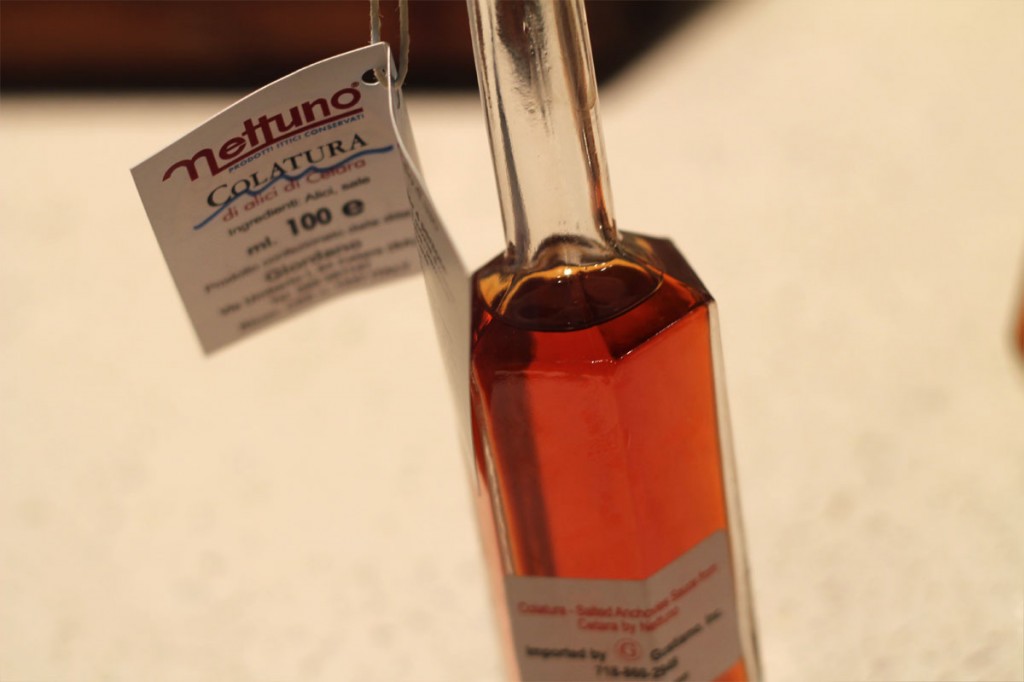
Packaged in a delicate glass bottle with a long, thin neck and cork seal, a bottle of colatura resembles an alchemist’s ancient potion or my grandmother’s favorite perfume. It is an amber colored liquid with the consistency of soy sauce, and crudely explained to be “salted anchovy sauce” or “anchovy syrup.”

I heard whispers of colatura from various cooks, but because it can only be found in specialty Italian food stores, I hadn’t tasted it or cooked with it until this week. Food historians trace its origins to an ancient Greek and Roman condiment known as garum—giving colatura even more mystique. When my order arrived from Gustiamo.com, I sat with the bottle for some time. I turned it upside down to examine how the liquid flowed. I held it up to the light to see the spectrum of colors. I knew it was something special—something to be coveted—but I wasn’t sure what I would encounter.

Finally, I unsealed the packaging, a difficult task that reminded me of when I was a child attempting to open medicine from my parent’s cabinet. When I eventually cut through the seal and unplugged the cork, I was shocked by the pungent smell that rushed out of the bottle like the smoke of a trapped genie rushing from his lamp. On first impression, it could be described as the type of odor one encounters while walking past open fish markets on Grand Street in China Town.

Colatura has a sharp, brinish smell. The initial sensation is unambiguously fishy anchovies, but when used in small doses as it is meant to be, it transports you to the picturesque fishing village on the Tyrrhenian coast of southern Italy from where colatura comes. Its essence is smoky, oak-aged, and sea-salty with a hint of espresso.

I made a light pasta sauce with colatura by mixing it with fresh-squeezed lemon juice, lemon rind, minced garlic, red pepper flakes, extra virgin olive oil, and freshly chopped parsley: a cold sauce, perfect for a hot summer day. Southern Italians add it to vegetable dishes that feature escarole, potatoes, broccoli, and cauliflower.

The taste of colatura is derived from the careful, strategic process that is employed to create it. Plump, Mediterranean anchovies caught during the peak season of March through August are rinsed and cleaned of their insides and heads. Their bodies are then placed in rows inside an oak or chestnut barrel about the size of an antique water pail. Each layer of the silver bodies is sprinkled with sea salt and then layered with another series of anchovies. Once the barrel is two-thirds full of the anchovy-salt strata, the mixture is covered with a wooden disk and a heavy stone is placed on top of it in order to create pressure that prompts the barrel’s contents to ripen. After six months, during which a liquid that rises to the top of the barrel is periodically removed, the final stage of production is to pour the collected liquid back into the barrel. The purveyors then drill a small hole at the base of the barrel prompting the collected liquid to travel through the strata and finally, drip through the hole. Collected in glass containers, this liquid is then filtered through gossamer linen sheets and ultimately bottled for distribution.

Like a fine wine that has been aged and cared for in order to capture the essence of the earth, sky, and seasons where the varietal’s grapes grow, colatura captures the tastes and smells of Cetara, Salerno, the sunny, Mediterranean fishing village where it is created. It is an ancient potion with rewards for those who aren’t afraid to let the genie out of the bottle.

Allison Scola is Director of Communications at Columbia University School of General Studies and a professional musician with a great passion for Italian, Sicilian, and Italian American culture.

by Tolly Wright

When I was growing up, my mother loved to cook, my father loved restaurants, and I loved buttered noodles.

While single and in her 30s, my mother discovered the Joy of Cooking (both the sentiment and the book). A decade later, by the time I was cognizant, she had a bookshelf as tall at the ceiling filled with cookbooks. She found excitement in discovering new recipes and would jump at any bit of food writing in The New Yorker or Southern Living.

She particularly took care to prepare great dishes for the few nights a week when her stepdaughters (my half sisters) would join us for supper. She’d spend hours in the kitchen: marinating meats, chopping salads, and doing whatever it is cooks do on counter tops. I, meanwhile, stayed planted firmly in my place adjacent to the kitchen in front of the television. On a Tuesday night, had I not been so entranced by a rerun of Full House, I might have seen my mother preparing crab imperial served in the old-fashioned pale pink scallop shells her grandmother gave her. Two days later, on a Thursday I might have smelled the cooking meatloaf made from the veal, pork, and ground beef of the best butcher in Baltimore. I didn’t care what she was making; I knew regardless of her meal plan there was a special pot on the stove boiling my supper. On nights like this, my sisters would set the long wooden table and my father would change the channel to Jeopardy.

As my mother would finish the final touches to her masterpiece and my custom order, my father would quiz me on the state capitals and my sisters would run to the second fridge in the basement for sodas. My mother would deliver my dish on top of my placemat, a plastic map of the United States, just as my father would ask me the capital of one of the difficult middle states like Kentucky (the answer is Frankfurt). The plates in front of my family would be full and balanced; everything my mother cooked miraculously came out hot at the same time. After we said grace my mother would take a bit of whatever it was she cooked, chew it for a moment, and say something to the affect of “su-perb.” She would turn “superb” into two separate words for affect. We all knew our cue and would compliment the chef. I never had to put on an act; I was always pleased with the plate prepared special for me.

My mother is an excellent purveyor of buttered noodles.

When my father was in his mid-thirties and legally separated from his first wife, he discovered all that Baltimore restaurants had to offer. He would dine at crab shacks, French bistros, steak houses, the restaurants of Little Italy, and the most elegant and famous of restaurants in the Inner Harbor. When he married my mother he knew having a baby was part of the deal, but one child does not have to get in the way of dining out; One child has no one to kick under the table or hair to pull; One child is easy to bribe with promises of ice cream or chocolate cake. Besides, he had three other girls, already teenagers, whom could be paid to stay with the younger sibling while he and she could have a night out on the town.

A few times a month my mother would put me in a dress, place a large bow in my hair, and us three would go out to dinner. My parents would gush over the menus and tell stories about occasions when they had been to the restaurant with friends pre-marriage (and pre-me). Sometimes one or two of their friends would join us, compliment me on my dress, politely listen to me brag about how much smarter I was than the other kids in my class (I wasn’t), and then the reminiscing of old times would begin. My mother would occasionally stop to point out a famous Baltimorean at another table.

“Over there is Peter Angelos,” my mother would whisper excitedly, as if any young girl cares about the old rich attorney who owns the Baltimore Orioles.

At home or in a restaurant—I didn’t care—I ate buttered noodles.

Inevitably, my chosen diet was occasionally disparaged: my mother was humiliated when I refused to eat tomato sauce at an Italian restaurant and my father became angry every time I tried to sneak a bit of chicken to the dog hiding underneath our kitchen table. My parents would attempt to beg or bribe me into trying new foods. They would tease me and insult my pride, and tell me I was worse than a little baby. Exasperated, they would claim that I could not be their child because I lacked their culinary adventurism.

‘But I am adventurous!’ I thought woefully. After all, I ate many things: linguini, fettuccini, ravioli, macaroni, bow-tied pasta, cart-wheel pasta, and angel hair pasta with parmesan cheese. I was also multi-cultural: for an entire month I had eaten Chinese noodles (with butter). I ate broccoli, carrots, string beans, and the skin off apples. I always ate any sweet that was put in front of me, except, of course, if it had a fruit in it or too much icing. In a bind, I even ate couscous!

By the time I left for college my pallet had expanded considerably. I ate meatloaf, hamburgers, swordfish, flounder, chicken, turkey sandwiches, grilled cheeses, hot dogs, soup, and an apple in its entirety and its different forms. When I arrived in Chicago for college, I quickly realized that wasn’t enough. I was surrounded by completely new people, people unaware of my finicky eating habits. If I wanted to be the cool easy-going person I pretended to be, than I was going to have to force myself into the unknown.

And I did.

Now in my mid-twenties in New York, I have been feeding myself for the past five years. My timid exploration of new foods when I first left the nest gave way to a love of spices and foods with names I cannot pronounce. I went from looking at the menu for something safe to asking the waiters for something good. When I visit my parents for the weekend, the question always arises of what I want to eat for dinner. I tell my mother that she can surprise me or that she can cook whatever she wants; I eat everything. When I arrive, she always serves the same things: meatloaf, crab cake sandwiches, hamburgers, swordfish, and grilled cheese with bacon. She cooks them because they are my “favorites.” I don’t bother to argue. If my sisters and nieces aren’t over to eat, then my father will still quiz me, “What is the capital of Nevada?” (Carson City). When he tires of this, my mother will ask me what we should eat for dinner the next night. I reiterate that I eat everything; I have even eaten sweet breads.

“Gross,” they say.

Every time I visit, we eat at the French restaurant around the corner from my parent’s house. I sit in restaurant and, without fail, witness my mother order the Trout Almondine, her favorite, and my father order some dish with either ham or lamb in it. They tell me stories of their friends now: so-and-so recently had a stroke, this friend had a hip replacement, or that friend had heart surgery. I regale them with my stories of New York: the Thai restaurant I went to on a date, the Indian place we went after my friend’s show, the Mexican sushi fusion place I tried on my own. They say it sounds too spicy. I tell them they lack adventure.

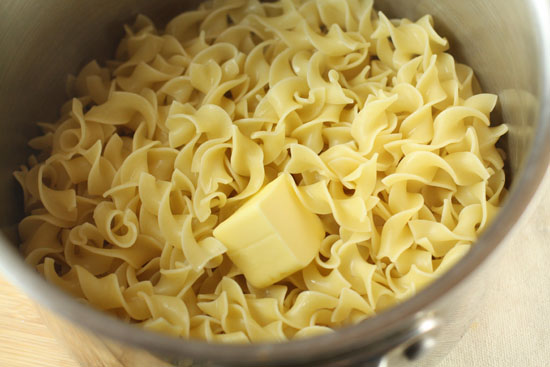
When I return to New York after a visit home, I go straight to my kitchen. There, I take out a box from my designated cabinet. I put a pot on the stove and boil some water. I place a colander in the sink. I retrieve the butter out of the fridge. I prepare the dish that no one else knows is my favorite: buttered noodles.

Tolly Wright is a current undergraduate student in The New School for Public Engagement’s Riggio Honors Program for Writing and Democracy. 


by Alex J. TunneyAlexTunney-Book_Review-_Raising_the_Bar-raising-the-bar

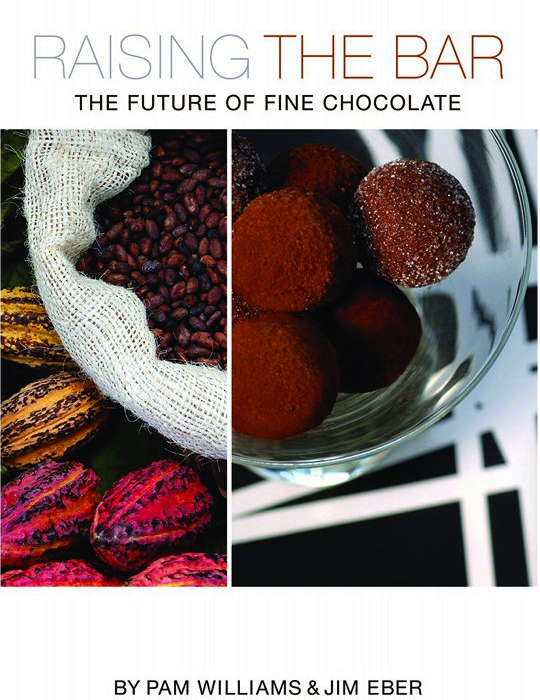
The second section of Raising the Bar: The Future of Fine Chocolate by Pam Williams and Jim Eber, opens up in November 2010 with Art Pollard, of Amano Chocolate, a waking up in the passenger seat alongside his friend as they traverse the mountainous region of Venezuela’s Henri Pittier National Park:

The road narrowed as they climbed. Tight hairpin turns and blind curves seemed barely big enough for a single car to pass. And now it was raining. Torrentially. Rivers of water ran down the road and soon small landslides followed. The road doubled back on itself revealing a deep mountain chasm. Art looked to the bottom: a bus.

Gripping stuff, right? I thought so. A following paragraph continues on with the travelers as they approach the town of Choroni and sets a beautiful scene:

[…] As the rain diminished to a drizzle, the mountains and the Caribbean Sea expanded before the windshield. Huge strands of bamboo planted years ago to keep the original dirt trail from washing away lined the road. Tiny shops appeared selling arepas…

Why are Art and his friend making such a dangerous trek? To meet the farmers in Chuao village who have helped grow and develop cocoa beans, and to present one of the products of their labor: Amano chocolate bars. This a great way to start off the section—mostly concerned with the labor that goes into creating the fine chocolate, including the current economic, social and political situations concerning farming and the cocoa farming population—by hooking the reader and giving the topic a human face.

However, the book only stays with Art and the members of the Chuao village for a few opening pages.  Then, the reader is moved on to another story. Introductions to the other three parts begin like this as well: a brief narrative hook focusing on a person that quickly transitions to a discussion of issues on a broader and more abstract level. The book uses Art for a quote or two but doesn’t return to his and villagers’ story. (Readers will be introduced to many people that are only used for quotes or brief narratives, so much so, that it gets distracting trying to keep track.)

Similar books intertwine narrative with knowledge, but Raising the Bar places information over story. It does so to its detriment, as evidenced in the first part, “Seeds of Change: Genetics and Flavor.” There, after the narrative hook is finished, the reader is thrown into a sea of acronyms and science with little way of understanding what it all means. Perhaps the reason for this can be found in the notice, prior to the book proper, in which the authors ask readers “looking for motives, morals and plots [… to] stop.” The authors, a veteran chocolatier and marketing writer, may have tried to avoid accusations of bias, but they also eschewed a narrative that would have given context to the information they provide and a forward momentum for the reader. The book is supposed to be a short overview, but it might take readers far too long to get through.

It also seems that Williams and Eber were somewhat unsure of the book’s intended audience. Instead of starting off with more accessible topics such as marketing and flavor—the topics of the latter half of the book—it starts off of by discussing genetics. There is also an inconsistent tone to the book: while it avoids a dry presentation of facts, the voice occasionally gets too informal—the occasional swear or a meta-reference to writing the book—that doesn’t gel with the rest of the writing. I began to wonder if the book was better suited for a niche blog than for a mass audience publication.

The presentation of the book aside, the information presented is invaluable not only to the avid chocolatier but anyone interested in food studies, or concerned with how and what they eat. It captures a spread of interesting trends in contemporary food culture: the increasingly curious consumer, alternative ways of farming, flavor experimentation and the application of genetics in food production.

There are stories to be told about the pursuit of better chocolate, better ways of making chocolate and narrowing down the definition of fine chocolate. But the authors could have gone deeper and further with these stories; they only hint at them. As a result, Raising the Bar is a great resource; unfortunately, though, it is not a very entertaining book to read.

Raising the Bar: The Future of Fine Chocolate was published by Wilmor Publishing Corporation on October 22, 2012.

Alex J. Tunney recently received his M.F.A. in Creative Writing (Non-Fiction) from The New School. He lives and writes on Long Island.

Innovate or die. This has turned into a mantra for today’s globalized food scene to the chagrin of those that would rather see traditions survive and thrive. Food manufacturers constantly introduce novelties and then spend huge amounts of money convincing consumers to embrace them. Chefs embrace new technologies and approaches to make a name for themselves. Many consider ongoing change as fundamental for economic success, but what happens when, for various and relevant reasons, innovation is hard to envision, let alone implement? And what if innovation needs to overcome deeply rooted social and economic divides? The food sector in the Dominican Republic provides a good example of these kinds of predicaments.

Lisa and Michael Ballantine, as relative newcomers to the island, have experienced the difficulties involved in carrying out projects that somehow clash with the status quo. Their latest project is a well-designed and quite upscale restaurant, Aroma de la Montaña (The Scent of the Mountain), located in the town of Jarabacoa, in a hillside development poetically called Jamaca de Dios (God’s Hammock). The Ballantines are dedicated to satisfying their local, mostly upscale and quite discerning clientele, and to do so they have relied on importing organic beef from the United States — despite the many cattle ranches that dot the island.

This is not unusual in the Dominican Republic, as upscale establishments — in particular those located in tourist resorts — often purchase their ingredients from faraway places, often considered superior in quality and prestige. However, the couple is now trying to switch to a local organic cattle farm and to implement a farm-to-table approach. In fact, part of the produce is actually grown on the property and the Ballantines are planning to expand their vegetable cultivations both in terms of quantity and diversity of crops. Moreover, by buying organic coffee, chocolate and vegetables from local farmers, they also hope to contribute to the improvement of the overall sector.

What struck me when I visited the restaurant is how difficult it can be to introduce innovation, which in this case corresponds to highlighting the culinary potential of the surrounding area. Despite the Ballantines’ best intentions, few entries on the menu are inspired by local traditions, as well-heeled patrons are not particularly open to dishes that remind them of the daily fare consumed by the majority of the population. Class stratification is clear and hard to avoid if entrepreneurs aim to build viable businesses.

The desire to maintain social distinction impacts the simplest of innovations, such as the diffusion of water filters, as the Ballantines have experienced firsthand. After moving to the Dominican Republic as missionaries in 2000, they soon figured out that the church might not have been their primary call. In 2003, they invested all they had to buy land on the slopes above Jarabacoa to establish a vacation house community. At the same time, they worked to find viable solutions to the urgent problem of drinkable water, which impacts, above all, the poorer segments of the populations.

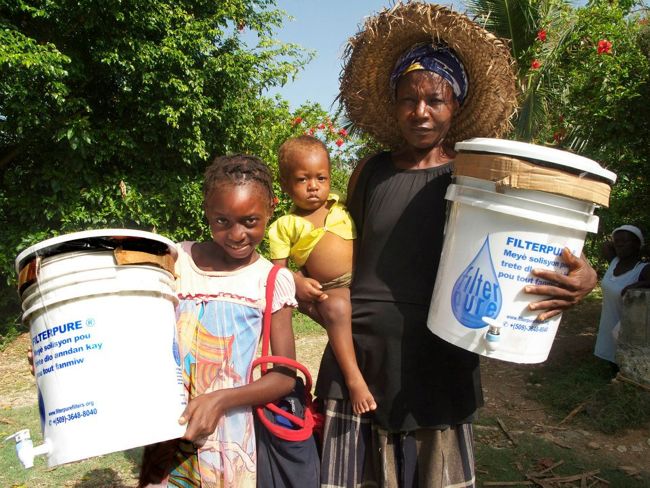
To that purpose, in 2006 Lisa established a company called FilterPure to develop affordable and practical filters that could easily be installed and used all over the island. After a few attempts, the company designed a simple ceramic filter that adopts a technology based on the chemical properties of silver and coal to purify water. Each filter costs $35 and, placed in a plastic bucket with a faucet, lasts five years. The price is still quite prohibitive for many families, so NGOs stepped in, buying thousands of units (so far around 50,000) not only for the Dominican Republic, but also for nearby Haiti.

Yet, when FilterPure tried to sell the filters to more affluent Dominicans, the product was not successful because it had already been identified as a “poor people’s filter.” The Ballatines then partnered with local artists to create filter containers that homeowners could proudly boast of as beautiful and costly pieces of art. The School of Design of Altos de Chavon, near La Romana on the southern coast, organized an exhibition of these creations in its art gallery. Purchasers of the top-of-the-line models would automatically finance the delivery of a simple, plastic bucket model to a needy community. Buy one, give one, in other words. The initiative is brand new, and so far few pieces have been sold, but the company hopes that the trendsetters who bought first will entice others to follow their example. The potential is there. The question is how to implement new solutions in a cultural and social environment that — for very complex reasons — is often resistant to change.

by Sophia Bosselmann

For Valentine’s Day last month, my parents sent me care packages. My mother sent chocolate and baking implements as she knows my sweet hobby. My father sent me a package filled with kishus.

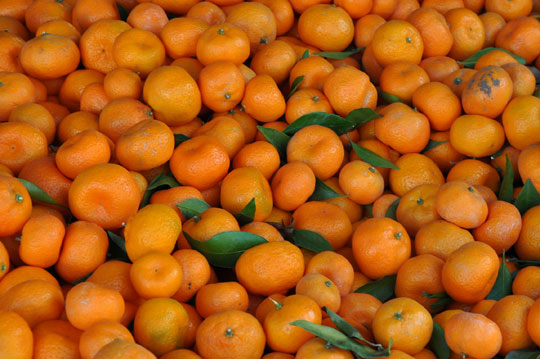
A kishu is petite, round, and bright orange, resembling and tasting much like a tangerine but sweeter. Its proper name is Citrus Kinokuni Mukakukishu. Kishus descended from Ruju, an ancient mandarin variety found during the Tang Dynasty.  They were popularly grown in Japan, and in the 1980s took a trip to America where they were bred by the University of California for mass production, and have since become a California gem.  I fell in love with them last summer, while working at a Chez Panisse in California.

There, in the chilly walk in, I first encountered this tiny bright orange globe.  After taking the boxes of citrus out of the walk in, and carrying them upstairs, I began my task: to find 300 perfect kishus.  I had been instructed on what to look for and how to sort through them. Lifting up my first box of kishus, I pulled open the cover to reveal their bright orange shining faces. I picked one up and held it to the light for inspection: I looked for scratches, bumps, bruises, any trace of mold discoloring— most notably white spots, which change the taste slightly—or anything else that would make the kishu in my hand imperfect. The first one had a bruise, the second was too firm, the third had another bruise, and the fourth was just right; I tucked it into a hotel pan I had already set up, the cold metal softened with blue napkins, to prevent the kishus from bumps, bruises, scratches, or woes of discomfort.  Only 299 more to go.

To my left was the pastry cook who would not let any imperfect fruits pass onto service. To my right was the pastry chef who performed an extra inspection before arriving to the waiters upstairs, who were the last check the kishus before they arrived at guests’ mouths. Those kishus that are imperfect are sliced in two and then juiced to make kishu sorbet or peeled, pithed, and sectioned for coulee. The sorting process is to be done every day by the pastry intern, who I happened to be for the duration of kishu season. So you could assume under such conditions I would grow tired of the little buggers.

But I love them; I love the scrutiny, the care, and the downright ridiculousness of the sorting process. Because I can trust that these are the best and most loved fruits—the sweetest— and, at least at the restaurant, I knew exactly where they had been grown: Churchill-Brenneis Orchards located in the Ojai Valley in Southern California, my home state. And it is the most fun to say, “Kishu.”

The day I received a very squishy package in the mail, a white box with a brown bag filled with kishus, I grinned ear to ear.   I peeled one and pop the whole thing in my mouth. I tasted the sweetest citrus and thought about people surging across the globe, fruit found on one side of the world being popularized in another country, and then made for mass production. As I ate I thought about how kishus embody both my Californian and Asian culture.

Work Cited:

“Kishu Mandarin Information, Recipes and Facts.” Specialty Produce Is San Diego’s Best Wholesale Distributor. Web. 20 Feb. 2012.

“Chez Panisse Cafe Menu.” Chez Panisse. Web. 20 Feb. 2012.

“Churchill Brenneis Orchard.” Churchill Brenneis Orchard. Web. 20 Feb. 2012.

Sophia Bosselmann is a Eugene Lang Senior studying both Global Studies and Creative Writing. She has been working in restaurants since she was eighteen. She currently works at Craft.