Archive

January 2013

Browsing

by Alison Kinney

When I was seventeen, my family attended a supper hosted by the Vietnamese-American Presbyterian church one town over.  We’d never sampled Vietnamese food before; we had no idea what to expect, apart from a break in the churchly routine of roasts-and-pie, fish-and-chips, and Jell-O salad.  We were slightly disappointed, but mostly relieved, that the chicken, beef, and rice dishes resembled the Chinese takeout we enjoyed.

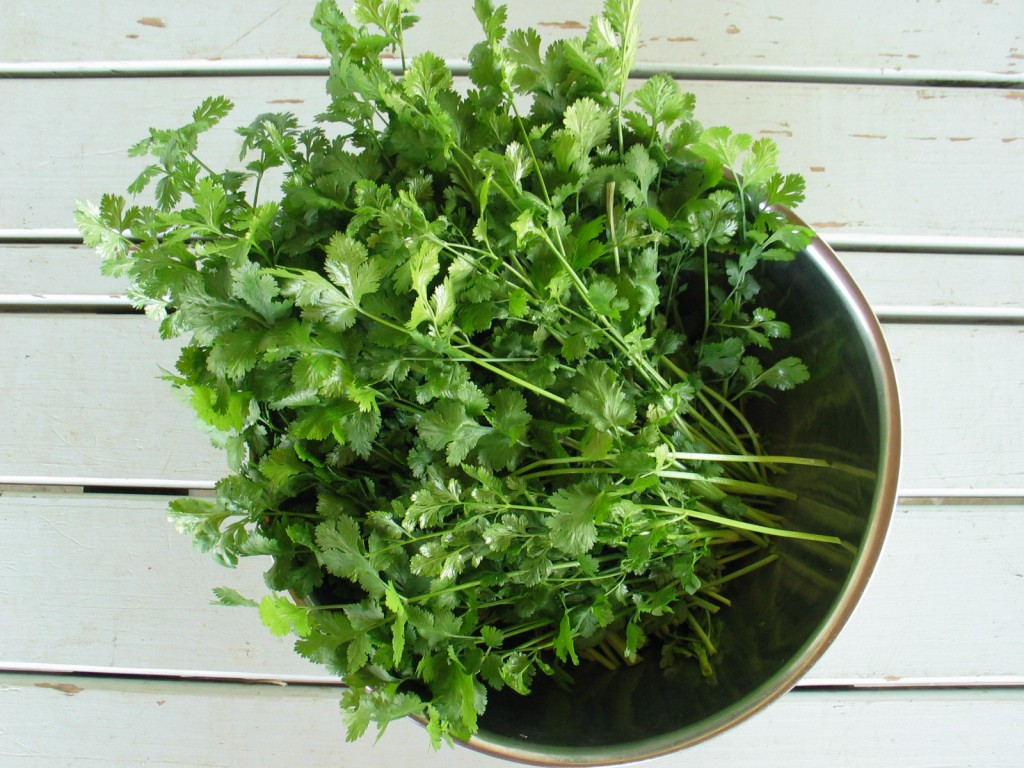
That is, until I tried the soup: chicken broth with translucent noodles, chicken breast, and floating disks of scallion, along with some lacy, parsley-shaped leaves.  One of the leaves stuck to my front teeth; I licked it off, chewed, and shuddered.  “There’s something wrong with the soup,” I told my parents.

“It’s just chicken,” they hissed.

I took another sip and tasted something chemical, like soap, perfume, or embalming fluid.  Or was it radioactive?  It made my teeth ache.  When I swallowed, a jolt shivered down my spine and into my nerve endings.  I felt poisoned, maybe electrocuted.

It was my first taste of cilantro.

The aversion to cilantro has attracted a lot of Internet noise, because some research suggests that it’s genetic.  People who’ve experienced the horror I felt that day—and felt again when I first tasted green curry and salsa—are only too happy to conclude that it’s hard-wired.

I no longer tasted the soapiness, shuddered with revulsion, or believed I was being poisoned.  This time, I detected lemon and maple, a not unpleasant hint of green grass, and that unmistakeable cilantro flavor.  If there was still a frisson in my backbone, it was only a thrill of surprise.

But our behaviors and attitudes, including our tastes, are complex processes that involve a lot more than Hate/Love, On/Off switches in our DNA.  I discovered this when I was nineteen and dating a man who liked to cook with a lot of cilantro.  He put cilantro in stir-fries, bean soup, and burritos, and I, gagging and sniveling, picked it out, frond by frond.  He took me to a Thai restaurant where I tasted that horrifying first green curry, then another Thai restaurant, and an Indian restaurant.  He chopped raw tomatoes—I hated raw tomatoes, too—and whole bunches of cilantro into salsa, opened a bag of tortilla chips, and said, “That’s dinner tonight.”

I have no idea why he was so persistent, but one day, several months and dozens of meals later, I felt a craving for salsa.  He whipped up a mixing-bowl full and I ate half of it in one go.  I no longer tasted the soapiness, shuddered with revulsion, or believed I was being poisoned.  This time, I detected lemon and maple, a not unpleasant hint of green grass, and that unmistakeable cilantro flavor.  If there was still a frisson in my backbone, it was only a thrill of surprise.

Whatever genetic inclinations I may have once had were now mingled with memories, the exhilaration of a new relationship, and a palate that had been shocked against its will into expanding.  The disgust I’d felt at that church supper was real, based on the incontestable evidence of my senses, and visceral in the most literal way:  I’d allowed a foreign body to pass my outraged tongue and enter my poor, vulnerable guts.  But one of the privileges of growing up is to be given the chance to re-feel, re-sense, reinterpret our reactions, and discover pleasure where we’d previously only known bleh.  Our gut reactions can change.

That boyfriend also taught me to cook, and the first thing I made was salsa.

Without cilantro’s tough love, I might never have come around to any of the foods that used to sicken me:  besides raw tomatoes, every kind of cheese.  And bananas.  Pretzels.  Strawberries.  Mushrooms.  Apples.  Peppers.  Sweet potatoes.  Avocados.  Licorice.  Asparagus.  Ham.  Brownies.  Green beans.  Cantaloupe.  Pine nuts.  Peanut butter.  Cinnamon.  Oreos.  Rare meat.  Granulated sugar; I was the kid who discarded most of her Halloween candy because of the gritty bits.

Learning to love these foods wasn’t about mind over matter; it was a continual reassessment of the relationship between mind and matter.  I began to want to eat food, not as something to like or dislike instantaneously and unthinkingly, but as an experience to regard with interest even, and especially, when my first reaction wasn’t delight.  I wanted to learn how a food might change my mind, which is not always a comfortable process.

I spent much of last year living in France.  On a vacation to the southwest, I ordered a goose gizzard salad for a first course.  It was strange, overwhelming, and so tasty I cleaned the plate.  At the end of the meal, I bit into a piece of aged local cheese.  It was odd and overwhelming, and, to my embarrassment, I gagged.  It was a learning experience.

But after a week of fatty fowls and organ meats, I returned to the markets of Paris, where I bought cilantro to stir-fry with cabbage, eggs, and sesame oil: for freshness, simplicity, a different shock to the palate, and a taste of the beloved and familiar.

Alison received her M.F.A. in Creative Writing from The New School.  Her writing has appeared in Gastronomica, The Robert Olen Butler Prize Stories, The Literary Review, and The Blue Mesa Review.

by Matt Kirouac

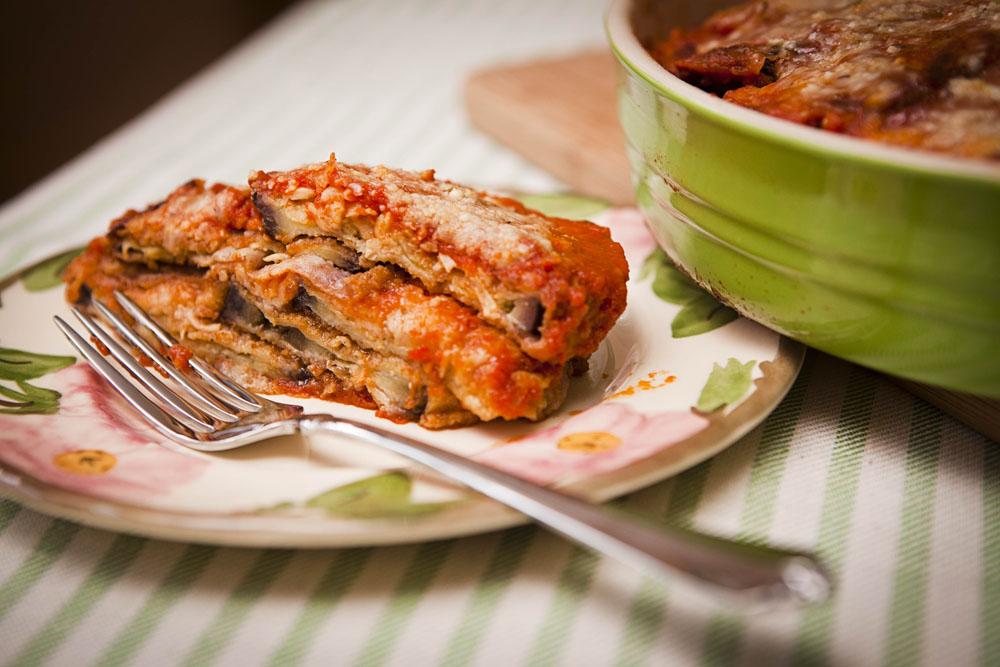
I have eggplant Parmesan to thank for my career. That sounds like a lofty statement, but it’s true. Had I not ventured out beyond the world of lasagna and meatloaf to try what I deemed “weird food,” as a teenager, I doubt I would have developed the passion for food that I possess today, and my career in food writing.

The very first time I tried eggplant Parmesan was in sandwich form at a deli attached to a super-sized gas station in Auburn, New Hampshire, the next town over from my home in Candia. I had seen eggplant Parmesan on menus in one form or another over the years, but certainly never felt the urge to try it, or even ask what it was. I couldn’t shake the idea that eggplant was some sort of plant that sprouted eggs, and the idea of that disgusted me. But for some reason, when that deli opened, I felt compelled to explore this seemingly exotic food. Prior to eggplant Parmesan, my childhood food memories mainly consisted of straightforward American fare, mostly made by my mom, such as American chop suey, lasagna, New England seafood, and “Chinese pie,” which is just shepherd’s pie that my mom inexplicably renamed. When I first told my mom I wanted to try this eggplant Parmesan sandwich, she warned me that I wouldn’t like it. Best advice I have ever ignored.

The sandwich was huge, made with soft French bread and over-stuffed with thick slices of fried eggplant, gooey cheese, and a boatload of marinara. It only took me a few bites to fall in love with it. The sandwich all melded together into one ambrosial mess. I really have no idea why my mom would think I would object to fried food covered in sauce and cheese, but I sure proved her wrong by devouring this truck-sized behemoth. I immediately became infatuated with different kinds of foods, and was determined to try as much as I could. Suddenly, I was cooking at home, ordering new things at restaurants, and begging my parents to take me to new towns and cities to eat. I was no longer content with the same old takeout, the same old pizza, and the same old dinner routine. In retrospect, I’m sounding a lot like a spoiled, picky brat, but I prefer to think of myself as cultured, which I’m sure my parents appreciated.

From that moment in my early teens to the time I moved to Chicago for college, my mom kept a steady supply of eggplant Parmesan ingredients at the house. It’s the dish I have prepared for myself more than anything else. It’s the dish I credit with inspiring me about food, and ultimately taking that inspiration to a whole new level in culinary school. Had it not been for this dish, I would likely not have moved to the big city, worked in restaurants and bakeries, or become a food writer. There is a special place in my aorta for this dish. No matter how far I go or what I do, though, no eggplant Parmesan will ever be as good as the sandwich that started it all.

Matt Kirouac is a Chicago-based food writer with more than five years of experience in freelance journalism, restaurant public relations, and blogging. Most recently, Matt served as the lead writer for Restaurant Intelligence Agency, and can currently be found writing for the likes of Front Desk, Serious Eats Chicago, Tasting Table, and Daily Candy.

by Anya Regelin


“Would you hurry up in there?” a voice said from outside the bathroom door followed by a loud banging.

“Just a minute,” I said for the third time flushed the toilet with my black clog.

Crumpled toilet paper was on the floor, used paper towels spilled out of the trashcan, and a slippery mist of white powder covered everything. On the shelf over the sink sat three yellow, mutilated boxes of Argo cornstarch. On the front of each box, hovering over each cartoon Indian woman’s head, someone had scrawled with a black Sharpie: Bart’s Balls. Bill’s Balls. Devons’ Duds. It was hot on the line and the boys, well, they suffered.

Again, pounding.

“Okay!” I yelled, and turned on the sink while clutching a paper towel. It was early in the night; there was still soap.

In this sleekly designed three-star restaurant, every detail was carefully considered except when it came to the back of the house.  There, the entire uniformed staff shared one washroom. Chefs, cooks, dishwashers, porters, captains, front-waiters, back-waiters, runners: we all had to stand on line.

I looked in the mirror and stared back at my pale face. Make-up was a no-no in the kitchen.

“Do it,” I said out loud, and cringed.

Do it was the buzz phrase running though the kitchen that week. It was initiated by Devon, the sous-chef, and was barked at overwhelmed cooks, complaining servers, and bored dish guys alike. It was a constant source of amusement to Mark, our Chef. When I said it, I felt awkward and plastic.

I swung open the door and glared at the blue shirted captain holding his toothbrush in his fist.

This wasn’t your typical cramped New York City restaurant kitchen. The space was wide open with sprawling stainless steel, white walls, ample low boys, and huge walk-in refrigerators. Across the kitchen and directly facing the washroom was the pastry area, where I worked. In the center of the kitchen, in front of two rows of face-to-face Viking ranges and four sweating cooks, was “the pass” where the Chef stood and orchestrated our night.

“Ordering: two Jon Dory, swiss chard, spring peas, followed by one baby lamb, butt-nut, fingerling,” called Mark. “Johnny, what the hell are you doing back there, I’m waiting on two guineas– you’re holding everyone up!”

“They’re resting Chef,” Johnny yelled back from his twelve-burner station, “two minutes.”

“You’re resting, Johnny, you are resting. Waiting on two guinea-hens!” he called again.

“DO IT!” Devon yelled from garde manger where he was demonstrating a perfectly plated foie torchone to Tony.

“Yes Chef!” Johnny said.

If Mark was in a good mood, we were in a good mood, but if he was in a bad mood we avoided all eye contact.

“DOWN!” yelled a runner, flying down the stairs from the dining room. He heaved the heavy tray on his shoulder and yelled “UP!” and ran out the door and up the stairs to expectant diners.

There were six of us pastry cooks, the only girls in the kitchen. Identical in our starched white jackets and pulled back hair, we had each developed a strong persona: the bitch, the martyr, the party-girl slut, the annoying little sister, and the “just-one-of-the-guys” best friend. It was my first two months and I kept my head down and I came off as aloof. Quickly, I became known as the stuck-up girl, though really, I was the uncomfortable girl. Before entering the elite restaurant world, I had visions of trips to the farmers market, heirloom blah-blah-blah, and hushed intellectual conversations of taste and texture. But this wasn’t art, it was the army, and I was having a hard time fitting into the club.

It was Sunday, and that night we were on a slow rolling wave. Lisa (the bitch) and I had our hands in a large, clear, plastic tub filled with cold water and a case of pomegranates. As we silently picked, seeds floated to the bottom, the pith to the top. In the morning, the day cooks would make sorbet from the juice. But for tonight, this was our Zen task, something to do while we waited for the next round of tickets to come flowing in.

Our machine came to life and spit out a single order.

“Guess what?” Lisa said, turning her head around to look at the order ticket without taking her hands out of the water.

“Ordering a donuts,” I said, sighing, and drying my hands on the blue towel that hung from my apron.

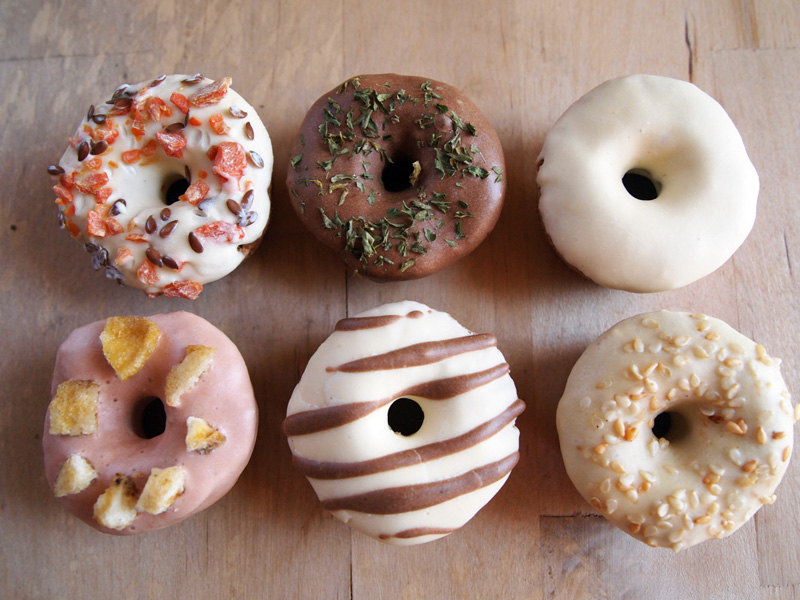
After a review earlier that month in The New York Times, we became known for our donuts. Cinnamon brioche and chocolate glazed; there were three of each on a plate lined up like little soldiers with donut hole caps on their heads. They were freshly made to order, smelled delicious, and were really, really cute. Almost every table ordered them, and they were quickly becoming the bane of my existence.

I carefully lowered the fry basket of raw donut dough into the hot oil and turned back to the jeweled seeds.

The line was in full force and Mark roared over the clamor.

“Are you guys still drunk out there? Order, fire, pick-up: tuna, frisse, add truffles, one more jew-chokes. two all day.”

Jew-chokes? I thought, turning the phrase over and over in my head. Jerusalem Artichokes. I looked up and smiled when I got it, and accidentally caught his eye. I blushed, he smirked, and I quickly looked down and kept picking.

“DO IT!” Devon yelled from inside one of the walk-ins.

Choruses of “Yes Chefs” gurgled from the line.

“Your donuts,” Lisa reminded me.

I pulled the basket out of the hot oil.

Burnt.

I showed the fryer basket to Lisa and she rolled her eyes. The delicate chocolate donuts had not only overcooked, but had also burst open, floating in the oil like a bunch of cracked, brown turds. I dropped in a new order, and was about to throw the ruined ones out when inspiration hit. I took two of the chocolate donuts, wrapped them in a paper towel, put them in my apron. No one was on line for the washroom. The savory side of the kitchen was fully slammed with everyone hovering over their stations cranking out food.

“Can you finish this these donuts?” I asked Lisa.

I ducked into the washroom and lay one of the donuts on the edge of the toilet seat. I put the other on the floor right beside the toilet, and kicked a piece of crumpled toilet paper next to it. I stood back to survey the scene: subtle, authentic, and completely gross. Quickly, I walked back to our station.

“Did you just …” Lisa started to ask, fighting back giggles.

“I did! Don’t laugh!”

Our ticket machine started buzzing. Lisa called out orders and we got busy. Tony walked off his station and went into the washroom. Not even five seconds later, he walked out, wide eyed.

A minute later, we heard “DOWN,” and a blue-shirted front waiter clomped down the stairwell, across the kitchen, and straight into the bathroom, slamming the door behind her.

Our ticket machine was going crazy. Out of the corner of my eye, I saw Bart, the vegetable guy walk off his station, untie his apron, and get on line for the bathroom. One of the porters emerged from the dish room and stood behind Bart. The waiter was still in there.

One order was rolling in after another, and I was trying to follow the action at the other end of the kitchen without losing it completely.

The door flew open.

“It wasn’t me,” she announced, emerging with a fresh coat of lipstick on. “UP!” she yelled, running upstairs.

Bart walked in, and then walked right out.

“It wasn’t her?” he said, loudly.

“Na, man, I saw it there too,” Tony yelled from his station.

“Chef!” Bart said, and walked over to talk to Mark in close conference.

“What the fuck, fucking animals,” Mark said, “Devon! Where’s my fucking sous-chef? I need a sous-chef here!”

Devon was pulled off the meat line where he was berating Johnny, comparing him to a weak little boy, wondering how he can get a woman in bed if he can’t sear a little piece of thymus gland right.

Lisa and I were trying hard to keep it together.

Mark and Devon had disappeared while the guys from the line were taking turns walking in and out of the bathroom, dramatically tying their dishrags around their mouths and accusing each other of the offense. When Mark and Devon reappeared, they were in full dishwasher cowboy regalia with elbow length rubber gloves, long plastic aprons, and blue rags tied over their faces. Devon was armed with a spray bottle and a hose, Mark with a broomstick.

“Animals!” Mark yelled, bending over, trying to nudge the turd off the side of the bowl with his broomstick.

“Do it Cheffie,” Devon yelled back, “DO IT!”

All of a sudden, the action stopped and they looked over at us, faces red, no sign of amusement.

“You?” Mark said to Lisa.

“No,” she said, saucing a plate, wiping tears from her eyes, and jutting her chin out at me. “Her.”

I was in the middle of about fourteen things, but I could feel myself freezing up.

Mark walked toward me, his arm outstretched, holding the donuts, which didn’t look much like turds anymore. I started to panic, wondering what in the world had possessed me. Was I so desperate to be one of the guys that I had stooped to potty humor?

“Well,” he said, “I guess you gotta shit with the crew to be part of the club.”

From that point on I was known as the Donut Girl, which I embraced, because hey, it could have been worse.

Anya Regelin has cooked professionally for the past 13 years. She currently chefs for private clients while working on her MFA in Creative Non-Fiction at The New School.  

by Jane Moon45673_8fd2b78138a5779662150a65b3dcc084_55f50bd3f10d31357a44140315907078

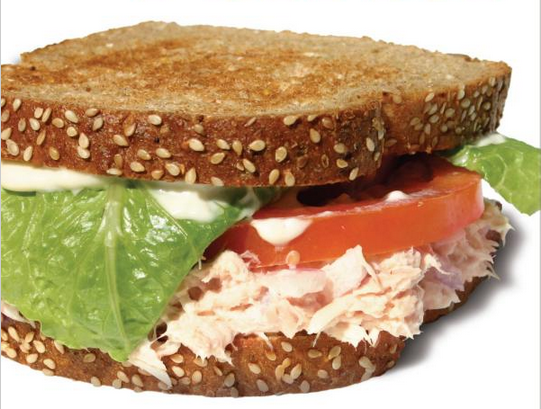
Tuna brings to mind many things.  I think of the canned product sitting on supermarket shelves and the raw version of the fish used in Japanese cuisine. I also think of mercury health concerns from the consumption of tuna.

Andrew F. Smith, editor of the two series Food and Edible, addresses all these topics and more. While covering the history of tuna, Smith tells us how Japanese fisherman along the California coast were vital to the tuna industry, and why the government encouraged consumption of tuna during World War I. He also tackles the persistent dolphin meat myth, discussing the issue of dolphins killed during the tuna fishing process.

American Tuna is divided into two sections: the first half covers tuna’s ascent from obscurity to popularity.  The second addresses the challenges later faced by the American tuna industry.  Tuna began with an uphill battle for acceptance: at first, the few Americans who thought to try tuna described it as oily and unappealing. Only after the canning process had been refined to remove most of the oil and lighten the color of the meat did the public conceive tuna to be enjoyable. I found this first part of the book particularly fascinating, as it focused on the underdog rise of tuna.  Smith also writes about the origins of the Tuna Club, a sports-fishing organization dedicated to preserving the original rod and reel method of tuna fishing, and covers all the steps from tuna’s unsavory introduction to the American diet to becoming a staple on the American dinner table.

The second half describes the fall of tuna: how the import of foreign tuna threatened the American tuna canning industry, unable to compete with low foreign labor costs.  This part of the book focuses on the economic and financial history of tuna, walking readers through the politics of tuna: tuna imports into the United States, the restrictions of American fishing boats in foreign waters, and the government’s involvement with the tuna industry.

Finally, Smith includes a section of tuna recipes. Several were published in cookbooks from the 19th and early 20th centuries. Other recipes come from corporate promotional pamphlets. These instruct the use of a specific brand of tuna in the ingredients, such as Blue Sea Tuna Fish in tuna chowder or Avalon Brand Tuna for tuna loaf.

Smith does a wonderful job of keeping my interest during the first part of the book, depicting the background of the tuna in a story-like form. My attention started to wane in the second section, when it became heavy with the facts and figures of import tariffs and distance restrictions regarding fishing on foreign shores. That said, American Tuna is a great read for anyone who wants to know how a fish that was once undesirable became one of the most popular sandwich fillings in America.

Jane Moon received her MFA in Creative Writing at The New School. She is currently writing her first novel.

by Joseph Warren

“This is Seattle food. For Seattle people. This is what we eat here. Seattle people eat teriyaki. This isn’t Dallas.”

-Boo Yul Ko, co-owner, Manna Deli & Teriyaki (Edge)


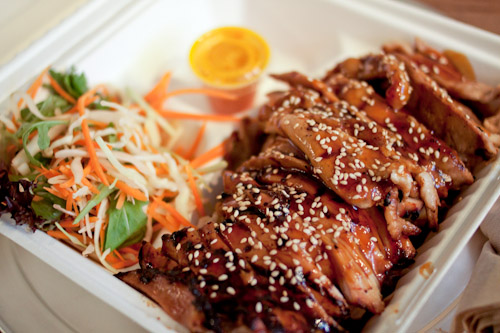
I grew up in Seattle, Washington in a family with two adopted Korean-American siblings. As such, my parents established a family tradition of regularly taking us to Korean restaurants. On most days, kimchee and rice were part of every meal, but on the weekends we drove up Aurora Ave N. and “went to Korean Food.” Instead of announcing Korean food, the signs for the two or three places that we went most often predominantly advertised traditional Japanese fare of teriyaki and sushi.  The Korean options were only revealed later on the menu.  While my parents usually ate chicken or beef bulgogi and my siblings and I generally ordered bibimbap, we also loved teriyaki. The teriyaki these restaurants served, the teriyaki I knew, varied from establishment to establishment but followed a pretty specific model. Huge amounts of chicken, beef or a combination of the two lay on a bed of white rice with an additional ball of rice on the side. Some places made their sauces with pineapple, some with citrus, some with ginger, but every teriyaki sauce was unapologetically sweet and liberally ladled over the meat and the rice.

It wasn’t until I was an adult, living nearly a thousand miles from my Seattle home that I realized that the teriyaki I had grown up eating was something special. Outside Seattle, the teriyaki I tasted inevitably led to disappointment. Instead of being a restaurant’s primary product, it was usually a just menu item among other Japanese foods. It had less sugar, more salt, and far more restrained portions. I remembered my childhood restaurants and wondered what made the origins of Seattle teriyaki so remarkably different.  Was it that I had been eating Korean-style teriyaki all along?  I decided to investigate.

Seattle teriyaki is considered, by some, to be the city’s signature food, like Chicago hot dogs, New York thin-crust pizza, or Philadelphia cheese steaks. I quickly learned that Seattle-style teriyaki established itself into the region’s diet soon after its introduction in the 1970s. Barely twenty years after it was created, Seattle’s distinctive teriyaki style was nominated in the local paper as the city’s “signature dish”.

And my guess that the very distinct form of Seattle teriyaki had been Korean based was not entirely off:  I learned that while Korean influence has been important, even dominant, Seattle teriyaki has been driven by many (primarily thought not exclusively) immigrant ethnic groups.

Predecessors

In an extensive 2007 article documenting the history of Seattle Teriyaki, Jonathan Kauffman traces the prototypical teriyaki history. Almost as interesting as the places where the history can be found is where the history cannot.

Teriyaki did not exist in the most likely places.  The Nihonmachi neighborhood, a Japanese community in Seattle from the end of the 19th century until the WWII internment, had no teriyaki restaurants, nor did the pre-war Japantown section of Seattle.

After the war, and the return of the detainees, teriyaki foods were on a small number of menus. Bush Gardens, the swanky Japanese restaurant in the city’s International District attracted former internment camp detainees and Caucasian GIs who had developed an appreciation for Japanese food while stationed abroad. The restaurant served teriyaki steak from 1957 onward. Canlis, the city’s most famous fine dining establishment, has included a teriyaki beef dish on their menu since their beginnings in the 1950s.

Toshihiro Kasahara’s 5 Item Menu

The contemporary Seattle teriyaki plate generally consists of a three-compartment clamshell container. For most of my life, the container was Styrofoam though it is now a more environmentally conscious cardboard.  In the largest compartment, there is the meat on its bed of rice. In the smaller compartments are a perfectly formed sphere of rice and a vegetable; usually a cabbage or lettuce salad. This standard was established by the father of the modern Seattle teriyaki, Toshiro Kasahara.

In 1976 (though Elizabeth Rhodes’ 1992 article on the subject says 1977) Kasahara opened Toshi’s Teriyaki Restaurant. Kasahara, a Pacific Northwest business school graduate originally from Ashikaga, Japan, imported the now ubiquitous containers from Japan. He created a sauce that broke tradition by using sugar instead of sweet rice wine, much like Hawaiian teriyaki.

The menu consisted of the following items:

  • Teriyaki Chicken
  • Teriyaki Beef
  • Tori Udon

And during dinner hours, also:

  • Teriyaki Steak
  • Japanese-style chicken curry

The prices ranged from $1.85 to $2.10.

The success of Toshi’s Teriyaki lead Kasahara to open a second store, this time focused exclusively on takeout. He expanded by, essentially, flipping the shops he opened. He would start a shop, bring it to a level of profitability, sell the shop, and open a new location, rarely owning more than two at any given time. By 1992, he had opened ten shops.

Yasuko Conner, the first employee of Kasahara’s second store, bought one of the shops, changing its name to Yasuko’s and starting her own ever-expanding chain of, at their height, nine restaurants. Similarly, a man named K.B. Chang purchased one of Kasahara’s stores and began quickly opening and “flipping” stores also (semi-legally) called Toshi’s.  Kasahara eventually began to sell franchise rights and to train new shop-owners.

The success of these stores, and the many stores they inspired, is astounding. Kasahara could only guess how many Toshi’s he’d opened over the years (the guess being thirty) and the number of teriyaki places in the greater Seattle area can only be estimated.  In 1992, there were 107 establishments within Seattle’s King County with “teriyaki” in their names.  By 1996, the estimated number of King County teriyaki places was up to 175. By 2007, there were 519 restaurants with “teriyaki” in their name, in the state of Washington and more than 100 just within the city limits.  In John T. Edge’s 2010 article, he cites the number of teriyaki stores within the city limits as a more conservative eighty-four. He also notes that there were, at the same time, only about forty Burger Kings, Wendy’s, or McDonalds.

Multiethnic Expansion

When Toshihiro Kasahar was selling and franchising Toshi’s Teriyaki shops, the new owners came from a variety of ethnic backgrounds: Japanese, Chinese, Mexican, Caucasian, Indian, and Korean-American.

“I’m glad it’s many nationalities,” he told The Seattle Times’ Elizabeth Rhodes in 1992. “That means more people are interested in my business and see it as an opportunity.”

Since the food’s early growth in the 1980s and 1990s, the variety of ethnic and cultural influences on Seattle Teriyaki has dramatically expanded. There are Hawaiian teriyaki restaurants.  Vietnamese Phở shops (another ubiquitous Seattle fast food option) often sell teriyaki, as do local hamburger places and Thai restaurants. A Somali restaurant in Tukwila (a suburb near the airport) serves a halal chicken teriyaki and a Vietnamese restaurant serves beef short ribs with lemongrass as, “The Best Teriyaki In Town.”

Tokyo Garden, near the University of Washington, is owned by a Nepalese immigrant with a chef originally from Puebla, Mexico. Among their offered dishes are Nepalese dumplings, Japanese dumplings, sushi, and, astonishingly enough, corn dog teriyaki.

Korean American Influence

The immigrant group with the largest impact on Seattle teriyaki was, as I suspected initially, Korean. After the passing of the Hart-Celler act of 1965, altering the system of immigration to the United States, Korean immigration boomed. Between 1970 and 1980, the Korean population in Washington’s King County increased by 566%, compared with 412% in the rest of the nation.

Many of the Toshi’s and Yasuko’s stores were purchased by Korean Americans. Other Korean natives, such as Chung Sook Hwang, opened unaffiliated shops of their own. In 1983, Hwang opened what would become one of my favorites, Yak’s Deli on a corner in the Freemont neighborhood.

In her 1992 article, Elizabeth Rhodes tells the story of Chang Sook Hwang (not to be confused with Chung Sook Hwang), a New York City deli owner. Chang received a call from a friend advising that teriyaki shops in Seattle were a moneymaker. Despite not knowing what teriyaki was until arriving in the Seattle, Hwang’s shop attracted crowds of customers.

In addition to dramatically increasing the number and popularity of teriyaki places, the Korean-American owners influenced the way teriyaki sauce tasted.

“We Koreans made it more interesting for people.” Kyung La (Sarah) Ahn explained to Jonathan Kauffman. “The Japanese only have three ingredients for seasoning: sugar, soy sauce, and vinegar. We have twenty to thirty ingredients for making seasoning. Teriyaki tastes much different.”

While I’m not convinced that the Toshi’s restaurants’ sauces were quite as simple as Ahn described, the influence of Korean cooks is evident. Ginger, garlic, and sesame oil all play a role in sauces that do, in some ways, resemble Korean bulgogi marinades.

While many restaurants have a pretty simple menu, some (such as the ones my family frequented during my childhood) have secondary Korean menus.

Seattle Exports

It could be said that a city’s signature food is defined by its arrival in other places. When “New York Style” pizza or “Chicago Style” hotdogs are available at the Dallas Ft Worth airport, you can be sure that it has achieved that status. The earliest Seattle teriyaki missionary I could find mentioned was in 1996, the single Toshi’s franchise outside of the greater Seattle area in Phoenix.

In 2002, Seattle area natives Eric Garma and his cousins Rodney and Allen Arreola opened Teriyaki Madness in Las Vegas. They purchased the Korean/Seattle-style recipes, the plans, and the rights to the name “Teriyaki Madness” from a local store where they had eaten growing up, and used the image of an Asian Elvis impersonator to cement a distinctive brand. There are currently seven Las Vegas stores, and they have begun the work of setting up franchises throughout the Southwest.

In 2010, businessman and Seattle ex-pat Paul Krug opened the first Glaze Teriyaki Grill in New York City.

“I lived here (NYC) for seven years and noticed New York was missing teriyaki,” Krug explained. “There’s a ton of Japanese restaurants in New York that offer teriyaki, but it’s a lot more expensive and doesn’t taste nearly as good as it does in Seattle.”

Glaze’s Seattle-style Teriyaki has developed a following. As research for this paper, a coworker and I visited a Union Square Glaze shop.  The food, as well as the shop itself, is very much like Seattle, if a little bit more self-consciously stylish.

Conclusion

Several years ago, for reasons irrelevant to this paper, I stopped eating meat. I have never regretted this choice nor have I had any real temptation to abandon it. The only meat that I have longed for in that time is Seattle teriyaki chicken. While I’ve yet to be convinced to change my vegetarian ways, I have become, like Paul Krug and Eric Garma, something of a Seattle teriyaki missionary. The first time my future wife came to Seattle, the priority after meeting my family was to drive up Aurora Ave N. to buy her the Korean (and Japanese, and Hawaiian…) -inspired chicken that was such an important food during my childhood. When two friends were in Seattle for their honeymoon, they asked if there was anything they should be sure to do. I recommended getting teriyaki at least once. To my delight, their Facebook pages documented at least one, sometimes two teriyaki meals per day of their Seattle trip, each from a different store. I think that it is safe to assume they enjoyed it.

References

Blake, Judith. “Teriyaki — Secret Is In Sauces For Popular Fast Food.” The Seattle Times 12 June 1996: n. pag. Seattletimes.com. The Seattle Times, 12 June 1996. Web. 24 Oct. 2012. <http://community.seattletimes.nwsource.com/archive/?date=19960612>.

Edge, John T. “A City’s Specialty, Japanese in Name Only.” The New York Times 6 Jan. 2010, New York Edition ed., sec. D: D1. The New York Times. Nytimes.com, 5 Jan. 2010. Web. 4 Oct. 2012. <http://www.nytimes.com/2010/01/06/dining/06unit.html>.

Giudici, Carey. “Korean Americans in King County.” HistoryLink.Org The Free Online Encyclopedia of Washington State History. HistoryLink.Org, 31 May 2001. Web. 10 Oct. 2012.

“Glaze Teriyaki.” About Us. Glaze Teriyaki, n.d. Web. 24 Oct. 2012. .

Kauffman, Jonathan. “How Teriyaki Became Seattle’s Own Fast-Food Phenomenon.” SeattleWeekly.com. Seattle Weekly, 15 Aug. 2007. Web. 4 Oct. 2012. <http://www.seattleweekly.com/2007-08-15/food/how-teriyaki-became-seattle-s-own-fast-food-phenomenon.php/>.

Kugiya, Hugo. “A Seminal Moment for ‘Seattle Teriyaki’ | Crosscut.com.” Crosscut: News of the Great Nearby. Crosscut.com, 30 Dec. 2010. Web. 4 Oct. 2012. <http://crosscut.com/2010/12/30/food/20502/A-seminal-moment-for-Seattle-teriyaki/>.

Raskin, Hanna. “Local Teriyaki Pioneer Is Back at the Grill.” The Seattle Weekly 9 Feb. 2012: n. pag. SeattleWeekly.com. Seattle Weekly, 9 Feb. 2012. Web. 10 Oct. 2012. <http://blogs.seattleweekly.com/voracious/2012/02/local_teriyaki_pioneer_is_back.php>.

Raskin, Hanna. “Teriyaki’s Expansion Plotted by Seattle Natives – Seattle – Restaurants and Dining – Voracious.” The Seattle Weekly Blogs. The Seattle Weekly, 13 Feb. 2012. Web. 10 Oct. 2012. <http://blogs.seattleweekly.com/voracious/2012/02/teriyakis_expansion_plotted_by.php>.

Rhodes, Elizabeth. “Teriyaki Takes The Town — Everybody’s Making It, Including Many Small Delis.” The Seattle Times 12 June 1992: n. pag. Http://seattletimes.com. The Seattle Times. Web. 10 Oct. 2012. <SeattleTimes.com>.

Susskind, Jonathan. “Votes Split on Which Dish Says Seattle.” Seattle Post-Intelligencer 10 June 1992: C1. Web. 10 Oct. 2012.

Joseph Baruch Warren holds an MA in Media Studies from The New School. He works for the Eugene Lang College budget office and takes occasional Food Studies classes at The New School for Public Engagement.

by Varaidzo Corinne Sengwe

Who knew that a bite of a small, ball shaped chestnut, boiled in lard could be so potent as to evoke significant memories within me? I did not. It was my first time in the Monragalase region of Piedmont, Italy on what I thought would be an average didactic tour around a farm and a chestnut forest.  I was there while studying abroad in Italy for the year, a far way away from my home in Zimbabwe.

As I tasted the boiled chestnut, a local delicacy of the area, I recalled a taste, flavor and texture that was familiar to me. It was not the conventional nut flavor that I had expected. Rather, it was starchy, sweet, and dry all in one mouthful. What I  tasted was a bittersweet memory of sweet potatoes from my time at home.

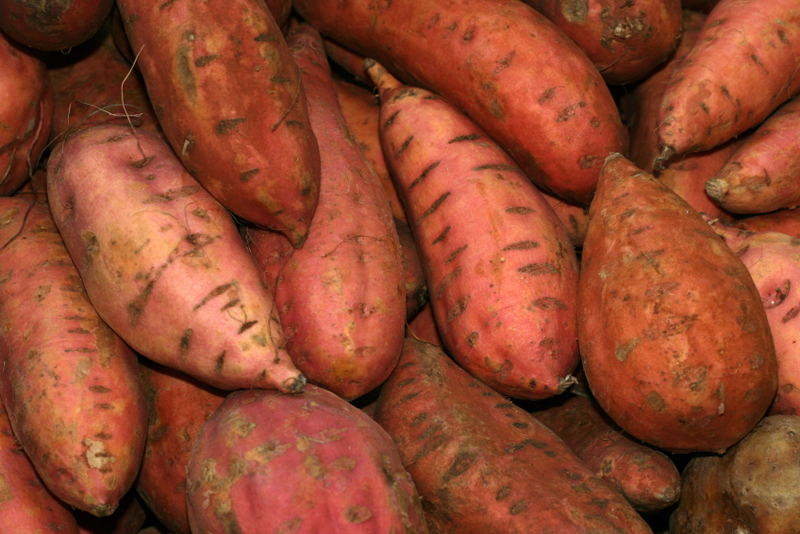
Sweet potatoes are more to me than just oblong shaped tubers with colourful white, beige or maroon skin that grow in the ground. For me, sweet potatoes represent family, enterprise, survival and hard work. This is because some of my family, myself included, faithfully produce sweet potatoes every year, planting in early summer, for an early winter harvest.  The extremely laborious physical work produces enough to feed my enormous extended family for the winter season, featuring breakfasts of boiled sweet potatoes as side dishes to roasted sweet potatoes. There are enough left over for enterprise, selling our sweet potatoes to the community for an extra income to cover school fees and pay the necessary bills.

But in Italy, I reminisced as my tour guide, Mr. Castagna, looked comfortable with the ice cold spring rain drops gently falling all over his body. Meanwhile, the tour group was shivering in the cold forest making silent prayers that it would either stop raining or the tour would be brought to a sudden end. Unhinged by the extreme weather conditions, Mr. Castagna continued his highly animated and very detailed explanation and description of the varieties of trees in the area. His determination reminded me of Mai Jasi, the main sweet potato producer in our large family.

Scorching summer sunshine, raging storms, and the not so silent complaints from the labourers who are her children, nieces (myself included) and nephews, do not deter Mai Jasi from producing possibly the best potatoes in the area. They are the envy of all the neighbours; boiled or roasted, the blemish-free, colourful skin effortlessly peels off exposing firm, supple edible ivory flesh.

Personal bias aside, the tubers are good for several reasons. The primary reason is probably that Mai Jasi has a personal devotion to the product. There are vast areas of arable land available in the semi- rural community of Juru, Zimbabwe; but these sweet potatoes are grown within the parameters of her ample yard so she can keep a watchful eye on their growth and make sure that wandering cows do not eat the crop. Weeds are a foreign concept as far as the sweet potato rows and ridges are concerned. We, the children, are responsible for allowing only green heart-shaped leaves to thrive. Everything else that attempts to sprout up out of the ground is an alien threat and instantly uprooted.

I constantly lament that I was born into a family that has an affinity to agriculture. I live in the capital cosmopolitan city, but I find myself usually coerced an hour away planting or weeding mbambaira (the Shona word for sweet potato) on a Saturday morning. Not high on my priority list. My cousins remind me that I am lucky I only visit, even if it is once a week, otherwise it would be my daily fate.

My loud and often angry complaints about the hard work are usually shut down by Mai Jasi’s default statement “as long as you have some land, you will never go hungry.”  Hers is a simple philosophy, an echo of generations before her, and a voice she hopes will continue to echo in generations to come. It is to my own peril and demise if I decide not to till the land, or at least have a vested interest in tilling it. I think that the constant repetition of this mantra works as a scare tactic, since my elder brother, who initially despised the hard work of farming, has been converted. He and his wife are now well on the way to being full -time farmers, leaving me as the last one to be converted.

I eat the slightly salted and boiled potatoes prepared as a tasty breakfast for us after a morning in the fields. It is important to know that I like sweet potatoes, but served with mashed sweetened avocado or as grilled chips, seldom for breakfast and never in excess. During some breakfasts, I have slow choking sensations that come from the half-chewed mushy tuber stuck at the roof of my mouth. Perhaps it is the universe’s way of telling me to develop an interest in farming, and then maybe, just maybe, the sweet potatoes and their memories will be easier to swallow.  Or perhaps Piedmont’s chestnuts- boiled, roasted, or dried- will seduce me into growing my farming knowledge. And then Mai Jasi’s sweet potatoes will truly be sweet.


Zimbabwean born Varaidzo Corinne Sengwe, is a recent graduate of the Masters Programme in Food Culture and Communications at the University of Gastronomic Sciences in Pollenzo Italy. She is currently based in Zimbabwe exploring the dynamics of the food system.