Archive

August 2012

Browsing

by Margaret Jones

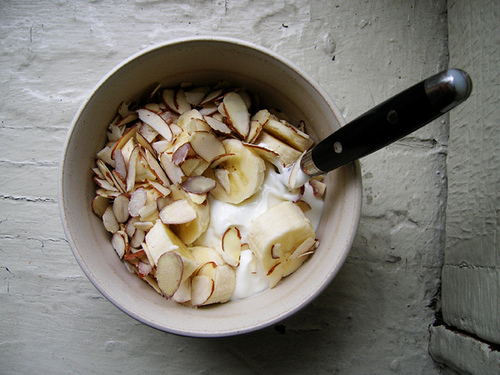
The birds ate the seeds, and Olive ate the birds. My friends had goats, and I ate yogurt we made from their milk, but after they stopped milking I ate Nancy’s Organic Plain with sliced bananas imported from Costa Rica or Guatemala or Honduras or Panama, stirred with peanut butter I ground in the bulk grinder at New Seasons Market, The Friendliest Store in Town, where, when it got hot, the cashiers smoked weed in the walk-in freezers, and they closed early on the 4th of July so that everybody could barbecue, and you could eat freely from the bulk bins—Please Use Tongs, Not Hands, the laminated signs read. The yogurt came in 32oz plastic tubs that said Re-use Me! in orange cursive on their sides, so I re-used them to store leftovers of other foods I ate, or re-used them to transport cooking scraps from the sink to the compost pile out back beside the chicken coop.

In the summer, I ate with Em and Baker in the backyard around a wooden table that was cracked and crooked from being left in the rain. We ate big salads—greens from the farmer’s market, where Em and Baker worked on Saturdays; cold farro or quinoa from an old yogurt container in the fridge; raisins and toasted sunflower seeds; a dressing of good balsamic vinegar and preserved lemons made by Baker’s mother in California—rotating our chairs to keep our backs in the sun and our faces in the shade. We would gossip, though not much ever happened.

On a day in July, we were gossiping about an artist I had dated, who had left in the winter and returned a few weeks earlier with a pregnant fiancé.

“But how pregnant?” Em  asked Baker.

“Pregnant-pregnant,” said Baker, reaching for the wooden salad tongs.  Baker was the tallest and thinnest; she ate oatmeal for breakfast with cream and dried figs, cinnamon and brown sugar. Em and Baker didn’t eat gluten, but Baker still ate special gluten-free bread, made from rice flour. She ate it toasted, with salted butter. She was the only one of us who had met the fiancé, because Em never went out and I was avoiding places that the artist and the fiancé might be.

“Oh,” I said.

“And you still haven’t heard from him,” Em said, leaning back into her chair. Her plate was pushed into the middle of the table, out of her reach. Her small face was smooth and tanned; her body compact from daily yoga and clean living. Em was the oldest, in her late thirties, and ate handfuls of nuts or seeds while she worked in her studio, salad for lunch, and for dinner a Japanese sweet potato. If I was home in the early evening, I would hear Em come down from her studio to put the sweet potato, which had purple skin and pale, yellow flesh, in the oven; soon after, the smell of caramelizing sugar.

Of the three, I was the youngest and plumpest. I ate yogurt and apples and salads all day, and then, willpower exhausted, made someone go to Happy Hour with me. My friends and I knew the places with $3 well drinks and half-priced appetizers—Thai-style barbecued wings or Kobe beef sliders, herbed French fries tossed in truffle oil.

“No,” I said, and there was a sound from the other end of the yard, where the chickens were fenced in. Olive, the black cat, had slinked past the coop and was headed for the wooden table. She had something in her mouth.

“Is that a—”

“Oh, fuck, Olive—”

“Olive!”

Olive, who was skittish even when no one was paying attention to her, dropped it on the ground next to me, and darted beneath the wheelbarrow.

I got up and squatted beside it.

“Is it alive?” Baker asked.

“It’s fucked up,” I said. The bird was lying on one wing. Its eyes were closed, and its free wing, black flecked with gold, was spasming.

“I should kill it,” I said.

“I’m just gonna like, drop a rock on top of it,” I said. I felt very calm, cleaned out on the inside. Of the three of us, I was the best one to kill the bird. I had once seen my roommate’s orange tabby get hit by a car, and had knelt beside him, in the street, while he convulsed and then went still. I had tried to clean his fur, but had only succeeded in staining the white parts pink.

“I’m going inside,” said Em.

A rock was not actually going to do it. I scanned the yard, and spotted a short row of rough-edged cinderblocks, which propped up pots of dried basil and marjoram. I lifted one; it was heavy enough.

“Do you need help?” asked Baker, who was still standing behind her chair, the table between her and the bird.

“It’s okay.” The bird was still twitching. Olive was still crouched under the wheelbarrow, watching.

The artist’s return with the pregnant fiancé had been anticipated by weeks of gossip. I had tried to prepare for his arrival by eating less; I had seen pictures of the fiancé on the internet, and she was very thin. At Happy Hour, my girlfriends had shaken their heads and said things like, “Aren’t you glad it wasn’t you?” as if the artist had been bound to get someone pregnant; as if I had dogged a bullet.

I hoisted the block over the bird, glad that its eyes were closed. My breath caught in my throat, and I let go. The block hit the ground, and Olive, startled by the sound, shot out from beneath the wheelbarrow.

Baker brought out an old yogurt container. We sealed the bird inside of it, to keep Olive, or a raccoon, from digging it out of the trash.

Margaret Jones is a 20-something student of nonfiction at The New School. Her work can be found in Meatpaper and on Twitter.
by Amy Neiman

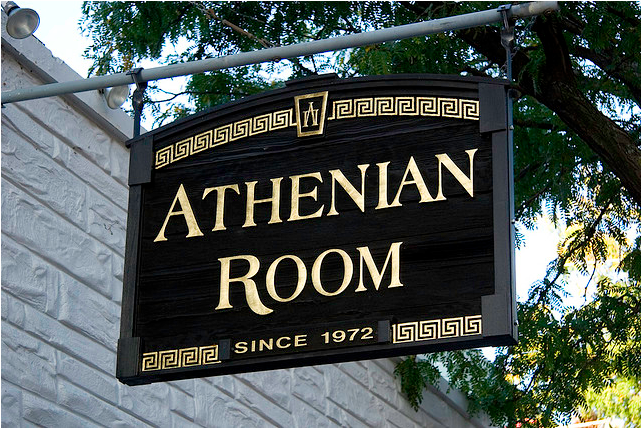
Growing up in downtown Chicago, I was surrounded by restaurants and markets of countless variety.  From my house, we had the tastes of the world in walking distance.  While my mom cooked dinner most nights, we also ordered takeout more than the average family. We had a handful of favorites; places that knew us by name and where menus were unnecessary because, after time, they just knew what the Neimans ordered. Two blocks from my home (or one and a half if you cut through the alley), was one such Greek restaurant.  Established in 1975, The Athenian Room was one of those secret neighborhood gems appreciated only by those in the immediate locale.  With the famously popular Greek Town just two miles south, there was no shortage of fabulous and authentic Greek cuisine in the city.  But this particular family-run joint, serving traditional Athenian cuisine, was unique to our particular neighborhood.  Its white stone façade imparted a rustic old world charm that contrasted quite dramatically with the more contemporary buildings of most nearby eateries.  If not for the dancing, flame-fueled spit warming the signature gyros meat just beyond the darkened front windows, you’d barely be able make out the brick walled interior, stained wood tables and red cushioned chairs inviting you to come share a meal.

In my family, it was a given that Sunday nights were “Athenian Nights.” On these evenings, there were two main tasks: someone was delegated the role of placing the order over the phone, and another the job of walking to pick it up.  The phrase “Who’s going to get the Athenian?” was a predictable inquiry in our Sunday evening repertoire. In the dead of Chicago winter, walking two blocks after sunset can be painful.  Whoever braved the cold was viewed as taking one for the team.

Despite our consistent patronage to the restaurant, I never developed a love for the food growing up. I didn’t enjoy the taste of meat, which was indeed their specialty.  In fact, as an insult I would often tell my brother that he “smelled like the Athenian Room” when he would return from being out on a humid, sweaty summer day.  Nonetheless, each member of my family was committed to their “usual.”  Mom savored the two-inch thick feta burger on a red sauce stained sesame seed bun, for dad it was the oregano-crusted Greek chicken dripping in olive oil and lemon, and for my brother, always the gyros shaved straight from the spit and into a freshly warmed pita, saturated with extra red sauce and tzatziki.  Then, there were, of course, always two additional side orders of Greek fries specially crisped to a deep golden brown.  I must admit that I did enjoy the fries, but grease laden starch didn’t seem a substantial meal for a growing girl.  On any other occasion, this sentiment would have been shared by my parents.  On Athenian Nights, however, fries were a fine substitute for a complete meal, the argument strengthened by my brother’s notion that that red sauce was a vegetable.

After 18 years in the same brownstone home on Fremont Street, I left my neighborhood and Chicago to study Anthropology in Boulder, Colorado. This transition quickly made clear how deeply my Chicago roots had been sown.  The diversity of my home town did not exist in Boulder where I felt young, white, pseudo-hippies dined exclusively on hummus, vegan burritos, tofu stir fry and barbequed tempeh.  While I myself was trying to be vegan at the time, I quickly grew tired of the aroma carried by the “trust-a-farians” whose dirty dreadlocks chronically emitted scents of garlic and over-priced craft beer.  I missed all the unique tastes and aromas of my city. The smell of Chicago classics like stale Old Style beer and boiled hot dogs squished between a steamed S.Rosen poppy seed bun felt so far away.  Boulder seemed void of both authenticity and culture.

That year, I returned to Chicago to celebrate Christmas. On my second night back, I convinced my dad to walk with me to The Athenian just a few blocks away.  It was particularly cold; we cut through the alley.  We walked with our hands stuffed deep in our pockets, keeping our breath shallow to lock the cold out of our lungs and hungry bellies.  And then, my nose was filled with smells overwhelmingly familiar.  Almost immediately, I could decompose the symphony of aromas.  Greek fries, freshly lit saganaki, warmed pita bread, and that gyros releasing its juices while roasting over that pit of flames.  I stopped in my tracks. I lifted my hunched head, putting my nose high in the air to take a big, freezing cold whiff of the moment.  Beginning to cry from what would have appeared to be out of the blue to any outsider, my dad stared at me with eyes that scolded, “Amy, It’s way too cold for an Amy meltdown.” In that precise second, the true significance of the Athenian Room to my life experience was revealed.  Much more than Sunday nights, it was my daily walks to school, it was my neighbors, it was my brother, it was my family and it was “taking one for the team” on the coldest of Chicago nights.

Currently living in Los Angeles Amy Kingson Neiman is working to incorporate her past experiences as a farm-to-table educator with her interests in the  larger food world.

by Larissa Zimberoff

What was the moment when it struck you to write a book about your history of being a picky eater?

It wasn’t so much my moment as it was my husband’s. We were eating at one of our favorite neighborhood restaurants (NOPA in San Francisco), and I commented that, since there was a time I despised cooked vegetables, I couldn’t believe I was getting so much pure joy and comfort out of the amazing brothy vegetable soup I ordered. “Let’s talk seriously about you writing a book,” was Mark’s response.

Are there still foods you steer clear of?

Most certainly, and here’s my list from the book: succotash, raisins, bananas, oatmeal, cream of wheat, grits, polenta, the skin of tomatoes, caviar, offal, innards, feet, ears, flan, tofu, red peppers, yellow peppers, cooked green peppers, string beans, some fish, figs, dates, most melon, stews, braises, gelatinous desserts, things with heads, rabbit, veal, dill, black licorice, tarragon, lemongrass, coleslaw, mozzarella cheese, mayonnaise, rice pudding, some leafy greens, cooked cherries, and more.

If I had to, I’d be able to eat those foods. I just prefer not to.

As a past picky eating child, and now a mother, do you push your son to eat a wide range of foods?

I don’t push him, but I introduce him to foods. If he’s not interested, fine. I try very hard not to make it an issue, but I also don’t decide to never offer that food again. It will show up on another day. I’ll usually fill his plate with 3-4 things, one of which I know he’ll like, the others being more of a crapshoot.

But with kids, it’s so up and down. For instance, just last night he finished his entire serving of roasted broccoli (the recipe is in Suffering Succotash). What you should know is that I’ve made this for him multiple times, and he’s taken one bite, two bites, and left the rest. He’s also had nights where he hasn’t taken any bites. For him to finish every last smoked paprika-drenched floret on his plate was unprecedented and I was thrilled. However, I know there will still be nights when he doesn’t do that. Kids have moods and they’re largely not in control of choosing what they get to eat.

In the book we learn of several possible reasons for children (and adults) picky-ness, and you say at the end that you don’t know why you were picky. Now that you’ve had some distance from writing the book, do you have any further thoughts on your picky eating provenance?

I really don’t. As I said in the book, I know that my picky eating came from a variety of factors and that there wasn’t just once source alone. I do think my dislike of vegetables was heavily influenced by eating mostly frozen vegetables. However, frozen vegetables are what was available back then and no amount of butter or salt can mask that blandness. I firmly believe that having access and knowing the best ways to cook fresh, in-season vegetables has made a huge difference in my life.

I remember the one time my mother was able to coax a few tomatoes out of our Minnesota garden. I ate them sliced with salt and though I thought I hated tomatoes, those straight-from-the-garden specimens were the best things I ever tasted.

Now that your picky eating secret is out, do your friends treat you differently at dinner parties?

Some have teased me about serving a raisin-filled dinner and needing to check their bookshelves after I leave.

Have you heard from any famous picky eaters?

Gosh, I can’t even think of any famous picky eaters except Anderson Cooper, though I’m sure they’re out there! But no, I haven’t heard from Anderson Cooper directly, though I did make an appeal to him in a column I wrote for CNN where I told him I could help him rewire his neural pathways which could help him like more vegetables.

I also heard through the San Francisco foodie grapevine that Dave Eggers is known to be a picky eater, but he hasn’t come to me with any secret confessions.

What are you working on now?

Preparing my son for pre-school and enjoying the hell out of not having a looming 60,000-word deadline!

For more information on Suffering Succotash and to read the book review by Larissa Zimberoff, click here!

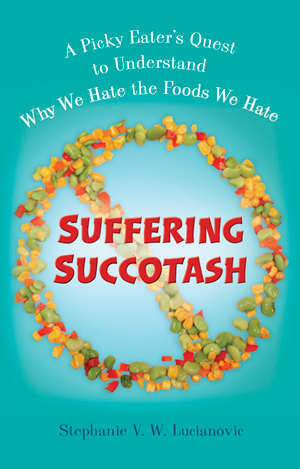
Suffering Succotash: A Picky Eater’s Quest to Understand Why We Hate the Foods We Hate
By Stephanie Lucianovic
Perigee Books, Published July 3, 2012

Larissa Zimberoff is a freelance writer living in Manhattan. She is currently working towards her MFA at The New School. Her writing has appeared in Salon, Untapped Cities and The Rumpus.

by Larissa Zimberoff

Until I read Stephanie Lucianovic’s new book, Suffering Succotash: A Picky Eater’s Quest to Understand Why We Hate the Foods We Hate, I didn’t quite realize the range in picky eating. I had often referred to myself as a picky eater, the kind of person that only likes good food. Of course I qualified the word good by saying things like healthy, local, organic, or even just tasty. In Stephanie Lucianovic’s book she attempts to determine why kids, and “finicky eating” adults, decide not to eat foods based on looks, taste or feel. Why do we have strong aversions to certain foods and, while we’re at it, what is succotash?

Simpler than I imagined, succotash is a mixture of sautéed lima beans, tomatoes and corn. It actually sounded pretty good, but I’m not twelve. Lucianovic grew up as one of those “three more bites and you’re done” kind of kids. She tells us she complained about things touching on her plate, steered clear of any food with a skin and more, subsisting on a narrow list of approved items from the four food groups. Just the cherry from the fruit cup please. Lucianovic had ways to manage the bad foods on her plate; she had places to hide them (try the books in the living room) and physical techniques to swallow them (deep breaths and lots of water). She was a food vanishing magician.

In addition to sharing her own funny stories, like when she was forced to eat “squishy and maple-syruped and gross” squash before she could leave the table, Lucianovic interviews friends and colleagues who were also picky. Like her chef friend Julie, who wouldn’t eat anything that she thought was “’wet,’ like a condiment,” or her friend Jeff, who “has a complex relationship with tomatoes”:

 Chunks of tomatoes, like in salsa, are fine, but a quarter of a tomato is too much. What about slices of tomatoes? “I won’t eat them sliced,” Jeff tells me. “In fact, I just pulled one out of my hamburger and threw it out the window on my way home this morning.”

As a compliment to the storytelling, Lucianovic does her best to give a nod to scientific research, both the at-home and in-lab kind. Purchasing a chemistry kit from an online lab supply store to determine if she’s a supertaster or an undertaster, Lucianovic finds out she’s neither. Disappointed with her results, she turns to Dr. Danielle Reed, from the Monell Chemical Senses Center, “the worlds only interdependent, non-profit scientific institute dedicated to research on the senses of taste and smell,” and procures an invite to spend time at their lab, or, as she calls it: DNA Camp. Once there, Lucianovic learns about TAS2r38, one of twenty-five bitter taste receptor genes we inherit, one from each of our parents. And this is where taste gets more complicated. And more interesting.

In addition to TAS2r38, Lucianovic learns about a newly discovered sixth taste. Not just five. Six. Until recently, we learn, our concept of taste was built on sweet, sour, salty, bitter, and umami. Adding to that list, scientists discovered a sixth taste, called calcium/mineral, which a scientist at the lab said tasted, to him, like fat-free milk. This sixth sense piqued my interest, but didn’t get me any closer to the why’s of picky.

The author does provide some very plausible reasons kids are picky: they reject on visual alone; they reject based on family tension at the dinner table; they can’t stand the texture of the food; they have some level of OCD; they have an over eager gag reflex. So here’s my dilemma: How does a non-scientist explain why people eat what they eat and is it at all possible to explain without being anecdotal?

Suffering Succotash: A Picky Eater’s Quest to Understand Why We Hate the Foods We Hate is a unique spin on a serious problem. Both on the kid level, how do you get them to eat their vegetables? And on the adult level, how do you manage telling people you have specific needs? The book is cute, but too light and flip for this picky eater, who wanted an Aha moment along with her small yield, heirloom lima beans from California.

To read an interview with the author, click here!

Suffering Succotash: A Picky Eater’s Quest to Understand Why We Hate the Foods We Hate
By Stephanie Lucianovic
Perigee Books, Published July 3, 2012

Larissa Zimberoff is a freelance writer living in Manhattan. She is currently working towards her MFA at The New School. Her writing has appeared in Salon, Untapped Cities and The Rumpus.

by Nora Boydston

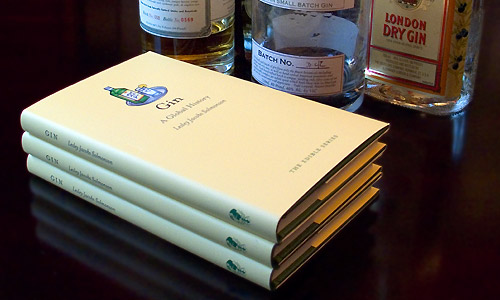
Gin: A Global History by Leslie Jacobs Solmonson and Vodka: A Global History by Patricia Herlihy are two delicious, well-mixed cocktails of history and booze. The first thing I learned from these books is alcohol’s long-lasting dual effect on society. It seems that from the moment we discovered how to make it, alcohol has been a substance that we use to celebrate life, and one that we abuse, bringing illness and death.  People drink when they’re happy and people drink when they’re unhappy.

I also learned that every kind of liquor has its own story.  In these handsomely bound little volumes, part of the Edible series from Reaktion Books, the authors retell the centuries-long and always fascinating stories of vodka and gin.

In many respects these two potent potables are very similar: they are both clear, neutral grain spirits. Both were originally used medicinally and both have been consumed with shocking excess at different times throughout history. But they are also quite unique in more ways than just flavor profile. Jacobs Solmonson writes that gin’s origins can be traced back to early Arab alchemists while vodka’s origins, Patricia Herlihy notes, remains quite bitterly disputed by two countries who claim ownership—Russia and Poland.

Although they have their roots abroad, both vodka and gin had revolutionary effects in the United States and are perhaps almost as entwined with American national history as they are with their countries of origin. This is partly due to American immigrants who, upon arriving in the United States, felt homesick and craving a taste of familiarity, introduced the national liquors of their fatherlands to The U.S.

The history of gin and vodka in the United States could also be summed up with one word: martini. Cocktails were invented in America and the martini is arguably the premier cocktail, originally made with gin. But as tastes and times changed, vodka became synonymous with the martini, and was eventually the clear liquor of choice in the United States.

In my opinion, there was but one hindrance in both books: the tone remained a little flat. Despite the addition of many full color photos throughout, including gorgeous vintage advertisements as well as strange and funny temperance posters, the books felt too scholarly, never quite rising above the tenor of a thorough encyclopedia entry to what I would call a passion project.

If you’re looking for affectionately or exuberantly told anecdotes, a love letter to a favorite liquor, you won’t necessarily find it here. What you will find however is a comprehensive global history of these famous liquors and a trove of information about current innovations including the exciting new artisanal brands and the many creative marketing strategies employed by liquor companies, all of which are of interest to the novice, but perhaps already known by the connoisseur.

As a partaker of both gin and vodka, but not knowing anything about how they are made, I thoroughly enjoyed the information on the process of distilling alcohol. These books provide ideal conversation fodder for slightly nerdy foodies who also happen to love history. And there are moments of true brilliance contained within, like when Patricia Herlihy declares that vodka is a postmodern drink. Although these books do seem to share the quiddity of vodka—neutrality, simplicity and versatility—they are far from what I would call postmodern food writing. A dash of innovation and creativity could have elevated these books from merely interesting to something truly exciting.

Nora Boydston is the founder of CartwheelsForJustice.org and received her MFA in Fiction from The New School.

Once again, the unstoppable machine of pop music invites us to a tasting of a sweet and – not incidentally – black body. This time Rihanna entices listeners to join her in a celebration where the main course is herself. As a matter of fact, a popular remix seems to point to her ex, Chris Brown, as guest of honor to the party the song refers to. The live performances do not leave many doubts as to what part of Rihanna’s body the word “cake” refers to. No need for winking, no double entendre: the song is a suggestive road map that guides the willing listener to blow the candles, lick the icing, and put his name on the artist’s cake, described as “sweeter than a rice cake, cake worth sipping.”

I am not trying to pass any moral or aesthetic judgment. Rather, I’m drawing attention on how popular culture, and in particular music, has compared female bodies to sweet substances that are there for the taking. “Honey,” “sugar,” and “sweetness” are common terms of endearment, without any explicit connection to oral pleasures and devoid of specific racial connotations. However, pop music draws more direct correlations between edible matters and female bodies. Lady Gaga hinted that she was an object of consumption when she showed up at the 2010 MTV Video Music Awards wrapped in a dress made of raw meat. But these connections are particularly interesting in what many identify as African-American pop culture, although produced by the entertainment industry for all kinds of audiences.

Starting from the 1930s, culinary themes were especially common in blues music. A desirable young girl was called a “biscuit” and a good lover was called a “biscuit roller” (If I Had Possession over Judgment Day, by Robert Johnson, 1936). The complexion of a black person also played a role: “honey ” referred to light-skinned persons, while “coffee” referred to darker ones, resulting in expressions such as “honey dripper” and “coffee grinder” as metaphors for a lover. Having sex was “grinding” (Grinder Man Blues, by Memphis Slim, 1940) or “squeezing lemons” (Dirty Mother for You, by Memphis Minnie, 1935). Jelly is an edible matter that denotes softness and sweetness, with connotations that point to childhood, comfort food, and satisfaction of primal drives. Peanut butter and jelly are often referred to as a quintessential treat for children and adults alike. The jelly metaphor, in which the physical consumption of food somehow mirrors the enjoyment of sexual pleasure, is not new, but originates in the 1942 song It Must Be Jelly (‘Cause Jam Don’t Shake Like That.

However, in recent years black female artists have started using these metaphors in ways that assert their power and control over their male counterparts. In her hit Milkshake, singer Kelis flips the stereotype from negative to positive to affirm the woman’s control over the man’s appetites. Realizing that her stuff is better than anybody else’s, she refuses to share her skills and wisdom with other women. Otherwise she should charge a fee. Destiny’s Child taunted listeners by reminding them that “I don’t think you’re ready for this jelly ’cause my body is too bootylicious for you, babe.” In her song, Rihanna teases an imaginary male who wants her cake “in the worst way,” positive about her control over him: “Don’t try to hide it, I’mma make you my bitch.” Who is the artist talking to? Just heterosexual males who find her come-on lines arousing, or also women who might identify with the sexual power and the assertiveness exuding from her?

Young black female performers might seem to have found, in the triangulation of their flesh, food, and sexiness, the key to affirming their commanding womanhood and their agency. Yet this phenomenon does not happen in a void, but as part of a massive showbiz industry that by commodifying minorities still allows mainstream culture to find new and discrete ways to reaffirm its power. At the same time, models of beauty that reinforce the preference for thinness turn female bodies into an object for entertainment.