Archive

July 2012

Browsing

by Ben Goldfarb

Perhaps it’s because farms are more visible than fishing vessels, or because there are more agricultural towns in America than seafaring communities, but the locavorism that has transformed the farming industry has mostly failed to touch the business of seafood. Farmed salmon, shrimp, and tilapia, all imported great distances, retain their stranglehold on our diets, and while there are hundreds, if not thousands, of Community-Supported Agriculture arrangements in this country, the sum total of Community-Supported Fisheries can be counted on fingers and toes. Most people seem to care more about where their tomatoes come from than where their swordfish does, and I think that needs to be rectified.

Which is why I drive, under cover of darkness one Friday morning, through pine barrens and potato fields, to the North Fork of Long Island.

My headlights catch a small white sign adorned with a hand-painted bluefish, and I swing into the driveway of Phil Karlin, one of Long Island’s longest-tenured farmer-fishermen and the owner of PEandDDSeafood. When I step out of my car the early summer air is ripe with horse manure and dead fish; across the dark yard I hear the talons of restless chickens scratching against wooden floors.

Karlin emerges from behind his truck, a white boxy thing whose engine is already running. “Benny boy, is that you?” he calls to my silhouette; he strides up and pumps my hand. He’s a short, vigorous man in his early 70’s, dressed in painter’s pants and a light sweatshirt covered in ambiguous stains. Ragged cats curl around our ankles as we load the truck with the heads and guts of yesterday’s catch, destined for the compost pile of a neighboring vineyard.

“Today we’re goin’ draggin’ for fluke,” he says as he slides the last of the reeking crates into the back of his truck, his gravelly voice unmistakably Long Island. “I set some sea bass pots, too, sometimes. Porgies, stripers. We’re pretty diversified. I do a little bit of lobstering, but not much anymore –– it’s been real poor the last couple years.”

After briefly stopping at the vineyard to unload the carcasses, we head down to the dock at Mattituck, an erstwhile fishing town of about 4,000 souls. Phil Karlin, it turns out, is actually Phil Junior, and his son, Phil III, meets us at the dock. The younger Phil is the recent founder of NorthForkSmokedFishCompany, for which he catches bluefish and striped bass on rod-and-reel and smokes them in his own home. Before that, he worked for the National Response Center in Louisiana, helping set booms and skim the oil that bubbled from the Deepwater Horizon blowout –– a far more lucrative job than running his smoked fish company, but he doesn’t miss it. “Nothing like being your own boss,” he says fondly, gulping his coffee.

As we cruise west along the North Fork, the rising orange sun silhouetting the trawling gear on our stern, Phil the Elder explains how the region’s fishing regulations work. In April and May, according to the National Marine Fisheries Service, Phil is allowed to catch 210 pounds of fluke, also known as summer flounder, every day. Beginning in June, though, that number drop to 140 pounds. “That’s not a whole lot,” Phil says, his eyes locked on the bobbing horizon. “Of course, you need conservation, but our quotas are very low. There’s been a lot of boats that have been put out of business. You don’t have half the fleet in New York State that you did fifteen years ago.”

We return to a favorite spot of his –– a shelf, only about fifteen feet deep, where he’s had good luck with fluke in the past. Phil the Elder barks orders at his son as they lower the net; Phil the Younger, an accomplished fisherman in his forties, bristles good-naturedly at his father’s commands. “Would you be quiet and let me do this?” he yells as he guides the net off the winch, though he’s smiling. He turns to me and shakes his head. “Been like this since I was ten years old.”

We tow the net behind the boat for fifteen minutes and then winch it up. As the net rises from the Sound we see fluke, their brown backs gleaming in the early light, flapping in the mesh. The winch cranks the belly of the net on board and we rush to the bulging bag to ease it open, and its contents spill out across the deck for our perusal.

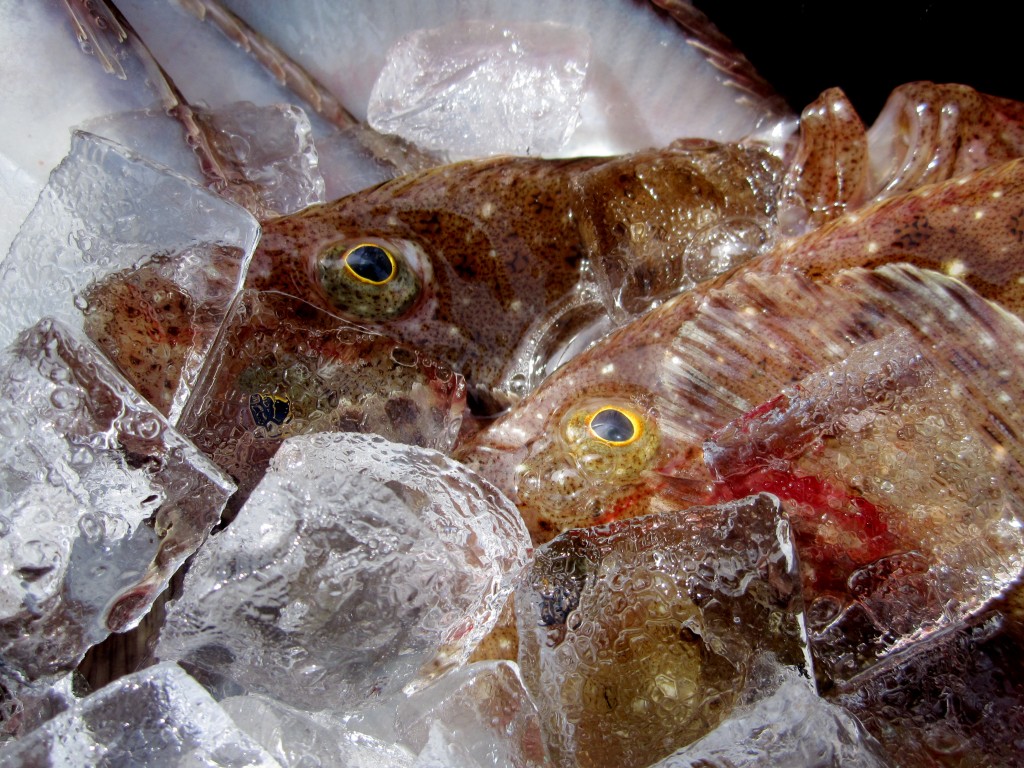
It’s a good haul –– plenty of lively fluke, broader than dinner plates, and about as flat. Along with the targeted species, the trawl deposits a panoply of other creatures onto the deck: two silvery striped bass; one black sea bass; a few fat porgies; a small delicate flatfish called a daylight flounder; and goggle-eyed, rust-colored sea robins, their winglike pectoral fins splayed wide. At least half a dozen species of crabs clamber around the deck, picking their way through the empty shells of moon snails and whelks that litter the floor of the boat.

“Go time, Bugsy!” yells the oldest Phil –– for reasons known only to him, he’s decided to call me Bugsy. “Grab those fluke! Grab ‘em! Two hands, two hands!” I scramble around the deck in pursuit of the flapping fish, whose irregular shape makes them almost impossible to grasp. They slide through my fingers and slap wetly against the floor. The net, hanging from the winch above us, splatters my exposed head with seawater and dollops of vegetation. All around me is writhing, slippery chaos, the sea’s mysteries unveiled and strewn across our feet, gasping creatures somersaulting back toward the Sound from whence they came.

The younger Phil kneels beside me, trying to wrap his hands around the full belly and narrow tailstock of a striped bass –– its sleek, silver body the Platonic ideal of a fish, as elegantly designed as the fluke is ungainly. The pair of stripers we’ve landed are gorgeous, but the commercial bass season doesn’t begin until July 1. So over the sides they go, vanished with one powerful stroke beneath the gunmetal water. I watch them disappear, locked in a kind of reverie, trying to imagine these same fish rejoining their comrades, great schools of them migrating together along the coast to New England…

“Bugsy, what the hell are you doing, Bugsy?” Older Phil hollers. “Get those fluke in the bucket, Bugsy!”

I turn my attention back to the writhing mass of fluke, no less vigorous for having been out of the water for several minutes. I finally corral a fish and coax it into a red bucket with a few of its unlucky friends. Fluke that measure below 14 inches go back into the sea, and make a beeline for the benthos from whence they came.

Soon all the keeper-sized fish are in the red bucket. We then transfer the fluke into a gigantic wooden box filled with seawater, an ad hoc live well designed to keep our catch vivacious for the rest of the trip. Fluke delivered alive and kicking to the dock are worth twice as much as dead ones. After the net itself, the live well is one of the most important pieces of equipment Phil Karlin has on board.

Once the fluke are stacked like unhappy flapjacks in the live well, we turn our attention to the other species still squirming on the deck. The black sea bass and the bluefish will both yield great filets –– many people claim not to like bluefish, finding it too, well, fishy; but I think it’s delicious. The spherical moon snails and the twisting whelks all wind up in a bucket of their own, destined for Asian supermarkets in New York.

The sea robins –– huge-eyed, splay-finned, whisker-chinned, freakish in every way –– are packed into another crate and entombed beneath ice. I’ve never eaten sea robin, and they have a reputation as a trash fish, a perception furthered by their strange appearance; but their stout bodies reportedly contain tasty meat, and they’re a staple of bouillabaisse. And sure enough, Phil knows a French chef at a local hotel who makes the dish, and is happy to take the odd creatures off his hands. 

Everything else that has come aboard –– the hundreds of empty, slime-furred shells, the skates, the uncountable spider crabs, hermit crabs, blue crabs, and green crabs whose legions spread across the deck on jointed legs –– is swept back into the ocean with a push-broom, leaving behind a dark streak of muck and a few doggedly clinging crabs that fail to realize it’s time to go home.

We make four more hauls of the net, none quite as successful as the first, and then Phil Senior decides to call it a day. It is not yet noon. The live well is crammed to the sloshing brim with fluke. Nearly every living thing we extracted from the sea is either destined for the dinner table or has been returned, alive, to its domain. A handful of spider crabs, crushed underfoot during the scramble to round up the fluke, are the sum total of the collateral damage.

***

Whether the fluke fishery is sustainable is impossible for me, a total outsider, to say. Certainly we’ve taken many fluke today –– around 300 pounds of the fish, accounted for by Phil’s 210-pound quota plus the extra pounds that he purchased at auction. And the bobbing white vessels that dot the horizon like seabirds, they’ve taken fluke too. Like they did yesterday, and like they will tomorrow. And these are only the eight or so boats that fish out of Mattituck ­­–– how many fish must all of Long Island’s fishermen be extracting every year? The National Marine Fisheries Service has set the 2012 Total Allowable Catch at nearly a million pounds of fluke, and you can bet fishermen aren’t catching less than the law entitles them to. When I remark to the younger Phil that it seems like we had a pretty good day, he shakes his head and stares out to sea, gazing at a gargantuan foreign tanker and the flock of tugboats that hovers around it. “This is a fraction of what it used to be,” he says. “A fraction.”  

But that’s the ocean-half-empty perspective –– and on the other hand, shouldn’t we be heartened by the fact that there are still, even after all these decades of relentless extraction, a million pounds of fluke to haul up? How many of the species must remain, and how rapidly must they reproduce, that their population can sustain this fishery? Despite all the damage we’ve inflicted upon them, the seas in New York City’s backyard remain fecund, and that should be cause to celebrate.

Conservationists, of which I am undeniably one, are fond of wringing their hands over the state of the world’s fisheries, and there’s plenty of reason to hand-wring. As many as 90% of the planet’s large predatory fish have vanished, and, depending on whose research you believe, somewhere between 10% of 30% of fish stocks have collapsed entirely.

But the outlook for American fisheries may not be so grim –– in a New York Times oped last year, fisheries biologist Ray Hilborn made the case that most of the nation’s fish stocks are recovering, nursed back to health by strong legislation and sensible management. The striped bass that we caught, for instance, were the beneficiaries of a moratorium on fishing passed in the 1980’s, a drastic measure that transformed one of the country’s most imperiled populations into one of its most robust.

Despite its salutary effects on the fish, however, aggressive conservation hasn’t always benefited small-scale fishermen like Phil Karlin. Recent regulations in New England, for example, hailed by environmental groups as a potential panacea for the region’s troubled fisheries, have forced hundreds of artisanal fishers to quit the business, their quota allocations snapped up by huge industrial seafood companies. In New York, chronically low quotas have forced veteran fishermen into early retirement and prevented aspiring young fishermen from joining the industry. “It’s very difficult for somebody starting out today to get into the fishing business in New York State,” Phil says. “Almost impossible.”

Not only is the proliferation of industrial fishing vessels bad news for employment, it’s also bad news for the fish. Industrial fisheries have farhigher rates of bycatch than small-scale, artisanal fishermen. The reasons for the discrepancy were obvious during my short trip with Phil Karlin. Industrial boats tow their nets for hours at a time, engulfing tens of thousands, if not millions, of fish –– many of which die in the net, crushed by sheer biomass pressed into such close quarters. Smaller boats, on the other hand, drag their nets for much shorter intervals –– Phil’s longest tow was only twenty minutes, ensuring that everything that came up in the net was still alive and capable of being released. And because smaller operations deal with only hundreds of organisms at a time, instead of hundreds of thousands, it’s far easier to pick out non-target species and immediately return them to the water. Phil couldn’t miss those two glistening striped bass atop his modest pile of fluke; but if the bass had been buried beneath a mountain of fluke, it’s doubtful that they could have been saved.

Finally, small-scale fishermen are often more connected to local markets, allowing them to find outlets for species that many dismiss as “trash fish.” Industrial boats have the luxury of singling out one species and relentlessly pursuing it: even if anchovies fetch less than a dollar a pound, catching a million pounds of anchovies will still allow a seafood company to turn a profit. But because fishermen like Phil can’t catch more than a few hundred pounds of anything, it behooves them to seek out all available markets –– even if that market is just a single French chef at a single hotel looking for a batch of sea robins for his bouillabaisse. If those sea robins had been caught by an industrial boat, the transaction never would have happened; instead, the robins would likely have been killed and wasted.

Yet all too often, consumers are unwilling to make use of the fish that flourish in their own backyards, unwittingly sabotaging local fishermen through their purchasing habits. “Porgies used to be a species that New York fishermen did very well on,” says Phil. “But a few years ago a lot of people went to tilapia and stuff like that, farm-raised fish that they can get cheaper than the wild fish. And now when a lot of porgies come on the market, there’s just no real demand for them. The price is so cheap that you can’t make a living.”

***

Two ospreys leap from their enormous aerie as we approach the dock, flashing their snowy plumage. A man named Kim, who operates a seafood distributorship and speaks little English, awaits us; he rummages through the still-living fluke in search of the healthiest specimens, which he tosses into another live well in the belly of his truck. “Pretty nice, huh?” Phil says to Kim, who smiles cryptically, scrawls a number in pencil onto a sheet of paper, and departs.

Back at Phil’s property, we offload the day’s catch. Unlike most fishermen, Phil owns a small plant that allows him to process and sell his own catch, a capacity that has helped keep him in business all these years. The processing plant is staffed by Phil’s immediate family –– another son, as well as a grandson –– and close friends; his wife runs the small store attached to the plant, which offers filets and fish salads. They won’t let me leave without taking a few pounds of fluke, and after a brief protest I acquiesce, fish tacos on my mind. “You’d better come back now, Bugsy,” Phil chides me as he holds the gate open. For sure, I tell him –– I wouldn’t miss striped bass season for anything.

*All photos by Ben Goldfarb

Ben Goldfarb is a Master’s student at the Yale School of Forestry and Environmental Studies. He is also a freelance writer who frequently contributes articles on environmental topics to a number of publications, both within Yale and elsewhere.
by Jen Karetnick

Why Pasta Tasted Better on the Terrace

The painting hung near the communal table,
portrait of plastic surgery at Vino
e Olio, syringe-stung lips pulled
as if by the opposing tides of Aventura
traffic, the skinny dorsal fin of nose,
the eyes, shadowless, that would not approve
my choices: sweetbreads to begin; a course
of gnudi ravioli; suckling pig where I’d have
skin as thick and easily shattered—more—
than peanut brittle. Under my own flesh,
sunk into celebratory fat, my bones hid
like nougat. “Perhaps the patio.” The downpour
was over. Bougainvilleas and a waitress
trained, clung to a frame, beckoned outside.
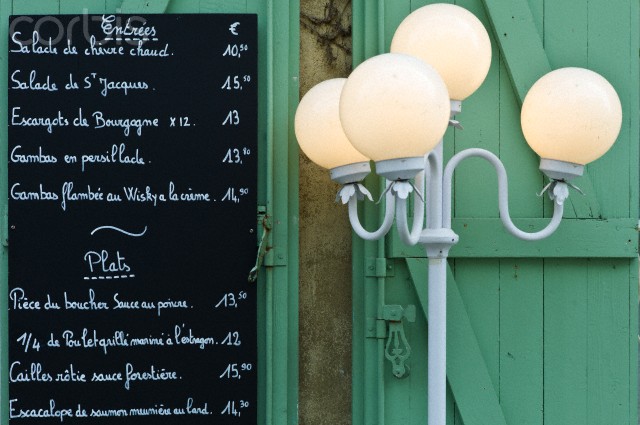
European Menu Reader
            -- from Berlitz

I failed at French
   with its slippery eel sounds
      but am willing to be sibilant
         for bouillabaisse, sarcelle, sabayon.

I came late to Spanish
   though its beat appeals and I can
      keep basic rhythm to jamón and tortilla,
         rev it up with racy zarzuela.

In the morning I have ordered pão
   followed by pökelfleisch for lunch
      and dinnertime bowls of acquacotta or brodetto
         simply because I like the sounds,

regardless of country or sense,
   and because I can find them all in one
      book. With such worldly fluency
         I speak menu! With what delicious conceit!

Jen Karetnick is the author of three chapbooks: Necessary Salt, Bud Break from Mango House, and Landscaping for Wildlife (forthcoming from Big Wonderful Press). Her poems, prose, playwriting and journalism have appeared widely in Gastronomica, The Miami Herald, and The New York Times among other publications. She works as the dining critic for MIAMI Magazine and is the Creative Writing Director for Miami Arts Charter School.

Three authors of recently published books explain how rum, vodka, and gin have changed history and discuss the importance of these beverages today.

Speakers are:

– Patricia Herlihy, professor emeriti of history at Brown University and author of Vodka: A Global History
– Richard Foss, instructor in culinary history at Osher Institute/ UCLA Extension and author of Rum: A Global History
– Lesley Jacobs Solmonson, a food and drink writer and journalist and author of Gin: A Global History.

Moderated by Andrew F. Smith, faculty member of the New School Food Studies program.

Food Studies | http://www.newschool.edu/ce/foodstudies
The Inquisitive Eater (New School Food) | http://www.inquisitiveeater.com

Location: Wollman Hall, Eugene Lang Building
06/26/2012 6:00 p.m.

The New School is holding its first annual Earth Week Festival this April, coordinated by the Office for Sustainability. This cross-disciplinary collaboration of administrative and academic departments and student groups will raise awareness about sustainability issues, strengthen our campus community, and link The New School with millions across the country in the 42nd annual Earth Day celebration.

Careers in Sustainability

A panel of alumni working in sustainability-related jobs discuss their work and career trajectories. Moderated by Professor John Clinton, director of the Environmental Policy and Sustainability Management Program, The New School for Public Engagement.

Master of Science in Environmental Policy and Sustainability Management |http://www.newschool.edu/milano/environmental-policy-sustainability-managemen…

Panelists include:

Kirsten Brooks, Master of Science in Nonprofit Management from Milano, Manager of Corporate Outreach, A+E Networks

Jason Hudspeth, Master of Architecture from Parsons
Designer, New York City-based firm LEVENBETTS

Ashok Kamal, Master of Science in Nonprofit Management, Milano
Co-Founder and CEO, green social media marketing firm Bennu

Reana Kovalcik, Master of Science in Urban Policy, Milano
Development Coordinator, Wellness in the Schools

Alex Smith, Bachelor of Science, Environmental Studies
Environmental Educator, Green Design Lab, Solar One

Visit http://www.newschool.edu/earthweek for more information.

Milano School of International Affairs, Management, and Urban Policy |http://www.newschool.edu/milano

by Mindy Trotta

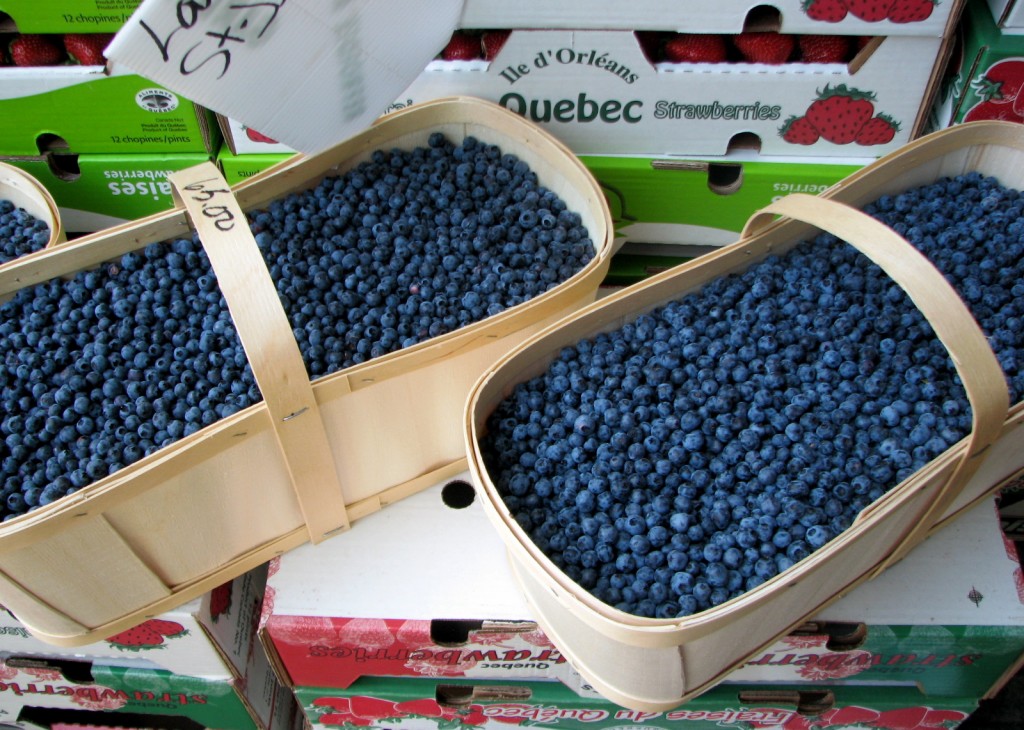
Many of my childhood summers were spent in the Catskill Mountains. The rural escape was a mere two hours north of my apartment in Brooklyn, and on this particular trip my friends and I had traveled up with our parents for a rural escape. Just minutes from our summertime bungalow was a blueberry bramble. This bramble was a short walk down the road and could be reached through a clearing in the bushes.

Our mission was to find as many berries as we could, and armed with plastic bowls, buckets, and dented metal colanders, our little army embarked on a treasure hunt.  The sun was high, its rays hot shards that pierced through the branches covered with berries. The sky was blue and paled only in comparison to the deep color of our quest. We were nicely hidden once we passed through the clearing, and unless one knew we were there, he would be hard pressed to find us. The only sound we made was with our berries: “blue jujubes” I liked to call them.

The first few to hit the containers plinked softly. “Don’t throw them,” the grown-ups admonished. As the bowls and buckets filled and berries piled upon berries, the sounds became more muffled. Time passed and we developed a rhythm: picking and filling, picking and filling, and here and there a break in the continuity as we stopped to sample. Some berries were firm and tart; picked too soon. Others were sweeter, softer and would fall apart in my fingers if I treated them too harshly.

One berry,
Two berry,
Pick me a blueberry.
– Bruce Degen

There was an unspoken sense of competition hanging over our heads. The intermittent bursts of sun felt hot on my skin and I had to proceed with great care so as not to get pricked by the thorns. Every once in a while one would catch my tee shirt and I would ever so gently pry myself from its grasp all the while trying not to draw blood. Old tee shirts and jeans were the uniforms.

In the battle between skin and barbs, and berry juice and fabric, barbs and berries were the victors every time. After a long while, someone called, “Finish up!”and our ragtag group emerged from the hideout, scraped, stained, and squinting at the full daylight that accosted our now shade-acclimated eyes. We trudged home, bellies and bowls filled with berries, glancing furtively at one another to see whose containers were filled higher than our own.

Mindy Trotta is a pastry chef, small business owner (Flour Girl Desserts), former editor and blog writer at relocationtheblog.blogspot.com

by Fabio Parasecoli

from Huffington Post

I admit it, I am a shameless history nerd, and I got excited when I received the advance copy of E.C. Spary’s upcoming book, Eating the Enlightenment: Food and Science in Paris. As much as we think we know French cuisine and its past, there is always new research shedding light on aspects that are not well understood or, even worse, are misunderstood. Spary’s work continues the efforts of other important books such as Susan Pinkard’s A Revolution in Taste: The Rise of French Cuisine, Sean Takats’s The Expert Cook in Enlightenment France, Rebecca Spang’s The Invention of the Restaurant: Paris and Modern Gastronomic Culture, Amy Trubek’s Haute Cuisine: How the French Invented the Culinary Profession and Priscilla Parkhurst Ferguson’s Accounting for Taste: The Triumph of French Cuisine, just to mention a few. So much material is available that it would be easy to teach a well-sourced course on the cultural history of French food.

Spary’s volume is far from being a light read, as it mines its way through a staggering amount of memoirs, letters, books, and all sorts of documents from the budding printing industry of the decades before the Revolution. But it definitely rewards those who might decide to engage with its fascinating content. Focusing on the Parisian who’s who, Spary explores debates and cultural dynamics that eerily remind us of the way many contemporary consumers in post-industrial societies decide what and how to eat, especially those in the upper income brackets who can afford to make expensive choices.

Of course, any crude simplification should be avoided: the author emphasizes that 18th century France was beginning to develop as a consumer society, in particular thanks to colonial products such as sugar and coffee. This epochal transformation was the cause of widespread unease and preoccupation: were French citizens going to be the same, even when ingesting exciting foreign substances and indulging in luxuries that were becoming increasingly affordable? Now, we live at a time when the consumption of exotic products and novelties is a daily occurrence and whole industries are based on our desire to experiment and try new stuff all the time. Also, 18th century upper class French consumers did not have to deal with global corporations, brand names, and the pervasive marketing that shape today’s food culture — one of the main reasons behind the renewed interest in traditional and so-called “authentic” foods.

Nevertheless, just like at the time of the philosophes, ingestion still functions as a metaphor for the cultural and political self. Standards of taste in the civic sphere were not only determined by fashion and practices, but also by political discussions, clashing scientific theories, and the attitude of public intellectuals. The connoisseur, who became a visible Parisian figure in the period that Spary explores, not only displayed expertise, but also claimed forms of authority and revealed specific approaches to the mind and its relationship of the body. Individuals modeled their behaviors based on scientific information, media, culture, personal preferences, popular advice , and competing ideals about health and well-being.

Then as now, dietary preferences can be used to distinguish us from one another, underlying our own uniqueness and personality, and it is possible to express political and social ideals by deciding to eat specific things. When we opt for products labeled as local, organic, sustainable, and fair trade, we are actually participating in political projects, just like the eighteenth century Parisians could express their discontents with the absolutist regime of the court by embracing sobriety and fasting. Spary shows how political controversies originated around coffee, liqueurs, and what was already known as nouvelle cuisine — a term that will enjoy long-lasting fortune and will be used under very different circumstances in the following centuries.
We should not be surprised: it is enough to think about the contemporary discourse on foie gras and high fructose corn syrup, just to mention two examples at opposite ends of the foodie spectrum. Spary’s book not only provides us with great information to understand the development of a cuisine that is still among the most prestigious worldwide, but also elicits reflections to our present-day attitudes about food, dietary choices, and their connections to much larger social issues.

by  Larissa Zimberoff

In Harvey Levenstein’s new book, Fear of Food: A History of Why We Worry about What We Eat, we spend a great deal of time wallowing in the early 1900’s. As a Jewish girl from Los Angeles, I felt like I was being followed down the grocery aisle by my mother. Scratch that, my grandmother.

When I read the title of the book, I had high hopes. I anticipated getting a better understanding of my own food issues. To put it plainly: I’m a picky eater. I avoid bread (bad, bad, evil carbs), I don’t eat processed foods (most of the time), I try to buy organic and, when possible, I eat local. Did this book explain any of my “issues” to me? No. Well, mostly no.

Levenstein, a professor emeritus of history, sets forth in his preface to “uncover the forces that have lead to Americans inability to enjoy eating.” He goes on to say that he will regard his book as a success “if he can help lessen even a few people’s anxieties and increase the pleasure they get from eating.”

Throughout the ten chapters of Levenstein’s book we explore the history of the American diet, from milk mandates to the invention of Betty Crocker. The chapters range in topic from the war on flies (leading to an abundance of packaging still in use today), swill milk (resulting in the creation of the Dairy Council and a shift in production from many to few), germ warfare, the life prolonging yogurt craze (eat yogurt and you’ll stay young!), beef scares (both contamination of the product and its effect on our hearts), vitamania (the discovery of missing nutrients, which led to manufacturers fortifying food) and fear of fat, aka lipophobia.

This history of our food chain was fascinating and compelling but I also wanted to be reading about my generation of eaters, or rather I had hoped the thread of historical food production would be brought all the way up to present day. Instead, much of this book is rooted in the past. Levenstein, content to do historical research, leans heavily on quotes from early issues of The New York Times and he fails to carry the topics forward to 2012. Why couldn’t the talk of swill milk in 1903 be connected to the low-fat craze of the 80s, when we got skim milk, to today, where everyone drinks an entirely different non-Jersey product: almond, hemp, coconut, rice and soy milk?

An example of the disconnect between past and present is the discussion of beef in the 1800s. Levenstein writes that cows were “fed the foul-tasting mash that was a by-product of brewing beer, giving their meat an unpleasant taste.” Well, flash forward to today and you read stories of chefs like Mario Batali, who gives the barley mash from the brewery at his Eataly establishment to heritage meat suppliers (who use it as feed), and then buys back that very meat to sell. It seems clear to me that our concept of food requires an evolving mindset. We are bombarded by media who tell us one week that meat is bad and the next that it’s good. How do we go about staying informed and still enjoy what we put in our mouths?

Fear of Food helped inform me of some major historical why’s, which I am thankful for, but perhaps in his next book Levenstein can tie all the strings together into a more compelling present day argument for why Americans worry about what they eat. Me, I’m still a little fearful.

Larissa Zimberoff is a freelance writer living in Manhattan. She is currently working towards her MFA at The New School. Her writing has appeared in Salon, Untapped Cities and The Rumpus.

by Ann Jaramillo

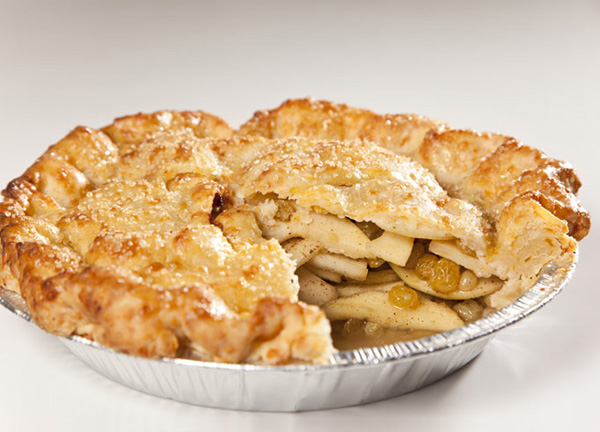
Here is my mom’s recipe for apple pie:

2 C. flour
2/3 C. shortening
1 tsp. salt

Mix 1/3 C of the above flour with ¼ C water.
Makes 1 double pie crust. Can be doubled, tripled, quadrupled.
Mix a mound of apples with heaping ¼ C of flour, 1 tsp. of cinnamon, 1 ½ C. sugar.
Bake at 450 for 15 minutes. Then 350 for 45 minutes.
 
Here’s what the recipe does not say:

  1. It really doesn’t make quite enough for a big glass pie plate. You sort of need to double the recipe. Roll out the leftovers, sprinkle with cinnamon sugar, and bake with the pie.
  1. About 90% of the time, an extra dab of shortening helps with the roll-out. I can’t tell you how much. It just has to feel right. The pie gods also have to be smiling down on you.
  1. Oh, yeah, you cut the shortening into the flour, then mix in the flour/water paste.
  1. Shortening means Crisco. Maybe it used to mean lard, but Mom never said it did.
  1. If you’re snooty about Crisco, go ahead and use part butter. You’ll get a different crust. It might, or might not, be better.
  1. The recipe might have come from someone in Kansas, or the old Joy of Cooking, or from my Grandma Petie. I don’t know now where Mom got it, and she’s gone, so I can’t ask.
  1. Sometimes you have to throw the dough away and start all over. This can happen if the weather is funky, or you’re crying because your brother died, or if you over-salted, or you wonder what the tiny crawly things are in the flour only to find your entire cupboard infected with tiny crawly things.
  1. One can eat a lot of uncooked pie dough. A lot. Be careful.
  1. Use your hands. Forget pastry tools. Feel the dough. When it’s right, you’ll know.
  1. It’s okay if the dough breaks and you have to do some patching. Some of the best tasting pie doesn’t look that pretty. “Pretty is as pretty does,” Mom always said. That applies to pie, too.
  1. After the first 15 minutes of cooking, take the pie out and put foil under it, unless you prefer a big smoking mess of bubbling pie juice on the bottom of your oven.
  1. Not-quite-ripe Gravenstein apples, picked straight off the tree in the backyard in the morning when the grass is dewy, make an awfully good apple pie. You can throw in a couple of golden delicious if you’ve got them. When I was little, Petie would ask Grandpa J. W. to peel and slice the apples. He’d do it quietly and perfectly, a white dish towel tied around his ample middle. I could sample as many as I wanted. He’d just do more.
  1. Don’t bother with ice cream. It doesn’t need it.
  1. By the way, this dough also makes a killer blackberry pie. Use only wild blackberries:  not the big-as-your-thumb dusty, seedy ones found next to any old road or ditch, but the small-as-your-pinkie-nail ones that only grow on the logged off areas on the mountain sides, in far-flung patches known only to a few. If you don’t have your own secret spot, you’ll have to meet a guy named Mitch up on Route 29 by the giant downed fir tree next to the abandoned U-Haul place, and you’ll have to pay a lot for a gallon of them, but they’re worth every cent. Use a pinch of lemon zest, and way more sugar than you think you’d need.
  1. When you serve the pie, cut good-sized pieces. This is not “just a sliver” pie.
  1.  Make two or three extra pies and put them in the freezer. You can be snooty about that, too, if you want, and insist only on fresh. I’d rather have the taste of those gravensteins in the deep of December when it’s rained for eight days non-stop, and the only apples to be in the store had are mushy cold-storage red delicious which make nasty pie and only passable sauce.
  1. Give the recipe away, over and over.  I’ve never kept it a secret, because there’s no reason to.  Fruit pie lovers often ask for the recipe, but most just look longingly at the flaky crust and oozy sweet filling, and say, “I just can’t make pie.”  Of course, that’s not true.  Anybody can make pie.  The key is practice, and more practice.  But I know good cooks with plenty of persistence who won’t make pie.  It doesn’t have to do with a good work ethic, or even skill in the kitchen.What’s hard to take is the disappointment. No matter how much you practice, or how closely you follow the recipe, pies very often disappoint. You can’t count on them to turn out.  The crust will be tough, even though you’ve barely handled it.  The filling will be watery, refusing to thicken up, despite the usual amount of flour or cornstarch or tapioca. The apples will be rubbery and stubbornly hard, or mushed into a goopy mess, though they’ve been baked just as always.

    The disillusionment of pie making can be too close to real life. We do all the right things, we follow the recipes, and for what? See how things turn out, despite our best efforts? But here’s what I know happens if I keep on baking.  I get, when I least expect it, a perfect pie. It feels like a gift I don’t deserve. The serendipity of its perfection gives me hope, and sense of continuity.  It’s happened before. Here it is now. It will happen again.

Ann Jaramillo is the author of a novel, La Línea.