Archive

April 2012

Browsing

by Madge McKeithen 

Much in my life is small, on purpose. Small apartment, small kitchen, and a small book by the coffee pot for a moment’s read first thing in the morning. Space is tight, time is finite, and the budget is trim. The small book had been my father’s, carried in his pocket in WWII in Italy. On a midsummer Sunday morning, the day’s light streaming in my north-facing kitchen window, I read a string of adjectives — bold, dynamic, dangerous, expansive, optimistic, dedicated, satisfying, and glorious. Allegedly descriptors of a well-lived life, the words are  unsettling, not because they are dissonant with a good life but because they are distant from my perception of the one I’ve been most recently living.

I close the book, shower and dress, run a few quick errands, and hop in the garage-baked, decade-old Honda for the quick drive up the Palisades for lunch.

“Magnitude,” says my friend. “As you know (I do not, but he is generous), color is all about magnitude.” With his hands, he frames a 6-inch square of green-painted wall below the mantle and then a much larger swath above. In the three years since my one previous visit to this house, walls have been painted, rooms furnished. My friend enjoys entertaining, cooking, and gathering around him people he likes; he has invited me today to help prepare a meal in honor of his friend and mentor’s eightieth birthday.

In the wide and high, full-of-light kitchen, I sit on the one stool and pull from my bag of veggies a tri-color squash. He pulls one from his. He sees my patty pan squash and raises me three Kirby’s. I counter with bacon, fresh ricotta and fresh rosemary; he, with arugula and fresh corn.  I serve up blackberries, and he lobs back blueberries. To my round red onions, he proffers tiny roasted beets. The similarities and redundancies are a delight, as if we had been contemplating more or less the same meal. It would now be more diverse and more abundant.

The fragrance of knowledge. A fragment of a sentence I had read that morning has snagged in my head. A part of a whole persists, the rest of the sentence fallen away.

Mozzarella melts over sweet tomatoes on the hot plate in the sun, slides right into the squash medley. We taste and talk, taste and talk, a thing in the mouth, one in the mind, and again. People we have known, things we have read and want to, family, hilarity, losses, finances, perceived realities, watermelon, insecticide, naps, and Netflix.

On the veranda, near the table where we sit, the deep magenta phlox, so sweet its aroma is peppery, is redolent of complexity.  Selecting, planting, tending, and attending can give rise – and not just in these blooms — to a perplexity, a quandary with potential.

“Are you allergic to anything?” I ask my friend, the man of the mansion.

“Only sanctimony,” he says.

When the guests arrive, we sit to eat, and the conversation ranges far and wide  from that point high on a hill of granite and gneiss. We talk of plants and gardens, dramas and musicals, deaths and hopes, pursuits and detours, a few accomplishments, more deferrals, John Berryman and Wallace Stevens, and Emily Dickinson, and I wonder whether, even here, in this beautiful place on this spectacular day Berryman’s Henry would have sensed a different little cough somewhere, an odour, a chime.

Old catastrophes and heavy things are about, his mother’s death just past, my father’s dying continuing, but other things hold this day. We proceed with what comes from the ingredients in front of us, consider the options, and toss things in. The lunch guests leave, and we go for a walk, stop in and visit friends of his – a widower he has known for years and his grown sons, home for a long weekend.

He cooks again; I chop. Mint and ginger together act on the salmon and white beans in the sauté pan and on the now cooler evening dinner plate, lifting the flavor, lightening it, bringing to mind fennel.

When I worry that I’ve been too bedazzled by the beauty of the day and have wearied him with an excess of wows, he says he’s been known to use wowser on occasion.

The keeper of good company gives me a cup of chamomile and mint tea to take upstairs to bed. “No Worries” Tea, I read on the label hanging on the string outside the cup and consider the possibility that the whole day has been too good to be real, propaganda or wishful thinking or too much country air. Breezes off the lake blow up the hill, and the very different tomorrow mixes in my mind with today’s leftovers.

Some of the words from the morning’s read in my father’s small book run through my head again. From my friend’s country home to my 500 square foot studio apartment, the movement back to finite from expansive is obvious, and yet expansive is not infinite; limits and possibilities come into play in both settings, in most.

*Lines from John Berryman’s Dream Song #29
Madge McKeithen teaches nonfiction in the Writing Program at the New School. Her essays have been published in TriQuarterly, the Utne Reader, the New York Times Book Review, Best American Essays 2011, and in Blue Peninsula, her first book (FSG, 2006). 

by Danielle Bonnici

My Denver-bred husband was craving Mexican food. Not authentic, arroz con frijoles or tamales, but the Tex-Mex style of his hometown. Back in New York, we made quesadillas, nachos, Mission-style burritos, all topped with chunky salsa fresca and homemade guacamole.  But here in the heart of Berlin, this was a bit of a challenge. We lived in the more genteel area of Schoneberg, where gourmet shops and natural food stores were well stocked with local, organic apples, kales and roots, fresh cheeses, chocolates, artisan breads, and olive oil rich sauces imported from Italy and Greece. Avocados? Sometimes. In BioCompany on Haupstraße, they were small, hard, ovals. In the Riechelt down the block, they were large, genetically modified monstrosities, with unnatural smooth skin. Both varieties lacked the creaminess of the Hass avocados we used to buy in Queens. The alternative was pre-made guacamole spread, a nasty concoction that looked like greenish cream sauce rather than the chunky guacamole of Tex-Mex cuisine. There was also the problem of tortillas. Germans are known for their bread, but their tortillas were rubbery, sweet cardboards. And the salsa. Our friend Riechelt sold Del Fuego brand. Not bad, but lacking in kick and too sugary for the real deal.  Zucker seemed to be a required ingredient in all packaged German foods, including beans, vegetables, and even hummus. Despite these obstacles, I was determined to figure out a way to make the food Dennis craved.

We had come to Berlin because I was offered a job at a German-American high school. We knew we were taking a huge risk–I’d left a job with the Department of Education, and hed left a budding career as a coffee roaster in an up and coming roastery in Brooklyn. But what did any of that matter given the opportunity to live and work abroad? A lot it seems. While things only went well for me, Dennis had struggled. After a month of working at a café, the management refused to pay him. Apparently this is a trick played a lot on newcomers, and without a visa my husband had no recourse. He was unemployed, far from home, and the only person he knew was me. Always an avid runner, and without anything else to do, he ran for kilometers along the Spree, burning up energy and calories at an alarming rate. I didn’t want him to waste away, so Tex-Mex had to happen.

With some exploring, I managed to find beans nicht zucker in Oz-Gida, the delightful Turkish supermarket a little bit further down on Haupstraße. A friend from work said there was nothing we could do about the avocados, but recommended Aqui España in Charlottenberg for our other quandaries. My husband and I were feeling intrepid, so one day after work, we embarked on the journey to the mini-Spain of Berlin. An S-bahn, U-bahn, bus, and 25 minute walk brought us to the tiny market. As soon as we walked in, I smelled the familiar gamey scent of jamón. I raised my eyes to the ceiling to see rows of the stuff hanging. The cramped aisles were crammed with olives, oils, pimentón, saffron. An entire wall was dedicated to the wines of Spain and Portugal, and one diminutive section was devoted to the salsas and sauces of Mexico and South America. Finally! Three mini-shelves of salsa! We grabbed at the jars with greed, drinking in the ingredients, desperate to find edible, sugar-free salsa. We found a bottle, not unlike a bottle of beer, made in Mexico. It looked chunky and delicious. There was also tomatillo salsa, refried beans, masa harina, and a beautiful tortilla press. We loaded our arms and with all haste made our way to our apartment in Shoneberg to make burritos.

The tortilla press worked perfectly. The tomato salsa was spicy-rich with garlic and cumin and chili, but was as salty as the German brand was sugary. After every bite we needed to drink so much water that our stomachs filled with liquid rather than Tex-Mex goodness. So we were back at the beginning.

Some weeks later, a mission unrelated to our desire for Mexican food brought us to KaDeWe, a massive, seven-floor department store, the sixth floor of which was a gourmet shop to put all others to shame. There were little restaurants representing every country, rows of chocolate, a champagne bar, wine bars, cheese bars, olive bars, tea bars, an exotic fruit and vegetable stand, and finally, a tiny aisle devoted to American food. This aisle contained: Hershey Bars, Swiss Miss, Pancake Mix, Jack Daniel’s barbeque sauce, Reese’s peanut butter cups, Chips Ahoy, and finally, a whole variety of Old El Paso Mexican products, that reminded me of my childhood taco night. That night, we made a Tex-Mex feast with homemade tortillas and guacamole, delicious homemade beans, and topped it all with good old American salsa. It almost seemed like we were back in our tiny Astoria apartment, like we were back home.

Danielle Bonnici is an English teacher, traveler, and yogi who lives in the woodlands of Queens, NY.

by John Chinnici

I’m not sure who to blame. The Food Network? The parenting techniques of the 1980s? It doesn’t matter. Somehow the saying that “everyone’s a critic” has come to be accepted without irony. I mean, I’m generally down with all the crowd sourcing and wiki-everything that makes the world go round. Can’t complain about benefitting from the free labor that paves the information superhighway. But we’re at a point where the criticism of restaurants comes to us not just in laymen’s terms, but on laymen’s terms. And that leaves me a little queasy.

You can’t google a restaurant without having to stare down its ratings in the results page. Recently I needed the telephone number to a trusted, beloved Mexican restaurant in my neighborhood, just to see when their kitchen was closing that night. I ended up wasting half an hour reading the reviews. When it comes to the comments sections of political news articles, I’ve gotten good at ignoring what’s on my screen. Yet there I was, consuming the opinions of, ugh, regular people, just because they had eaten at one of my favorite restaurants.

There wasn’t a single two- or three-star review (out of five). Every poster had decided that the place was heaven or hell, the pico of the litter or burnt tostadas. One customer complained of food poisoning she had come down with just hours later, despite that being medically impossible. Somehow her dinner of crab guacamole, chorizo nachos, a carnitas burrito, and mango frozen margaritas didn’t sit well with her. Score one for empiricism!

Just like you wouldn’t blame a restaurant for indigestion after completing their 72-ounce steak challenge, you shouldn’t become accusatory after indulging in a cumulative 72 ounces of various foods. No rational person should expect that a meal of a) seafood and avocado, b) pork cheek sausage, c) an entree of enough calories for an entire day, and d) artificially flavored booze will be greeted hospitably by the digestive system. When you gorge on every kind of lipid in the natural world and down it with booze, then wind up sick, that’s not food poisoning. That’s your own fatty acid getting what’s due.

I suppose that when a reviewer gives clues that I shouldn’t trust them, I should be able to move on with my life. Yet her one star rating pulls down the average, and for a new restaurant with maybe ten reviews, that matters. She has 10% say in telling the world whether to eat there.

The fact that having Internet access affords us the right to have a say in driving business to or away from a restaurant can’t be a perfect situation, right? Maybe if everybody’s user profile contained more contextual data, such as how many how many Scoville units they can handle and whether they think Olive Garden qualifies as fine dining, then we would have more usable information. But even then, we would need each person’s review to count unevenly – we’d need weighted scores where some people don’t get to vote. Undemocratic, I know. I know.

I used to complain about professional reviews for a few reasons: casual and neighborhoody joints often don’t get a fair shake, and the standard practice of estimating the price point by using a meal of appetizer, entree, drink and dessert can make those figures unusable. But you know what? We don’t need to be reading reviews of every falafel joint and pizza parlor anyway. We all have our favorites, and we’re too busy to be driving across town or transferring subway lines just to get a different, random, five-dollar lunch. We need reviews for the restaurants where we’re spending special occasions, the places where we’re dropping half a day’s wages.

Everyone is more conscientious than ever about food, and that has to be a good thing. I’m glad that people are more informed about a wider variety of cuisines and that we are all increasingly savvy about what makes a quality restaurant experience. But like climate change research, we should all be deferring to the experts. There are people out there who have studied and practiced the craft of food writing, and I believe in the value of informed, objective criticism. When we abandon the monoliths of expertise, we end up wading in a pool of opinion-sewage. Our tummies grumble while we moan through tastelessly written reviews of anecdotal circumstances.

John Chinnici is currently finishing a master of fine arts in poetry at The New School, where he works as readings coordinator. Raised as a meat-loving Texan, he now enjoys a vegetarian life in Manhattan. His poetry credits include the North Texas Review, Gigantic Sequins, and The Best American Poetry Blog.

by Danya Bilinsky

Nestled in the southwest corner of Adelaide’s Central Market in Adelaide, Australia is Lien Heng Asian Grocery. It is identified by piles of greenery – one dollar bunches of coriander, fresh mint and an array of leafy vegetables. Mustard greens, choy sum, bok choy and kang kung are heaped on stalls that overflow from the small store, which itself only covers nine square meters.

I delve further inside. Knobs of ginger are gnarled hands and strands of garlic shoots are restrained from running wild by blue tape. The enormous jackfruit is armored with a spiky exterior alongside the green papaya, halved, de-seeded and ready for grating into a spicy salad.

The aisles of the store contain an entire continent. The musty aroma of the shiitake mushroom carries me to China. A corner of spices conjures up the colorful saris and dusty streets of India. Titles of mysterious Japanese snacks are indecipherable, although tempting, considering the joy they seem to provide the grinning cartoon characters on their packets.

Other sections simply intrigue. Where is dried sea coconut from? How is the fox nut used? Would a dry lily bulb taste earthy or floral? The dried north almonds and the dried south almonds look suspiciously similar within their separate packages, so what would the explanation be for the one cent difference in price?

Types of tofu line seven rows of the small fridge, interspersed with balls made from beef and fish. Even the freezer section, never an area to provide much inspiration, makes the stomach rumble. Frozen dumplings neatly encase pork and prawn – crimped, curved and crescent varieties. Reams of paper thin Peking duck wrappers bring to mind the crunch of the bird’s skin they were made to hold.

However it is the simple purple eggplant that transports me.

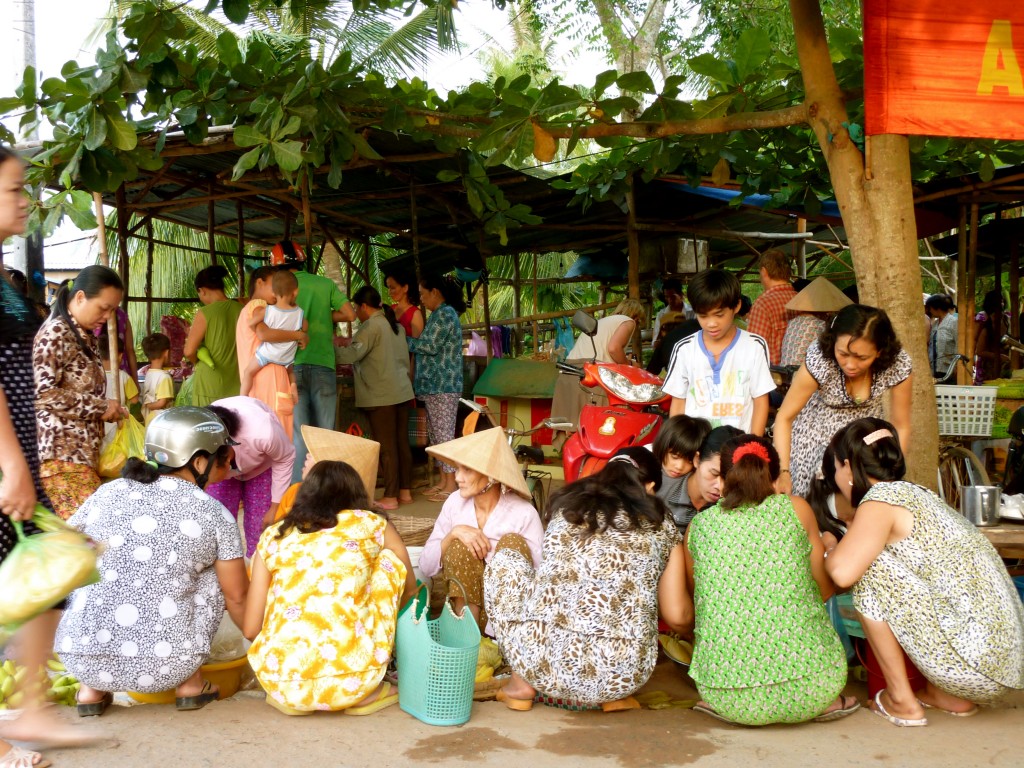
I am in the north of Laos, in Luang Prabang. Despite having a traveling companion I have kept the morning to myself. I wake not long after the sun and cycle along the bumpy streets to the local market. Similar to the southwest corner of Adelaide Central Market the produce is piled high and taken from the ground not long before its sale.

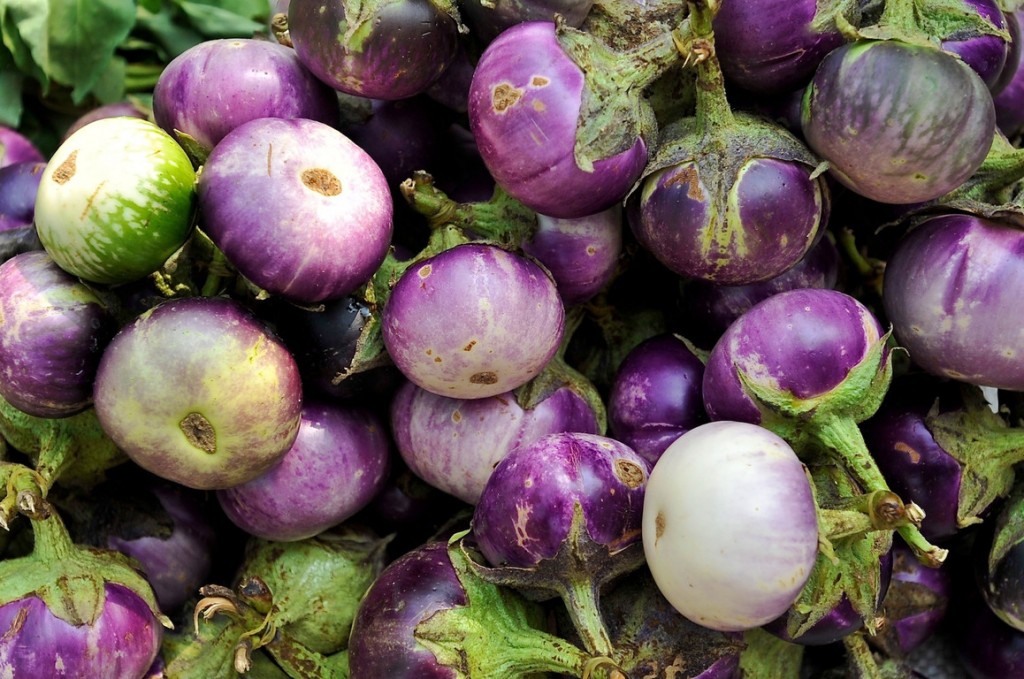
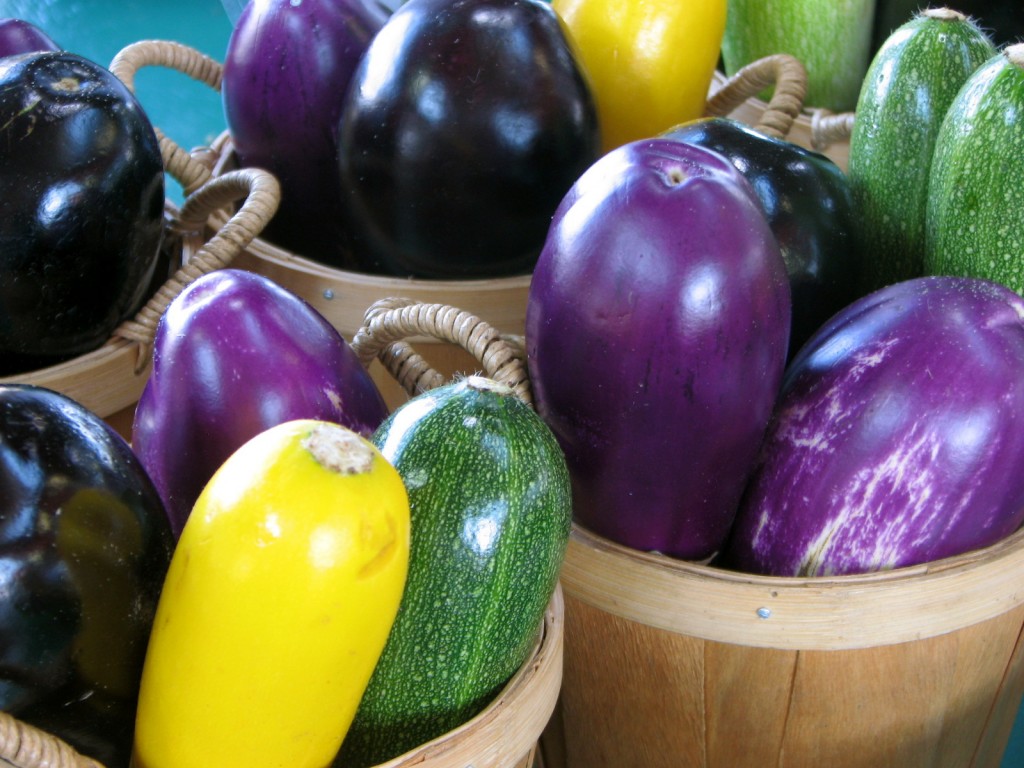
One of the stalls is simply a blanket on the ground. A variety of eggplants covers the material. Smooth skinned orbs, the size of a golf ball, come in purple, green and porcelain white. They can be served raw, a refreshing crunch to douse the fire of a minced meat larb. The smallest eggplants are only the size of a pea and similarly green in color. Still clinging to the vine they provide a bitter burst in a curry. Longer, meatier eggplants are roasted, together with garlic, and puréed to form a dipping sauce to serve with sticky rice.

The stallholder notices my fascination, although our languages divide us. A passerby assists. ‘This is not even the beginning’ she translates from the toothless face. ‘Do you know how many different types there are?’

I admit I do not.

‘Sixteen’, she proudly declares. ‘There are sixteen types of eggplant.’

Danya Bilinsky has written for the Spectator food blog, Spectator Scoff, as well as Australian online publication Concrete Playground and blogged for Yahoo 7 lifestyle.  She has worked in Food TV and made food look beautiful for cookbooks.  She is currently studying Food Writing at The University of Adelaide.

Photo by Jennifer Martiné

by Julianne Clark

There is no greater pairing than the pungency of garlic and the umami taste of anchovy. Add a few bottles of extra virgin olive oil, and you end up with a local Piemontese dish called bagna cauda.

Bagna cauda is not for  someone who plans on an intimate conversation soon thereafter. You will not get the taste of this potent combination of garlic and anchovy out of your mouth for at least a week’s time.

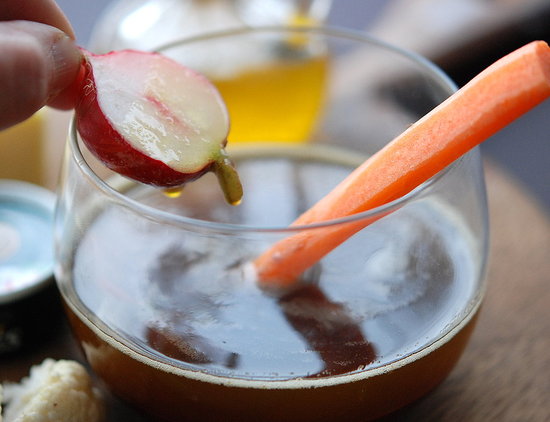
It is traditionally eaten during late fall and early winter months with fresh vegetables like, fennel, bell peppers, celery, potatoes, and carrots.  There are some variations depending on which region in Italy, some substituting olive oil as the main component with cream or butter. It is generally served in a small terra cotta pot to keep warm over a small candle or flame. I have eaten it in a local trattoria served on a plate poured over bell peppers, but it is not quite as fun as the fondue family style of a home, which consists of having a huge pot in the center for dipping and a plate of vegetables for everyone to share.

Piemontese people are generally private and hesitant to open up until you show them you are someone they can trust. Luca is different. I met Luca at a party through another friend about a year ago. He was hosting a dinner party for two Spanish students who were helping him on his farm. Luca, naturally athletic, is a builder by day and socialite by night. He is almost always in his work boots, jeans, and a t-shirt. His permanent tan from working outside gives him a healthy glow, complimenting a friendly smile.

Every few months he hosts travelers from around the world to come stay with him in exchange for work . For each guest he will host dinner parties filled with close friends and plenty of Barbera wine from his brother’s winery. I was able to attend paella night with two guests from Madrid, homemade pizza night with some of my friends from the University of Gastronomic Science and bagna cauda night with visitors from The States.

Luca is never too busy to have people over, and makes you feel guilty if you don’t come. People come and go from his house about as often as they check their face in the mirror. His place is there, and you generally know exactly what to expect. What you get at Luca’s is a nice hangover the next morning; nonetheless you also get memories to cherish after the headache subsides. He is the first to greet you and the last to ask you to leave, encouraging one more drink.

Dinners always start late, and end past late. During the winter months there is always a warm stove in the kitchen that acts as a central meeting place for two dogs that are about as mobile as your metabolism after Thanksgiving dinner. The friendly old neighbor Francesco is a permanent fixture at the house and rarely misses a night. Other regulars include old family friends and hunting buddies.

For bagna cauda night, Luca, with a cigarette already in his mouth, came in carrying bags of fennel, bell peppers, anchovies, and extra virgin olive oil. As guests slowly arrived, a new dish or wine was added. While everyone else started peeling and chopping garlic, Luca simmered the olive oil and anchovies in a big pot. After a few fistfuls of garlic were added to the oil, the combination was stirred for a little over an hour. Finally, the garlic and anchovies had melted in the oil, creating a thick sauce with tiny bits and pieces of anchovy sticking to the pot.

I had a pretty good idea of what it would taste like as the aroma was stinging my nose, but what I did not expect was the pungency of the  garlic and the slightly hairy texture of the anchovies after you swallow. The first spoonful felt like thousands of tiny knives going down my throat. I was a bit disappointed at my ability to take the pain.

By 2 AM the bagna cauda pot and the wine bottles were empty. The only things left on the table were a few lonely pieces of fennel. We had been sitting around eating garlic and anchovies for 6 hours. Some of the guests, including myself, were either too tired or felt too smelly to go home that night, so we stayed in one of the spare bedrooms.

I will remember the dinner for a long time, not only because of the bagna cauda smell I had on my clothes, but the warmth of Luca’s kitchen and the unexpected friendliness of his Piemontese friends.

The other night I attempted to make bagna cauda on my own with my small, inferior pot and could not duplicate Luca’s version. My kitchen felt cold and sterile in comparison to his. Garlic and anchovies are easy, but friends, a warm fire, and two lazy dogs are not.

Julianne Clark is currently a master’s student at the University of Gastronomic Science in Pollenzo, Italy. She will be graduating this May with a MA in Food Culture and Communications. After graduating, she will be pursuing her interest in Piemonte food and wine. 

by Claudia Vitarelli

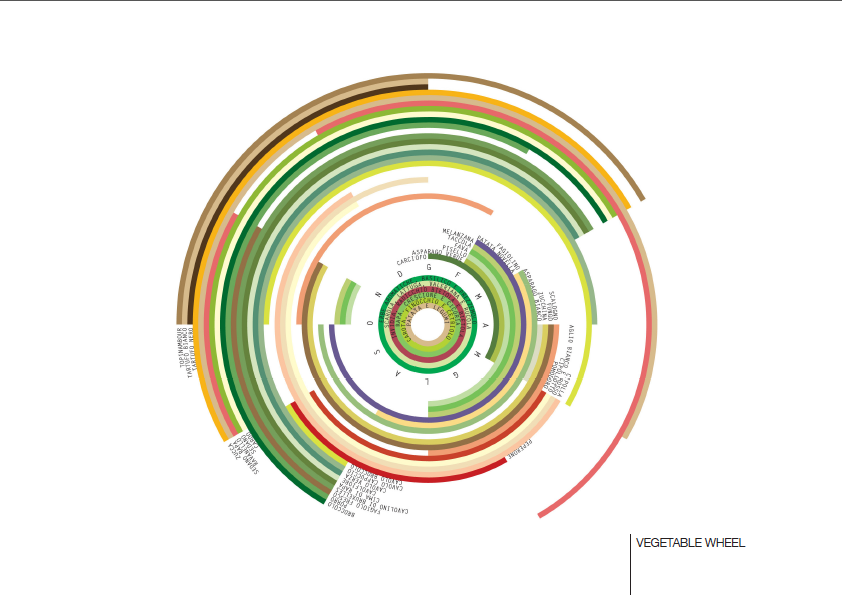
This project addresses seasonal food and educating the general public. This info-graph, targeted for the Italian market, aims to teach, in a simple visual way, about the vegetables and fruits in season. The project includes information about food production in Italy and the prototype for a learning and shopping tool.  This all supports the notion that eating better means living better.

[scribd id=89066131 key=key-26kyfh6jwo09avqdnd6c mode=list]

Claudia Vitarelli is a senior student at Parsons, in the Design Management program, at The New School.

by Mandy Beem-Miller

by Mandy Beem-Miller

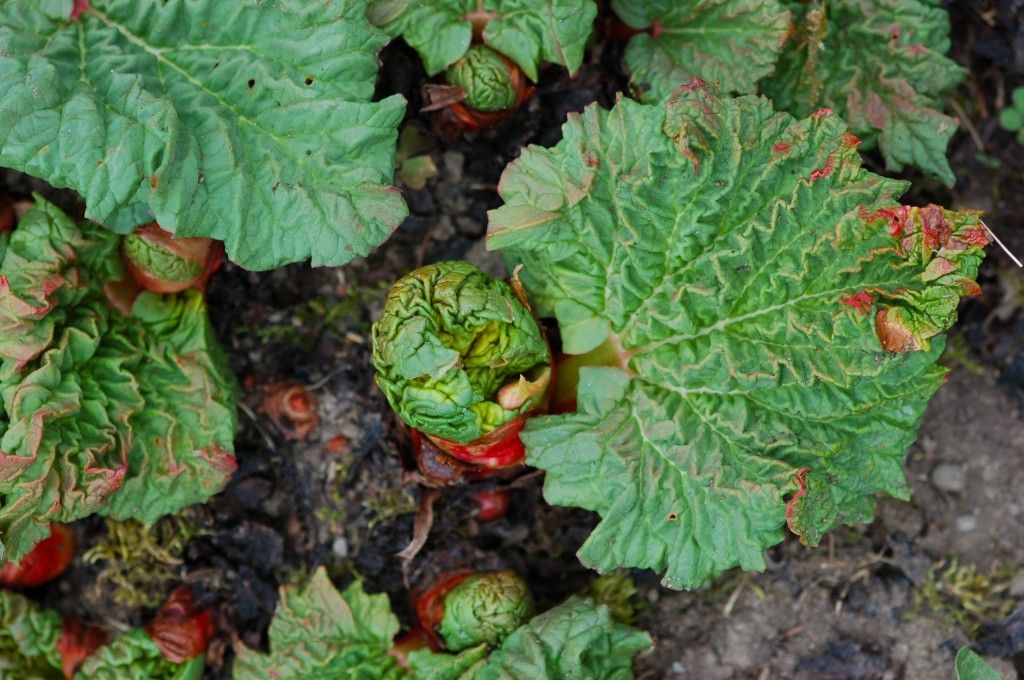
It’s one of those things that seems to come out of nowhere. One moment the rhubarb patch is barren, nothing but dead stalks and dirt. The next you are looking through the back porch window, out over the flag stone wall and the hill that rises beyond to the garden and, low and behold, that spiritless mass of wintery debris is transformed. At first there are just the red nobly buds, poking above the dark earth. Without much ado wide paddle like, almost triangular leaves, in deep emerald green, balloon out from the deep red nubs, which have now become cinnamon candy colored stalks. It occurs in such a jiff, like growing babies, weeds in the garden, and the weekend, that it appears to have happened when your head was turned. From dirt heap to vibrant edible, and one of the first true signs that the growing season in upstate NY has begun.

Much of the yard is still in hibernation; the rest of springs flora and fauna appears to creep along more slowly. The trees are budding but only the first flowers- crocuses, snowdrops, maybe a daffodil or two- have begun to show signs of life. But this rhubarb is one of the great gifts of early spring. While we must wait months longer for the next edible harvest, grandma’s rhubarb patch will be prime for picking in a few short weeks. And the thing is prolific, so long as you keep harvesting it. As per GK’s (Grandma Kate) instruction you must regularly prune the patch to keep up the production. Only then you end up with so much of the stuff that you need to come up with more ways to use it, beyond the requisite pies, crumbles and fools.  A couple of years back we were wallowing in this rhubarb surplus and wondered if rhubarb could be used as savory ingredient as well….  and so the experiments began.

There were compotes and gastriques to accompany pork loin and pot roast, a haphazard attempt at a savory rhubarb chowder, and finally rhubarb salsa. This was the winner. Deciding that the flavors of rhubarb were similar to that of tomatillo- tart, sour, tangy- I created a salsa with all of the other elements of traditional green salsa. By blending together roasted rhubarb with lots of cilantro, onion, garlic and jalapeños, and touch of sugar and salt we ended up with a semi-seasonal spring salsa. The discovery was exciting for an Upstate New Yorker who wants desperately to use local ingredients, but faces many months (most winters) of dreary weather with not an edible thing in sight. It might not be totally local, in light of the fact that until much later in the summer we will have to depend on cilantro from elsewhere, but it’s an improvement. Plus it’s a use for this giant patch of rhubarb.

Mandy Beem-Miller is currently a senior at The New School.  Before obtaining her Bachelors, she spent a year at Apicius, a culinary arts school in Florence Italy, completing the program in Food Communications. She has worked as a food photographer and in many professional kitchens. Just last year she opened her own taco truck that serves locavore style mexican inspired street food.  She lives in the rural Finger Lakes region of Upstate NY, on land that has been in her family for over 100 years.

Republished with permission from Mandy Beem-Miller.

by Diane M. Stillwood

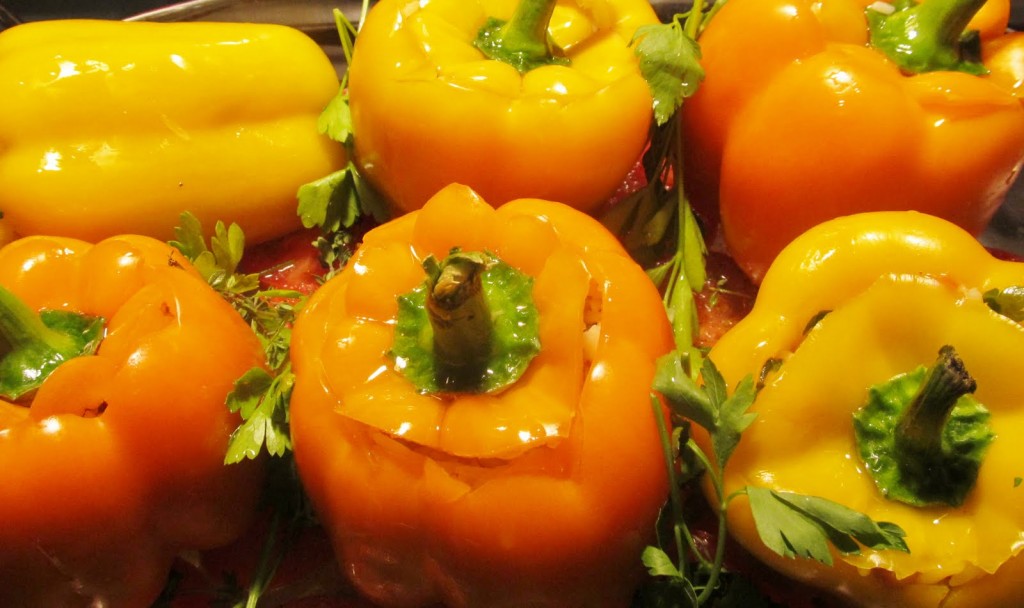
The recipe for Cheese-Stuffed Peppers sat in my small green metal file box, printed in my girlish swirl on a not-yet-stained index card. I had been collecting different cooking ideas since becoming vegetarian several years prior, and had been meaning to try this one. I hadn’t had any kind of stuffed peppers since childhood, and had never prepared them myself. So during a routine trip to the grocery store with M–my tall, dark-haired honey–I picked up the ingredients: six shiny green peppers, slivered almonds, raisins, cheddar cheese; I already had the rice and the tomato paste, along with other assorted staples. We were doing one of those close-to-dinnertime sojourns, both of us fairly famished and thus susceptible to impulse purchases just to get us through to a decent meal.

So it was, while putting together the various parts of this special dinner later on in the kitchen, that we both started snacking on Doritos, coupled with thick chunks of blue cheese–a favorite of his, not mine, but hunger will make exceptions. To my surprise, the recipe took forever to prepare; there were several stages, most of them painstaking. We parboiled, sliced, chopped, simmered, sautéed, covered, spooned, emptied, diced, filled, assembled–all the while munching on the powdery triangular salt licks topped with the rich cheese–and finally, finally, popped the whole thing in the oven to bake.

As we cleaned up the cooking and prep mess, I finally stopped eating to give my stomach a rest before the meal. Alas, once I slid the Pyrex baking dish containing the wonderful, bubbling concoction from the oven an hour or so later–a full three hours after we’d started–I knew I still didn’t have enough room in my tummy to accommodate much more of anything. I ladled one of the peppers onto my plate, marveling in its piping hot aroma, a mixture of spices and sauce, pepper and rice, almonds and raisins. My eyes truly felt “bigger than my stomach,” befitting the legend my parents had bestowed upon me as a child. I savored a couple of bites, then put down my fork in despair.

“I can’t,” I told M.

“Why? What’s wrong?” he asked.

“Damn Doritos,” I muttered. “Your blue cheese didn’t help, either. I’m still full! There’s no way I can eat this–not and enjoy it.”

“So wrap it up and eat it later or tomorrow,” he suggested. “We made enough of them.”

I watched enviously as he polished off his pepper; he was relishing the experience thoroughly, maybe even a bit teasingly. I moaned softly and got up to wrap the leftovers while he cleared the table. The kitchen in our second-floor apartment was even more steamy than usual, with the continued warmth of the stove mixing with the languid summer heat. Once I had the glass dish covered in plastic wrap and aluminum foil, I padded over to the tiny alcove where the refrigerator sat. As I opened the fridge door, the dish shifted in my right hand and crashed to the floor.

“Oh! My peppers!” I yelled, bursting into tears.

M ran over from the kitchen, stopping just short of where I stood surrounded by splintered glass, tomato sauce splattered onto my bare feet and legs. Momentarily oblivious to the danger, all I could think of was the waste–of time, money, effort, food, even the love I’d put into the creation.

“Don’t move!” M said, sounding shaky. “DON’T. MOVE!”

“My peppers!” I wailed.

He looked almost ready to have me committed to a padded room. I thought at first he would admonish me for my seeming foolishness, but his voice softened as he continued to finesse the situation.

“OK, just stand still. There’s glass all around you. Let me get some of it up first.”

“The peppers…..” I whimpered.

“I’ll clean those up, too.”

“Save what you can.”

He looked up at me, pityingly, then went about sweeping and wiping while I stood in the light of the still-opened refrigerator. No matter how M tried to keep the thick red sauce separate from the glass shards, the two smeared together into one gooey mess. When I finally looked over at the peppers, I saw that none of them could be salvaged–food gone, favorite Pyrex baking dish gone, the entire evening a waste, it seemed. And I hated waste.

Years later, I stood in a different second-floor kitchen, several miles away, with my grown son, who was helping me tackle my second go at Cheese-Stuffed Peppers. I hadn’t had the heart in all the intervening years to attempt the unwieldy recipe, keeping the card tucked away in the now-rusting and slightly dented green metal box. I told myself it wasn’t the disaster that had befallen me the first time that had prevented me from making the peppers again, but merely the time and effort involved. No matter now, since I was sure my high-powered microwave would cut the prep time at least in half, and would ultimately streamline the whole endeavor. And I was definitely keeping my stomach “open” for the eating experience, although my tall, dark-haired son thought eating Doritos–one of his major food groups–would be just fine, and he loved blue cheese.

The irony–or was it just poignancy?–of making this dish twice was subsumed for the moment in the whirl of assembling ingredients and prepping everything, with Son and I sidestepping each other in the small space. We used equipment both old and new, but the basics remained the same as they had been in that earlier kitchen adventure–slicing, dicing, chopping, filling–and the one-hour bake in the regular oven was unchanged.

Total time for this second try at the lovely, luscious pepper dish: twenty years, two hours, thirty minutes.

Diane M. Stillwood is a writer and teacher who lives in the Mid-Hudson Valley above New York City.  She is a graduate of The New School with an MFA in Creative Nonfiction Writing (2009), and is currently completing her memoir, Through a Brick Wall, a coming-of-age story with a twist, about the eighteen months she spent as an adolescent in an orthopedic rehabilitation hospital following surgery to correct scoliosis.